A comprehensive guide to the newest advancements in pellet grill technology and design.

Here's what sets us apart from the competition
We position ourselves as delivering high-end outdoor cooking features and performance without premium-brand pricing, emphasizing “Quality Grills. Unbelievable Value.”
We offer gas grills, pellet grills, griddles, smokers, pizza ovens, portable/tabletop grills, electric grills, accessories, and replacement parts — allowing customers to stay within one ecosystem for all outdoor cooking needs.
We differentiate ourselves through smart grilling products like the Oakford smart pellet grill, including app-connected cooking controls and modern outdoor cooking technology.

Expert tips, buying guides, comparisons, and inspiration for choosing and getting the most out of your grill.

Practical guides for cleaning, maintenance, common grill issues, and performance optimization.

Step-by-step grilling recipes, cooking techniques, and meal ideas for every occasion and skill level.

Backyard entertaining ideas, seasonal grilling inspiration, and stories that celebrate outdoor cooking culture.

Helpful articles covering grilling tools, cookware, maintenance gear, and must-have accessories for outdoor cooking.

Find griddle recipes, cooking techniques, cleaning tips, and outdoor meal ideas designed for Nexgrill griddles.
Find answers to common questions
Pellet grills offer versatility by allowing you to smoke, grill, and bake with precise temperature control. They use wood pellets as fuel, providing a unique flavor to your food that is difficult to achieve with other types of grills.
Consider factors such as cooking capacity, temperature range, and additional features like digital controls or Wi-Fi connectivity. Assessing your cooking habits and space availability can also help in selecting a suitable model.
You can use a variety of food-grade wood pellets, including oak, hickory, mesquite, cherry, and apple. Each type of wood imparts a different flavor to your food, allowing for a unique grilling experience.
Regular cleaning involves emptying the ash pan, cleaning the heat diffusers, and wiping down the exterior. It's also important to check for any pellet obstructions in the hopper and ensure the grill's components are in good working order.
Nexgrill pellet grills are designed to smoke effectively, offering low-temperature settings to infuse food with rich, smoky flavors. They also provide adjustable temperature controls to suit various cooking styles.
In This Article
Smart Combustion Technology
Touchscreen Interfaces
Modular Accessory Systems
Pellet grills used to be appreciated mainly for one thing: the convenience of cooking with wood flavor without managing a fire by hand all day. That baseline still matters, but the newest wave of pellet-grill innovations has changed what buyers should expect from the category. Today’s better pellet grills are less like simple smokers and more like connected outdoor cooking systems that aim to control temperature more precisely, streamline the cooking process, and adapt to a wider range of foods and routines. For Nexgrill, that evolution fits naturally with a brand philosophy built around approachable, dependable outdoor cooking that welcomes both casual cooks and more experienced grillers.
The most meaningful shift is that innovation is no longer limited to raw firepower. A modern pellet grill can now improve the entire cooking experience through smarter combustion, finer control logic, clearer user interfaces, modular cooking accessories, and better energy efficiency. Those changes sound technical, but the practical outcome is simple: fewer temperature swings, less guesswork, faster setup, and more confidence when you are cooking ribs for the weekend, roasting vegetables for a family dinner, or trying to hold steady smoking temperatures for a long brisket cook. Recent product launches from major outdoor-cooking brands show that the industry is investing heavily in next-generation controls and more user-friendly connected experiences, not just bigger hoppers or more steel. That trend matters because it changes who can use a pellet grill successfully and how consistently they can repeat results.
The real innovation in pellet grilling is not one feature by itself. It is the way sensors, software, airflow, and accessories now work together to reduce friction for the cook.
That broader approach is especially important for households that want one outdoor cooker to handle multiple jobs. A pellet grill may be expected to smoke low and slow on Friday, roast chicken on Saturday, and sear vegetables or reheat side dishes later in the week. The newer generation of products is responding to that expectation by improving start-up routines, learning curves, and accessory ecosystems. In Nexgrill’s market position, that means helping buyers understand not just what a pellet grill can cook, but how much simpler the process can become when the grill is designed around the way people actually cook at home.
Nexgrill’s Oakford pellet line is a useful reference point for this conversation because it shows how pellet-grill design can balance performance with accessibility. The Oakford 875 Pro Pellet Smoker Grill and Oakford 1125 Pro Pellet Smoker Grill are positioned to meet different capacity needs, while the Oakford Homestead 24 Heavy Duty Charcoal Grill in Black represents the kind of adjacent product choice that buyers often compare when deciding whether they want digital pellet convenience or a more traditional live-fire experience. That comparison is a good reminder that innovation does not eliminate preference; it expands the number of ways a household can cook outdoors. Nexgrill’s brand materials also emphasize connection and shared meals, which aligns well with pellet grilling because pellet systems are often chosen by hosts who want to spend more time with guests and less time babysitting a fire .
Temperature control is the center of pellet-grill innovation because consistency is what separates a pleasant cook from a frustrating one. Early pellet grills already offered an advantage over traditional charcoal in set-it-and-monitor-it convenience, but newer systems go further by using more responsive control logic, smarter feed adjustments, and better integration between firepot, auger, and internal sensors. The goal is not merely to hit a target temperature once. It is to maintain that temperature through changing weather, repeated lid openings, different fuel qualities, and varying food loads. For home cooks, that matters because a stable 225°F smoke session or a reliable 375°F roast setting can make the difference between guessing and repeating results with confidence.
Modern pellet-grill buyers should care more about how the grill holds temperature than about a single headline number.
A smart combustion system usually works by using feedback from internal temperature probes and fuel-delivery timing to keep the fire stable rather than simply dumping pellets at a fixed pace. In practical terms, that means the grill can respond when cold wind pulls heat out of the chamber or when a large cold pork shoulder absorbs energy at the start of the cook. Better temperature control can also reduce the all-too-common experience of overshooting the target and then waiting for the grill to settle back down. For users in the United States who grill across seasonal temperature swings, that stability is a concrete quality-of-life improvement, especially on shoulder-season weekends when the weather can change by the hour.
Another important advancement is zoning. Some newer pellet grills are designed to offer more useful hot spots or better heat distribution across the cooking surface, which helps when you want to smoke one item and finish another at a higher temperature. While pellet grills are not identical to gas grills in zone-cooking flexibility, the newest designs are trying to close that gap by combining improved combustion with better chamber design and, in some cases, accessory grates or heat-management parts that make the cooker more versatile. Buyers should look for how the grill handles both low-end stability and higher-temperature recovery, because those two traits reveal more about real-world usability than promotional language does.
| Control feature | Why it matters | Best for |
|---|---|---|
| Adaptive pellet feed | Helps keep temperatures from drifting when conditions change | Long smoking sessions and cool-weather cooking |
| Improved sensor feedback | Lets the grill respond faster to heat loss or overshoot | Users who want repeatable results |
| Faster recovery after lid openings | Reduces time spent waiting after checking food | Frequent hosts and multi-item cooks |
Nexgrill buyers should think about this category as a controllable cooking environment rather than a single-temperature appliance. If you mainly cook poultry, chops, vegetables, or tray bakes, you want a grill that can move from smoke to roast without feeling finicky. If you smoke brisket or pork shoulder, you want steady low heat over many hours with fewer corrections. In either case, the best innovation is not flashier hardware; it is a system that helps the food stay on schedule. That is why temperature-control improvements deserve more attention than cosmetic upgrades or oversized control panels alone.
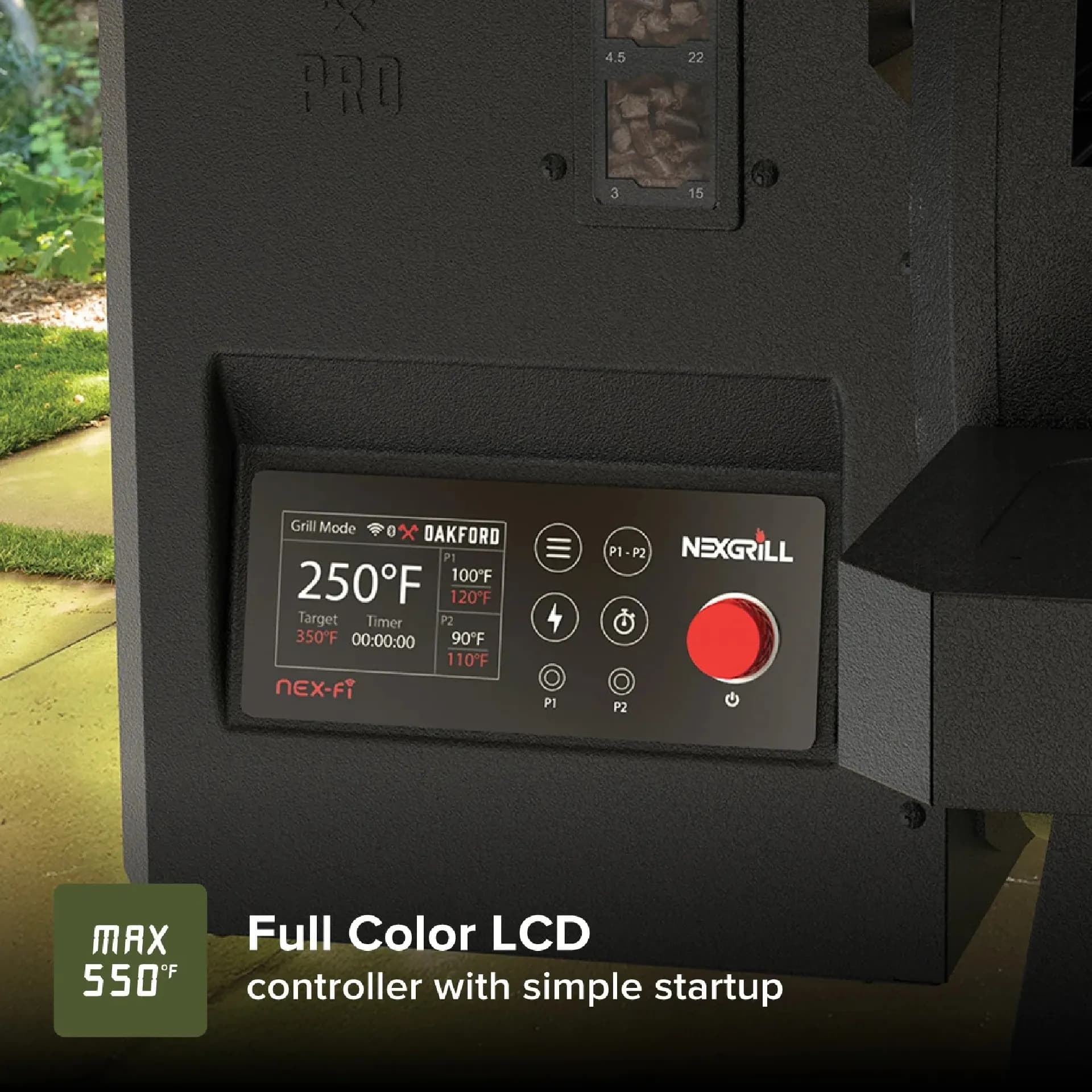
One of the most visible changes in pellet-grill innovation is the move toward clearer interfaces and more connected controls. Older grills often relied on a small dial and a modest display, which worked, but usually left a lot of interpretation to the user. Newer models increasingly feature touchscreen or app-connected experiences that make it easier to set targets, monitor probes, and understand what the grill is doing at a glance. This is not just a convenience upgrade. It lowers the barrier for cooks who want the benefits of pellet grilling without having to learn every nuance of airflow, smoke density, or auger timing on day one.
For a family in the United States making Saturday dinner while balancing other tasks, interface design can decide whether the grill feels approachable or intimidating. A readable touchscreen with clear icons and probe data can reduce the need to stand over the cooker, especially when cooking multiple items at different finish times. Connectivity also matters because many users expect remote monitoring for temperature and cook progress. That means a parent can watch a roast from indoors, a host can greet guests instead of repeatedly lifting the lid, and a more advanced griller can stage the cook with better timing. The point is not to replace skill. It is to make the skill easier to apply consistently.
Recent product introductions from major outdoor brands show how much emphasis the market is placing on user experience and digital cooking control. Traeger’s Ironwood launch highlighted next-generation grilling experiences, while Weber’s 2023 outdoor-cooking portfolio signaled ongoing investment in pellet-based innovation and broader connected cooking experiences. Recteq has also been widely discussed for elevating customer experience as part of product innovation. These developments suggest that the category is moving toward more guided cooking, not just heavier construction or higher heat numbers. That is good news for buyers because it turns a pellet grill into something closer to a well-designed kitchen tool rather than a test of patience .
If you are comparing two pellet grills, spend time on the control layout and app experience. A better interface can matter more than a small bump in hopper size.
A useful interface should do three things well: make the set temperature obvious, show meat-probe readings without clutter, and communicate changes or errors clearly. If a grill uses app connectivity, the app should help rather than distract. Useful features include cook-history tracking, temperature alerts, and the ability to monitor more than one probe when preparing a main protein and a secondary item. Even if a product has impressive hardware, a confusing or laggy interface will make daily use harder than it needs to be. That is why the best connected pellet grills balance digital sophistication with straightforward physical controls. They should feel smart, not complicated.
For Nexgrill readers, the practical question is whether the interface supports the way they already cook. If you regularly multitask, a connected panel can keep you from checking the grill every ten minutes. If you prefer a hands-on experience, the screen should still be simple enough that you can make quick changes without a learning curve. In either case, the right interface saves time and reduces avoidable mistakes. Try comparing two products side by side below to see which fits best:
Once you've weighed two pellet grills against each other, smart combustion is the next place to look because it explains how the cooker actually behaves under pressure. In a practical sense, smart combustion refers to the way the grill manages airflow, pellet delivery, ignition, and heat recovery so the fire stays cleaner and steadier. The promise is not that the grill eliminates the laws of physics. Rather, it minimizes the work the cook must do to stay in the sweet spot. That is a major reason newer pellet grills are becoming more appealing to households that want dependable smoke flavor without constant intervention.
One of the biggest benefits of smarter combustion is cleaner burn consistency. Pellet fuel is efficient only when the fire can maintain a stable burn with enough airflow to avoid smoldering too heavily or cycling too aggressively. Better combustion control helps the cooker produce more predictable heat and can improve the quality of smoke exposure during longer cooks. For the customer, that translates into fewer surprise dips, fewer spikes, and a more repeatable result from one cook to the next. If you are cooking in a climate where humidity is common or you have outdoor conditions that fluctuate between morning and afternoon, that kind of control is not a luxury; it is a genuine usability feature.
This is also where sustainability and efficiency become more than marketing language. A pellet grill that manages its burn more intelligently can waste less fuel during idle periods, settle more quickly after the lid opens, and spend less time chasing temperature. While the exact savings depend on weather, food load, and model design, the principle is straightforward: efficient combustion uses less pellet energy to do the same cooking work. For buyers who cook regularly, that can influence long-term operating cost and reduce frustration from inconsistent fuel use. It is worth paying attention to whether a grill’s design appears tuned for stable output instead of just maximum combustion output.
Smarter combustion can support steadier cooking and better fuel efficiency over repeated use.
Touchscreen interfaces are becoming a defining feature in the premium and mid-premium pellet-grill space because they make advanced cooking data more accessible. A strong touchscreen should present target temperature, actual chamber temperature, and probe readings in a way that does not require guesswork. It should also make navigation simple enough that first-time pellet grill owners can get started without reading a manual three times. The best implementations do not overcomplicate basic tasks. They reduce the steps needed to begin a cook, adjust a target, or check whether the grill has recovered after opening the lid.
Connectivity adds another useful layer. In the current market, consumers increasingly expect remote alerts and monitoring, especially when cooking longer cuts or managing a meal while entertaining. A connected pellet grill allows the user to receive temperature updates while inside the house, or even when stepping away briefly during a gathering. That kind of function is not about showing off technology. It is about fitting the cooker into real household routines. In a busy American household where dinner may be timed around work calls, after-school activities, or hosting friends, a dependable interface can be the difference between relaxed cooking and stressful repetition.
Connectivity is only helpful if it is stable and easy to read. A feature-rich app that is hard to use adds friction instead of removing it.
Recent industry examples help set expectations. Traeger’s Ironwood series launch emphasized next-generation features in wood-pellet grilling, and Weber’s 2023 announcements showed that connected outdoor cooking remains a major product-development theme. These are useful signals because they show that the market is rewarding brands that simplify monitoring, not just brands that add more knobs and settings. For buyers, that means checking whether the touchscreen is actually legible in bright daylight, whether the layout is intuitive with greasy hands, and whether core information is easy to find when you need it quickly. If a grill looks impressive but buries basic operations under too many screens, it may not be the best long-term fit.
Modular accessory systems are one of the most practical pellet-grill innovations because they extend the value of the cooker beyond a single use pattern. Instead of treating the grill as a fixed box with one cooking mode, modular systems let owners adapt surfaces, racks, shelves, inserts, or specialty attachments for different meals. That matters because pellet grill buyers often want one appliance to handle smoking, roasting, baking, warming, and occasionally higher-heat finishing. Accessories are the bridge between those expectations and the physical limits of a pellet chamber.
The best accessory systems are designed to feel integrated rather than improvised. They should fit securely, support easy setup, and not undermine airflow or temperature stability. Buyers benefit when accessory options are made for the specific grill family instead of requiring awkward workarounds. From a planning standpoint, that means thinking about your cooking calendar. If you frequently cook ribs and chicken at the same time, a secondary rack may matter. If you host brunch, griddle-like surfaces or warming tools may be more valuable. If you do meal prep, modular shelving and easy-access zones can make the workflow easier. The innovation is not just the accessory itself; it is the way the accessory changes how many ways the grill can earn its place on the patio.
This is also where Nexgrill’s product strategy is relevant. The Oakford 875 Pro Pellet Smoker Grill and Oakford 1125 Pro Pellet Smoker Grill show the importance of matching capacity to household habits, while the broader Oakford ecosystem suggests how pellet grilling can become a platform for future add-ons and accessories. The brand’s emphasis on communal cooking and approachable outdoor experiences aligns with modularity because it lets users customize the grill around how they gather, not the other way around .
Sustainability in pellet grilling is usually expressed through efficiency, smarter fuel use, and better long-term product design. The newest innovations are less about grand environmental promises and more about incremental improvements that reduce waste and extend useful life. That includes burners or fire systems that reach target temperature with fewer pellets, controls that avoid overshooting, components that resist wear more effectively, and accessory systems that allow one grill to do more jobs before a buyer feels the need to replace it. For most consumers, that is the sustainability story that matters: use less fuel, replace less often, and get more everyday value out of the product.
Efficiency also affects how people actually grill. A cooker that recovers quickly after lid openings uses time and fuel more intelligently, which is helpful during long cooks. A better-insulated or better-managed chamber may reduce unnecessary cycling, and a smarter control system may keep the machine from working harder than it needs to in moderate weather. These are not abstract benefits. They show up as more stable cooking, less pellet consumption over time, and fewer moments where the user feels the grill is fighting the conditions. In practical United States use, where backyard cooks may barbecue year-round in varied climates, that translates into meaningful ownership value.
The most efficient grill is often the one that fits your real cooking pattern best, because oversizing can waste both fuel and money.
There is also a design-efficiency connection. Modular systems can be more sustainable than buying multiple single-purpose outdoor cookers, especially if one pellet grill plus the right accessories covers smoking, roasting, and general family cooking. That is one reason the category is attracting consumers who want fewer appliances on the patio without sacrificing flexibility. The better the product is at adapting to different meals, the more likely it is to deliver value across seasons and reduce unnecessary purchases. The sustainability conversation, then, is not limited to fuel. It includes durability, serviceability, and thoughtful use of space.
When comparing top pellet grill models with newer features, buyers should separate surface-level specs from real-world usability. Two grills may both advertise digital controls and large cooking areas, but the way those features are implemented determines whether the cooker feels premium or merely crowded with technology. The most useful comparison categories are temperature stability, interface clarity, accessory ecosystem, and how much flexibility the grill provides for different cooking styles. That framework is more helpful than comparing one feature in isolation because pellet grills are systems, not single-purpose tools.
| Model perspective | Innovation strength | Best fit |
|---|---|---|
| Oakford 875 Pro Pellet Smoker Grill | Balanced capacity for steady backyard smoking and roasting | Smaller households and frequent weeknight cooks |
| Oakford 1125 Pro Pellet Smoker Grill | Larger capacity for more ambitious meal planning | Hosts, batch cooks, and big-family weekends |
| Oakford Homestead 24 Heavy Duty Charcoal Grill in Black | Traditional live-fire experience rather than digital control | Buyers who prioritize charcoal flavor and manual control |
That comparison shows why innovation should be interpreted through use case. If you want set-and-monitor cooking with less babysitting, the pellet category is where smart combustion and connected controls shine. If you want a more analog fire-building ritual, charcoal may still be the better fit. But within pellet cooking itself, the most advanced models are the ones that remove friction while preserving flavor. A good next-generation pellet grill should make it easier to get through a Tuesday dinner or a Sunday smoke without creating extra steps. It should also leave room for the cook to grow into the product rather than outgrow it quickly.
Recent launches from Traeger and Weber, along with product-experience emphasis seen across the segment, make one thing clear: the category is competing on usability as much as on temperature range or build size . For Nexgrill readers, the smartest buying question is not “Which grill has the most features?” It is “Which grill’s features will actually change how I cook for my household?” Once that question is answered, the right model usually becomes much easier to identify.
Here's what sets us apart
We position ourselves as delivering high-end outdoor cooking features and performance without premium-brand pricing, emphasizing “Quality Grills. Unbelievable Value.”
We offer gas grills, pellet grills, griddles, smokers, pizza ovens, portable/tabletop grills, electric grills, accessories, and replacement parts — allowing customers to stay within one ecosystem for all outdoor cooking needs.
We differentiate ourselves through smart grilling products like the Oakford smart pellet grill, including app-connected cooking controls and modern outdoor cooking technology.
Don't just take our word for it
Keep reading
From our catalog