Nexgrill Oakford 715 Manual: Pellet-Specific Startup, Shutdown, and Controller Fixes
A practical field guide for Oakford 715 owners who need the right document, a clean burn pot, and a shutdown ritual that prevents auger fires.
In This Article
Find the Right Revision
Own the Shutdown Ritual
Decode Controller Behavior
Your Oakford 715 Is Loaded With Pellets and the Manual Is Missing - Start Here
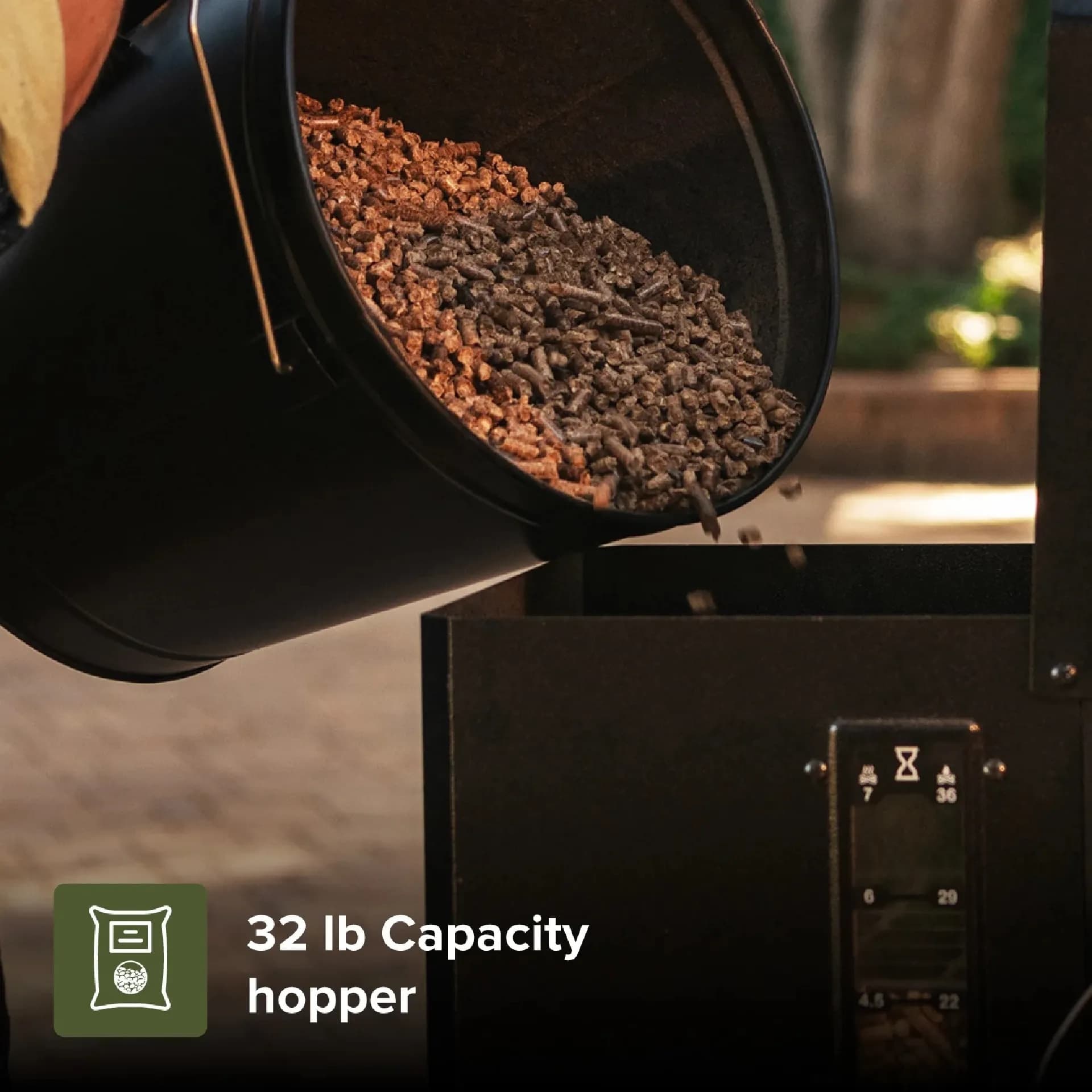
This is written for the owner who has already filled the hopper, plugged in the Oakford 715, and realized the paperwork is either lost, water-damaged, or never made it out of the carton. Pellet smoking punishes guesswork in a way gas grilling never does: feed rate, burn-pot airflow, and a proper fan-driven cool-down are all decisions the manual makes for you, and getting them wrong is how augers jam and hoppers smolder.
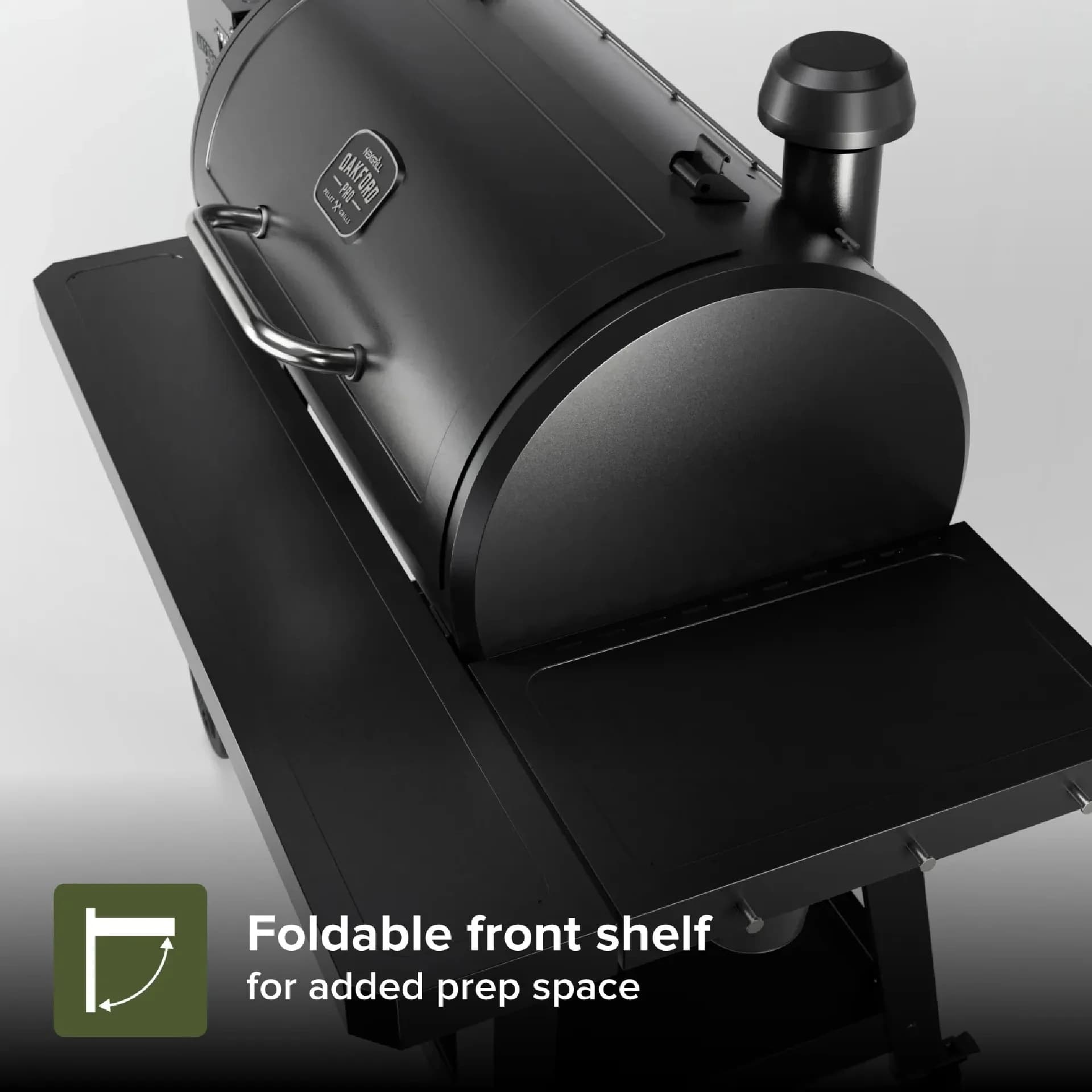
Before anything else, be honest about the SKU question. Nexgrill's live site currently lists the Oakford 875 Pro and Oakford 1125 Pro. A specific 715 product page and a Nexgrill-hosted 715 PDF could not be verified at the time of writing, so treat the 715 as most likely a retailer-tier or regional pellet SKU and confirm your exact model string before you trust any download. The steps below work either way - they teach you to match the document to your data plate rather than to a name on a marketing banner.
If the burn pot has visible ash buildup and the last cook ended with the controller switched off mid-cycle, do not run another startup until you clean the pot. Residual pellets plus an unverified startup sequence is the classic recipe for a flare in the fire pot.
Why a Pellet Smoker Manual Is Not a Gas Grill Manual (Read These Pages First)
If you have owned a Nexgrill gas grill, you know the manual's center of gravity: leak testing, burner tube alignment, and crossover ignition. A pellet unit is a different machine with different failure modes, and pages that matter on gas are simply absent here. On the Oakford 715 the high-value pages are, in order:
- First-burn and seasoning sequence - the oil coat and the timed run that cures the cooking chamber.
- Startup and shutdown - specifically the cool-down stage where the fan runs the fire out before power-down.
- Controller settings - feed rate or P-setting adjustment, low-pellet sensor behavior, and any Wi-Fi pairing steps if your revision is equipped.
- Fault codes - what the display shows and what the manual tells you to do about it.
- Parts diagrams - auger motor, hot rod igniter, RTD temperature probe, and burn pot, each with a part number.
A pellet controller's shutdown routine is not cosmetic. Skipping it leaves burning pellets in the pot and can push heat back up the auger tube - the reason that page deserves a folded corner.
Prerequisites: Six Things to Stage Before You Search, Season, or Cook
Line these up on one work surface before you open a browser tab. Owners who chase a PDF first usually end up re-searching because they cannot answer the model question halfway through.
- A phone photo of the data plate - typically on the rear of the hopper or printed inside the hopper lid. Capture the full string, letter suffix included.
- The box label or shipping confirmation, which often carries a retailer-specific item number that differs from the grill badge.
- A retractable tape measure, if you plan to order a replacement part.
- Pellet details - wood species and bag weight. Some manuals specify a maximum moisture level or pellet grade.
- Two clean, dry rags and a high-smoke-point cooking oil such as canola or grapeseed for seasoning.
- A notes file or a scrap of paper taped inside the hopper lid for settings and codes.
Step 1: Confirm You Own an Oakford 715 and Copy the Full Data-Plate String
Read the plate character by character and transcribe it twice. Suffix letters and digits - the difference between a
Once You've Sourced the Document, Here's What Else Decides Whether the Cook Goes Well
The manual sets the rules; the environment decides whether they work. Ambient temperature, wind, pellet moisture, and how full the hopper is all shift how an Oakford 715 behaves. A 40°F evening with a stiff breeze will draw more fuel than a still afternoon at 75°F, and a pit that cooks beautifully in July can run lean and slow in November. Read your first several cooks against those variables rather than assuming the grill is at fault.
Controller Behavior on the Oakford 715: What the Display Is Telling You
Treat the controller as a small computer that owns the fire. It reads the RTD probe, decides how often to run the auger, and coordinates the fan. Three behaviors confuse new owners most: the initial feed delay (the auger must fill its tube before any pellet reaches the pot), the temperature overshoot in the first 10-15 minutes of a startup, and short pellet feeds at low setpoints, which can look like the unit has stopped working when it is simply holding temperature. Feed rate or P-setting adjustments - present on many OEM pellet controllers under names like P0-P5 or Feed Rate - trade fuel delivery against temperature stability. Confirm the exact label and the adjustment range in your own manual before touching them.
Error codes vary by controller. Strings like ErH (high temperature) or ErP (probe/RTD fault) appear across many pellet brands, but the definition and required response must be confirmed in your manual. Do not assume a code means a failed part - probe faults are often a loose connector or an ash-coated probe.
Auger, Burn Pot, and Hopper: The Three Pellet Faults That Cause Most No-Heat Calls
When the grill will not heat, the cause is nearly always in one of three places, and they are diagnosable in sequence.
| Symptom | Most likely cause | Check before ordering parts |
|---|---|---|
| Fan and controller on, no fire after 10+ minutes | Auger not feeding; empty tube or jammed pellet | Prime/feed mode; listen for auger motor; inspect auger for a packed pellet bridging |
| Pellets in pot, no ignition | Hot rod igniter failed or misaligned | Hot rod position in the manual; a failed igniter still allows a manual start where the manual permits |
| Pit runs hot and then drops out | Ash-choked pot restricting airflow | Empty and vacuum the pot; check the hopper for dust and fines |
| Hopper empties faster than expected | Feed rate set high; cold or windy conditions | Record feed rate setting; note outdoor temperature at cook time |
Temperature Swings and Flame-Outs: Reading Symptom Against Cause
A flame-out is not a warranty conversation yet - it is a data point. Log the setpoint, ambient temperature, wind, pellet brand, and the timer reading when the drop occurred. A consistent swing of 20-30°F around the setpoint is normal PID behavior on many pellet units; the manual's stated tolerance is the number to trust. Swings beyond that, repeated flame-outs, or an inability to hold low temperatures point to ash buildup, a damp pellet supply, a probe that needs cleaning, or a feed rate calibrated for a different climate. Change one variable at a time and record the result.
Vacuum the burn pot and the area under the diffuser every few cooks, not just when something goes wrong. Ash insulates the pot, slows ignition, and is the cheapest fix in pellet cooking.
Parts, Revision Letters, and Ordering the Right Replacement
Common replacement parts on an Oakford pellet pit - hot rod igniter, RTD probe, auger motor and its drive pin, burn pot, and controller board - are ordered against the exact model and often the revision letter. Igniters and probes are frequently in the $20-$60 range in the U.S., motors and controllers commonly $60-$150, though treat those as ranges, not quotes. When you call support, lead with the full model string, serial, and the part number from your manual's exploded diagram. That combination gets a correct part shipped the first time far more often than a description alone.
Five Mistakes Oakford 715 Owners Make in the First Month
- Powering off directly after a cook instead of running the full shutdown cycle.
- Judging a startup as failed before the auger has had time to fill the tube.
- Ignoring the burn pot between cooks, then blaming the igniter.
- Changing feed rate before cleaning the pot and the probe.
- Downloading a sibling Oakford manual from a forum and treating it as authoritative.
A One-Page Checklist to Keep Taped Inside the Hopper Lid
Model string and serial: __________. Manual source: __________. Startup: lid open, pot clean, ignite, close at setpoint. Shutdown: full fan cycle, no shortcuts. Clean pot every ___ cooks. Fault code log: code, time, ambient temp, fix. This sheet does more for troubleshooting than any forum thread, because it records your machine, not someone else's.
Nexgrill has been building outdoor cooking equipment from California since 1993, and its current pellet lineup sits alongside the 715-style tier as the Oakford 875 Pro and Oakford 1125 Pro. If your 715 documentation cannot be located, the support channel is the right place to start with your data-plate string.