Enhancing Grilling Precision with PID Controllers
A comprehensive guide to understanding and implementing PID controllers in your grilling setup.
In This Article
What is a PID Controller?
Benefits of PID Controllers in Grilling
Top Grills Featuring PID Controllers
Introduction to PID Controllers in Grilling
A PID controller on a grill is designed to do one job exceptionally well: keep cooking temperature steady enough that your food behaves predictably from start to finish. For pellet grill owners, that matters more than it sounds. Once you move beyond simple weeknight burgers and into ribs, pork shoulder, brisket, turkey breast, or even delicate baked dishes, a few degrees of drift can change how fat renders, how bark sets, and how evenly smoke adheres. PID stands for proportional, integral, and derivative, and those three pieces work together to reduce the temperature swings that can happen when a grill reacts too slowly or too aggressively to changing conditions.
Nexgrill’s brand approach emphasizes dependable, approachable outdoor cooking that welcomes both newcomers and experienced grillers, and that makes PID technology a natural fit for this conversation. A stable temperature system supports the kind of confident, shared cooking experience Nexgrill describes in its brand guidance: outdoors, around good food, with less guesswork and more consistency . In practical terms, a PID controller helps a pellet grill behave less like a blunt on-off appliance and more like a precise cooking partner.
If your biggest frustration is seeing a pellet grill overshoot the target temperature or swing too widely during long cooks, PID control is usually the feature worth understanding first.
This article takes a practical angle: not just what PID means, but how the controller affects real grilling decisions, how it changes the day-to-day cooking experience, and what to look for if you are considering a pellet grill or thinking about upgrading what you already own. That is especially useful because many grill shoppers focus on headline specs like hopper size or cooking area, when temperature control is often what determines whether dinner feels easy or fussy.
How PID Controllers Work in Pellet Grills
A PID controller constantly measures the gap between the grill’s current temperature and the target set by the user, then adjusts fuel and airflow to close that gap. The proportional part responds to the size of the error: if the grill is far from the target, it corrects more aggressively. The integral part looks at error over time and helps eliminate long, slow drift. The derivative part watches how quickly the temperature is changing so the controller can avoid overshooting the set point. In a pellet grill, those decisions typically translate into auger feed timing and fan behavior. The result is a steadier chamber temperature than you would get from a simple thermostat that only turns heat up or down in broad strokes.
A good way to picture it is as a conversation between sensors and fuel delivery. The temperature probe reads the cooking chamber. The controller interprets the change. The auger meters pellets into the firepot. The fan helps maintain combustion. When the system is tuned well, the grill does not wait for a dramatic swing before reacting; it nudges heat output in small, frequent adjustments. That is why PID-equipped grills often feel calmer in use. They are not necessarily hotter or more powerful in a raw sense. They are simply more controlled.
Core signals work together: proportional, integral, and derivative.
The main thing to understand is that PID does not mean the grill never moves a degree or two from your target. Outdoor conditions still matter. Wind, cold weather, lid openings, pellet quality, and grease buildup all affect performance. But PID reduces the size and duration of those changes. For the user, that means less babysitting and a smoother path from preheat to plate. BBQGuys explains pellet grills as a category built around convenience and temperature control, while Pit Boss describes PID basics as a tighter method of regulating heat on a pellet grill; both point to the same central idea: better feedback leads to steadier cooking behavior .
Advantages of Using PID Controllers for Grilling
The first advantage is consistency. If you are smoking at 225°F, consistency helps food move through the cook at a more predictable pace. That is useful for brisket point and flat tenderness, for pork shoulder bark development, and for ribs that you want to finish with the same texture across multiple racks. The second advantage is convenience. With tighter control, you spend less time compensating for temperature swings and more time focusing on seasoning, timing, and rest. The third advantage is better repeatability. If you cook the same chicken thighs every Sunday or run the same rib recipe for a family gathering, PID control makes it easier to reproduce your results.
There is also a quality-of-life benefit that experienced grillers appreciate immediately: less drama. Grill temperature spikes can dry out thinner cuts, darken rubs too quickly, or create an uneven smoke profile. When the controller keeps heat steadier, your recipes become easier to trust. That does not replace technique, but it reduces the amount of technique required just to keep the grill in range. For newer grillers, that lowers the learning curve. For advanced users, it improves control and frees attention for airflow, resting, bark, and finishing sauce timing.
PID is especially valuable for long cooks, overnight smokes, and recipes that depend on stable low-and-slow heat rather than fast searing.
Another practical advantage is fuel management. A controller that reacts more precisely can help avoid excessive pellet feeding caused by large oscillations. Savings are not always dramatic enough to measure from one cook to the next, but over many sessions, smoother control often means less wasted fuel from repeated overshooting and recovery. For U.S. buyers comparing pellet grills, that can influence total cost of ownership as much as the purchase price itself.
Top Pellet Grills with PID Controllers
Because model features can vary by year and configuration, the safest way to think about PID-equipped pellet grills is by the kind of user they serve. BBQGuys’ pellet grill guide highlights the broader category benefits, while Pit Boss’ controller overview shows why the controller itself can be a differentiator when comparing pellet smokers . The table below shows the kinds of grills shoppers usually associate with PID-style precision, along with the use case that makes them compelling.
| Grill type | Why PID matters | Best use case |
|---|---|---|
| Mid-size backyard pellet grill | Keeps weekday cooks steady without constant adjustment | Families who smoke chicken, ribs, and pork shoulder |
| Large-capacity pellet smoker | Helps stabilize heat across longer cooks and heavier loads | Brisket, multiple pork butts, or entertaining |
| Controller-upgradeable smoker | Adds precision to older equipment if hardware supports it | Owners who want better control without replacing the whole grill |
If you are shopping specifically for a PID-capable pellet grill, focus less on flashy wording and more on controller behavior, chamber recovery after lid openings, and whether the grill maintains temperature in real outdoor conditions. The most useful models are the ones that hold their target well during wind, cool weather, and long smokes, because that is when temperature control earns its keep. A strong controller should feel invisible most of the time. When it works, you simply notice that the grill stays where you set it.
Implementing PID Controllers in Your Existing Grill
Retrofitting an existing pellet grill with PID control can be a smart move, but only if the platform is compatible. Some controller swaps are straightforward, while others are limited by wiring layout, probe placement, or auger and fan integration. Before buying parts, identify the exact grill model, check whether the manufacturer or a trusted parts supplier supports a controller replacement, and confirm that the new unit matches your existing electrical connections and sensor setup. Outlaw Smokers offers a dedicated controller product as an example of how aftermarket control systems can be designed for specific smoker hardware rather than treated as one-size-fits-all parts .
If you are planning a retrofit, the most important question is not whether the new controller is powerful, but whether it is tuned for your grill’s airflow and fuel delivery pattern. A mismatched controller can create new problems instead of solving old ones. For that reason, experienced installers usually verify probe location, auger cycle behavior, fan operation, and the controller’s temperature range before making changes. It is also worth checking whether the grill already has a reasonable control board that may only need a replacement sensor or updated firmware rather than a full controller overhaul.
A retrofit only makes sense when the controller, sensor, auger, and fan all work as a matched system. Buying the wrong board can make temperature swings worse.
For many owners, the best retrofit path is incremental. Start with accurate temperature probes, clean the firepot and grease path, inspect the pellets you are using, and then decide whether a controller upgrade is still needed. A dirty burn path or poor-quality pellets can mask the benefits of a PID system. In other words, PID is not a substitute for good airflow or clean hardware; it is a refinement on top of them.
Troubleshooting PID Controllers in Grilling
When a PID-controlled grill behaves oddly, the first step is to separate controller issues from fuel, airflow, and sensor problems. If the temperature is oscillating more than expected, check the probe for grease buildup or physical damage. If the grill struggles to reach target temperature, confirm pellet quality, inspect the firepot for ash accumulation, and make sure the lid seals properly. If the grill overshoots and then settles slowly, look at startup settings, calibration, and whether the controller has been set for the correct cooking mode.
A few troubleshooting habits make a big difference. Keep a simple log of outdoor temperature, pellet type, set temperature, and observed chamber behavior. Patterns show up quickly. A grill that performs well in summer but swings in winter may simply need more warmup time or wind protection. A grill that overshoots after every lid opening may need a calmer recovery setting or better loading habits. If the controller display gives error codes, use the manufacturer’s manual first rather than guessing, because the same symptom can mean different things on different platforms.
Before replacing a controller, rule out the simple causes first: dirty probes, ash in the firepot, poor pellets, and lid leaks.
Another overlooked issue is expectations. PID improves control, but it does not make a pellet grill immune to physics. A cold windy day will still challenge recovery. A fully packed chamber will still absorb heat differently than a lightly loaded one. The controller’s job is to minimize disruption, not eliminate every environmental variable.
Conclusion
A PID controller on a grill is best understood as a precision tool for consistency. It helps pellet grills maintain steadier chamber temperatures, reduces unnecessary swings, and makes long cooks easier to manage. For everyday griller and serious pitmaster alike, that translates into more repeatable results and less time spent chasing heat. If you are evaluating a new pellet grill or thinking about upgrading an existing one, PID control is one of the clearest signs that the grill is built with careful temperature management in mind.
Try comparing two products side by side below to see which fits best:
Understanding PID Controllers
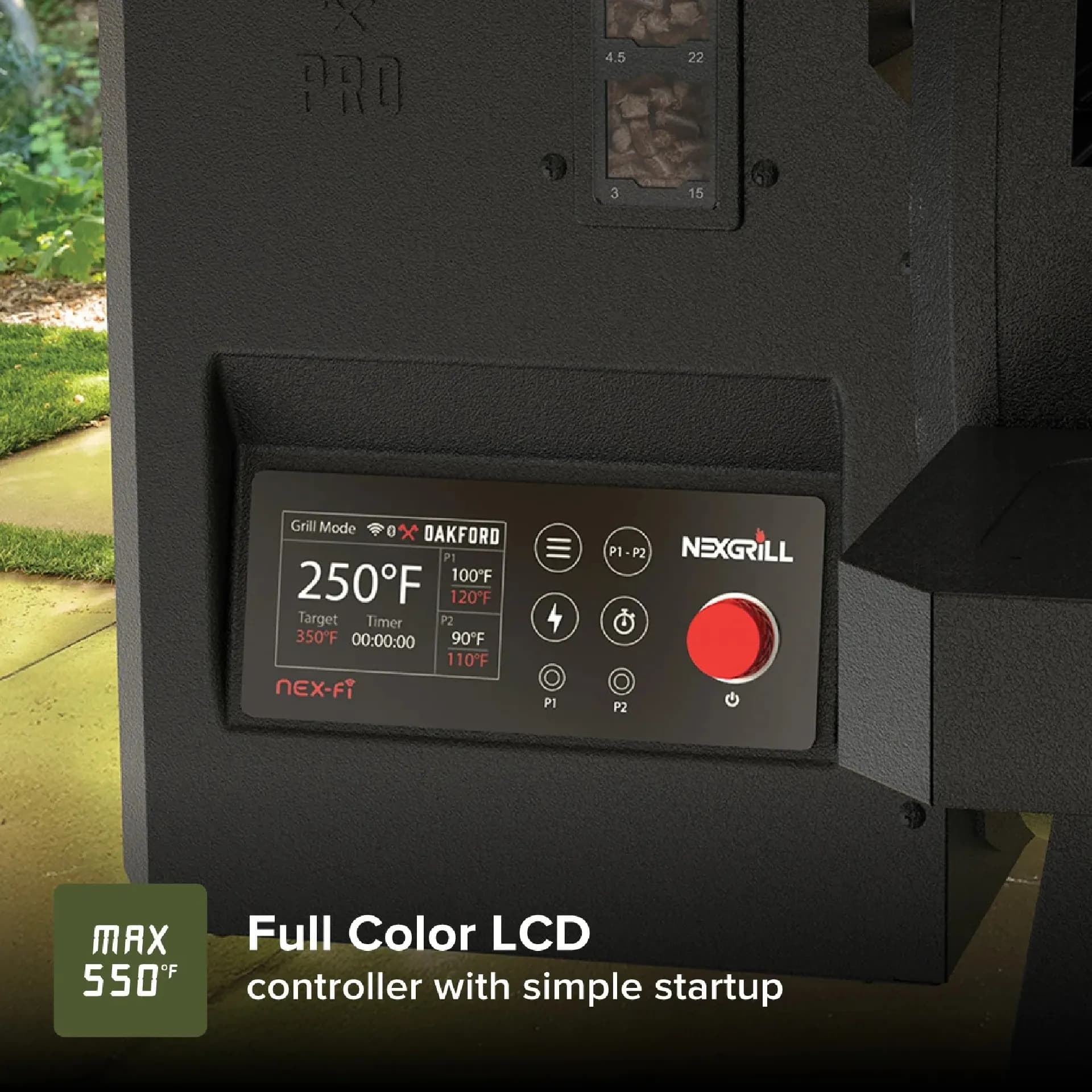
Once you've compared two grills side by side, the next step is understanding what the controller is actually doing behind the scenes. PID is not a marketing label so much as a control strategy. It measures a set point, reads a sensor value, calculates the error, and adjusts output in response. On a pellet grill, that output usually means how often pellets are fed and how hard the combustion fan pushes air through the fire system. A well-tuned PID controller does not simply react; it predicts how the grill is trending and compensates before the temperature moves too far away from the target.
That predictive behavior is what makes PID different from a simpler feedback loop. A basic thermostat can be perfectly functional, but it often waits too long to act and then corrects too aggressively. PID splits the decision into three pieces. Proportional handles the immediate error. Integral corrects drift that has persisted over time. Derivative tempers the correction if the grill is already moving toward the set point too quickly. For grilling, that means fewer peaks and valleys, which is especially useful when you want one rack of ribs to cook like the next one you make next weekend.pellet grill, that output usually means how often.
Pit Boss explains the basics of PID on a pellet grill in consumer-friendly terms, and BBQGuys’ pellet grill buying guide helps place that control feature in the broader pellet category, where temperature stability is one of the biggest reasons shoppers choose pellets in the first place .
Benefits of PID Controllers in Grilling
The most obvious benefit is temperature consistency, but the practical payoff goes deeper than that. Stable heat helps fat render at a steady pace, which matters on cuts like pork shoulder and beef brisket. It also helps smoke adhere in a more even way during the early phase of a cook, when the surface is still receptive. That does not mean every pellet grill with PID produces identical flavor or bark, but it does mean the cooking environment is less likely to be the reason a recipe fails.
There is also an efficiency story here. A grill that frequently overshoots and then backtracks can waste pellets and create inconsistency across a long cook. With tighter control, the grill can often approach its target more smoothly and hold it with fewer dramatic corrections. For busy households, that means less tending and more confidence leaving the grill alone for stretches of time. For entertaining, it means you can spend more time at the table instead of standing by the lid.
Another often-overlooked benefit is learning. Newer grillers can focus on food timing, internal temperature, and rest without constantly wondering whether the grill is drifting wildly. More experienced users benefit because PID makes recipes easier to standardize. If you are testing rubs, smoke levels, or finishing temperatures, a stable chamber gives you a cleaner read on the result of your technique.
For long smokes and overnight cooks, the value of PID shows up most clearly in fewer surprises and more repeatable results.
Top Pellet Grills with PID Controllers
The best PID-equipped pellet grill for you depends on how you cook, not just how much space it has. A compact backyard model may be ideal for weeknight chicken and weekend ribs, while a larger smoker makes more sense for brisket days or cooking for a crowd. When a controller is part of the pitch, look for clear language about temperature range, recovery speed, and sensor placement. Those details tell you more about real-world performance than a vague mention of precision.
| Buyer profile | What to prioritize | Why it matters |
|---|---|---|
| Weekend family griller | Stable mid-range temps and easy startup | Keeps dinner predictable without much babysitting |
| Low-and-slow enthusiast | Fine control and low-temp steadiness | Improves bark development and smoke consistency |
| Large-batch host | Strong recovery and chamber stability | Helps when loading the grill with multiple items |
Among the products referenced in the research notes, Outlaw Smokers’ controller product is notable because it shows how controller hardware can be purpose-built rather than treated as a generic part. That matters if you are buying or retrofitting, because fit and tuning can affect how well the grill behaves once installed .
Implementing PID Controllers in Your Grill
If you want to add PID control to an existing grill, start by checking whether your current smoker was designed for a controller upgrade. Confirm the wiring harness, probe compatibility, fan configuration, and auger control logic before purchasing anything. A retrofit is most successful when the controller matches the machine instead of forcing the machine to adapt to the controller. If you are unsure, consult the grill’s parts diagram or manufacturer documentation before buying components.
A careful retrofit process usually begins with cleaning and calibration. Ash, soot, and grease can make a healthy grill look unstable, so clean the firepot and verify probe placement before assuming the controller is the problem. Once installed, test the grill at several temperature targets and note how it responds after the lid opens, during windy conditions, and after a long stabilization period. That test pattern tells you whether the PID settings are genuinely helping.
Retrofits are not plug-and-play in every case. If the controller is not matched to your grill’s airflow and fuel system, results can be disappointing.
Troubleshooting PID Controllers in Grilling
When something feels off, troubleshoot in layers. Start with the pellet supply, then the burn pot, then the temperature probe, and only then the controller itself. Poor-quality pellets, excess ash, and dirty sensors are the most common reasons a grill appears unstable. If the controller display looks fine but the chamber temperature wanders, compare the readout to an independent thermometer to see whether the issue is the controller or the probe.
If the grill keeps overshooting, it may be reacting too aggressively to a large temperature error at startup. If it undershoots and never fully recovers, the firepot may be restricted or the fan output may not be sufficient. Outdoor conditions matter too. Cold weather, direct wind, and repeated lid openings can make even a good PID-controlled grill work harder than expected. The key is to diagnose the pattern rather than chasing one random number.
Use a simple test log: set point, outdoor conditions, pellet type, and actual behavior. A few notes often reveal the real issue faster than guesswork.
Conclusion
PID controllers make pellet grilling more precise, but their real value is not technical complexity. It is confidence. When your grill holds closer to the target, the whole cook becomes easier to plan, easier to repeat, and easier to enjoy. If you are choosing a pellet grill for your backyard, comparing control systems should be as important as comparing cooking area or features.
For readers who want to learn more from trusted product and controller references, the sources below offer a practical starting point.