Nexgrill Oakford 930 Manual: Pellet Grill Startup, Step by Step
Find the right Oakford pellet grill manual, then run the first-fire, burn-off, and shutdown sequence it describes - in the correct order, without the mistakes that wreck a first cook.
In This Article
Find the Right Document
Prime Before You Light
Shut Down Properly
What 'Nexgrill Oakford 930 Manual' Usually Means - and What to Do First
Most people searching for a Nexgrill Oakford 930 manual are not doing research for fun. They have a pellet grill on the patio, a bag of pellets in the garage, and a question that needs answering tonight: how do I start this thing without ruining dinner? The frustrating part is that a search for the exact string often returns nothing labeled "930." As of this writing, the current Oakford pellet line on Nexgrill's own store reads 875 Pro and 1125 Pro - the 930 may be a retailer-specific SKU, a regional variant, or a renamed model. That does not mean you are stuck. It means you should stop chasing the label and start matching your machine by product type and controller, because the startup logic across the Oakford pellet family is nearly identical.
This walkthrough assumes you already own the grill. It covers what the manual would tell you, in the order it actually matters: fuel and fire pot prep, sourcing the right document, the first light, the burn-off, and the shutdown cycle that too many owners skip. If you are still deciding between models, read anyway - the process explains the product better than any spec sheet.
Do not trust a random PDF from a forum or a file-sharing site. Pellet grill controllers vary, and a wrong sequencing guide can lead you to light the fire pot incorrectly. Confirm your unit first, then use the matching document.
Before You Start: Hopper, Pellets, and a Clean Fire Pot
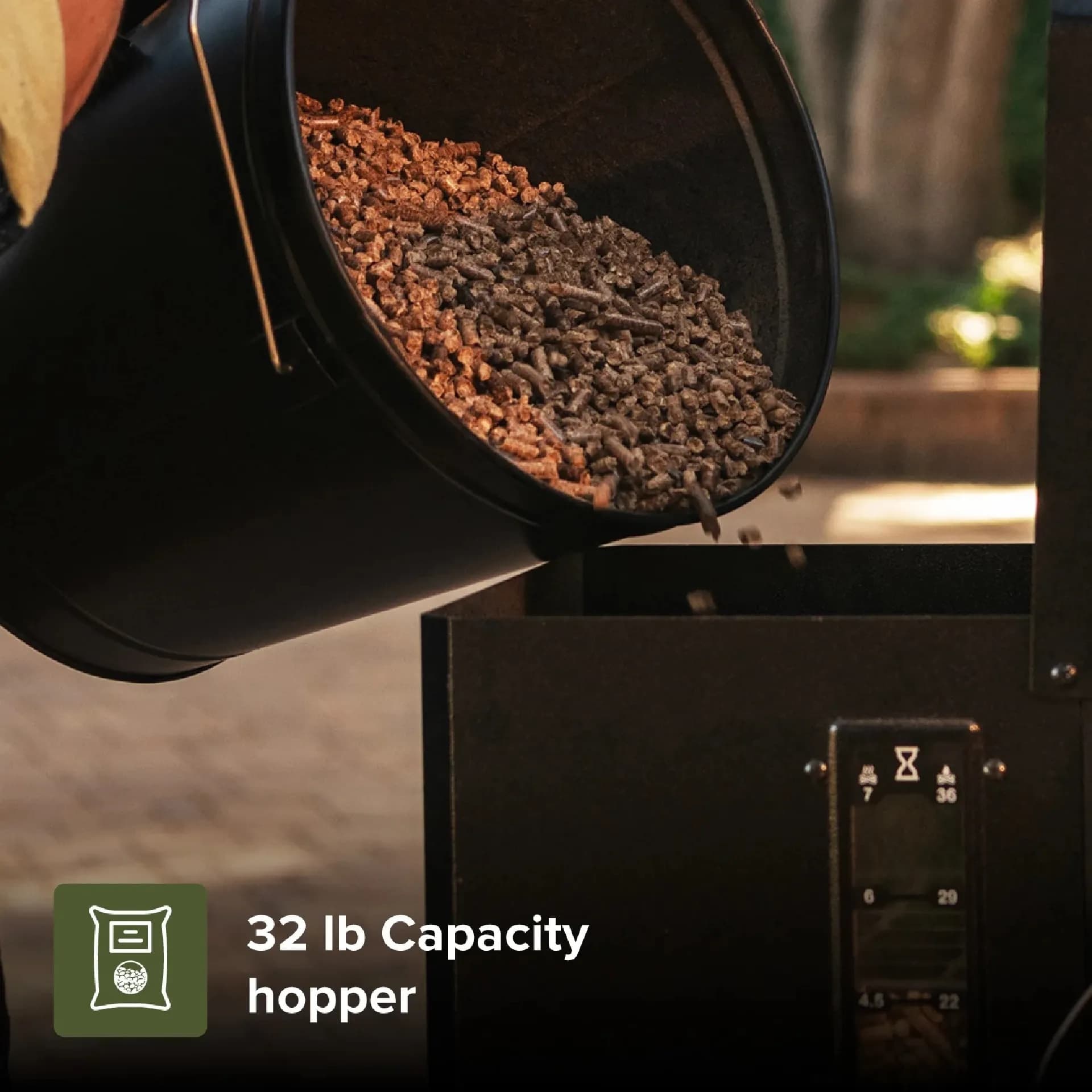
Whatever the manual says next, these three things come first. Fill the hopper with dry, food-grade hardwood pellets - not heating pellets, which are not intended for cooking. A 20 lb bag typically runs $12-$18 in the U.S., and a first burn-off plus a short seasoning cook will use a noticeable fraction of it, so budget for a second bag.
Next, open the lid and look into the fire pot. On a brand-new grill it should be empty and free of packing material or stray pellets. On a used grill, scoop out ash with a small cup or shop vac (only after the unit is fully cold). A fire pot packed with old ash chokes airflow, and poor airflow is the root cause of most temperature swings owners blame on the controller.
- Dry hardwood pellets, sealed and stored out of humidity
- A clean, empty fire pot and a clear grease tray
- Lid open, grill on a level surface, away from walls and overhangs
- Your phone or a notebook, so you can log controller settings
Step 1: Confirm You Have a Pellet Grill, Not the Charcoal Homestead
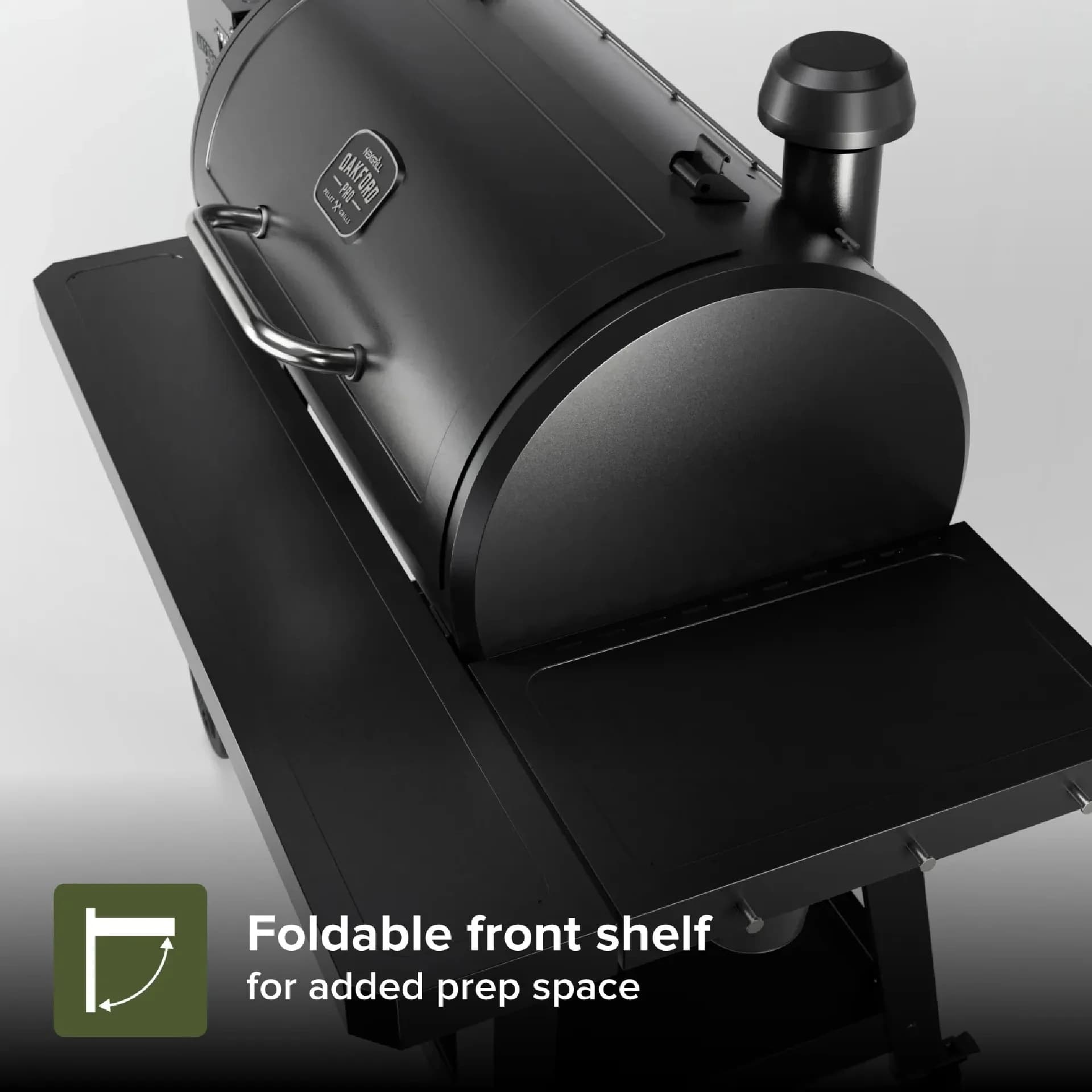
Nexgrill sells an Oakford Homestead 24, and it is a charcoal grill - a completely different fuel type with a vent-and-damper startup. It shares the Oakford name but none of the startup logic below. Before you follow any pellet procedure, confirm you see a hopper with an auger, a controller with Smoke and temperature settings, and a fan. If your unit has a charcoal grate and adjustable dampers instead, you have the Homestead and need the charcoal guide, not this one.
Step 2: Pull the Manual From the Two Real Sources (Brand Support and Retailer Guides Tab)
There are exactly two dependable places to get a document that matches your unit. The first is Nexgrill's own support channel via Nexgrill's contact page - send your model number and serial from the rating plate and request the use-and-care PDF. The second is the retailer product page for your exact grill; look for a "Use and Care Manual," "Info & Guides," or "Specifications" tab, which typically hosts the downloadable PDF next to the assembly video.
Match by product type and controller, not marketing name. If your manual hunt returns an Oakford 875 Pro or 1125 Pro document, that is usually the right family to follow - both are pellet smoker grills with the same startup and shutdown logic, and the same approach applies when tracking down a guide for your exact model. Browse the current Nexgrill product range to see which document set most closely resembles your unit.
Step 3: Prime the Auger and Light for the First Time (Lid-Open Rule)
This is the step that separates a clean first cook from a frustrating one. A new grill's auger tube is empty, so pellets have not yet reached the fire pot. Set the controller to Smoke (or the lowest setting) and let the auger feed until you hear pellets dropping into the pot - usually a couple of minutes, though it varies by unit. Never assume the pot has fuel just because the hopper does.
Then start the ignition cycle with the lid open. Leave it open until you see a steady flame and thin, bluish smoke. Only then close the lid and dial to your target temperature. A closed lid during initial light smothers the fire, produces thick white smoke, and can cause a temperature overshoot as unburned fuel ignites all at once.
Do not skip priming. A dry auger is the single most common cause of a first-start flame-out. If the grill shuts off shortly after ignition, stop, empty the pot, and repeat the prime with the lid open.
Step 4: Run the Burn-Off and Seasoning Cook Before Any Food Goes On
New grills ship with manufacturing oils on the interior surfaces. Run the unit at a moderate-to-high setting for roughly 30-45 minutes with the lid closed and nothing on the grates. That burn-off clears the residues. Then do a low-and-slow seasoning cook on the Smoke setting for about an hour - this lays down the first layer of seasoning on the cooking surfaces and lets you watch how your controller holds temperature before food is at stake.
Pellet Startup vs. Charcoal Startup: Why the Sequence Order Matters
| Stage | Pellet grill (Oakford) | Charcoal grill (Homestead 24) |
|---|---|---|
| Fuel prep | Fill hopper, prime auger to fire pot | Load chimney, light coals separately |
| Ignition | Controller start with lid open | Dump lit coals, adjust vents |
| Control | Digital setpoint via controller | Manual damper and vent tuning |
| Shutdown | Fan burn-off cycle, pot empties | Close vents, coals burn out |
The lesson: pellet grills move the thinking into the controller and the shutdown cycle, while charcoal grills move it into vent management. Following a charcoal procedure on a pellet unit - or vice versa - is where first cooks go wrong.
Common Mistakes That Ruin a First Pellet Cook
- No auger prime: flame-out within minutes of starting.
- Closed-lid initial light: smothered fire, dirty white smoke, temperature overshoot.
- Overfilled fire pot: a rich fire that runs hot and smoky.
- Ash not cleared between cooks: restricted airflow and erratic temps.
- Skipped shutdown: the next cook starts on a fuel-packed pot.
Try comparing two products side by side below to see which fits best - the startup routine is the same, but hopper size and cook capacity differ meaningfully across the Oakford family.
Once You've Weighed Two Options Against Each Other, Here's What Else Matters
You have matched your unit, primed the auger, and run a burn-off. The comparison tool likely showed you that the Oakford 875 Pro and 1125 Pro share a control philosophy while differing in hopper capacity and cooking area. Your decision now shifts from "which grill" to "how do I live with this grill season after season." That is where the shutdown cycle, maintenance rhythm, and capacity math come in.
Step 5: Learn the Shutdown Cycle Before You Close the Lid for the Night
Most pellet controllers include a shutdown mode that keeps the fan running to burn off pellets remaining in the fire pot. Run it every single time, even for a quick burger cook. If you flip the switch off directly, unburned pellets sit in the pot and become a fuel bed that can flash up at the start of your next session - the classic "flare on startup" complaint. Let the fan finish; it is usually a few minutes and it is the cheapest insurance in pellet cooking.
Tip: log your shutdown time alongside your cook time for the first month. Owners who can see the cycle happening stop skipping it, and temperature consistency improves noticeably.
Why Your Oakford Won't Hold Temp or Puts Out White Smoke
White, billowing smoke is almost always a combustion problem, not a pellet-quality problem. The three usual suspects are a lid closed too early during startup, a fire pot packed with ash, or pellets that have absorbed humidity. Address them in that order. Temperature swings on a pellet grill typically trace back to airflow: clear the pot, verify the fan runs during startup, and check that your grill is not boxed in against a wall where exhaust cannot escape.
If the controller shows a fault code, check the manual that matches your unit rather than a generic code list - setpoint behavior and sensor placement differ across models. Nexgrill support can confirm which document applies to your serial number.
Hopper Size and Cook Capacity: When a Smaller 875 Beats a Larger 1125
Bigger is not automatically better. If you cook for two to four people a few nights a week, the Oakford Pro 875 Pellet Smoker Grill runs a full rack of ribs or a spatchcocked chicken without forcing you to heat a large chamber for a small meal. Its smaller footprint also suits patios where an oversized unit would dominate the space. The Oakford 1125 Pro earns its size when you are routinely feeding a crowd, running two proteins at once, or doing overnight brisket cooks where hopper capacity translates into fewer refills at 3 a.m. Neither is "better" - they map to different households.
Seasoning, Ash, and Grease: The Maintenance Rhythm the Manual Assumes
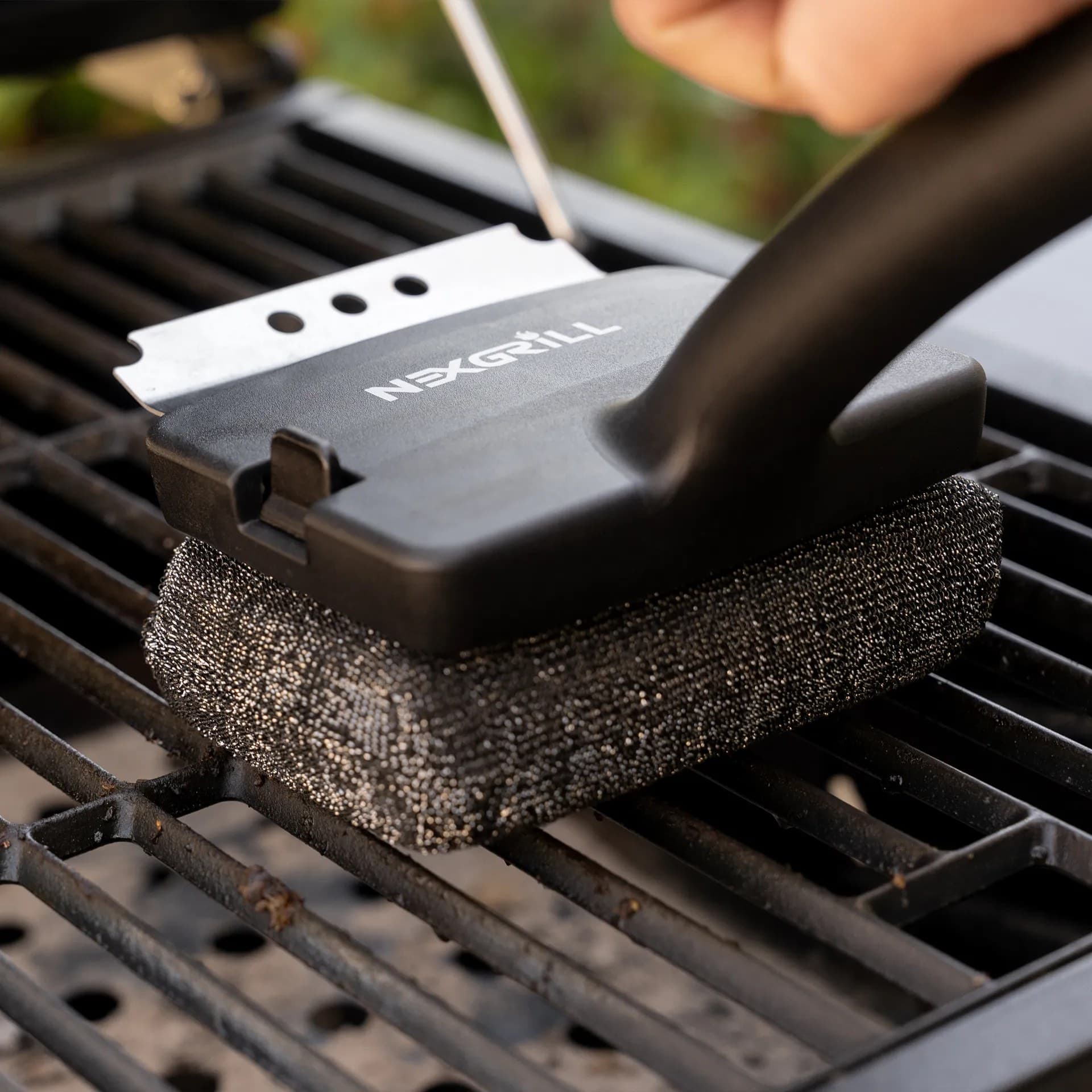
The manual assumes a rhythm that is easy to ignore and expensive to skip. After every few cooks, clear ash from the fire pot and the interior floor. After every cook, scrape the grease tray and empty the grease bucket before it becomes a fire hazard. Wipe the temperature probe clean so readings stay honest. Once a month in the season, check the hopper for fines and moisture, and confirm the lid gasket still seals. These tasks take minutes and directly control the temperature consistency you paid for.
Quick Pre-Cook Checklist for Every Oakford Pellet Session
- Fire pot empty and clear of ash
- Hopper full enough for the planned cook
- Grease tray scraped, bucket in place
- Controller set to Smoke, lid open, auger primed
- Steady flame and thin blue smoke before lid closes
- Shutdown cycle run at the end, every time
Where to Get Manuals and Product Info You Can Actually Trust
Start with the manufacturer itself - Nexgrill has been building outdoor cooking equipment since 1993, and its support channel is the authoritative source for use-and-care documents. Nexgrill's about page gives context on the brand and its product families, while the product pages carry the specifications and current model lineup. For a model string that does not resolve, contact support with your rating-plate data rather than downloading an unverified file.
A "930" label that does not appear on Nexgrill's site may be a retailer SKU or renamed model. Match by product type and controller - the startup and shutdown sequence in this guide applies across the Oakford pellet family.