Nexgrill Oakford 36A Review: What It Really Is and How to Run an Oakford Pellet Grill
A practical, no-guesswork guide to the Oakford name puzzle, plus step-by-step setup, first-cook temperatures, and the mistakes that ruin pellet-smoked brisket.
In This Article
Name First, Specs Second
Setup and Seasoning Steps
Cook Targets and Mistakes
Is the Nexgrill Oakford 36A Actually a Real Model?
No product carrying the exact name "Nexgrill Oakford 36A" appears in Nexgrill's current catalog. The Oakford name is real; the "36A" suffix is not part of any manufacturer listing. What exists is a genuine Oakford line from Nexgrill, a California outdoor cooking company founded in 1993, covering pellet smoker grills and one heavy-duty charcoal grill.
Nexgrill's Oakford family is a pellet-and-charcoal line today. No gas Oakford exists, and no "36A" model is listed by the brand at the time of writing.
The Three Oakford Products Nexgrill Currently Lists
The confirmed products are the Oakford Pro 875 Pellet Smoker Grill, the Oakford 1125 Pro Pellet Smoker Grill, and the Oakford Homestead 24 Heavy Duty Charcoal Grill. Two burn wood pellets through a controller-driven auger; one burns charcoal with manual vent control. There is no third fuel option in the range.
Why "36A" Shows Up in Search Results
The suffix most likely leaked in through marketplace or reseller naming, forum shorthand, or cross-contamination with Nexgrill's 36-inch-class griddle models - the Daytona 36" 4-burner flat top shares that number and is a completely different product. Listings using an unverified model name are harder to warranty and harder to match to replacement parts. If a seller insists a 36A exists, ask for the printed model number on the unit's data plate.
Five Things to Confirm on Any Oakford Listing Before You Pay
1. The Exact Model Number and Fuel Type
Get the model number off the rating label, not the marketing title. Confirm whether the unit is pellet, charcoal, gas, or griddle - a pellet smoker and a 36-inch griddle share nothing but the brand.
2. Cooking Area and Grate Material
Total square inches and grate material drive capacity and searing. Check the brand's own product page for published figures; if a third-party listing quotes a number that does not match, trust the manufacturer page.
3. Hopper Capacity and Controller Type
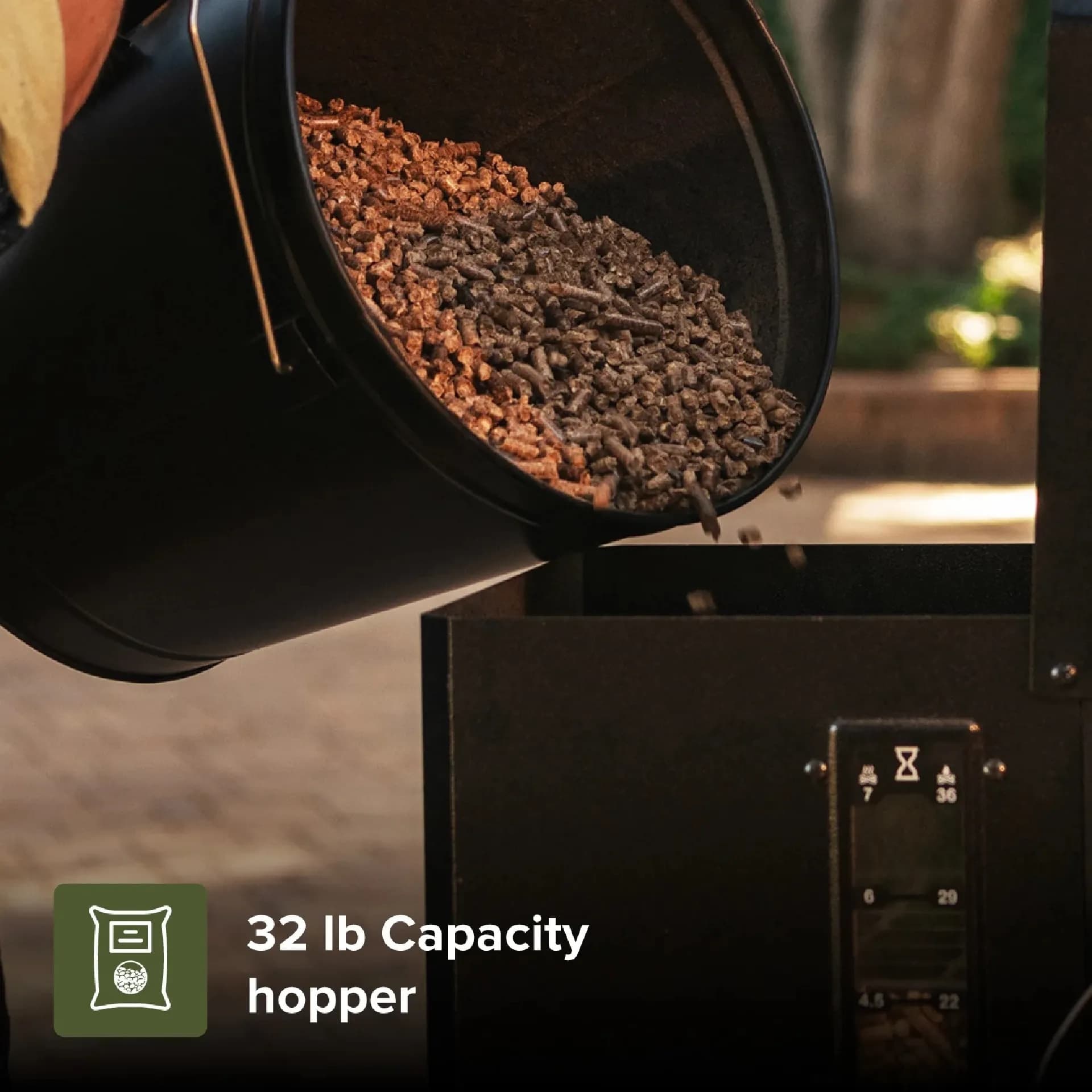
Hopper size determines how long an unattended smoke can run - a long brisket cook can consume pellets for 12 hours or more. The controller type (basic dial versus digital setpoint) determines how tightly you can hold a target temperature.
4. What Is Included in the Box
Covers, temperature probes, and front shelves are sometimes bundled and sometimes sold separately - the 875 listing explicitly bundles a cover, which changes the real cost comparison between two otherwise similar grills.
5. Warranty Terms in Writing
Warranty coverage on pellet grills is split by component - burn pot, controller, and auger motor often carry different terms. Read the warranty document attached to the specific model.
Step-by-Step: Setting Up and Seasoning a New Oakford Pellet Grill
Do not cook food on a factory-new pellet grill. The first firing is a burn-off to clear manufacturing oils - not dinner.
Step 1 to 3 - Unbox, Position and Check the Fire Pot
- Step 1 - Unbox and inventory. Match every part against the parts list before assembly. Missing hardware is the most common setup delay.
- Step 2 - Position it. Place the grill on a level, non-combustible surface with clearance on all sides, away from walls, railings, and overhead structures.
- Step 3 - Inspect the fire pot. Remove the grate and heat deflector, and confirm the fire pot is empty and the auger opening is clear of packing material.
Step 4 to 6 - Prime the Auger, Load Pellets and Run the Burn-Off
- Step 4 - Fill the hopper. Use dry, fresh hardwood pellets only. Do not mix in chips, chunks, or damp pellets.
- Step 5 - Prime the auger. Run the controller's feed function until pellets drop into the fire pot. The feed tube is empty from the factory, and skipping this step is why so many new grills appear to fail on first start.
- Step 6 - Run the burn-off. Set roughly 350-400°F and run 30 to 60 minutes with the lid closed to burn off manufacturing residue.
Step 7 to 8 - Verify Temperature Accuracy and Apply Cooking Oil
Step 7: compare a trusted probe reading at grate level against the controller's displayed temperature. A 10-25°F variance is common on pellet grills of every brand, so learn your offset. Step 8: once cool enough to handle, wipe the grates with a high-smoke-point oil such as canola to lay down a seasoning layer.
What to Expect on Your First Cook: Temperatures and Timings
Heat-Up Time and Temperature Swing at Low Settings
A pellet grill typically reaches cooking temperature in about 10 to 15 minutes. At 225°F, expect a wider swing than on a gas grill - a controller holding "225" may cycle between roughly 210°F and 245°F at grate level. That is normal pellet combustion behavior, not a defect.
Brisket, Ribs and Poultry Targets in One Table
| Cook | Typical Smoker Temp | Typical Time | Pull Target |
|---|---|---|---|
| Packer brisket, 12-14 lb | 225°F | 12-16 hours | 200-205°F, then rest |
| Pork ribs | 225°F | 3-2-1 method | Bend test, ~195°F |
| Spatchcock chicken | 375°F | 45-60 min | 165°F in the breast |
Those pull temperatures come from USDA FSIS guidance - 165°F for poultry and 160°F for ground meats - while whole cuts of beef and pork are safe at 145°F with a rest. Treat the times as typical ranges, not guarantees; wind, ambient temperature, and pellet quality all move the clock.
Typical burn-off length on a new pellet grill before its first cook
Compare Two Oakford Options Side by Side Before You Decide
The 875 and the 1125 share a fuel source and controller philosophy but differ in capacity and bundled accessories, and the Homestead 24 sits in an entirely different lane as a charcoal cooker. Try comparing two products side by side below to see which fits best - that is where the capacity-versus-cost trade-off becomes obvious.
Once You Have Weighed Two Grills Against Each Other, Here Is What Else Matters
Comparing two Oakford models tells you which one you want. It does not tell you whether you will still be happy with it after a season. That comes down to three things: whether the model suits your cooking rhythm, whether you choose the right wood, and whether you avoid the operational mistakes behind most disappointing results.
Who Each Oakford Model Actually Suits
The Weeknight Cook Who Wants Smoke Without the Fuss
If your realistic pattern is two or three cooks a week - chicken thighs, sausages, a pork loin, a couple of steaks - you want the smaller, more responsive option and should not pay for capacity you will not use. A pellet grill only earns its keep when firing it up is easy enough that you do it on a Tuesday.
The Weekend Brisket Cook Who Needs Capacity
A 12-to-14-pound packer brisket plus a tray of burnt ends is a space problem before it is a temperature problem. If you regularly cook for eight or more, the larger Oakford pellet model is the rational pick, and the bundled cover on the 875 matters more than it sounds - a pellet grill left outside through a wet winter is a pellet grill with a seized auger by spring.
The Charcoal Traditionalist Who Wants Oakford Build Quality Only
Some cooks do not want a controller making decisions for them. The Oakford Homestead 24 is the answer: direct charcoal heat, manual vent management, no electronics to fail. The trade-off is honest - you gain flavor control and lose overnight unattended cooking, because a charcoal fire needs human attention.
Wood Pellet Choices and How They Change Flavour
Hickory, Mesquite, Apple and Cherry Compared
| Wood | Character | Pairs Best With |
|---|---|---|
| Hickory | Bold, bacony, assertive | Pork ribs, brisket, bacon |
| Mesquite | Sharp and intense | Beef, short hot cooks |
| Apple | Mild, sweet, subtle | Poultry, pork loin, fish |
| Cherry | Sweet with a rosy colour | Chicken, duck, pork |
| Blends | Balanced, all-purpose | Everyday cooking |
Blends, Storage and What Happens When Pellets Get Damp
Pellets are compressed sawdust, so they are hygroscopic - they absorb moisture from the air. Damp pellets crumble into dust, and that dust bridges and jams the auger, the root cause of a large share of "my pellet grill stopped feeding" complaints. Store pellets in an airtight container or their sealed bag, keep them off a concrete floor, and never top off a hopper with pellets that have sat open for months. If switching woods mid-cook, empty the hopper first rather than layering flavors by accident.
Pellet dust at the bottom of a bag is not free fuel. Sift or discard it, or it will clog the auger feed.
Six Pellet-Grill Mistakes That Ruin Otherwise Good Cooks
Skipping the Burn-Off and Cooking on Factory Oils
Manufacturing oils and metal residue sit on every new grill. The burn-off removes them. Cooking immediately means your first meal tastes of machine shop.
Overloading the Fire Pot, Then Blaming the Controller
Too many pellets in the pot at ignition produces a heavy, smoldering fire that overshoots temperature and then chokes. Let the auger feed the pot naturally and start with a modest pile.
Opening the Lid Every Fifteen Minutes
Every lid opening dumps heat and forces the controller to recover. On a long brisket cook, constant checking can add an hour or more. Cook by probe reading, not curiosity.
Letting Ash Build Up in the Fire Pot
Ash insulates the fire and restricts airflow. On long cooks, empty and vacuum the fire pot periodically; a clogged pot produces flame-outs and wild temperature swings that look like controller failure but are not.
Chasing Exact Temperatures Instead of a Range
Pellet combustion cycles. Fighting a 20-degree swing with constant controller changes makes results worse. Pick a target, accept the range, and manage the cook by internal temperature.
Shutting Down Without the Cool-Down Cycle
Cutting power while the fire pot is still burning leaves unburned pellets to smolder and can cause a dangerous flare on the next startup. Always run the controller's cool-down cycle and let the fan burn out the pot before unplugging.
Low-and-Slow Versus High-Heat: Running One Grill Two Ways
A pellet grill is not only a smoker. At 225°F it is a low-and-slow barbecue machine for brisket and ribs. Cranked to 375-450°F it becomes a convection oven that roasts spatchcock chicken, vegetables, and even finishes a reverse-seared steak. Raising a pellet grill from 225°F to 400°F takes several minutes and consumes a burst of pellets, so plan searing as a deliberate second phase. Learn both modes and one cooker covers weeknight roasting and weekend barbecue.
A Practical Pre-Purchase Checklist
- Confirm the real model name and number on Nexgrill's own product pages - treat unverified suffixes like "36A" with caution.
- Match capacity to your largest realistic cook, not your imagined one.
- Check whether a cover and probes are bundled or extra.
- Read the warranty document for the specific model, including component-level terms.
- Budget for pellets and an airtight storage bin from day one.
- Plan where the grill lives - level, clear of structures, protected from weather.
Done properly, an Oakford pellet grill is a genuine two-mode cooker that handles a 14-hour brisket and a 45-minute chicken with the same hardware. Explore the current Oakford range on Nexgrill's product catalog, and see the brand background on the About Nexgrill page.
Sources
- Oakford Pro 875 Pellet Smoker Grill with Cover - Nexgrill
- Oakford 1125 Pro Pellet Smoker Grill - Nexgrill
- Nexgrill Oakford Homestead 24 Heavy Duty Charcoal Grill - Nexgrill
- About Nexgrill - brand background
- USDA FSIS - Safe Minimum Internal Temperature Chart
- FoodSafety.gov - Safe Minimum Internal Temperatures