Explore top models, key features, and expert tips to find the perfect wood pellet grill for your outdoor cooking needs.

Here's what sets us apart from the competition
We position ourselves as delivering high-end outdoor cooking features and performance without premium-brand pricing, emphasizing “Quality Grills. Unbelievable Value.”
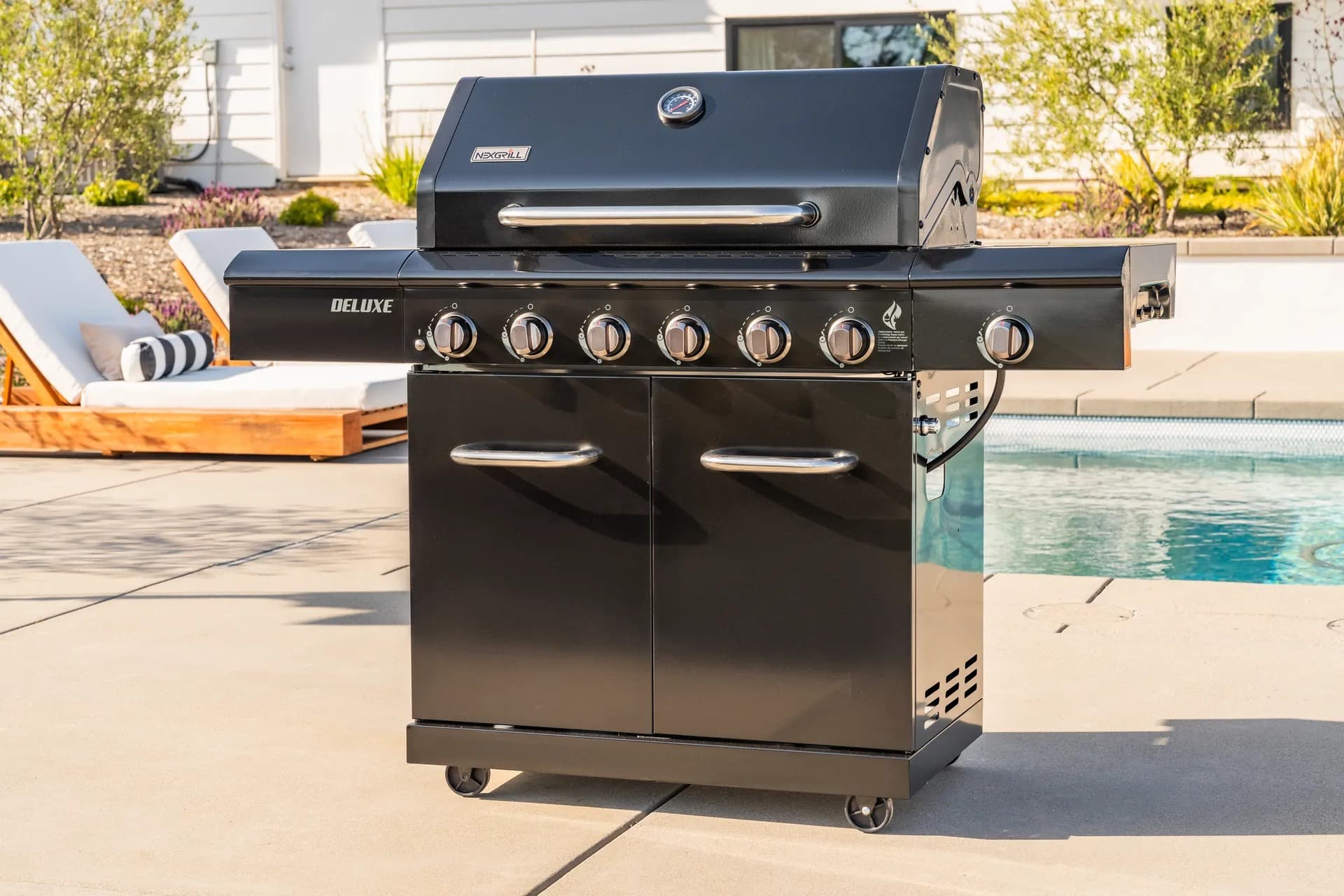
We offer gas grills, pellet grills, griddles, smokers, pizza ovens, portable/tabletop grills, electric grills, accessories, and replacement parts — allowing customers to stay within one ecosystem for all outdoor cooking needs.
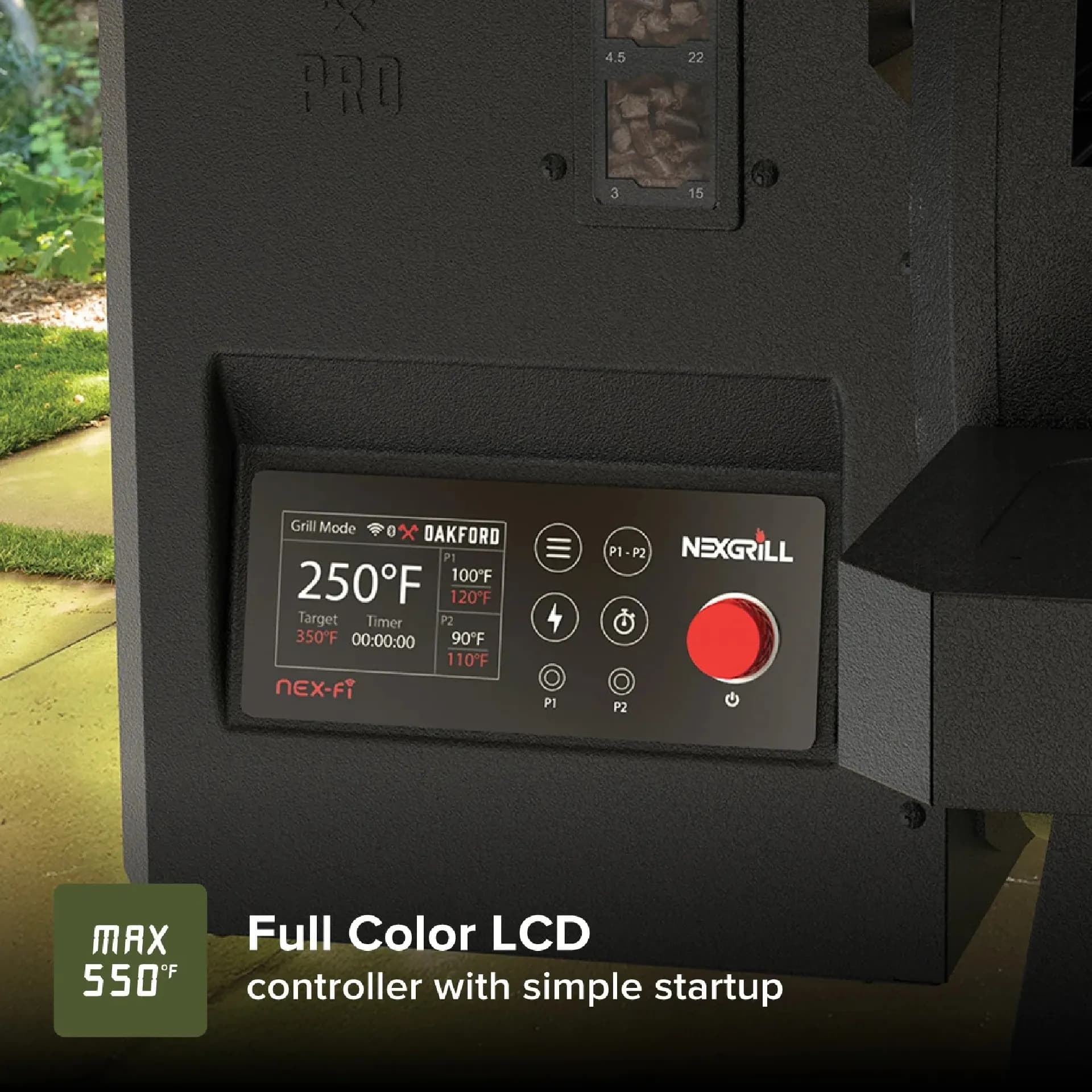
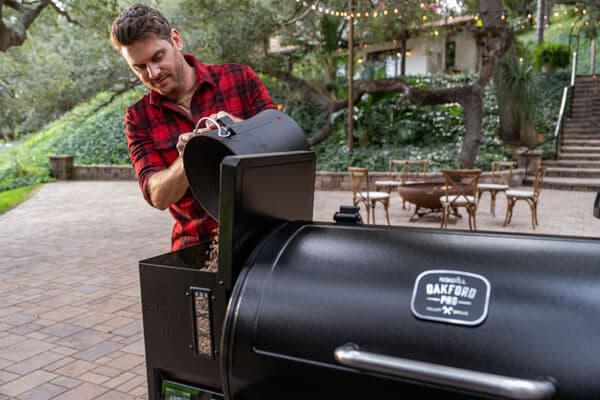
We differentiate ourselves through smart grilling products like the Oakford smart pellet grill, including app-connected cooking controls and modern outdoor cooking technology.

Expert tips, buying guides, comparisons, and inspiration for choosing and getting the most out of your grill.

Practical guides for cleaning, maintenance, common grill issues, and performance optimization.

Step-by-step grilling recipes, cooking techniques, and meal ideas for every occasion and skill level.

Backyard entertaining ideas, seasonal grilling inspiration, and stories that celebrate outdoor cooking culture.

Helpful articles covering grilling tools, cookware, maintenance gear, and must-have accessories for outdoor cooking.

Find griddle recipes, cooking techniques, cleaning tips, and outdoor meal ideas designed for Nexgrill griddles.
Find answers to common questions
Pellet grills offer versatility by allowing you to smoke, grill, and bake with precise temperature control. They use wood pellets as fuel, providing a unique flavor to your food that is difficult to achieve with other types of grills.
Consider factors such as cooking capacity, temperature range, and additional features like digital controls or Wi-Fi connectivity. Assessing your cooking habits and space availability can also help in selecting a suitable model.
You can use a variety of food-grade wood pellets, including oak, hickory, mesquite, cherry, and apple. Each type of wood imparts a different flavor to your food, allowing for a unique grilling experience.
Regular cleaning involves emptying the ash pan, cleaning the heat diffusers, and wiping down the exterior. It's also important to check for any pellet obstructions in the hopper and ensure the grill's components are in good working order.
Nexgrill pellet grills are designed to smoke effectively, offering low-temperature settings to infuse food with rich, smoky flavors. They also provide adjustable temperature controls to suit various cooking styles.
In This Article
Top Wood Pellet Grills
Key Features to Consider
Maintenance Tips
A wood pellet grill with a digital controller sits in a sweet spot that many backyard cooks are actively looking for right now: the flavor profile of real hardwood fuel, but with much tighter temperature management than a basic analog setup. For buyers who are tired of chasing temperature swings or constantly babysitting a fire, digital control changes the experience from hands-on fire tending to repeatable cooking. That matters whether you are smoking ribs for four hours, finishing a pork shoulder overnight, or simply wanting a reliable weeknight chicken dinner without guesswork.
What makes this category especially appealing is that pellet grills are no longer just for dedicated barbecue hobbyists. Digital controllers have made them easier to use, easier to learn, and far more approachable for families who want consistent results without a steep learning curve. On a practical level, that means you can set a target temperature, feed pellets automatically, and spend more time on food prep and serving rather than constantly adjusting vents or dampers. In the United States, that convenience is a major part of the value proposition because many buyers want one grill that can handle smoking, roasting, baking, and searing with minimal complexity.
Nexgrill’s brand perspective is built around accessible outdoor cooking that invites more people to gather around the table, and that is a useful lens for evaluating pellet grills too. The best purchase is not necessarily the most expensive one; it is the one that fits your cooking habits, your space, and your appetite for control. A digital controller can be a simple onboard dial or a more advanced PID system with tighter feedback, and those details often matter more than flashy marketing terms. If you understand how the controller behaves, you can predict how the grill will perform on a windy patio, during a cold shoulder-season cook, or on a long smoke where consistency matters most. Nexgrill’s brand guidelines emphasize approachable, dependable outdoor cooking and a welcoming gathering around food, which is exactly the mindset that helps buyers choose a grill for real household use rather than showroom specs alone .
Can cover smoking, roasting, and baking when the controller is dialed in well.
Tip: Focus first on controller quality and hopper capacity, then compare cooking area and add-on features. That order usually leads to better long-term satisfaction than chasing the highest advertised temperature range.
The first feature to evaluate is the controller itself. A basic digital controller lets you select a temperature and maintain it automatically, but a PID controller typically reacts more intelligently to temperature changes by adjusting fuel feed and airflow more precisely. In practice, that can mean fewer overshoots, steadier low-and-slow smoking, and less wandering when outdoor conditions shift. If you live in a region with changing weather, or you like cooking overnight, a tighter controller is worth prioritizing even if it costs more.
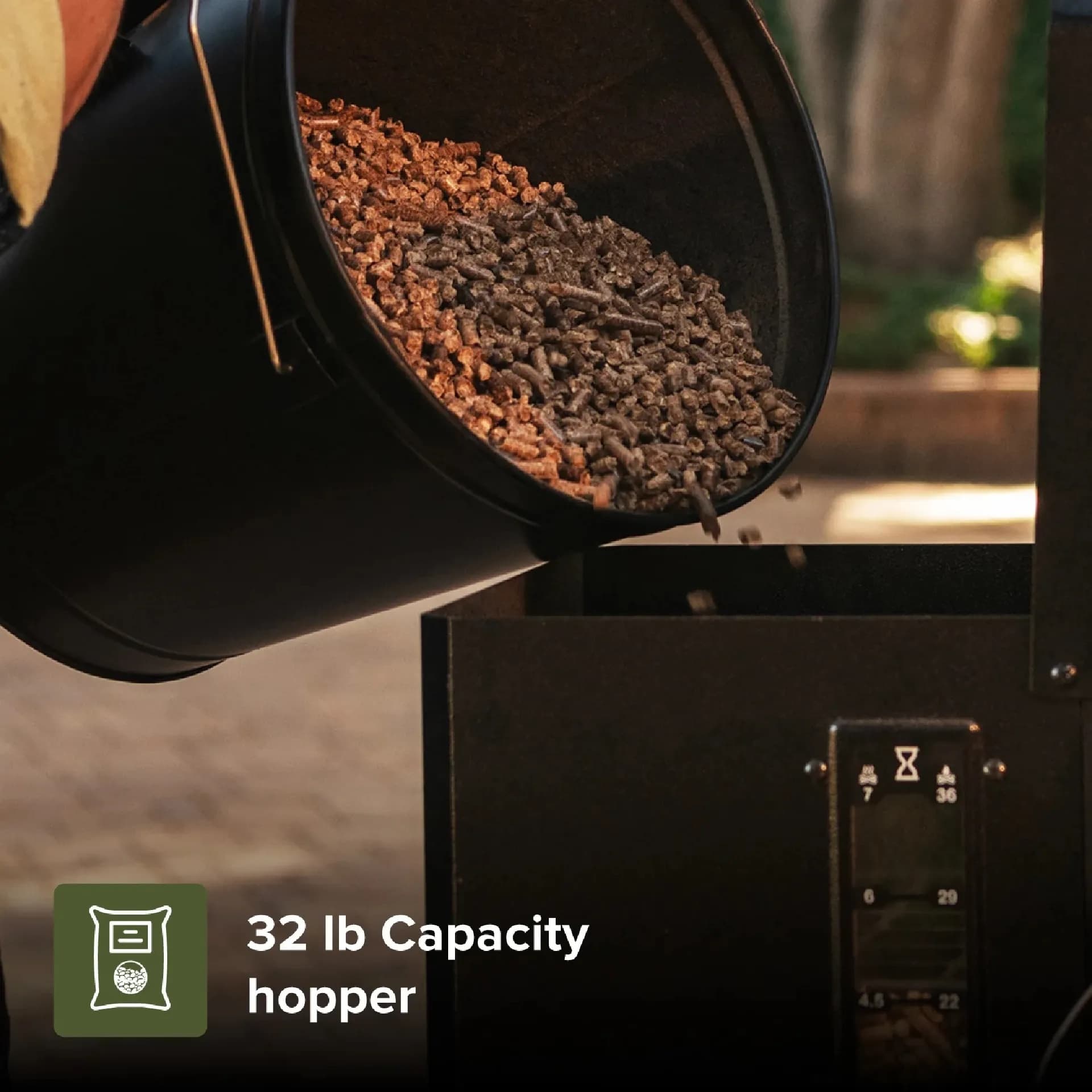
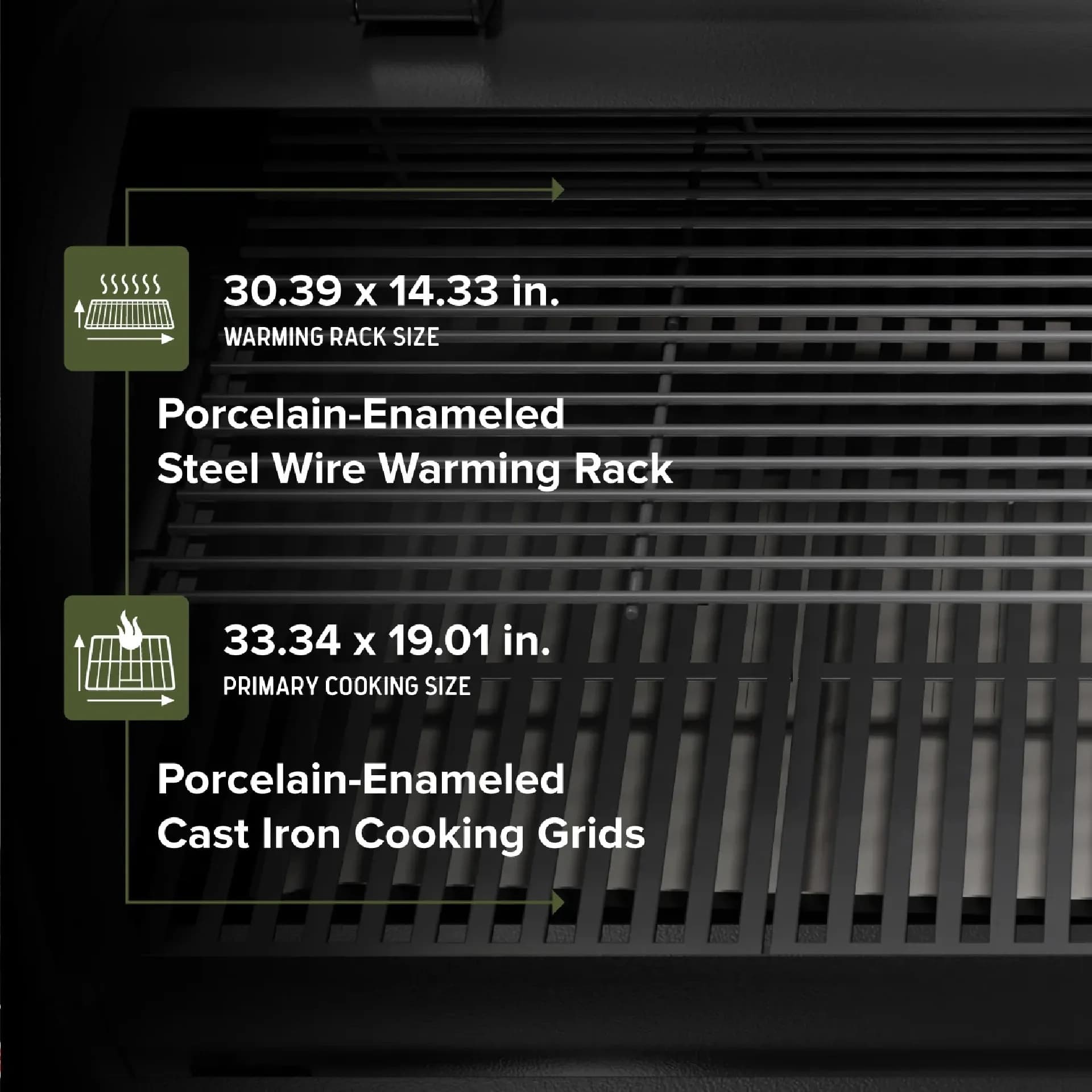
Cooking space is the second major consideration. A compact pellet grill may be perfect for two to four people and occasional meal prep, while a larger unit is better if you regularly cook for parties or want room for multiple racks of ribs. Think in terms of real menus, not just square inches. A grill that fits two pork butts comfortably is more useful than one that looks huge but becomes awkward to load or clean. Hopper size matters for the same reason: a larger hopper extends unattended cook time, which is especially helpful when you are smoking brisket or turkey over many hours.
WiFi connectivity and smart app integration have become common selling points, but they are most useful when they solve a real problem. Remote monitoring helps if you want to check temperatures from inside the house, and grill alerts can reduce the need to stand outside in bad weather. Still, app features should be treated as a convenience layer, not the main reason to buy. A well-built grill with a dependable digital controller is better than a connected grill that struggles to hold temperature.
Construction details deserve equal attention. Look for a lid and body that feel solid, grates that can retain heat effectively, a grease management system you can actually empty without frustration, and a pellet feed path that is easy to inspect. If a grill has more precise temperature control but a poorly designed cleanup path, ownership can become tedious fast. The smartest buyers compare not just headline features, but also how easy the grill will be to live with after the first few cooks.
| Feature | Why it matters | What to prioritize |
|---|---|---|
| Digital controller | Sets and holds cooking temperature automatically | Choose a clear interface with stable temperature response |
| PID control | Improves precision and reduces swings | Best for long smokes and variable weather |
| Hopper capacity | Affects how long the grill runs unattended | Larger if you cook brisket, pork shoulder, or turkey |
| WiFi/app support | Adds remote monitoring and alerts | Useful if convenience matters, not essential for everyone |
Warning: Do not buy by controller type alone. A precise controller cannot fully compensate for poor heat retention, undersized hopper capacity, or a grill body that leaks heat in cold weather.
If you are comparing Pit Boss, Traeger, Z Grills, and Recteq, the meaningful difference is usually not whether they are all pellet grills; it is how they approach control, build quality, and user experience. Traeger is often the brand that newer buyers recognize first, and its pellet-grill lineup is positioned around a broad range of user-friendly models and smart-connected options. For people who want a familiar name and a polished ecosystem, that can be appealing. Pit Boss commonly attracts shoppers looking for a practical feature set and approachable price tiers, which makes it a frequent value competitor in the category. Z Grills tends to show up in conversations around budget-conscious buyers who still want digital control and straightforward pellet cooking. Recteq has built a following among buyers who prioritize sturdier construction and more advanced controller behavior, especially when repeatability is a top concern.
The better way to compare these brands is to ask what kind of cooking life you expect from the grill. If you want to smoke on weekends and occasionally roast vegetables or chicken for the family, a midrange model from any of these brands may be sufficient. If you plan to run long brisket cooks, cook year-round, or rely on the grill as your primary outdoor cooker, you will feel the difference in how the controller reacts and how well the grill retains heat. In that case, a stronger controller and more durable body construction can be worth paying for. Buyers should also compare the availability of replacement parts, the clarity of the digital interface, and whether the grill has enough room for the foods they actually cook most often.
Consumer feedback often highlights the same recurring themes: temperature accuracy, ease of assembly, startup reliability, and how simple it is to clean after cooking. Those are not glamorous features, but they are the things people remember after a few months of ownership. Before making a decision, look at the brand’s pellet grill collection, read recent reviews, and compare how each model handles the low-temperature range where pellet grills earn their reputation. The largest grill is not always the best fit if you do not need the space; the most advanced controller is not always the best if you only smoke a few times a year.
| Brand | Typical appeal | Best for |
|---|---|---|
| Traeger | Recognized ecosystem and connected features | Buyers who value a polished user experience |
| Pit Boss | Feature-rich models at accessible price points | Shoppers balancing value and capability |
| Z Grills | Budget-friendly digital pellet options | First-time pellet grill buyers |
| Recteq | Sturdy build and control-focused designs | Repeat cooks and precision-minded users |
A common mistake is assuming that a lower purchase price means the grill will feel flimsy or unreliable, and that is not always true. The budget end of the pellet market has become much more capable, especially for buyers who mainly want simple digital control and dependable smoking performance. The key is to understand which compromises are acceptable. You may give up some app features, a heavier lid, or premium finishes, but you should still expect a controller that can hold a reasonable target temperature and a hopper that supports the length of your normal cooks.
Budget-friendly shoppers should pay close attention to the ratio between cooking area and controller quality. A large, low-cost grill can be tempting, but if the temperature swings are wide or cleanup is frustrating, the savings may disappear in day-to-day use. If your household mostly cooks chicken thighs, ribs, salmon, and vegetables, a modestly priced grill with solid digital control may be a better investment than a larger premium model you will not fully use. One practical strategy is to define your minimum must-haves before comparing products: consistent temperature range, readable control panel, enough hopper capacity for your longest cook, and easy access to grease and ash management.
Budget also includes fuel cost and long-term ownership. Pellet grills use hardwood pellets, so the ongoing cost of fuel should be part of your buying decision. A grill that is efficient with pellets and holds heat well may be cheaper to own than a bargain model that burns through fuel quickly. That is why the cheapest sticker price is not necessarily the cheapest grill over time. Buyers in the United States should compare total ownership cost, including pellets, covers, replacement parts, and any accessories they know they will need.
Tip: For a first pellet grill, choose the model that does the basics well. A stable controller and easy cleanup usually matter more than advanced features you may not use right away.
A digital controller can make cooking simpler, but it does not remove the need for regular care. In fact, pellet grills often perform best when owners build a simple maintenance routine. Empty the ash, keep the fire pot clear, and inspect the hopper area for sawdust buildup that can interfere with feeding. If the auger is struggling to move pellets, the controller may appear to be the problem when the real issue is physical blockage. Regular cleaning also helps preserve flavor because old grease and residue can affect the next cook.
For long-term longevity, weather protection is a major factor. Moisture is hard on pellets, and wet pellets can swell, jam, or produce inconsistent heat. Store fuel in a dry area, keep the hopper covered when the grill is not in use, and use a fitted cover when the grill lives outdoors. It also helps to run the grill periodically through higher-temperature cycles, because that can burn off residue and keep the fire path cleaner. Owners who follow these habits usually get more consistent results and fewer surprises when it is time to cook.
Digital components deserve attention too. If the display becomes hard to read or the controller seems unresponsive, check power connections, probe placement, and any error codes before assuming a major failure. The good news is that many issues are simple to diagnose if you understand the basics. Treat the grill as a cooking appliance with moving parts and electronics, not just a metal box that burns pellets, and it will usually reward you with better performance over time.
The best way to buy a wood pellet grill with a digital controller is to match the controller’s strengths to your cooking habits. Start with temperature precision, cooking space, hopper capacity, and ease of cleaning. Then compare brand ecosystems, smart features, and price ranges only after you know what kind of outdoor cooking you will actually do. If you want repeatable results with less effort, a digital pellet grill is one of the most practical upgrades you can make to a backyard setup.
For many households, the right grill is the one that can deliver both weekday convenience and weekend performance without becoming complicated to own. Once you know your priorities, compare two products side by side below to see which fits best:
Once you have compared two grills side by side, the next step is understanding what the digital controller is actually doing behind the scenes. In a pellet grill, the controller governs the feed rate of pellets into the fire pot and helps regulate the fan and ignition cycle, which together shape how much heat the grill produces. That means your chosen temperature is not just a number on a screen; it is a feedback loop between fuel, airflow, and sensing. For buyers, that matters because controller behavior often explains why one grill feels steady and another seems to drift during the same cook.
The simplest controllers do a fine job for everyday smoking, but they may hold a wider temperature band than a premium PID-style controller. That difference becomes more noticeable when you cook something that takes many hours, such as pork shoulder or brisket, where a steady environment helps protect texture and reduces the need to constantly compensate. If you mostly cook burgers and chicken thighs, a basic digital controller may be enough. If you want to do overnight smokes or trust the grill during a long family gathering, a more responsive system is easier to live with. The controller is also where you first notice the value of clear display logic: an interface that is easy to read in sunlight or at dusk is more useful than one packed with settings you never touch.
Tip: Look for a controller that is simple enough to use on day one but precise enough to support longer cooks on day one hundred. Ease of use and control are not opposites.
WiFi is one of the most talked-about features in modern pellet grills, but it helps to separate convenience from necessity. Remote temperature monitoring is helpful when you are inside preparing sides, helping kids with homework, or waiting for guests to arrive. Smart integration can also send alerts if the grill temperature moves outside your chosen range. That said, WiFi is only valuable if the grill’s core temperature control is already dependable. Buyers sometimes overpay for app features and underinvest in controller quality, which can create frustration later.
A good smart grill ecosystem should make the cooking process more transparent, not more complicated. If an app can show probe readings, alert you when the grill reaches a target temperature, and help you manage cook stages, it may genuinely improve the ownership experience. But if pairing the device is frustrating or alerts are unreliable, the novelty fades quickly. For that reason, it is smart to treat smart features as a secondary buying factor after build quality and controller stability. When comparing models, ask whether the smart tools are integrated cleanly, whether firmware updates are supported, and whether the grill still functions well without the app.
| Smart feature | Buyer benefit | Best use case |
|---|---|---|
| WiFi monitoring | Check temperatures from inside the house | Long smokes and multi-tasking cooks |
| App alerts | Notifies you if temp changes | Overnight or extended sessions |
| Probe integration | Tracks food doneness more easily | Brisket, pork shoulder, turkey |
Reviews are most helpful when you read them for patterns rather than isolated opinions. Across pellet grills, the same themes appear again and again: people praise even heat and easy set-and-forget cooking, and they criticize temperature drift, difficult startup routines, or confusing cleanup. A single five-star review can be less informative than a dozen comments mentioning the same hopper jam or the same controller strength. Consumer-focused ratings collections can help you spot the recurring issues faster than product pages alone because they reflect real ownership instead of marketing language .
When reading reviews, pay close attention to whether the buyer cooked in conditions similar to yours. A grill that performs well in a mild climate may feel different on a windy deck or in a colder region. Also note the foods being cooked. Someone who only makes chicken breasts may not notice the same controller behavior that a brisket cook sees over ten hours. The best review research is comparative: look for mention of assembly, startup, app reliability, heat consistency, pellet consumption, and cleanup. Those details tell you more than generic praise or frustration. For additional product research, brand collections from Pit Boss, Traeger, Z Grills, and Recteq offer a useful baseline for feature and pricing comparison across the category .
A digital pellet grill shines when you use it for techniques that benefit from steady heat and wood-fired flavor. The most obvious use case is low-and-slow smoking for pork shoulder, ribs, or brisket. But pellet grills are also excellent for roasted vegetables, chicken quarters, salmon, and even baked dishes that benefit from gentle convection. For weekday dinners, try running the grill at a moderate temperature to cook chicken thighs while a pan of vegetables roasts alongside them. For weekends, set up a longer smoke with a water pan and a probe thermometer so you can monitor doneness without opening the lid repeatedly.
The best recipe strategy is to think in temperature zones. Many pellet grills allow you to cook low for smoke flavor, then finish hotter for texture. That is useful for pulled pork, reverse-seared steaks, and chicken that needs crisp skin after a slower start. If your grill supports a stable digital controller, these transitions are easier to manage because the grill responds predictably when you adjust setpoints. A simple recipe example is salmon at a moderate temperature with a brown sugar and mustard glaze, followed by a short finish to set the surface. Another good test recipe is smoked sausage with peppers and onions, which helps you learn how your grill handles both direct heat and a slightly longer cook.
The most common pellet grill problems are usually mechanical rather than mysterious. If the grill will not ignite, check power, pellet flow, and whether the fire pot has excess ash blocking airflow. If temperature is swinging too much, inspect the probe and make sure the lid is not being opened too often early in the cook. If pellets are not feeding consistently, moisture may be the culprit, or the hopper may have accumulated dust that needs to be removed. These are the kinds of issues that are easier to solve when you understand how the digital controller and fuel delivery system work together.
One practical approach is to isolate the variable. Start with dry pellets, a clean fire pot, and a stable power source. Then test the grill at a moderate target temperature and observe whether it holds steady before moving to a more ambitious recipe. If the problem persists, the user manual for your specific model should guide you through error codes or reset steps. You do not need to be a technician to handle routine troubleshooting, but you do need to keep the grill clean, dry, and properly loaded with pellets. That simple discipline prevents many of the issues buyers worry about after purchase.
For U.S. buyers, the best place to buy a wood pellet grill with a digital controller depends on whether you value selection, shipping convenience, or in-person inspection. Online shopping often gives you access to the broadest lineup and the easiest comparison shopping. Brand collections from Pit Boss, Traeger, Z Grills, and Recteq are good starting points if you want to compare controller types, cooking area, and smart features without leaving home. Retailers such as BBQGuys can also help shoppers evaluate models through editorial roundups and buying guides, while Consumer Reports is useful when you want a more neutral look at product categories and performance trends .
Local stores can be useful if you want to inspect the physical build, compare lid heft, or ask about delivery and assembly options. For many buyers, the deciding factor is how soon they want to cook and whether they prefer to handle the setup themselves. If a store has the model in stock, you may be able to see the size in person before committing. If you buy online, compare shipping costs, return terms, and whether accessories such as covers or additional probes are bundled. The best purchase is one that matches both your cooking goals and your preferred buying experience.
Here's what sets us apart
We position ourselves as delivering high-end outdoor cooking features and performance without premium-brand pricing, emphasizing “Quality Grills. Unbelievable Value.”
We offer gas grills, pellet grills, griddles, smokers, pizza ovens, portable/tabletop grills, electric grills, accessories, and replacement parts — allowing customers to stay within one ecosystem for all outdoor cooking needs.
We differentiate ourselves through smart grilling products like the Oakford smart pellet grill, including app-connected cooking controls and modern outdoor cooking technology.
Don't just take our word for it
Keep reading
From our catalog