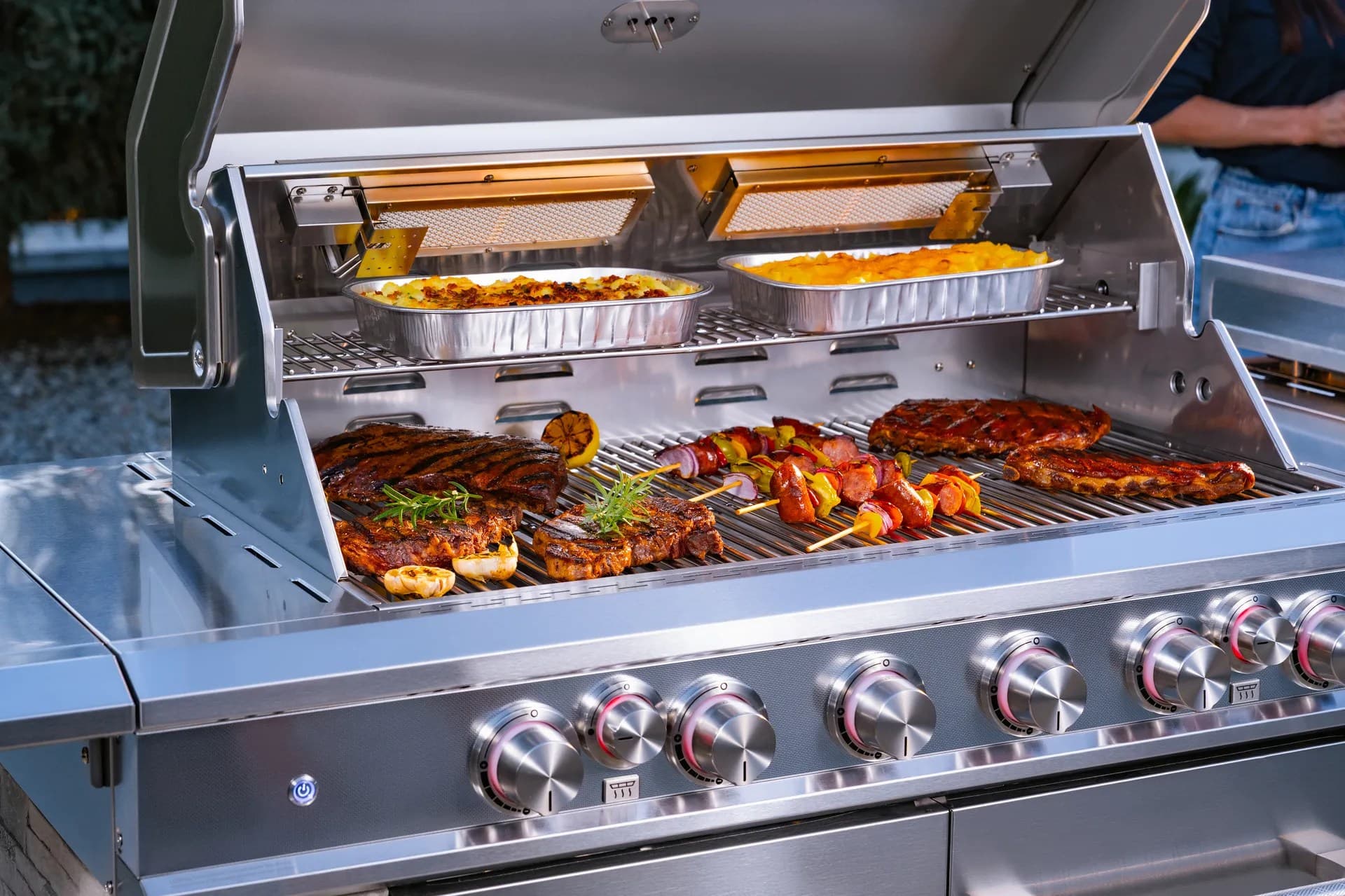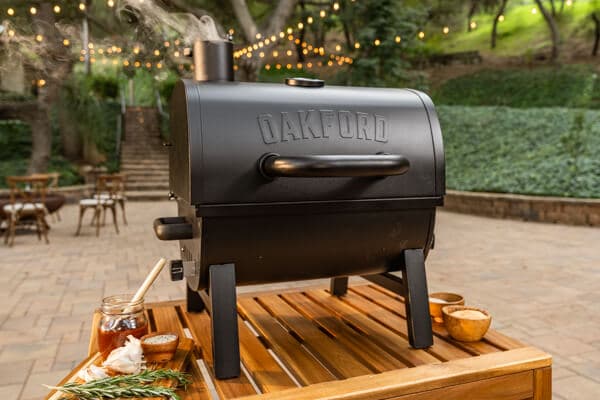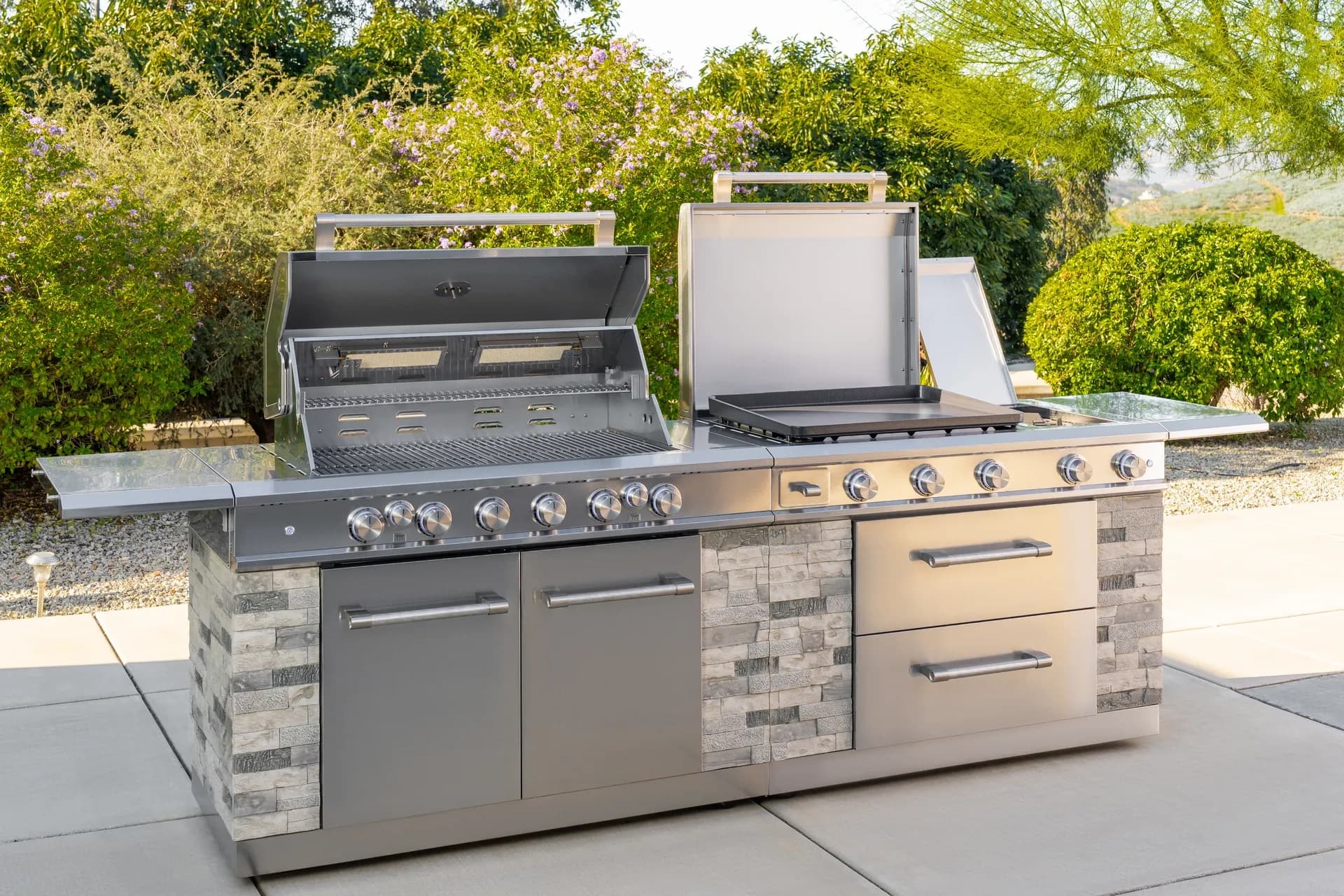
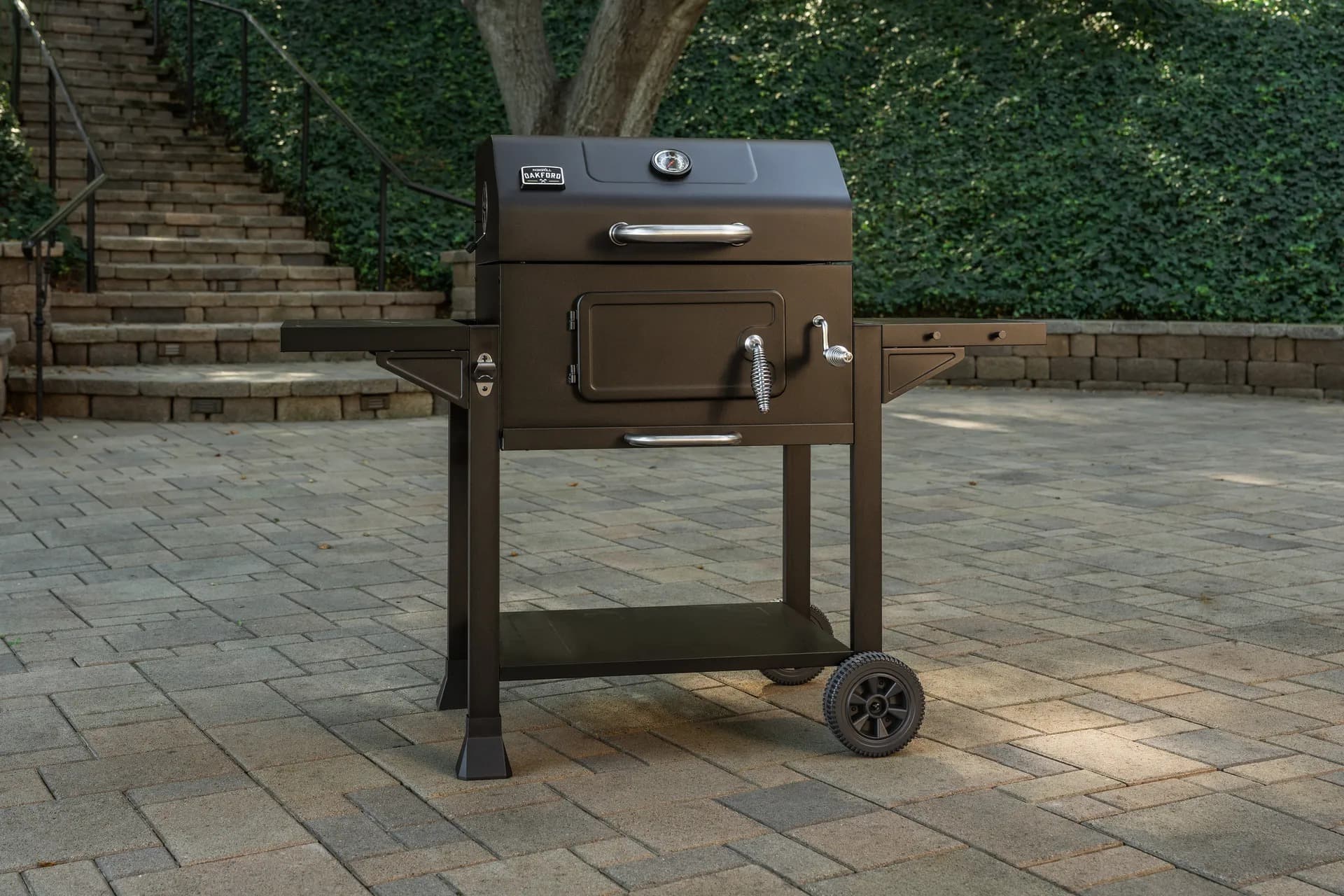
Explore the latest innovations enhancing your grilling experience.
From sizzling breakfasts to smash burgers and teppanyaki-style dinners, the Daytona Pro 5 Burner NitroGuard™ Griddle delivers powerful heat, fast cooking, and a durable cooking surface built for every backyard cookout. Watch how easy outdoor cooking can be.
Here's what sets us apart from the competition
We position ourselves as delivering high-end outdoor cooking features and performance without premium-brand pricing, emphasizing “Quality Grills. Unbelievable Value.”
We offer gas grills, pellet grills, griddles, smokers, pizza ovens, portable/tabletop grills, electric grills, accessories, and replacement parts — allowing customers to stay within one ecosystem for all outdoor cooking needs.
We differentiate ourselves through smart grilling products like the Oakford smart pellet grill, including app-connected cooking controls and modern outdoor cooking technology.
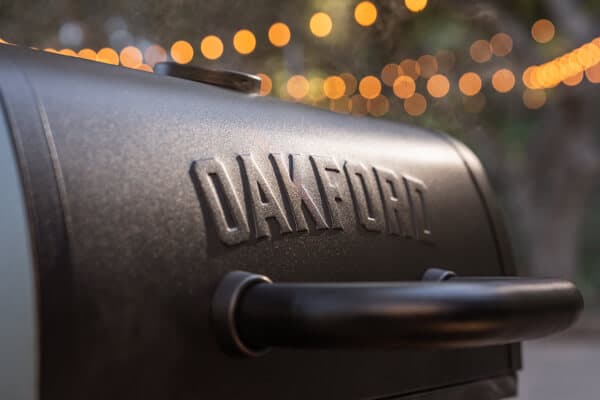
Expert tips, buying guides, comparisons, and inspiration for choosing and getting the most out of your grill.
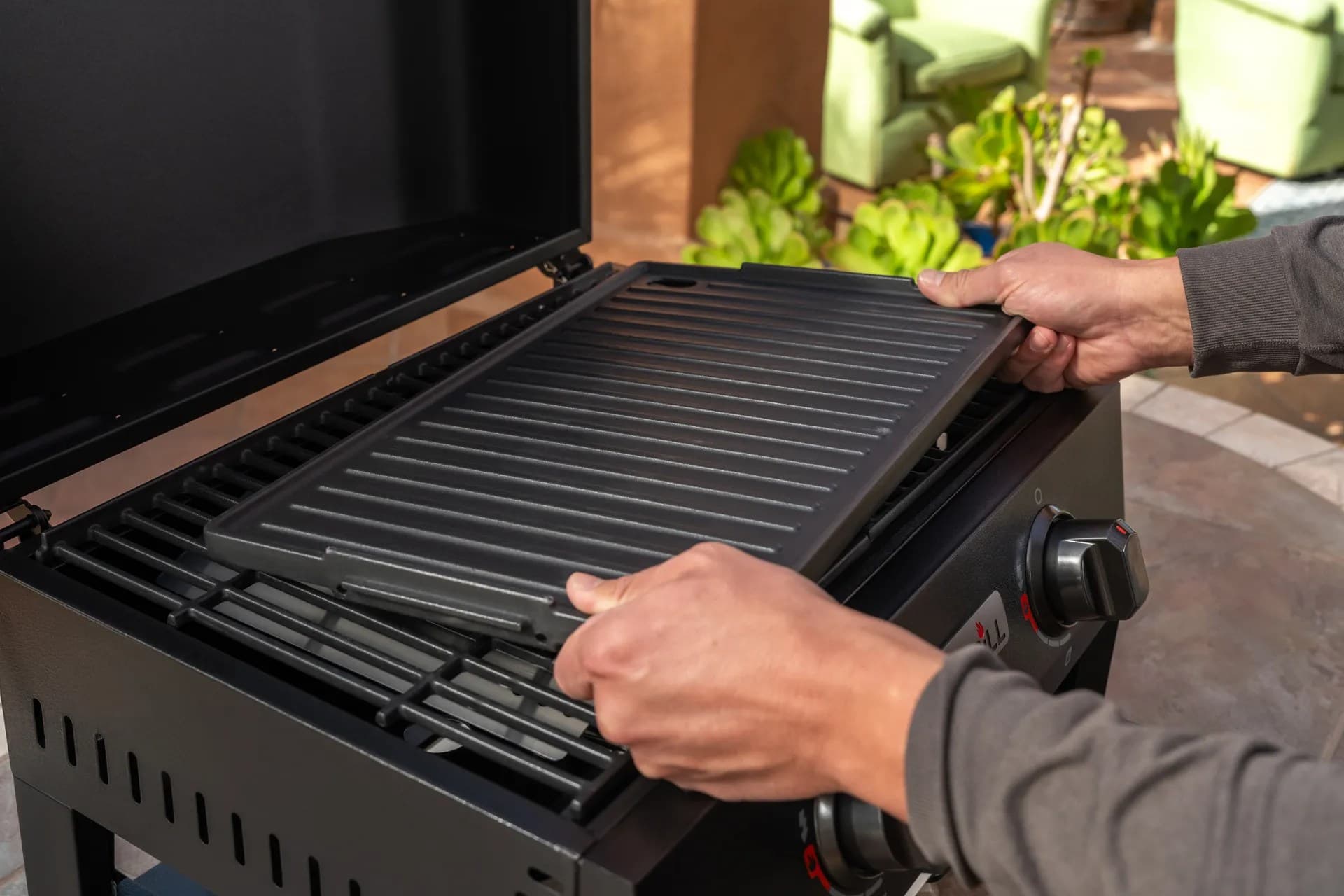
Practical guides for cleaning, maintenance, common grill issues, and performance optimization.
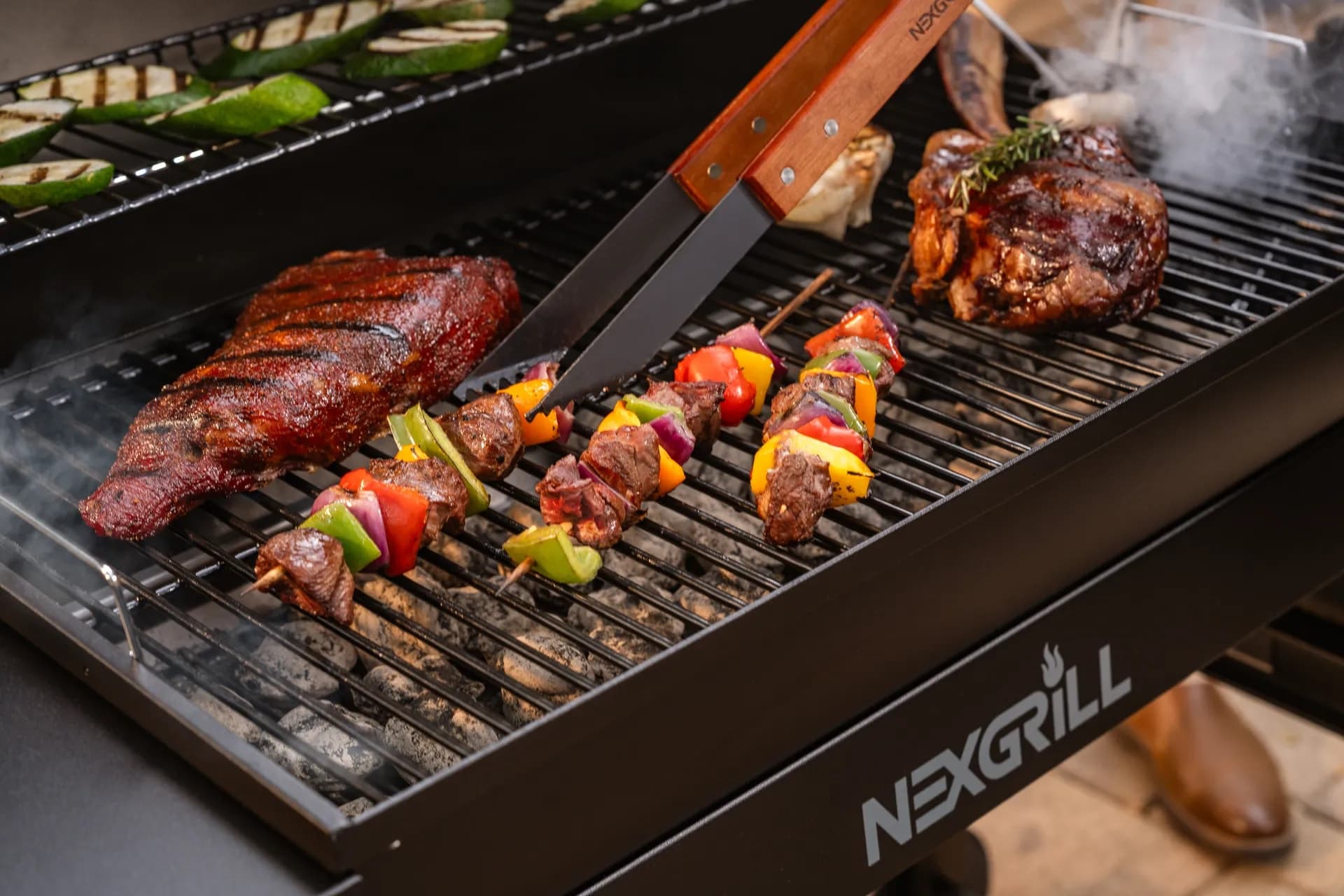
Step-by-step grilling recipes, cooking techniques, and meal ideas for every occasion and skill level.

Backyard entertaining ideas, seasonal grilling inspiration, and stories that celebrate outdoor cooking culture.
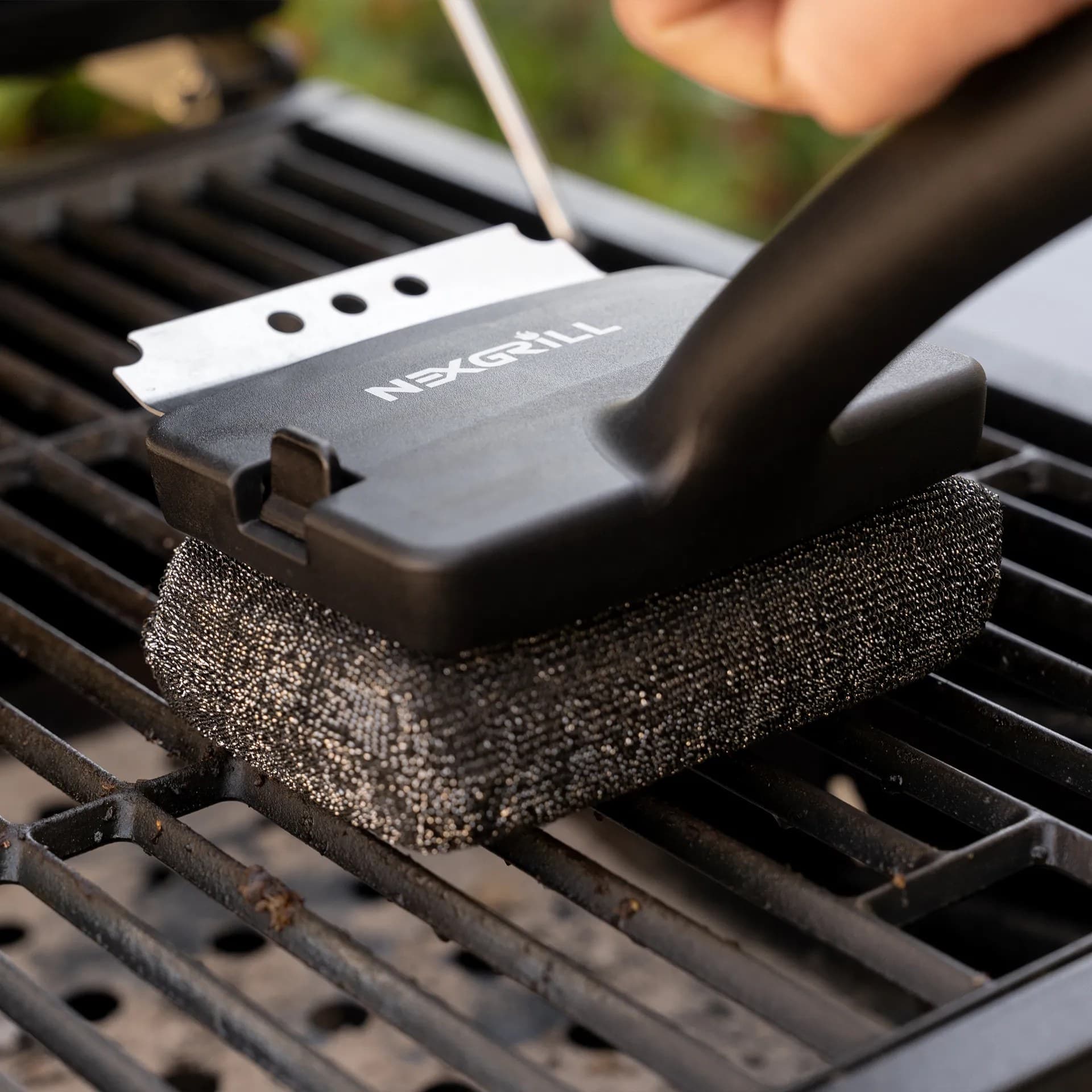
Helpful articles covering grilling tools, cookware, maintenance gear, and must-have accessories for outdoor cooking.
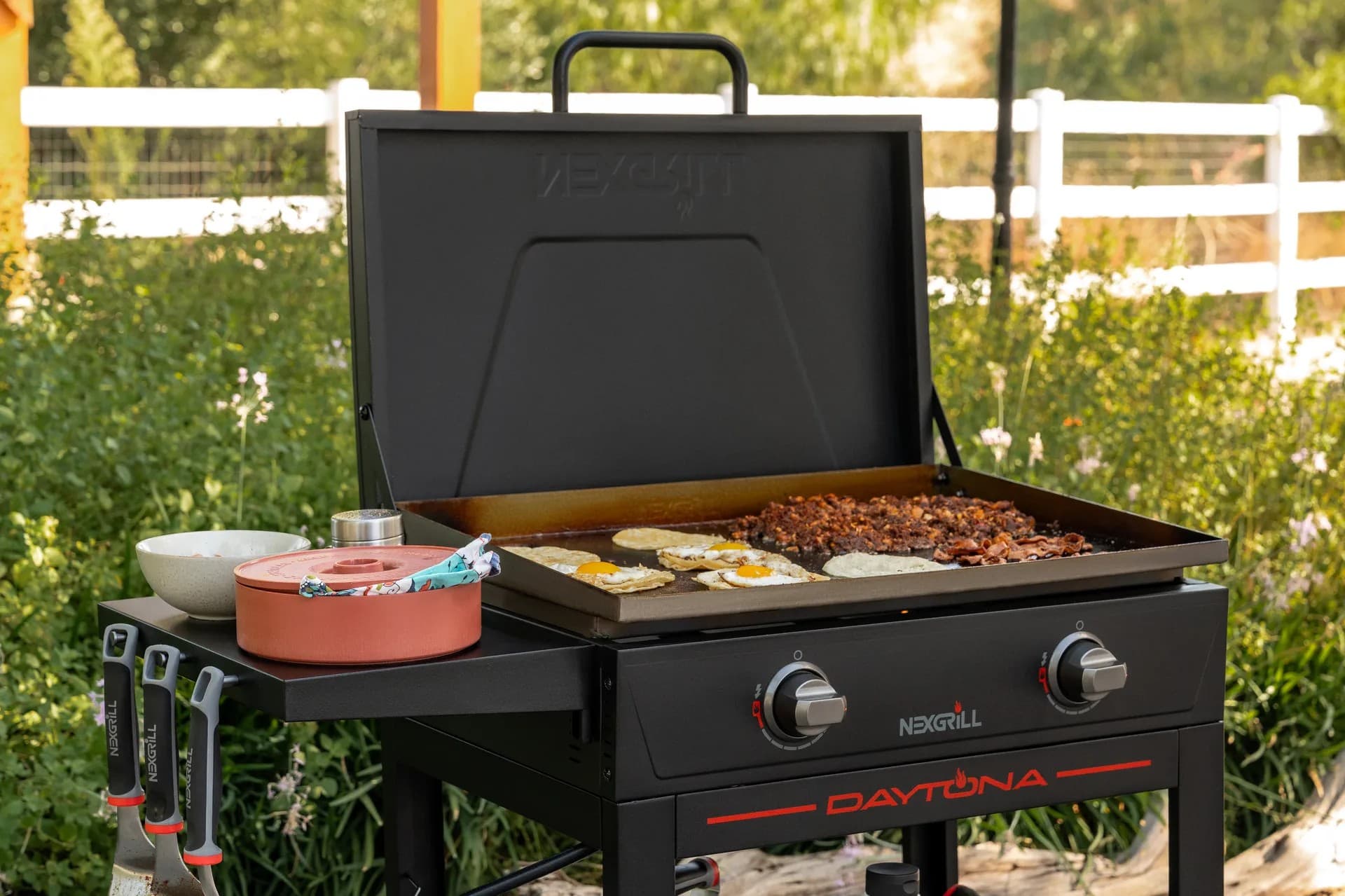
Find griddle recipes, cooking techniques, cleaning tips, and outdoor meal ideas designed for Nexgrill griddles.
Find answers to common questions
Gas grills provide instant heat and precise temperature control, making them easier to use. Charcoal grills offer a smoky flavor and high heat for searing but require more time to heat up and manage.
Pellet grills combine the convenience of gas with the flavor of wood, allowing for smoking, baking, and grilling. Traditional gas grills, however, are quicker to start and often easier to clean.
Charcoal grills typically reach higher temperatures quicker than gas grills, making them better for searing meat. However, high-quality gas grills can also provide adequate heat for effective searing.
Nexgrill offers models designed specifically for gas, charcoal, and pellets, allowing users to choose based on their cooking style and flavor preferences. Each type is built to optimize the characteristics of its respective fuel.
Choosing between gas and charcoal grills depends on your cooking preferences and lifestyle. If you value convenience and quick cooking, a gas grill may suit you better; if you prefer the taste and experience of traditional grilling, a charcoal grill would be ideal.
In This Article
Advanced Temperature Control
Remote Monitoring and Control
Automated Cooking Programs
Smart grills are changing the way home cooks manage outdoor heat. Instead of treating grilling as a task that requires constant hovering, modern smart models use connected sensors, guided cooking programs, and app-based controls to help you cook with more consistency and less guesswork. That matters whether you are making a weeknight chicken dinner, searing steaks for friends, or trying to hold a steady low temperature for ribs over several hours. The real appeal is not novelty. It is control, visibility, and a better margin for error.
Nexgrill’s brand philosophy is built around approachable outdoor cooking, and that mindset fits smart grilling well. The goal is to make grilling feel more welcoming for newcomers while still giving experienced cooks the precision they want. Nexgrill’s emphasis on accessible value and inclusive outdoor gatherings shows up in the way the brand talks about grilling as a shared experience rather than a technical contest, which is a useful lens for evaluating smart features too. A good smart grill should help you cook better food without making the process feel complicated or fragile. Nexgrill describes its products as designed for people of all budgets and skill levels, with the broader idea that grilling should invite more people to the table rather than intimidate them .
The best smart grills reduce guesswork while keeping live control in your hands.
The best smart grills are not defined by one flashy gadget. They are defined by a system of features that work together: accurate sensing, app connectivity, automated cooking support, and alerts that help you react before food overcooks. If you are comparing models, it helps to think in terms of how each feature changes the cooking experience. For example, a connected temperature probe is useful, but if the app interface is clumsy or the grill cannot hold a steady fire, that advantage shrinks quickly. Likewise, remote monitoring sounds impressive, but it only becomes valuable when the grill responds reliably to input and the readings are easy to understand at a glance.
Another thing that separates premium smart grills from basic connected units is how they handle different cooking styles. Some are stronger at high-heat searing, while others are built around slow smoking and temperature stability. If your household mostly cooks burgers, vegetables, and quick weekday proteins, the value of a smart system may come from simple preheat tracking and reminder alerts. If you regularly cook brisket, pork shoulder, or whole chickens, you will care more about probe accuracy, multi-zone heat management, and the ability to keep tabs on long cooks from indoors. Smart features should match the way you actually cook, not just inflate the spec sheet.
| Feature | What it helps you do | Why it matters |
|---|---|---|
| Temperature sensors | Track internal and ambient heat | Improves cooking confidence and consistency |
| Mobile app control | Adjust settings remotely | Lets you react without standing by the grill |
| Preset programs | Guide common foods | Reduces timing mistakes for newer users |
| Alerts and notifications | Warn about temp changes or doneness | Prevents overcooking and missed checkpoints |
Advanced temperature control is the feature most likely to affect your results every time you cook. In a smart grill, temperature control is not only about setting a target number. It is about holding a stable cooking environment despite wind, lid openings, fuel fluctuations, and the natural variability of outdoor cooking. The more accurately a grill can sense and respond to those changes, the more repeatable your results become. That is especially important for foods that punish inconsistency, such as thick chops, fish, chicken thighs, or a rib roast where a few degrees can change the outcome.
For everyday users, advanced temperature control also shortens the learning curve. Instead of memorizing where hot spots sit on the grate or guessing when a sear zone is ready, the grill can help provide a clearer baseline. Experienced grillers may still prefer to make manual adjustments, and that is fine. The point is not to remove skill from grilling; it is to reduce wasted food and avoid unnecessary stress. A smart grill that stabilizes heat well can help you manage both low-and-slow cooks and faster direct-heat meals with fewer surprises.
Tip: When comparing models, look at how many temperature zones the grill can manage independently, not just the headline maximum temperature.
Remote monitoring is one of the biggest reasons people move toward smart grills in the first place. Outdoor cooking is social, and the ability to step away from the grill without losing track of progress makes a real difference. With app-connected monitoring, you can keep an eye on temperature readings while preparing side dishes, setting the table, or even stepping inside for a few minutes. Remote control also becomes useful when the weather shifts unexpectedly. If the wind picks up or the lid is opened too often, the app can make it easier to respond quickly.
The most useful remote tools are simple and readable. You want alerts that feel specific rather than noisy: meat reached target temperature, pit temperature dropped, or the cook has been running longer than expected. A good app should also present the information in a way that is practical for real use, not just visually polished. Some consumers prefer straightforward dashboards; others like more guided, step-by-step interfaces. Either way, the winning experience is one that reduces mental load instead of creating another screen to manage.
Automated cooking programs are especially helpful for busy households and newer grillers. These programs can guide you through common cooks such as steaks, chicken breasts, pork chops, or smoked proteins by suggesting target temperatures, timing checkpoints, and alert thresholds. The best systems do not lock you into one rigid path. They provide a smart starting point that you can adjust based on thickness, cut, or the style of finish you want. That flexibility is important because a brisket, for example, can behave very differently from a boneless chicken breast, and a smart system should recognize that not all foods need the same treatment.
For experienced users, automated programs can still be valuable because they speed up routine cooks. If you regularly grill the same meats for family meals, having a familiar program reduces setup time and keeps outcomes more consistent across different weather conditions. The key is to treat automation as support, not a substitute for judgment. Great grilling still depends on understanding carryover cooking, target doneness, and the importance of resting meat after it comes off the heat.
Voice control is a smaller feature on paper, but it can be surprisingly practical in the middle of a cook. If your hands are covered in sauce or you are managing food prep outdoors, being able to ask for a temperature update without touching your phone is a convenience worth having. It can also help create a more seamless kitchen-to-patio workflow, especially when the grill is part of a larger outdoor entertaining setup. Still, voice integration works best when it is simple. It should support quick status checks or basic commands, not force you to navigate a complex conversation just to see whether the grill is ready.
If you are choosing between two smart grills, voice support should be treated as a nice enhancement rather than the main reason to buy. The core value is still in the sensing, app reliability, and cooking accuracy. Voice control matters most to users who already live in a connected-home environment and want the grill to fit naturally into that setup.
Real-time monitoring and alerts are what make smart grilling feel genuinely useful instead of merely high-tech. A grill can have connected features, but if it does not notify you when something changes, the information is harder to act on. Alerts should help you stay ahead of issues such as temperature drift, probe disconnects, or a food item reaching its desired finish. In practical terms, this means fewer overcooked proteins and fewer anxious trips outside just to check a lid thermometer.
Warning: Notification overload can make smart features less useful. Look for alerts that are clear, relevant, and customizable.
Customization is an underrated smart-grill feature because it lets the grill adapt to your habits rather than forcing you to adapt to its defaults. Some users want saved profiles for favorite cuts, while others want probe naming, custom alert tones, or preferred temperature units and app layouts. These details may sound minor, but they add up over time. A grill that remembers how you like to cook steaks versus chicken feels easier to use than one that treats every session as a new puzzle.
This is also where smart grilling becomes more inclusive for households with mixed experience levels. One person may want detailed data; another may only want simple go/no-go guidance. Good personalization makes the grill accessible to both. That is a meaningful design advantage because it keeps the grill from becoming an expert-only tool.
Choosing the right smart grill starts with an honest look at your cooking habits. If you mostly cook quick dinners, prioritize fast startup, reliable app control, and basic temperature alerts. If you are drawn to longer smoking projects, choose a model with stable heat management, multi-probe support, and good low-and-slow performance. If your patio hosts a mix of novice and experienced cooks, look for a grill that balances automation with manual control so everyone can use it comfortably. In other words, buy for the way your household actually grills, not for the most impressive feature list.
It also helps to think about how a smart grill fits into the rest of your outdoor setup. Do you need a compact footprint, or do you have room for larger cart storage and prep space? Will the grill be used mostly for entertaining, or for family meals several nights a week? Smart features can save time, but only if the grill itself suits the space and the cooking volume you expect. Try comparing two products side by side below to see which fits best:
Once you've weighed two options against each other, the next step is understanding what the technology is actually doing behind the scenes. Smart grills combine heat management hardware, sensors, wireless communication, and software that interprets the data for you. The most important shift is that the grill is no longer just a heat source. It becomes a guided cooking system that can help you monitor conditions, adjust targets, and reduce the amount of guesswork between raw ingredients and a finished meal.
That technological stack can look different from brand to brand, but the core ideas are similar. Sensors measure ambient grill temperature and often food temperature. A controller receives those readings and compares them to your selected target. The app then presents that information in plain language, often with alerts when the grill drifts too far from range or when the food reaches a milestone. The better the system, the less you need to interpret raw numbers and the more you can focus on cooking decisions. This is particularly useful in the United States, where backyard cooking often happens during variable weather and across different outdoor spaces, from compact suburban patios to larger decks and open yards.
One practical way to evaluate smart-grill technology is to ask whether it supports the cooking method you use most often. A tech package optimized for slow smoking may feel overbuilt if your typical meal is weeknight burgers. On the other hand, a simple connected display may not be enough if you routinely smoke a brisket or cook large cuts that need precise monitoring over many hours. The best smart grill technology is the one that quietly handles complexity so the cook can stay focused on timing, seasoning, and rest periods.
Connectivity is where smart grills move from helpful to genuinely convenient. Most connected grills use mobile apps as the main interface for setting temperature targets, tracking probe data, and reading alerts. A well-designed app should make it easy to see what matters quickly. That means readable numbers, clear graphs, and navigation that does not require several taps just to find the current cook temperature. If the app is confusing, the grill can still work, but the experience will feel less smart and more frustrating.
The best app integrations also account for real-world use. You may be flipping burgers with one hand, carrying a tray with the other, or checking the grill from inside while guests are arriving. In those moments, fast access matters more than advanced menus. Some systems let users create saved cook profiles or name probes by food type, which is helpful for households that cook multiple items at once. Others emphasize simple connection and ease of setup. Either approach can work, but the right choice depends on whether you want more guidance or more control.
| Connectivity Feature | Best for | What to check before buying |
|---|---|---|
| Bluetooth pairing | Short-range monitoring | Range limitations and connection stability |
| Wi-Fi connectivity | Longer remote monitoring | Network setup, signal strength, and app support |
| Cloud account sync | Households with multiple users | Profile sharing and login flexibility |
| Firmware updates | Long-term feature support | Whether updates are simple to install |
Temperature sensors and food probes are the backbone of smart grilling. Without reliable probe data, the rest of the system loses much of its value. A good sensor setup should help you understand both the grill environment and the food itself. That distinction matters because a grate temperature reading tells you how hot the cooking chamber is, while a food probe tells you whether the interior has actually reached the level you want. Those are related, but they are not the same thing.
For buyers, the biggest questions are usually how many probes are included, whether they can be used simultaneously, and how easy they are to place and clean. A single probe may be enough for simple cooks, but multi-probe support is far more flexible if you serve different doneness preferences or cook more than one protein at a time. It is also worth paying attention to how clearly the app labels each probe. If the grill is monitoring two steaks and a pork tenderloin, you do not want to guess which reading belongs to which item.
The real-world advantage of sensors is that they help bridge the gap between cooking theory and practical execution. If you know your grill can report a steady temperature and your food probe is trustworthy, you can plan rest times, side dish timing, and plating with more confidence. That is valuable for both casual cooks and serious backyard hosts.
User-friendly interfaces often decide whether smart grill owners use the advanced features regularly or ignore them after the first week. The best interfaces are straightforward, legible, and forgiving. They should make it obvious how to set a target temperature, check the current reading, and silence or acknowledge a notification. Large icons, simple labels, and uncluttered dashboards are not aesthetic luxuries; they are part of making the grill useful when your hands are busy and your attention is divided.
A user-friendly system also needs to support different comfort levels. Newer grillers may want step-by-step prompts and simple recommendations. Experienced cooks may prefer fast manual access and fewer interruptions. The ideal smart grill offers enough clarity for beginners without removing the freedom that seasoned grillers expect. If you are comparing models in a store or online, think about whether the interface would still be easy to use after a long day, after dark, or when several people are moving around the patio.
Smart grills add electronics to an environment that already includes heat, grease, moisture, and outdoor exposure. That makes durability a bigger consideration than it might be on a basic grill. When evaluating a smart model, look at the build quality around the control panel, probe ports, seals, and cable routing. Components should be designed to handle frequent opening and closing, temperature swings, and routine cleaning without feeling delicate.
Durability also affects long-term value. A grill with excellent software but fragile physical components can become frustrating over time, while a rugged grill with a weak app may fail in a different way. The sweet spot is a system that balances sturdiness with practical electronics. For ownership, the maintenance routine should remain simple: keep probes clean, protect the controller area from excess moisture, and store the unit according to the manufacturer’s guidance. In that sense, smart grilling still rewards the same basics as traditional grilling, just with a little more care around the tech layer.
When comparing smart grill models, focus on the combination of hardware and software, not just the headline feature list. One model may offer excellent mobile controls and multiple probes but lack enough cooking space for family entertaining. Another may have a large grate and strong searing capability but weaker app design. The right choice depends on what you cook most often and how you plan to use the grill over the next several seasons.
A useful way to compare is to map features to use case. Frequent hosts should prioritize capacity, stable heat zones, and easy monitoring. Weekend smoking enthusiasts should prioritize probe count, low-temperature consistency, and alert quality. Smaller households may do better with a more compact smart grill that offers quick startup and simple automation rather than a larger, more complex unit. Smart features should simplify the cooking process, not force you to adopt a new hobby around software settings.
Info: The best comparison is not between feature counts alone. Compare the same steak, the same smoking session, or the same weeknight meal across models.
To get the most from a smart grill, use the technology as a planning tool. Preheat fully before adding food, place probes correctly so they read the thickest part of the cut, and use app alerts to organize the rest of your meal timing. If your grill offers custom profiles, save the settings that work for your most common recipes. That saves time and builds consistency from one cook to the next.
It also helps to think about smart grilling as part of the entire meal rhythm. If the app says your chicken will finish in 15 minutes, use that window to finish sides, warm plates, or rest sauces. Smart grilling works best when the person behind the grill uses the information proactively rather than reactively. Keep firmware or app updates current when available, and learn the interface before a big gathering so you are not troubleshooting in front of guests.
The future of smart grilling is likely to move toward even better automation, clearer data, and more flexible integration with the rest of the connected home. Expect improvements in predictive cooking assistance, more refined heat mapping, and interfaces that reduce setup time for common foods. As sensors become more capable, smart grills may provide more detailed information about how heat moves across the cooking surface, which could help users place food more strategically.
Another likely trend is better personalization. Instead of a one-size-fits-all app experience, future grills may adapt to your cooking history, preferred doneness levels, and favored recipes. That would make the smart experience feel more like a trusted helper and less like generic software. The key challenge will be maintaining ease of use. The best future features will still have to support the core promise of grilling: good food, shared outdoors, and less stress around timing.
A smart grill is worth considering when you want more confidence, more consistency, and more freedom to step away from the heat without losing control of the cook. Advanced temperature control, remote monitoring, automated programs, voice support, and personalization all matter most when they make outdoor cooking easier to enjoy. The right model should fit your cooking style, your household, and your space while still feeling intuitive enough to use on a regular basis.
If you approach the purchase with your real meals in mind, you will have a much easier time separating useful innovation from marketing noise. Look for sensors that are reliable, controls that are intuitive, and construction that can handle everyday outdoor use. When those pieces line up, smart grilling becomes less about gadgets and more about better meals, fewer surprises, and a more relaxed time around the fire.
Here's what sets us apart
We position ourselves as delivering high-end outdoor cooking features and performance without premium-brand pricing, emphasizing “Quality Grills. Unbelievable Value.”
We offer gas grills, pellet grills, griddles, smokers, pizza ovens, portable/tabletop grills, electric grills, accessories, and replacement parts — allowing customers to stay within one ecosystem for all outdoor cooking needs.
We differentiate ourselves through smart grilling products like the Oakford smart pellet grill, including app-connected cooking controls and modern outdoor cooking technology.
Don't just take our word for it
Keep reading
From our catalog