Nexgrill ORA 12 Review: How to Confirm the Model Before You Buy or Cook
A practical, step-by-step guide to verifying whether an 'ORA 12' is a genuine Nexgrill, identifying the real grill from its rating plate, and running it correctly once confirmed.
In This Article
Verify Before You Trust
Cross-Reference the Real Model
Run It Right
Why a Nexgrill ORA 12 Review Starts With a Verification Step
If you searched for a Nexgrill ORA 12 review, there is an awkward starting point worth naming plainly: no grill carrying the ORA 12 name appears in Nexgrill's current catalogue or in the model lines the company has documented since its founding in 1993. That does not mean you are imagining the listing. It means the label you were given is unverified, and the sensible first move is not to read a review - it is to confirm what grill is actually sitting in front of you, or in the seller's photos.
Nexgrill is a California-headquartered manufacturer that sells gas, charcoal, and pellet equipment through national retail partners such as Home Depot and directly through its own site, and it merged with Megamaster to form Global Leisure. Its documented families are named Oakford, Daytona, Fortress, and the numeric 720-series - not ORA. So the useful work here is a verification chain: find the sticker, read the rating plate, cross-reference the numbers, and only then talk about cooking performance.
Treat any 'ORA 12' listing as an unidentified grill until the rating plate proves otherwise. A model name typed into a marketplace ad is the weakest possible evidence; stamped metal is the strongest.
This guide is deliberately fuel-agnostic. Whether the unit turns out to be a two-burner propane grill, a flat-top griddle, or a charcoal kettle, the sticker-to-plate-to-catalogue path is the same. Once you know the real model, the setup advice becomes specific instead of guesswork.
What You Need On Hand Before You Search: The Model and Serial Sticker
Gather four things before you open a browser tab. First, a phone with a working camera and flash. Second, a tape measure. Third, a rag - grease films obscure exactly the numbers you need. Fourth, the seller's contact details if this is a used unit.
On a Nexgrill, the identification sticker is typically a metallic or heavy vinyl label adhered to the back panel of the firebox, the inside of the cabinet door, or the underside of a side shelf. It carries a model number, a serial number, and often a barcode. Photograph it flat-on, then take a second shot at an angle with flash to catch stamped text that washes out under direct light.
- Full model number exactly as printed, including any hyphenated suffix
- Serial number (needed if you contact support)
- Gas type - LP/propane or natural gas
- Overall width, depth, and lid height in inches
- Number of main burners and whether a side burner is present
If the sticker is missing or unreadable, ask the seller for a photo of the rating plate under the control panel - it usually survives even when the exterior label has peeled.
Where Nexgrill Prints the Model Number and Rating Plate
Nexgrill splits identification across two locations, and confusing them is the most common reason people give up. The sticker is the marketing and logistics label: model, serial, barcode. The rating plate is the engineering label: gas type, manifold pressure, and burner input ratings, usually in BTUs per burner and a total.
The rating plate is commonly fixed inside the cabinet, on the back of the firebox, or beneath the control panel fascia. On cart-style grills it is frequently visible with the lid closed by kneeling at the rear. On griddles it tends to sit on the rear frame or the underside of the grease trough housing.
Record the BTU figures individually, not just the total. A total of 60,000 BTU could come from four 15,000 BTU burners or two 30,000 BTU burners, and those are entirely different grills. The per-burner number, plus the grate footprint you measure, is what lets you match an unidentified unit to a documented model.
Step-by-Step: Confirming Whether the ORA 12 Is a Real Nexgrill Model
Work through these in order. Stop as soon as you have a match.
- Photograph the sticker and the rating plate. Both, in focus, before you touch anything else.
- Search the catalogue. Open the Nexgrill product catalogue and search the model number from the sticker, not the name in the ad.
- Contact support with your photos. Use the Nexgrill contact page and attach the sticker and rating-plate images. Ask directly whether the model is current, discontinued, or not a Nexgrill product.
- Match by numbers, not by name. Compare burner count, per-burner BTU, gas type, and measured grate dimensions against documented models.
- Confirm parts availability. A real match means burners, heat tents, and ignition modules can be sourced; a non-match usually means no parts path.
Keep your photos in one album. If you later need parts or want to sell the grill honestly, that album becomes your proof of identity.
Decoding the Nomenclature: ORA vs Oakford, Daytona, Fortress, and the 720-Series
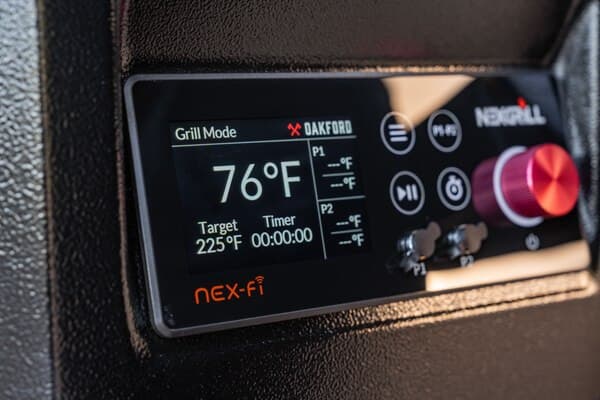
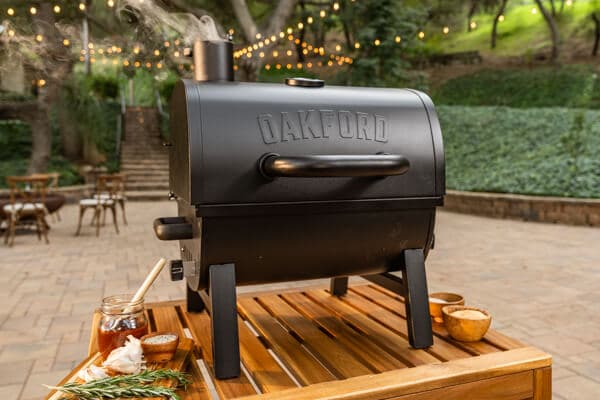
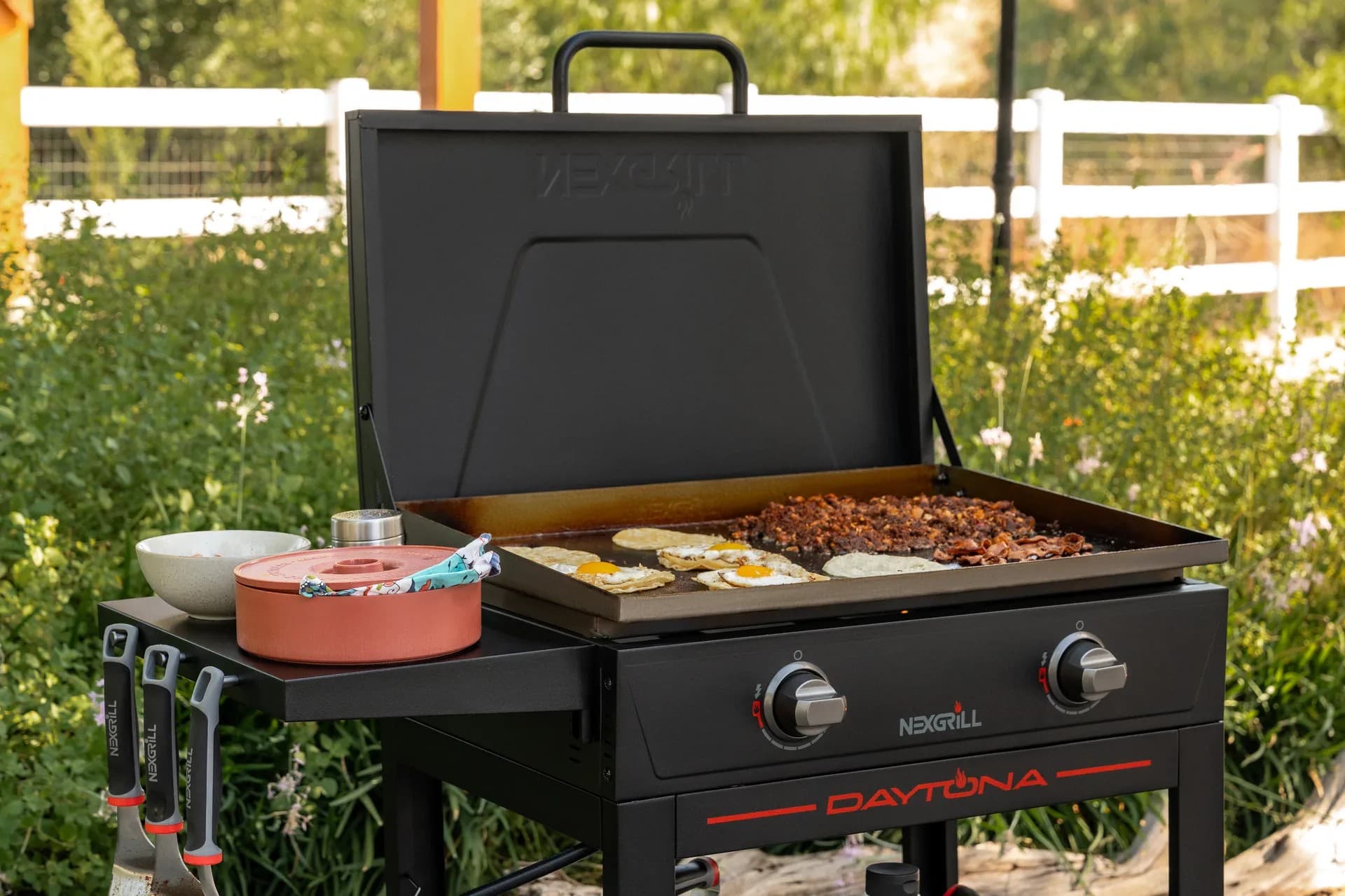
Nexgrill's documented naming follows recognizable patterns. Oakford denotes pellet smoker grills, with the Oakford 875 Pro and Oakford 1125 Pro both listed in the catalogue and the Oakford Homestead 24 covering heavy-duty charcoal. Daytona denotes griddles and flat-top cooking, spanning two-burner and four-burner formats. Fortress covers compact two-burner gas grills designed for small footprints. The 720-series covers older and current cart-style gas grills sold largely through Home Depot.
'ORA' fits none of those patterns. It could be a truncated seller abbreviation, a typo for Oakford, or a name invented for a secondhand listing. Do not assume ORA equals Oakford without evidence - an Oakford is a pellet grill with a hopper and controller, and a quick look at the unit will confirm or eliminate that immediately.
Cross-Referencing Specs When the Name Doesn't Match Anything
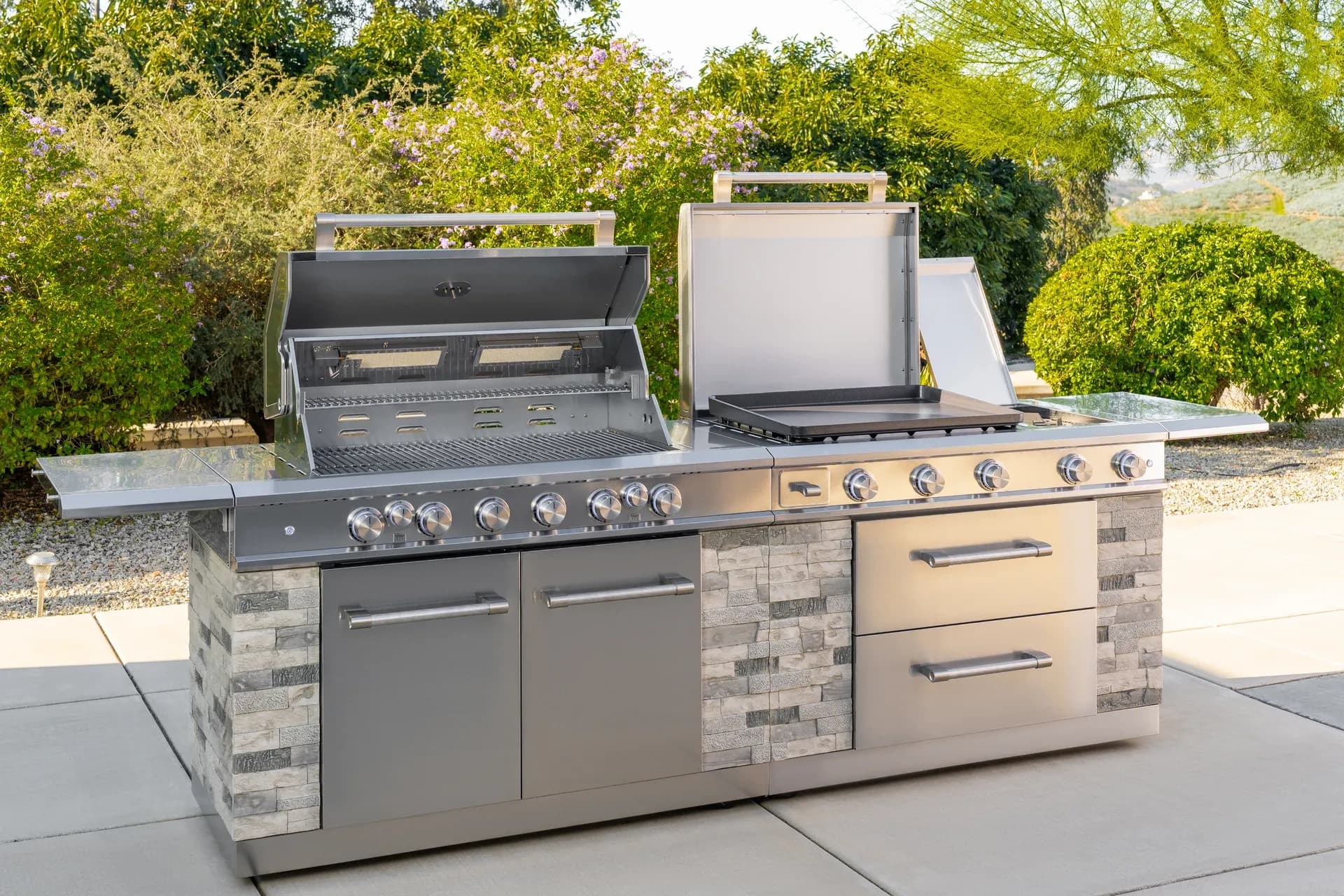
When the name fails, the numbers usually succeed. Build a small spec sheet from what you measured and compare it to a documented model of the same format. A 4-burner cart gas grill in black with a stainless main lid, for example, has a published page you can check burner count and layout against; a two-burner griddle with a lid has its own documented entry.
Two figures do most of the discrimination work: total BTU and usable grate area. If the plate says 4 burners at 12,000 BTU each and your tape says the grate is 30 inches wide, you are looking at a full-size cart grill, not a compact Fortress-class unit. If the surface is one continuous flat steel top with no grates at all, you have a griddle and should be reading Daytona guidance rather than grill guidance.
Verification record
Model on sticker:  ______________
Serial:           ______________
Gas type:         ______________
Burners:          ____ x ____ BTU
Total BTU:        ______________
Grate W x D:      ____ in x ____ in
Cooking format:   [ ] open grate  [ ] flat top  [ ] pellet hopper
Closest catalogue match: ______________
Take that filled-in record and compare two products side by side below to see which fits best - line your matched model up against the grill you originally thought the ORA 12 was, and let the specs settle it.
Once You've Weighed Two Options Against Each Other, Here's What Else Matters
Comparing two models clarifies the headline numbers, but the ownership details decide whether you are happy in month six. Three things consistently matter more than the spec sheet: parts availability, fuel logistics, and whether the cooking format suits the food you actually cook.
Parts availability is the quiet advantage of a confirmed model. A documented Nexgrill model - a Daytona 2-burner griddle with lid, for instance, or a 4-burner propane gas grill in black - is a grill whose burners, heat tents, and ignition parts can be identified by number. An unidentified unit is a grill you repair by improvisation.
Fuel logistics come second. A 20 lb propane cylinder lasts different lengths of time depending on total burner input, and a natural-gas unit cannot simply be switched to propane without the correct orifices and regulator. Confirm which you have before you buy accessories. Third, format: griddles excel at smash burgers, breakfast, and rice; open grates excel at steaks, chicken, and anything you want char on.
The Used-Grill Scenario: Five Minutes of Checks Before You Hand Over Cash
Marketplace and driveway purchases are where the ORA 12 name most often appears. Run these checks before money changes hands.
| Check | What you do | Why it matters |
|---|---|---|
| Identity | Photograph sticker and rating plate | Confirms model and parts path |
| Rust survey | Lift grates, inspect firebox floor | Perforated fireboxes are terminal |
| Ignition | Turn each burner on, listen for click | Replacement igniters vary by model |
| Gas system | Inspect hose for cracking, smell for leaks | Hoses are cheap; a leak is not |
| Recall search | Search the model at cpsc.gov/Recalls | Standard due diligence, not an accusation |
Walk away from any grill whose firebox floor flexes underfoot or crumbles when you press it. No replacement part fixes structural rust, and the price rarely reflects it.
Mistakes That Cost ORA 12 Searchers Money and Time
- Buying parts for a name, not a number. Ordering an 'ORA 12' burner guarantees a return; order by verified model number.
- Assuming ORA means Oakford. That leap sends pellet-grill money to a gas-grill listing.
- Trusting the ad's BTU figure. Sellers repeat whatever the previous seller wrote. The rating plate is the only defensible number.
- Skipping the serial number. Without it, support cannot narrow a discontinued model to its parts diagram.
- Buying a cover before measuring. Lid height and side-shelf width vary enough that a generic cover will not fit a cart grill with shelves deployed.
Setting Up the Grill You Actually Own: Leak Check, Burn-Off, and First Cook
Once the model is confirmed, setup follows the format you identified rather than generic advice. For any gas unit, mix a few drops of dish soap in water, brush it on every connection from cylinder to manifold, open the valve, and watch for expanding bubbles. If you see them, close the valve and reseat the fitting. Never leak-check with a flame.
Run a burn-off before food: all burners on high, lid down, 15 to 20 minutes, then brush the grates and oil them lightly with a high-smoke-point oil. For a pellet unit, follow the controller's startup cycle and let it reach set temperature before loading meat. For a flat-top griddle, ignore the burn-off and season the steel instead - different format, different procedure.
First cook should be cheap and forgiving: burgers, sausages, or vegetables. Save the expensive cut for cook three, once you know where the hot zones actually sit.
Which Buyer Profile Are You? Matching the Confirmed Model to Your Cookout
Balcony or small-patio cook. A compact two-burner gas grill or a two-burner griddle is the right scale. Two burners give you a sear zone and a hold zone without consuming floor space you do not have.
Weeknight family cook. A four-burner cart grill handles a full meal - protein on two zones, vegetables on one, warming on the last - and has the side shelf space to plate from. Look for a model with a documented parts listing.
Weekend entertainer or smoker. If low-and-slow is the goal, the format should be a pellet smoker such as the Oakford line, not a gas cart grill. If high-volume flat-top cooking is the goal, a four-burner Daytona griddle covers more surface than any open-grate equivalent.
A Short Pre-Purchase and First-Cook Checklist
- Sticker photographed, model and serial recorded
- Rating plate photographed, per-burner BTU written down
- Grate footprint measured in inches
- Model searched in the online catalogue and matched
- Support contacted with photos if no match was found
- Firebox inspected for structural rust (used units)
- Recall database searched by model number
- Leak check completed on every gas connection
- Burn-off or seasoning completed per format
- First cook kept simple to map hot zones
If the verification chain ends without a match, the honest conclusion is that the grill is unidentified - not that it is worthless, but that it should be priced and treated accordingly. For anything still in production, the Nexgrill homepage and company background give you the current line-up context to compare against.