Nexgrill Daytona 2-Burner Griddle Review: Season It, Run It, Keep It Cooking
A hands-on how-to review of both Nexgrill Daytona 2-burner flat-top models - seasoning, two-zone cooking, and the mistakes that ruin a steel griddle top.
In This Article
Two SKUs, One Keyword
Seasoning Beats BTU
Left Sear, Right Hold
Which Daytona 2-Burner Are You Actually Reading About?
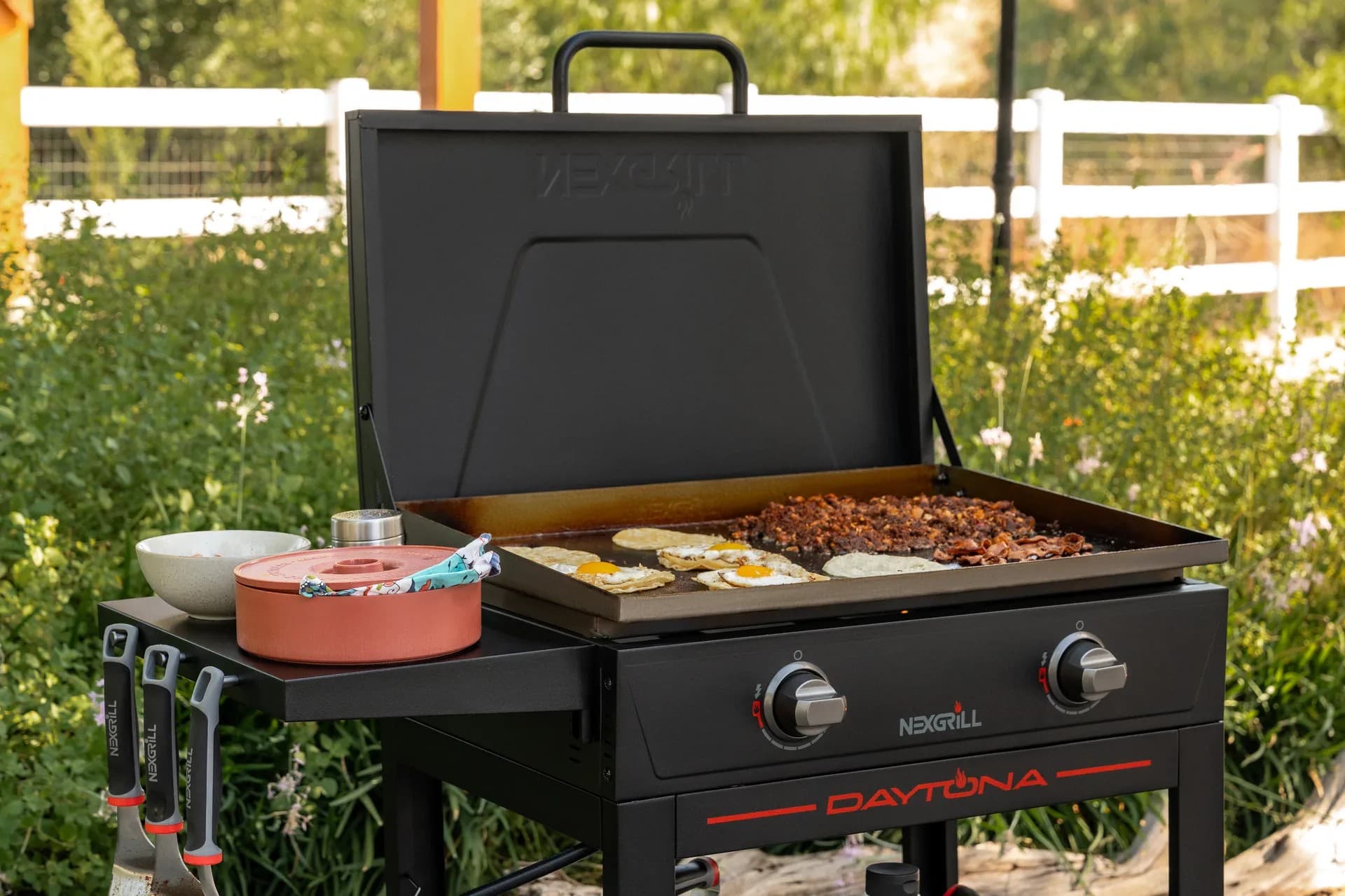
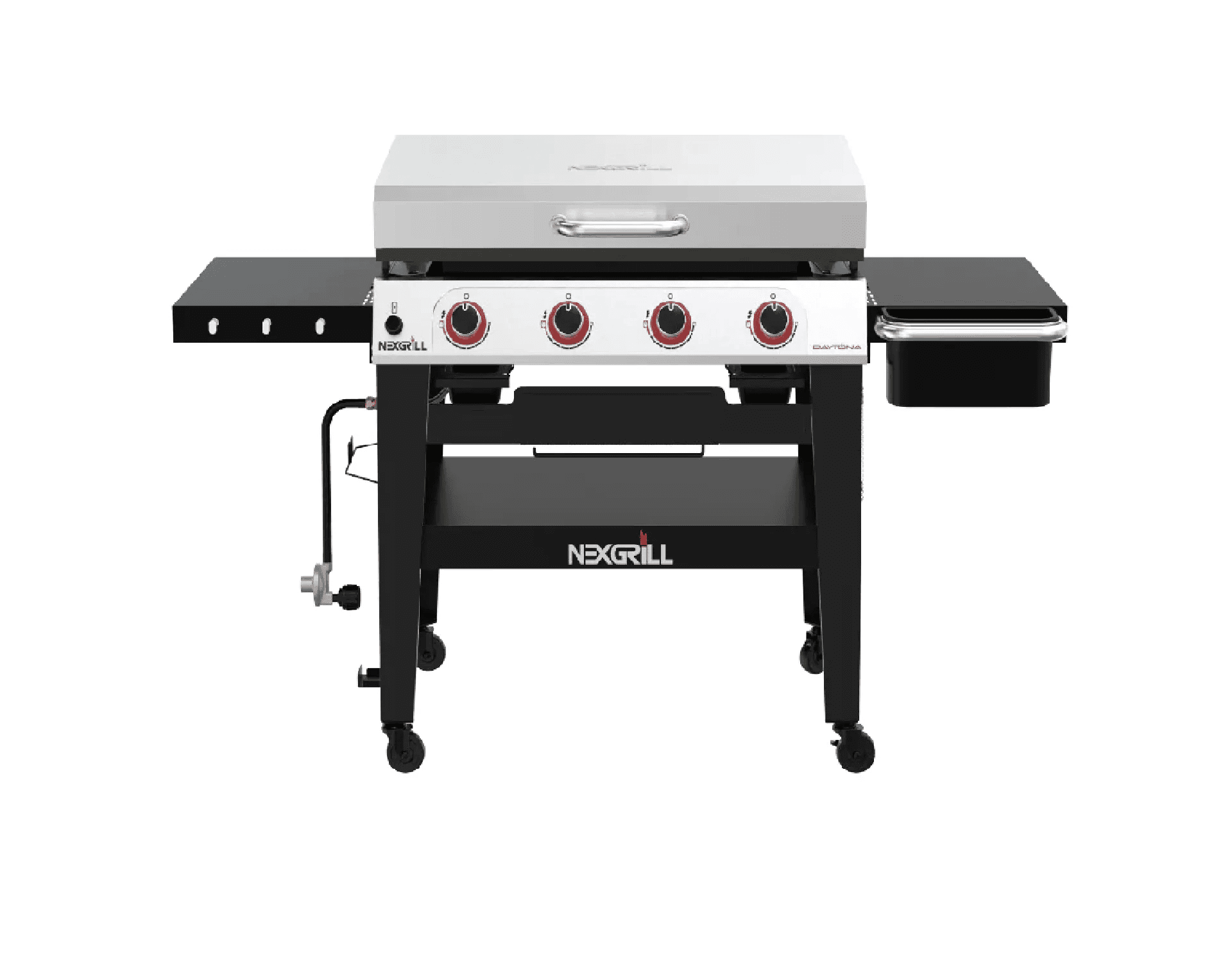
Search for a Nexgrill Daytona 2-burner review and you will land on two different products that share a burner count and almost nothing else. The first is the Daytona 2-Burner Propane Gas Griddle with Lid - a freestanding flat-top with a hard lid that clamshells over the cooking surface. The second is the Daytona 2-Burner Propane Gas Griddle with Foldable Cart, which trades the lid for legs that collapse.
Both are flat-top griddles, not open-grate grills. If you were looking for the Fortress 2-Burner - a lidded grill with exposed grates for steaks and chicken - you are in the wrong review. The Daytona 1-Burner is the smaller sibling with a single control knob. This piece covers only the two 2-burner flat-tops, and the reason it matters is practical: the lid model and the cart model season, cook, and clean identically, but they store completely differently. That single difference decides which one a renter, a tailgater, or a couple with a small patio should buy.
Nexgrill has been building outdoor cooking equipment since 1993 from its California base, and the Daytona line is its flat-top answer to the smash-burger era. The griddle plate - not the burner count - is the product here.
What You Need Before the First Cook: Prerequisites and Unboxing
Do not unbox onto a wooden deck and start cooking. Assemble on a flat, fire-safe surface with the propane still disconnected, because a wobbly cart and a half-seated regulator are the two things that turn a first cook into a bad memory. Have on hand: a propane tank (1 lb for short sessions or a standard 20 lb cylinder for a full season), two clean lint-free cloths, a silicone or cotton mop for oil, a metal scraper, and a bottle of high-smoke-point cooking oil - canola, avocado, grapeseed, or refined peanut all work.
Nexgrill does not publish one fixed specification sheet that applies to both SKUs, and figures such as total BTU, cooking area, and unit weight are best confirmed on the live product page before you buy, because retailer listings and model years differ. The same applies to warranty: frequently a limited term, so confirm the stated term on the product page rather than trusting a marketplace summary. Prices sit in the mid-hundreds of USD depending on retailer and season - treat any single quoted number as a snapshot, not a promise.
Leak-Check the Propane Hookup in Five Minutes
Every new connection deserves a soapy-water test before the first ignition. Mix a teaspoon of dish soap into a cup of water, brush it over the regulator-to-tank joint and the hose-to-manifold joint, open the tank valve, and watch. Bubbles that grow mean a leak - tighten, retest, and if it persists, stop and contact the retailer. A 1 lb bottle screws straight onto the regulator; a 20 lb cylinder needs the collar seated and the coupler hand-tight only. Never use a flame to check for gas.
I have watched a first-timer skip this step, cook anyway, and smell gas the whole meal. Five minutes now saves a genuinely dangerous afternoon later - and repeat the test any time you swap tanks or move the cart.
Step-by-Step: Seasoning a Cold-Rolled Steel Griddle Top
The griddle plate ships with a protective factory coating - usually a waxy film - and it must come off. Wipe the plate with a warm, damp cloth and a drop of mild dish soap, then dry it thoroughly. That is the only time soap touches the cooking surface. Now season:
- Coat thinly. Pour a teaspoon of high-smoke-point oil onto the cold plate and spread it with a cloth until it looks almost dry. If you can see pooled oil, you used too much.
- Heat to smoking. Light both burners on medium and let the oil smoke, then kill the heat and let the plate cool completely.
- Repeat two or three times. Thin coats over heat build a hard, black-brown polymer layer. Each pass should look glossier and darker than the last.
- Test with an egg. A properly seasoned plate slides a fried egg with almost no sticking. If it grabs, do one more thin coat.
Use high-smoke-point oil, not olive oil or butter. A reader I know seasoned with extra-virgin olive oil, triggered a smoke alarm, and ended up with a tacky, sticky plate that had to be stripped and reseasoned with canola in three thin coats.
Preheat, Oil, Cook: Your First Meal on Two Burners
A cold-rolled steel plate takes a real 10 to 15 minutes to reach a proper cooking temperature across its full width. Light both burners, close the lid (if you have the lid model), and wait. When a drop of water skitters across the surface, you are ready. Wipe on a very thin film of oil just before the food lands, and keep it thin - a puddle of oil is a deep fryer, not a griddle.
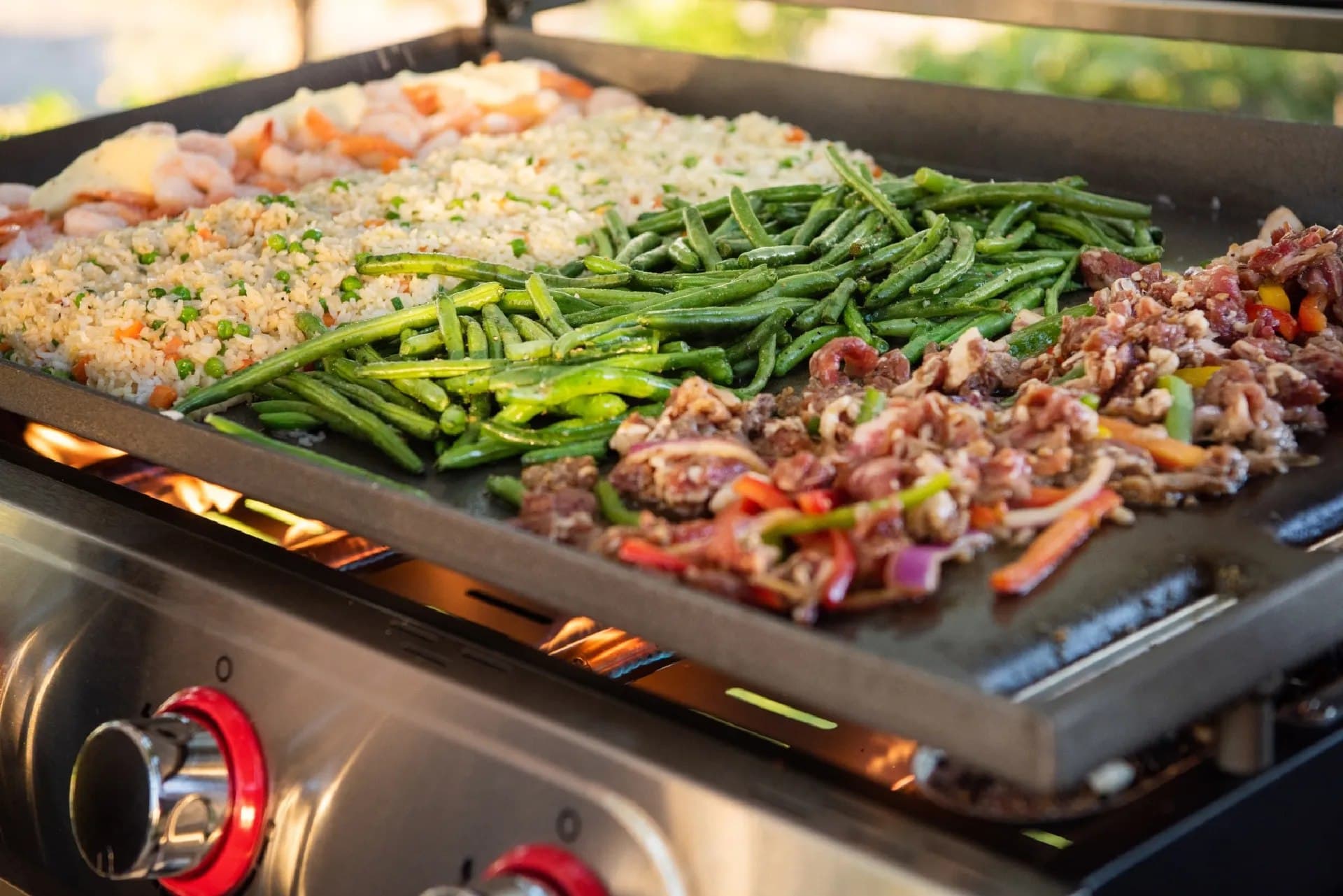
Your first cook should be forgiving: bacon, onions, or a batch of pancakes. Bacon is ideal because the fat seasons the plate further as it renders. For a Sunday breakfast of eggs, bacon, and pancakes for two, you are using only a third of the plate, and you are learning the single most valuable skill on this machine - where the hot zone ends and the holding zone begins.
Two Burners, Two Zones: The Left-Sear, Right-Hold Layout
This is the whole justification for two burners instead of one. Assign the left burner as your sear side and the right burner as your hold side. Smash burgers go on the left, get their crust, then slide right to finish slowly while the next patty goes down. Hash browns brown on the left; the finished eggs wait on the right at low heat. On the foldable-cart model, the same logic applies - you just gain no lid to trap heat between cooks.
| Zone | Burner setting | What goes there |
|---|---|---|
| Sear side (left) | Medium to medium-high | Burgers, chops, hash browns, stir-fry vegetables |
| Hold side (right) | Low, or off after warm-through | Eggs, pancakes, finished patties, tortillas |
Lid Model or Foldable Cart: The Trade-Off That Actually Divides These Two
This is not a performance decision; it is a storage and usage decision. The lid model protects the seasoned plate from rain, dust, and neighborhood cats between cooks, which makes it the friendlier choice for a balcony or a small patio where the griddle stays outside. The foldable-cart model wins for anyone whose griddle lives in a garage or trunk: it collapses, sits low, and survives the trip to a parking lot. Neither is more of a
Once You've Weighed Two Options Against Each Other, Here's What Else Matters
The side-by-side view settles lid versus cart in seconds. What it cannot tell you is how a flat-top behaves on day ninety, when the seasoning is built and the honeymoon is over. That is where most 2-burner reviews stop and where the real ownership experience begins. Seasoning is done; now the plate has to survive cleaning, weather, and your own enthusiasm.
| Decision factor | Lid model | Foldable cart |
|---|---|---|
| Lives outside on a balcony | Better - lid protects the plate | Workable, but cover recommended |
| Transport to tailgates | Awkward - fixed frame | Better - folds for a hatchback |
| Stored in a garage | Doable, uses more vertical space | Better - collapses low |
Daily Clean in Four Minutes - and the One Thing Never to Do
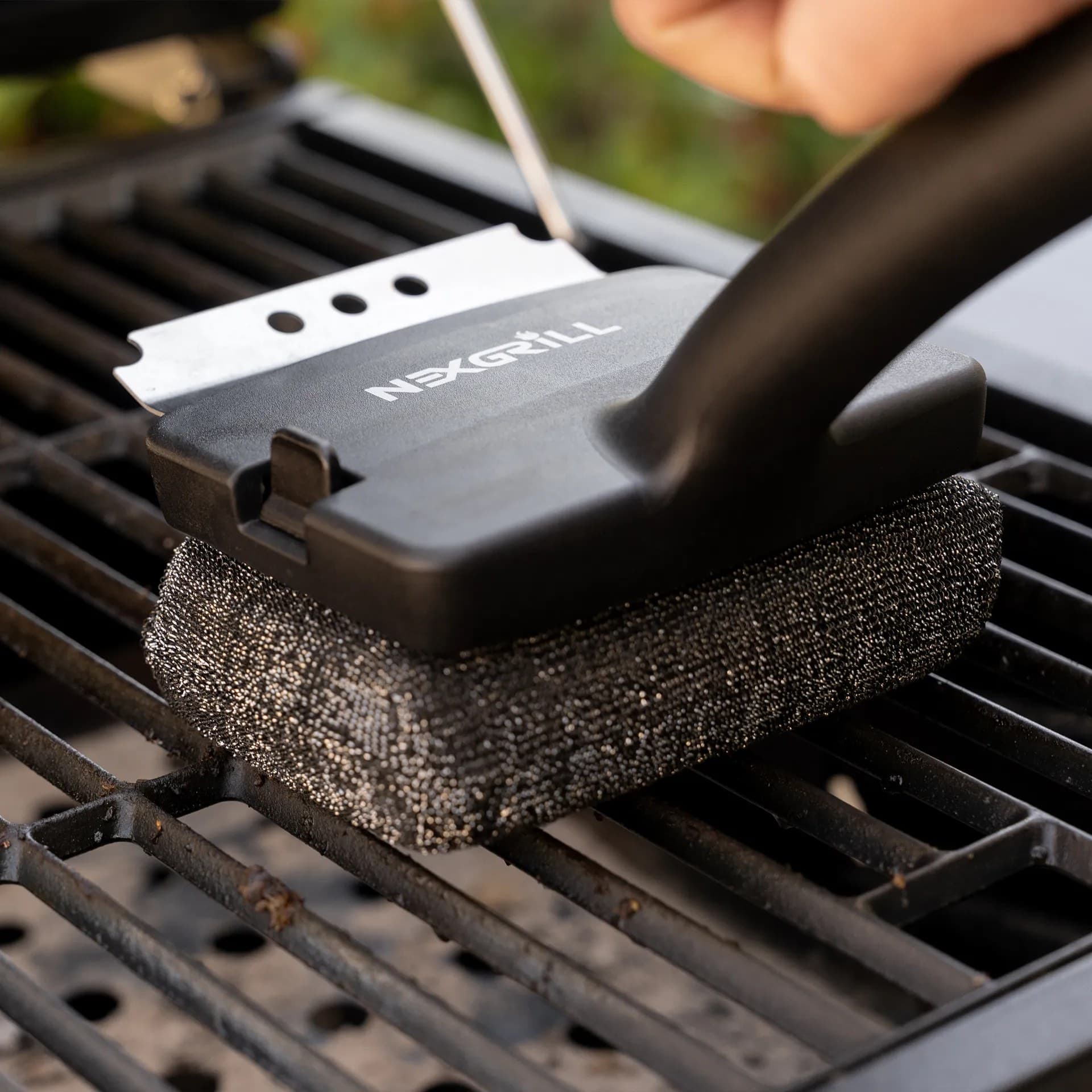
While the plate is still warm but not scorching, scrape food residue toward the grease channel with a stiff metal scraper, then wipe with a dry cloth. Finish with a bead of oil wiped almost dry. That is four minutes and it preserves everything the seasoning earned. The one thing never to do: soap on a seasoned plate after the initial wash. Dish soap strips the polymer layer and puts you back at step one.
Never hit a hot plate with cold water. Thermal shock can warp the steel, and a warped griddle cooks unevenly forever. Let it cool on its own.
The 10-Minute Monthly Check That Keeps a Flat-Top Level
Once a month, look under the hood. Inspect the burners for rust or insect nests, check that the flame is blue with a short yellow tip, confirm the grease tray is clean and seated, and re-run the soapy-water leak test if the tank was swapped. Wipe the cart or lid exterior with a damp cloth and check screws for tightness, especially on the foldable cart, where hinge bolts loosen with transit. Ten minutes, four times a year, is the difference between a griddle that lasts a decade and one that rusts out in three summers.
Seven Mistakes New Flat-Top Owners Make (and the Fix for Each)
- Seasoning with a low-smoke-point oil - use canola or avocado, not olive oil.
- Pooling oil during seasoning - wipe nearly dry; thin is the rule.
- Cooking on a cold plate - preheat 10 to 15 minutes.
- Scrubbing with soap after every cook - scrape and wipe instead.
- Leaving the plate wet - dry and oil immediately to block rust.
- Running both burners full blast constantly - you lose the hold zone.
- Cooling a hot plate with water - air-cool only to avoid warp.
2-Burner vs. 4-Burner Daytona: Which Household Size Needs Which
The 2-burner is right for one to four people cooking in one or two batches. The Daytona 36-Inch 4-Burner Propane Gas Griddle with Lid is the answer when your Sunday breakfast runs out of room halfway through the pancakes and the bacon is cooling on a plate. A four-burner also gives you a genuine dedicated hold zone instead of a shared one. If you routinely feed six or more, buy up.
Real-World Scenarios: Breakfast for Two, a Hatchback Tailgate, a Balcony Lid
Three owners sketch the decision fast. A couple cooking Sunday breakfast - eggs, bacon, pancakes - clears it in about 15 minutes on one 2-burner, with the right burner holding finished items. A tailgater folding the cart model to slide into a hatchback gets portability no lid model offers. A renter who leaves the lid model on a balcony between weekend cooks gains weather protection that a bare plate and a thin cover cannot match. None of these is a performance choice; each is a lifestyle fit.
If your cooking volume is genuinely seasonal - a few cooks a month - the 2-burner cart model plus a good cover hits the sweet spot without paying for capacity you will not use.
Five-Point Buyer Checklist Before You Pay
- Confirm the spec sheet (BTU, cooking area, weight) on the live product listing.
- Confirm the stated warranty term on that same page.
- Decide lid or foldable cart based on storage, not specs.
- Budget for oil, a scraper, and a cover - the seasoning kit your first cook needs.
- Check delivery and pickup options in the USD price range at your retailer before committing.
Sources
- Nexgrill Daytona 2-Burner Propane Gas Griddle with Lid - full specifications and warranty terms.
- Nexgrill Daytona 2-Burner Propane Gas Griddle with Foldable Cart - cart dimensions and current specs.
- Nexgrill Daytona 36-Inch 4-Burner Propane Gas Griddle with Lid - the step-up model for larger households.
- About Nexgrill - brand heritage and manufacturing background.
- Nexgrill All Products - compare the full griddle range.