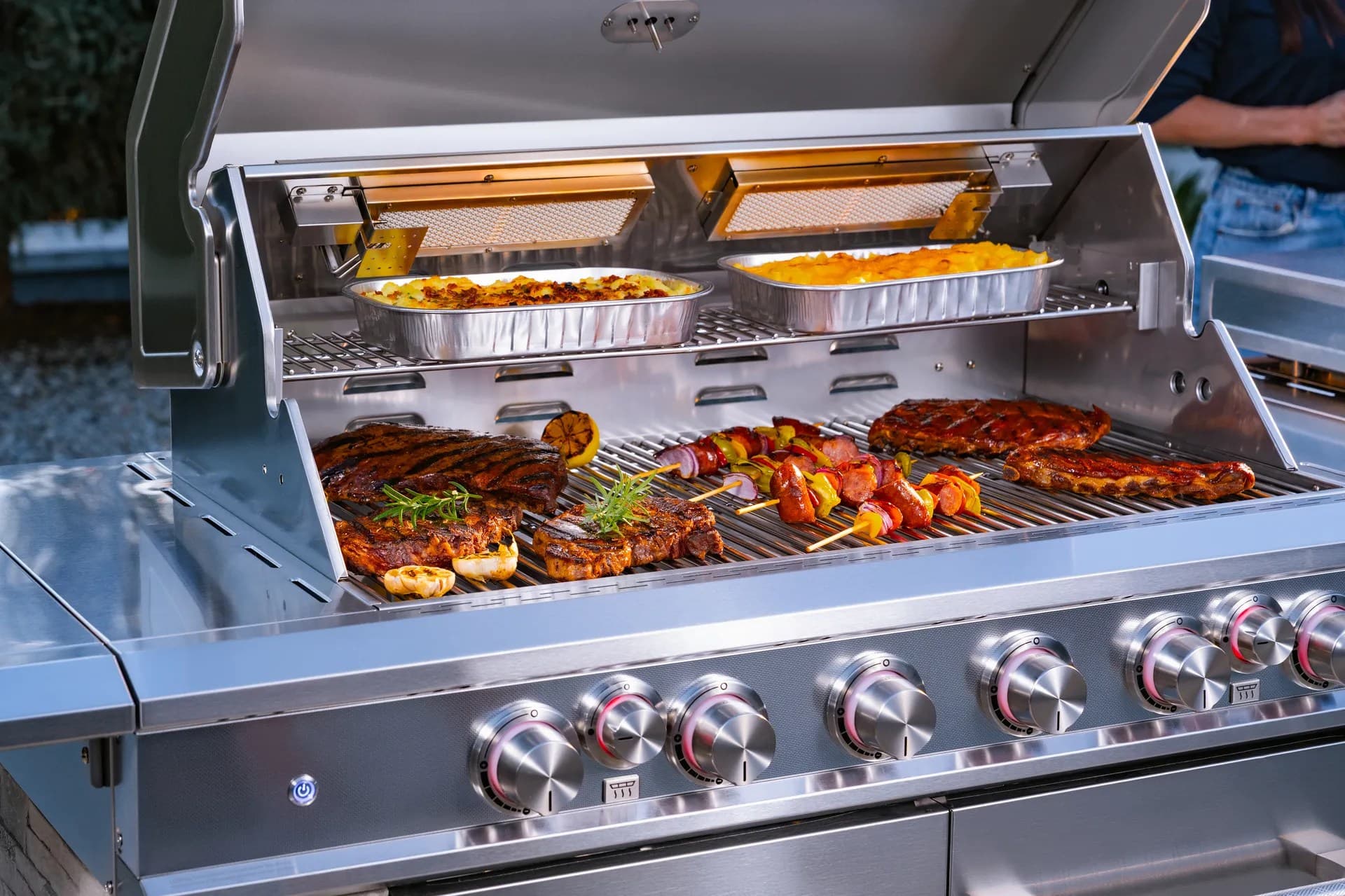
Explore the costs and benefits of pizza ovens and grills to find your best cooking solution.
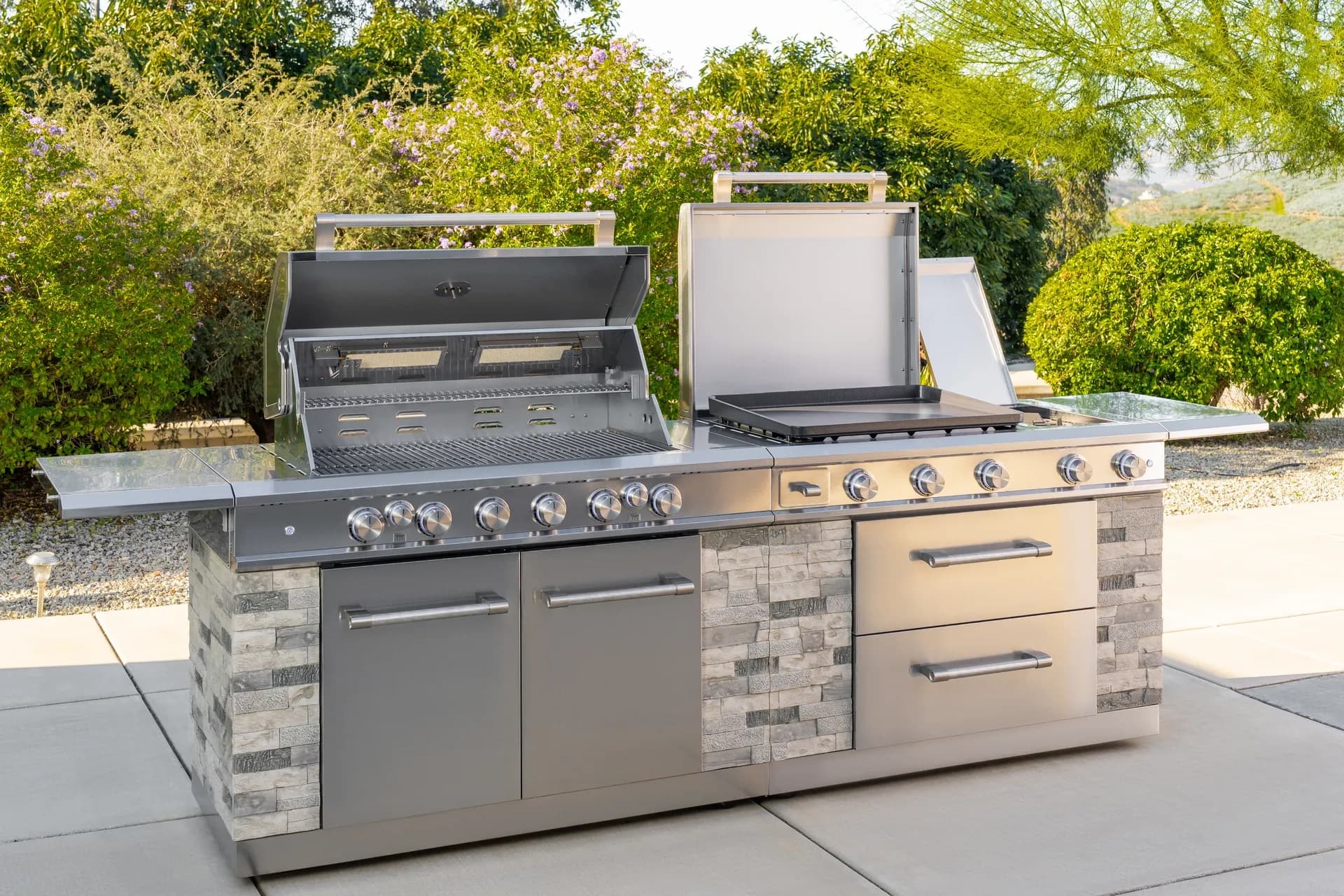
From sizzling breakfasts to smash burgers and teppanyaki-style dinners, the Daytona Pro 5 Burner NitroGuard™ Griddle delivers powerful heat, fast cooking, and a durable cooking surface built for every backyard cookout. Watch how easy outdoor cooking can be.
Here's what sets us apart from the competition
We position ourselves as delivering high-end outdoor cooking features and performance without premium-brand pricing, emphasizing “Quality Grills. Unbelievable Value.”
We offer gas grills, pellet grills, griddles, smokers, pizza ovens, portable/tabletop grills, electric grills, accessories, and replacement parts — allowing customers to stay within one ecosystem for all outdoor cooking needs.
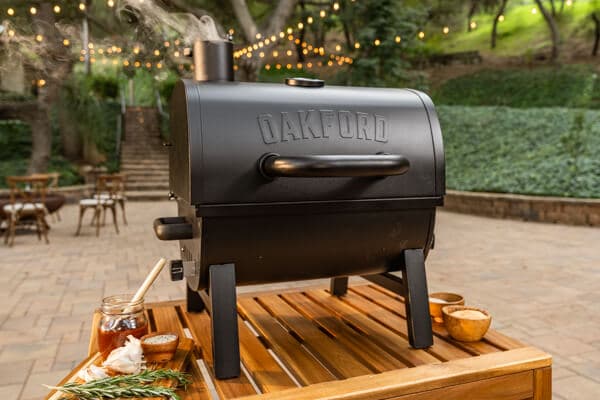
We differentiate ourselves through smart grilling products like the Oakford smart pellet grill, including app-connected cooking controls and modern outdoor cooking technology.

Expert tips, buying guides, comparisons, and inspiration for choosing and getting the most out of your grill.

Practical guides for cleaning, maintenance, common grill issues, and performance optimization.

Step-by-step grilling recipes, cooking techniques, and meal ideas for every occasion and skill level.

Backyard entertaining ideas, seasonal grilling inspiration, and stories that celebrate outdoor cooking culture.

Helpful articles covering grilling tools, cookware, maintenance gear, and must-have accessories for outdoor cooking.

Find griddle recipes, cooking techniques, cleaning tips, and outdoor meal ideas designed for Nexgrill griddles.
Find answers to common questions
Gas grills provide instant heat and precise temperature control, making them easier to use. Charcoal grills offer a smoky flavor and high heat for searing but require more time to heat up and manage.
Pellet grills combine the convenience of gas with the flavor of wood, allowing for smoking, baking, and grilling. Traditional gas grills, however, are quicker to start and often easier to clean.
Charcoal grills typically reach higher temperatures quicker than gas grills, making them better for searing meat. However, high-quality gas grills can also provide adequate heat for effective searing.
Nexgrill offers models designed specifically for gas, charcoal, and pellets, allowing users to choose based on their cooking style and flavor preferences. Each type is built to optimize the characteristics of its respective fuel.
Choosing between gas and charcoal grills depends on your cooking preferences and lifestyle. If you value convenience and quick cooking, a gas grill may suit you better; if you prefer the taste and experience of traditional grilling, a charcoal grill would be ideal.
In This Article
Cost Breakdown
Performance Insights
User Testimonials
When people compare pizza oven vs grill price, they usually start with the sticker number, but the better question is what you are actually buying with that price. A grill can often get dinner done on a weeknight, while a pizza oven is built to push concentrated heat and recover quickly between pies. That difference changes not only what each appliance costs, but also how much value you get from it over time. If your goal is more than pizza alone, the price conversation becomes a question of versatility, fuel use, storage space, and how often you will realistically cook with high heat.
For a Nexgrill audience, the decision often comes down to balancing enthusiasm with practicality. Some households want the quickest route to a crisp crust and restaurant-style char. Others want one outdoor cooker that handles burgers, vegetables, steaks, and the occasional pizza night without requiring a second purchase. That is why a useful price comparison has to go beyond the base cost and include the hidden economics of accessories, fuel, setup, and maintenance. A budget grill may appear cheaper up front, but a pizza oven may feel like the better buy if pizza is the centerpiece of your outdoor cooking routine.
The real value test is not only what costs less today, but which appliance matches your most common meals and your available space.
A grill usually earns its keep through versatility, while a pizza oven pays off fastest when pizza night happens often.
In the United States, the price spread is wide enough that two shoppers comparing the same category can land in very different places. Entry-level outdoor grills commonly start in the low hundreds of USD, with small two-burner models often serving as the most affordable full-size option. Midrange four-burner grills usually sit in a higher band because they add more cooking space, better heat control, and extras like side shelves or a side burner. Premium grills with thicker materials, larger cooking areas, and specialty features can move well above that, especially when stainless steel and advanced temperature control are part of the package.
Pizza ovens tend to begin a little higher than the most basic grills if you are comparing purpose-built models. Portable countertop or small backyard pizza ovens often fall into a mid-hundreds to low-thousands USD range depending on fuel type and build quality. Wood-fired and gas-fired outdoor pizza ovens with heavier shells, better insulation, or larger stone decks usually cost more because they are designed to hold higher temperatures for repeated use. Built-in outdoor pizza ovens or larger specialty units can climb substantially once installation, masonry, cabinetry, and venting are included. In other words, the real price is often the appliance plus the infrastructure around it.
| Category | Typical U.S. price range | What drives the cost |
|---|---|---|
| Basic gas grill | About $150 to $400 | Burner count, cooking area, and frame materials |
| Midrange gas grill | About $400 to $900 | Thicker construction, side burner, better grates, larger surface |
| Portable pizza oven | About $250 to $700 | Fuel source, insulation, stone size, portability |
| Dedicated backyard pizza oven | About $700 to $2,500+ | Heat retention, size, materials, included accessories |
The often-overlooked cost factor is flexibility. A grill can make pizza with a stone or steel, but it does not require you to dedicate the appliance to pizza alone. That means if you spend $500 on a grill, you may get year-round use for weeknight dinners, holiday sides, and searing. A $500 pizza oven may deliver better pizza results, but if it only comes out a few times a month, the cost per cook is higher. On the other hand, if your family or friend group makes pizza regularly, the specialized appliance can be easier to justify because it reduces the learning curve and speeds up repeat sessions.
Not all pizza ovens are priced the same because not all of them are built for the same job. Portable pizza ovens are usually the most approachable entry point. They are compact, easier to move, and often designed for propane, wood, pellets, or hybrid use. Their lower size helps control cost, but that also means less thermal mass and, in some cases, a smaller pizza opening. For many households, that trade-off is worth it because the oven can be stored away and used only when needed.
Wood-fired pizza ovens usually command a premium because they deliver the romance and flavor people associate with classic pizzeria cooking. The cost is not just about the oven body. You also need to think about fuel storage, fire-starting time, and the amount of practice it takes to maintain steady heat. Gas-fired pizza ovens often cost a little more than the simplest portable models, but they can be easier to control and faster to use on a busy night. That convenience can matter more than the fuel itself for buyers who want fewer variables.
Built-in pizza ovens are the highest-commitment option. They may offer the best visual integration and heat retention, but the total project cost can move far beyond the appliance price once labor and installation are included. For many homeowners, that makes a built-in oven a lifestyle investment rather than a casual purchase. If your outdoor kitchen is already planned, the added expense may make sense. If not, a portable or cart-based solution can deliver a much better cost-to-use ratio.
A low appliance price can be misleading if setup, fuel, and installation push the total well above your budget.
Grills, especially propane models, usually win on upfront accessibility because there are more sizes and feature combinations available at almost every price tier. For shoppers comparing pizza oven vs grill price directly, the most practical question is whether you want a single appliance that can do more jobs or a more specialized machine that does one job exceptionally well. Try comparing two products side by side below to see which fits best:
Once you've weighed two options against each other, the next step is figuring out what performance means in real life. Pizza ovens are designed to get very hot, very fast, and that matters because a pizza crust needs intense top and bottom heat to rise quickly while browning before the toppings dry out. A grill can absolutely make good pizza, especially with a pizza stone or steel, but it usually behaves more like an adaptation of a multi-use cooker than a purpose-built pizza station. That difference affects both the cook time and the final texture.
A dedicated pizza oven can often finish a pie in just a few minutes once fully preheated. That speed is one of its main advantages, especially if you are cooking for a group and want to keep pies moving. Grills, by comparison, may take longer to stabilize at the right pizza-making temperature, and the heat under the stone can be less even unless the grill has strong, balanced burners and a closed lid. Still, a grill can be a strong choice for people who want browned bottoms, moderate char, and a smoky edge without buying another appliance.
| Cooking factor | Pizza oven | Grill |
|---|---|---|
| Preheat time | Usually faster to reach pizza-ready heat | Often slower to stabilize for pizza baking |
| Cook time per pizza | Often a few minutes | Usually a bit longer and more variable |
| Flavor profile | High-heat bake with pronounced crust blistering | Adds grilled notes and lighter smoke character |
| Versatility | Best for pizza and similar high-heat bakes | Strong for meats, vegetables, seafood, and pizza |
Flavor is where personal preference becomes decisive. Pizza ovens create a concentrated bake that browns cheese, melts toppings quickly, and can produce leopard spotting or a charred edge if the dough and temperature are dialed in. That is the flavor people chase when they want something close to a specialty pizzeria experience. Grills, especially when paired with wood chunks or charcoal, can add a deeper smoky note that some cooks prefer. If you enjoy a slightly rustic finish and do not mind a less refined crumb structure, a grill-based pizza can feel more relaxed and backyard friendly.
If your top priority is classic pizzeria-style crust, the pizza oven usually wins. If your top priority is one appliance that handles steak night and pizza night, the grill usually wins.
Heat retention also affects consistency. Pizza ovens with more insulating material and heavier construction hold heat better between pies, which means less waiting and fewer temperature swings. A grill can lose more heat when the lid is opened repeatedly or when the stone is not fully preheated. This is why some home cooks find their first pizza on a grill looks good, but the second and third pies take more attention. In practical terms, the pizza oven rewards repetition, while the grill rewards flexibility.
User feedback tends to split along lifestyle lines. Families that make pizza night a weekend ritual often say the pizza oven feels more exciting and more repeatable. They like the fast turnaround, the dramatic oven heat, and the sense that everyone can customize their own pie without waiting long. In those households, the appliance becomes part of the gathering, not just the cooking. That social factor matters because when the oven is hot and people are waiting on fresh pies, the experience feels special in a way that a standard grill dinner may not.
Grill owners, meanwhile, often describe pizza as a bonus capability rather than the primary reason they bought the appliance. Their most common praise is that they can grill dinner most days, then use the same setup for pizza when they want variety. A typical comment from this group is that the grill is the appliance that stays busy all year, while a pizza oven is the appliance that earns enthusiasm on specific occasions. That does not make the grill less valuable; it simply means the value comes from frequency of use.
Another recurring user insight is learning curve. Pizza ovens can be extremely rewarding, but they can also punish inattention because the temperatures are so high. Dough that is not stretched evenly, sauce that is too wet, or toppings that are too heavy can turn a great-looking setup into a burnt or underdone pie. Grills are usually more forgiving, especially for beginners who are already comfortable with indirect heat and lid control. For many buyers, the best choice is the one that matches their confidence level and how much practice they want to invest.
If your household likes variety and low drama, a grill often feels easier to live with. If your household loves pizza as an event, a pizza oven can be more satisfying.
DIY pizza ovens can look tempting because the material cost may appear much lower than a retail model. A home-built oven can be assembled from firebrick, refractory materials, insulation, and a simple base if you already have tools and know-how. In theory, this can reduce upfront spending. In practice, the savings depend heavily on design complexity, delivery fees for heavy materials, and how much trial and error you are willing to accept. If you make mistakes in the structure or insulation, you can easily erase the initial savings.
Store-bought pizza ovens cost more at the register, but they usually save time and reduce risk. The shell, insulation, and cooking chamber are engineered together, which can make temperature management more predictable. For buyers who value convenience or who want to start cooking immediately, that predictability is part of the value proposition. A store-bought model may also be easier to move, resell, or cover for storage depending on the design.
From a cost-effectiveness standpoint, the choice often hinges on labor. If you enjoy building projects and you want a custom size or aesthetic, DIY may be the better long-term fit. If your main goal is repeatable pizza with fewer variables, a retail oven can be more efficient despite the higher purchase price. The same logic applies when comparing grills and pizza ovens more broadly: lower upfront cost is not the same as lower total cost of ownership.
Maintenance is a quiet but important part of the price comparison because cleaning, storage, and replacement parts all affect how expensive an appliance becomes over time. Grills usually require regular grease management, grate cleaning, burner checks, and occasional ignition or hose inspections. The upside is that many grill components are straightforward to clean or replace, which can help extend lifespan if the unit is built well. A covered grill stored out of harsh weather can last for many seasons with sensible upkeep.
Pizza ovens need less grease cleanup, but they are not maintenance-free. Ash removal, stone care, heat cycling, and protection from weather all matter. Wood-fired ovens may need more attention because residue and ash build up differently than in a gas grill. The stone or deck also requires care because moisture and thermal shock can shorten its usable life if it is not heated and cooled properly. Over time, the oven that is simplest to maintain is usually the one that matches your fuel choice and storage habits.
Longevity also depends on construction quality. A grill with thin steel and exposed components may wear faster than a better-built model, even if it was cheaper on day one. A pizza oven with stronger insulation and weather protection may justify its higher cost by staying consistent longer. In practical U.S. backyard use, the better value is usually the appliance that survives the most seasons with the least frustration, not the one with the lowest initial quote.
Leaving either appliance uncovered through winter or repeated rain exposure can turn a bargain into a replacement cost faster than expected.
If you want the clearest answer to pizza oven vs grill price, it is this: grills usually win on flexibility and everyday value, while pizza ovens usually win on dedicated pizza performance. Choose a grill if you want one appliance that handles many meals and keeps your outdoor cooking budget under control. Choose a pizza oven if pizza is the main event and you care most about fast bake times, high heat, and classic crust texture. Choose DIY only if you are comfortable trading labor for potential savings and accept a steeper learning curve.
For shoppers in the U.S. who are watching total spend, the smartest path is to compare purchase price, fuel, accessories, and how often the appliance will actually be used. That is where the real difference shows up. If you want a broader outdoor cooking setup, a grill is usually the safer buy. If you want memorable pizza nights that feel closer to a pizzeria experience, a pizza oven may be worth the premium. Sources:
Here's what sets us apart
We position ourselves as delivering high-end outdoor cooking features and performance without premium-brand pricing, emphasizing “Quality Grills. Unbelievable Value.”
We offer gas grills, pellet grills, griddles, smokers, pizza ovens, portable/tabletop grills, electric grills, accessories, and replacement parts — allowing customers to stay within one ecosystem for all outdoor cooking needs.
We differentiate ourselves through smart grilling products like the Oakford smart pellet grill, including app-connected cooking controls and modern outdoor cooking technology.
Don't just take our word for it
Keep reading
From our catalog