Nexgrill Gourmet Pro 6-Burner Review: How to Inspect, Test, and Revive a Legacy Gas Grill
A practical how-to for owners and used-buyers of the Gourmet Pro 6-burner: confirm the SKU, run a pass/fail inspection, then decide whether to repair or walk away.
In This Article
Confirm the SKU First
Three Failure Points
Repair-or-Walk Rubric
Why a Gourmet Pro 6-Burner Review Starts With the Model Plate, Not the Spec Sheet
If you just towed home a used Nexgrill Gourmet Pro 6-burner for two or three hundred dollars off a Marketplace listing, the useful question is not "is this a good grill in 2024?" It is "can this specific unit be made to run safely and evenly for one more summer, and at what cost?" That question is answered by stamped metal and a sticker, not by a spec sheet. The Gourmet Pro is a legacy retail nameplate that Nexgrill built for big-box channels-historically Home Depot-and it does not appear as a current, orderable model on Nexgrill's own product collection. That absence matters: it means there is no live product page to copy specifications from, and any review you read that quotes a precise BTU number for "the Gourmet Pro" is guessing or describing a different year.
So treat this as a how-to, not a verdict. You will confirm what you actually own, run a pass/fail inspection, decide repair versus walk-away, and only then talk about money. Everything below is written for the second-hand buyer and the long-time owner reviving a dormant unit.
Do not trust the seller's stated model year, BTU rating, or "barely used" claim. The rating plate and a flashlight settle every one of those in under ten minutes.
What the Gourmet Pro Nameplate Actually Is (and Where It Sits vs. Today's Daytona and Oakford Lines)
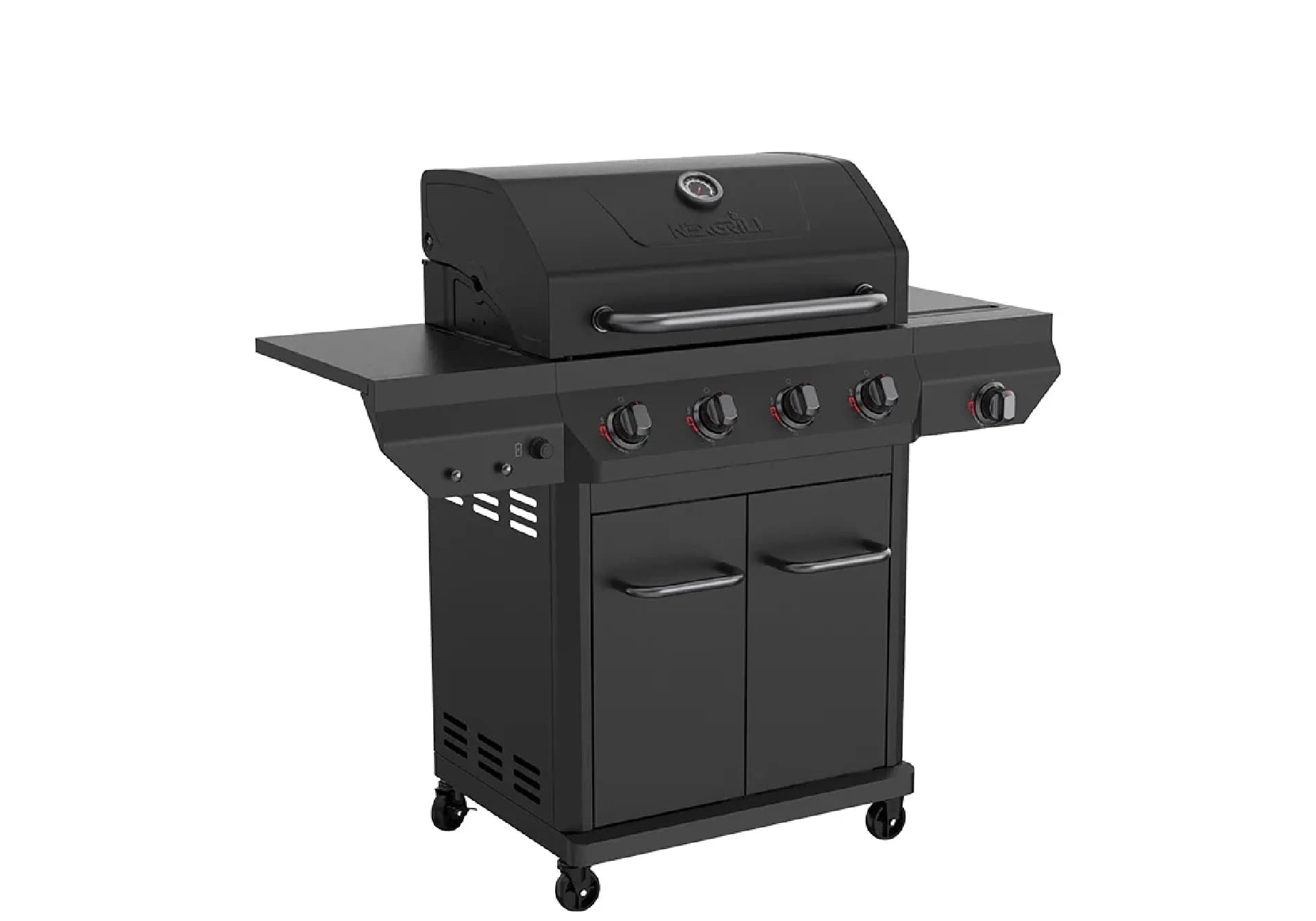
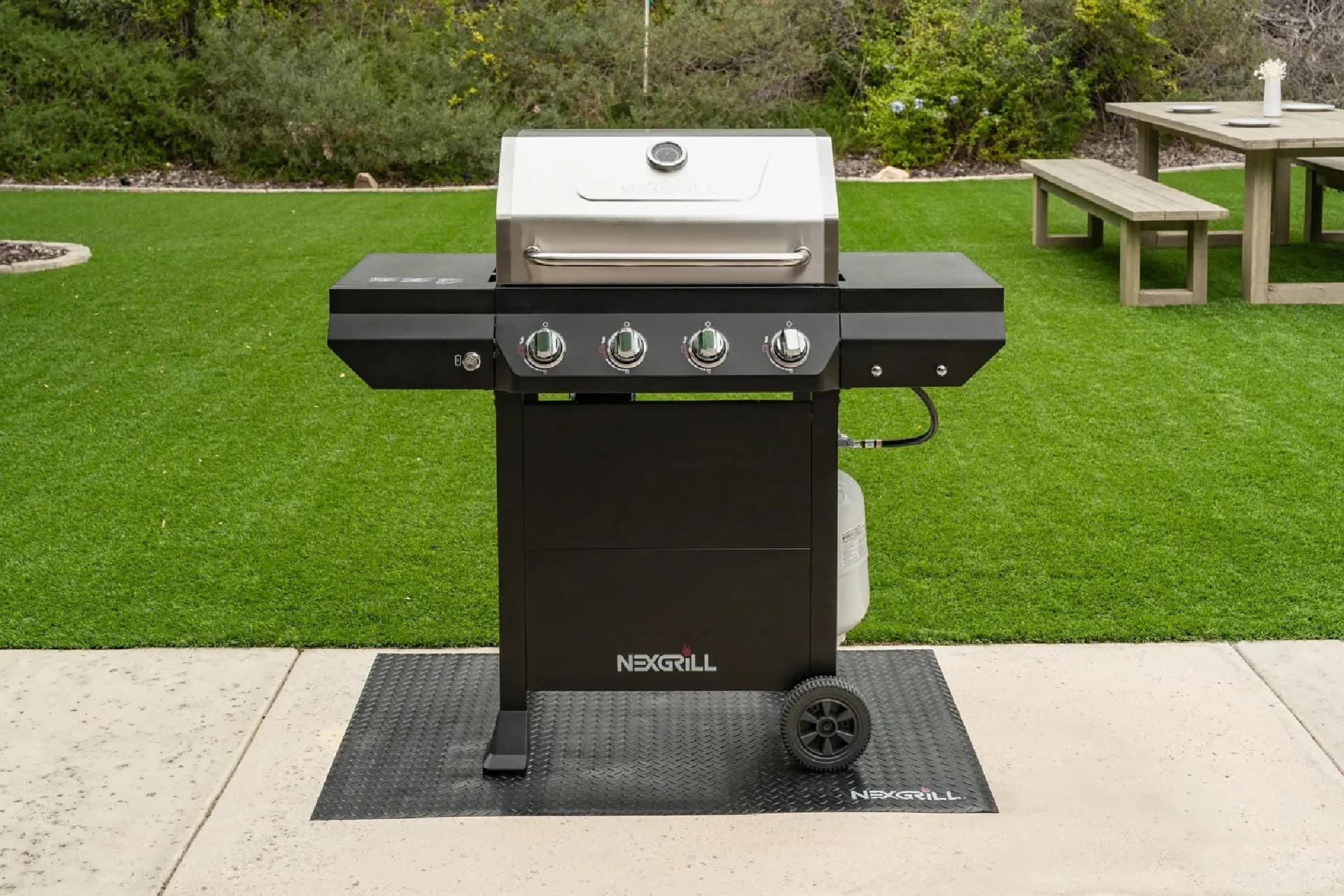
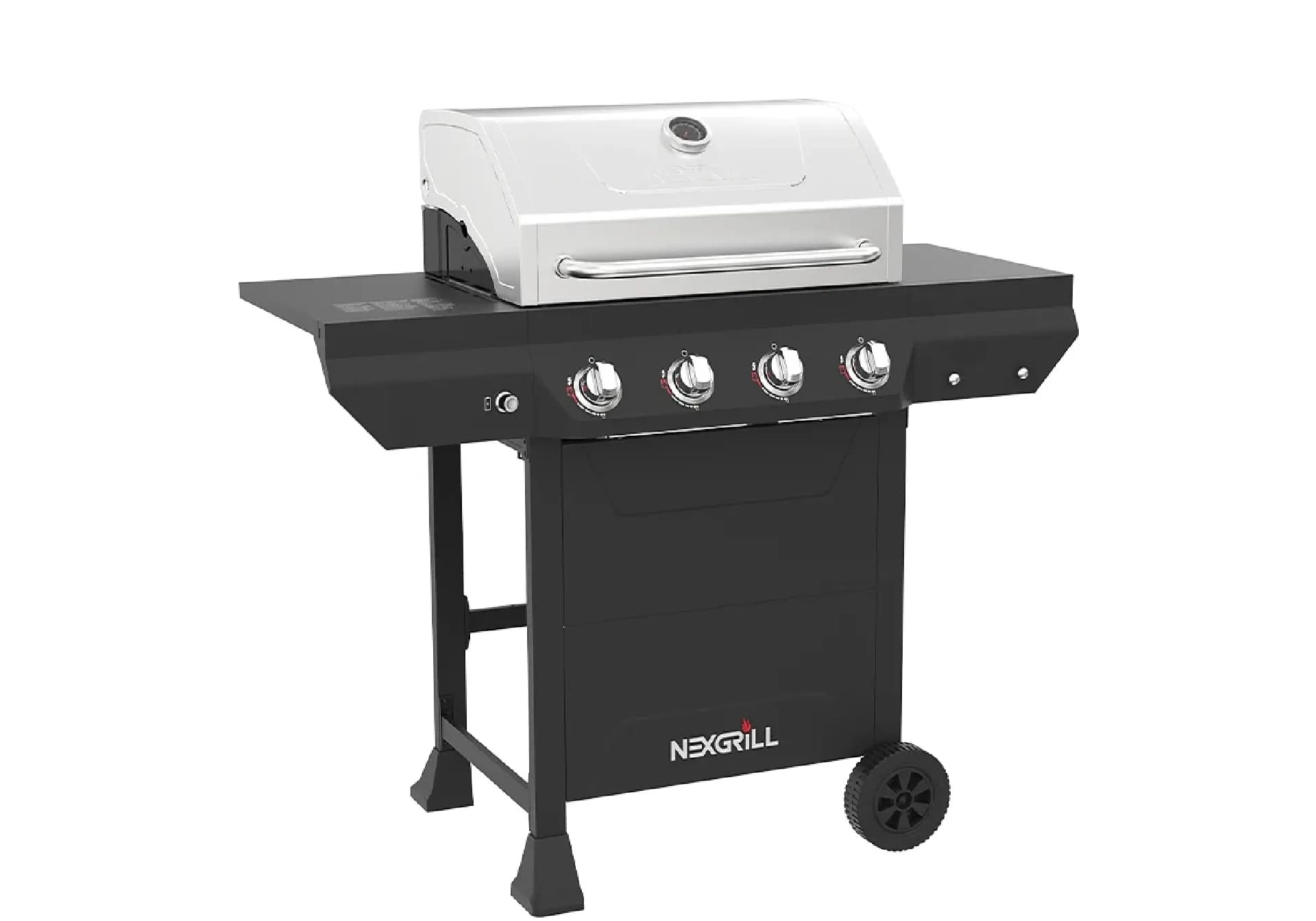
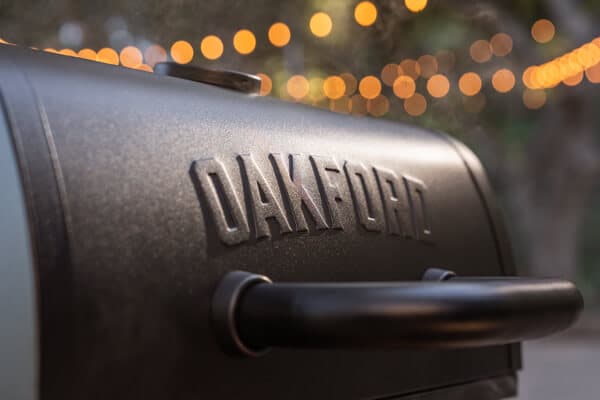
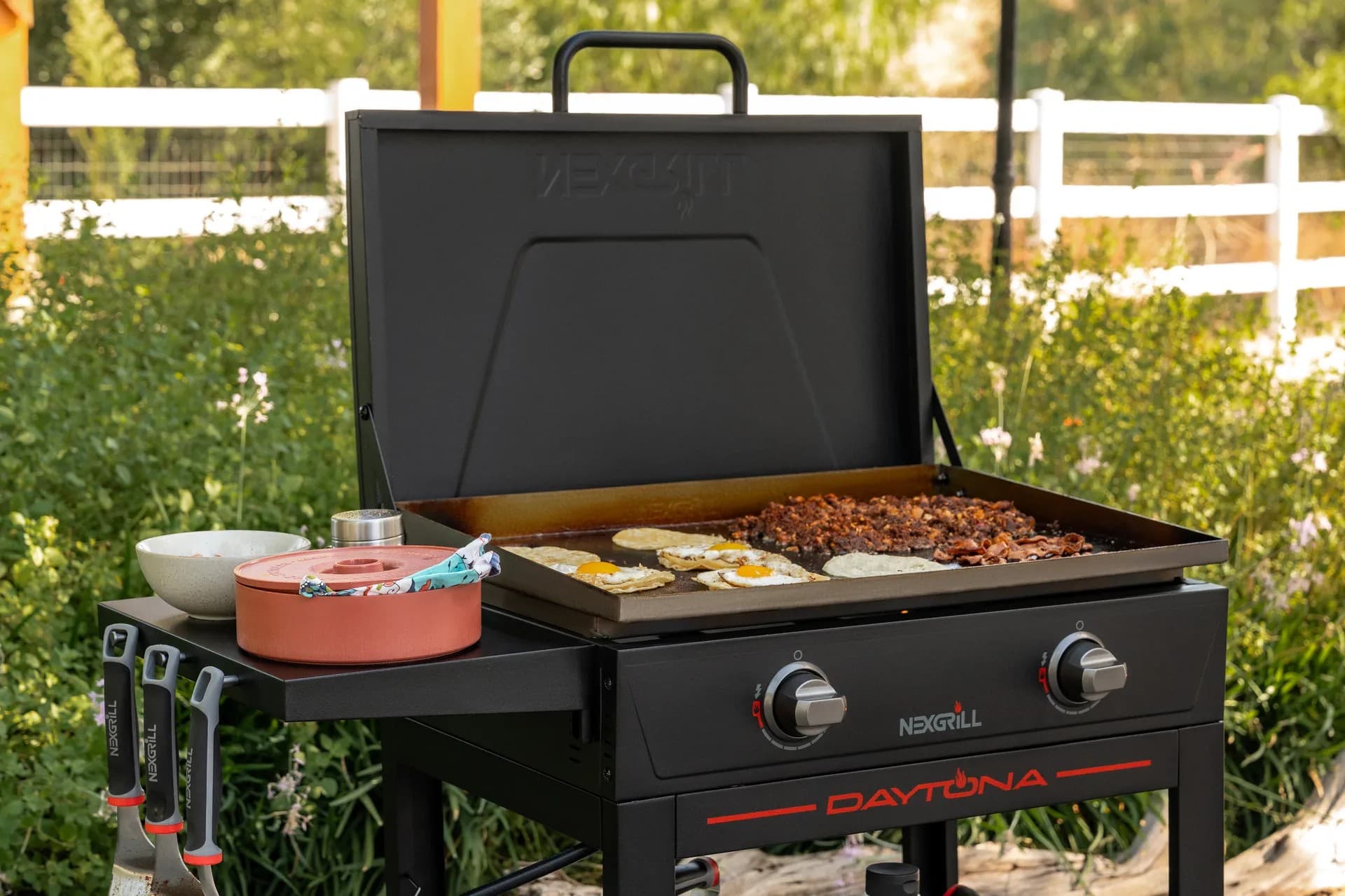
Nexgrill has run several retail names over three decades-Gourmet, Deluxe, Daytona, and Oakford among them-and the Gourmet Pro 6-burner belongs to the older, conventionally styled gas family: a cart-mounted cabinet grill with six main burners, usually a side burner, and a stainless or powder-coated lid depending on the year. It is not a flat-top griddle and not a pellet smoker. Today's lineup has moved in two directions this grill predates: the Daytona griddle line (flat-top cooking) and the Oakford pellet and charcoal family (smoke-forward cooking). A working Gourmet Pro still does the job those gas grills always did-direct and indirect heat across a wide surface-so its age is not disqualifying. What is disqualifying is rust you cannot stop.
Before You Start: Tools, a Propane Tank, and the 720-Series Number You Need
Gather these before you touch the grill, because a cold inspection misses half the problems:
- A full or half-full propane tank, plus a spray bottle of soapy water
- Flashlight or headlamp for cabinet interiors
- Phillips and flathead screwdrivers, adjustable wrench, wire brush
- Phone camera to photograph the rating plate and any damage
- A notepad to log pass/fail results
The number that matters is a 720-series model code-Nexgrill's legacy grills use the format 720-XXXX. You will need it for every parts search later. Write it down before you do anything else.
Step 1 - Locate and Photograph the Rating Plate Inside the Cabinet
Open the cabinet doors and look on the inside of the right or left door, the rear panel, or the underside of the side shelf. The plate is usually a silver or white sticker listing the 720 model number, serial, fuel type, and manifold pressure. Photograph it at an angle where the digits are legible. If the sticker is gone or unreadable, you are inspecting blind-negotiate accordingly, because you cannot order correct parts without it.
Step 2 - Confirm Burner Count, Side Burner, and Fuel Type Against Your Plate
Count the control knobs on the front panel. Six main burners means six primary knobs; a seventh knob usually indicates a side burner, and an eighth may be a rotisserie or sear burner on some years. Confirm the plate says LP (propane) or NG (natural gas). This is not trivia-a natural-gas manifold will not run correctly on a propane tank, and swapping requires a different orifice set. If the seller converted it, ask for documentation; if there is none, assume the conversion was not done and price in a correction.
Step 3 - Sanity-Check BTU and Cooking Area Against the 6-Burner Class Range
Nexgrill does not publish a current spec page for this legacy model, so compare what is stamped on the plate to the typical range for a mid-size six-burner cart grill: roughly 60,000-72,000 BTU total output and about 700-800 square inches of primary cooking area, with warming racks adding more. A quick sanity check is the BTU-to-area ratio: divide total BTU by primary square inches. Healthy six-burner gas grills generally land in the roughly 80-100 BTU per square inch band. Much lower and the grill will struggle to sear; much higher often signals an overstated figure.
Typical healthy ratio for a six-burner gas grill primary cooking area (verify against your own plate)
Step 4 - The Five-Minute Pass/Fail Inspection: Burner Tubes, Crossover Channels, and Firebox Seams
Three failure points decide most legacy gas grill outcomes. Inspect each one deliberately:
| Component | What to Look For | Pass | Fail |
|---|---|---|---|
| Burner tubes | Rust, holes, blocked ports | Uniform ports, surface-only rust | Perforated or flaking metal |
| Crossover channels | Metal bridging burners | Intact, lights neighbour | Cracked or missing |
| Igniter electrode | Ceramic and tip condition | Clean gap, strong spark | Cracked ceramic or dead spark |
| Firebox seams | Bottom and side welds | Surface rust only | Deep pitting or perforation |
| Cabinet base | Lower frame and legs | Solid, no flex | Soft metal or holes |
Remove each burner tube by lifting it off the valve orifice-do not force it. Shake it. If rust flakes rain out and you can see daylight through pinholes, that burner is a fail, not a maybe. Crossover channels are the small bridges between burners; if one is cracked, one burner will not light the next.
Reading a Used Listing: What 'Works Great' Usually Hides
"Works great" is a statement about whether the seller lit it once, not about whether all six burners produce even flame. Expect the listing to omit the 720 number, to disguise firebox rust under a freshly scrubbed grate, and to skip any mention of the side burner's condition. Ask for a photo of the rating plate and a photo of the flames with all six running before you drive anywhere.
Try Comparing Two Products Side by Side Below to See Which Fits Best
A legacy Gourmet Pro and a current Nexgrill gas grill can do similar cooking work but differ sharply in parts availability and inspection risk. Use the comparison tool below to line up two candidates-the used six-burner you found and a new model-before you commit money to either.
Once You've Weighed Repair Against Replacement, Here's What Else Matters
You have the plate photographed and a pass/fail sheet filled in. Now run the grill hot and watch the flames. A compression pass does not prove ignition, and an ignition test is where most hidden faults surface.
Lighting and Temperature Test: What Good Looks Like on All Six Burners
Open the lid, turn every knob to high, and press the igniter. Good behavior: each burner lights within two or three clicks, flame is blue with slight yellow tips, and flame height is roughly consistent across all six. Lift a burner high or low and watch for flame that climbs back toward the valve-that is flashback, caused by spiders or grease blocking the venturi tubes, and it must be fixed before the grill is used. Let it run ten minutes with the lid closed and compare grate temperatures by hand-a hot spot on one side and a cool zone on the other usually means a failing burner or a blocked port.
Flashback is a genuine hazard, not an annoyance. The U.S. Fire Administration and CPSC both flag blocked venturi tubes and leaks as leading causes of outdoor grill fires-clean or replace the burner before first use.
Parts Sourcing by 720 Model Number, Not Generic 'Universal' Burners
This is where used Gourmet Pro buyers go wrong most often. A "universal" burner sold online may have a different length, port spacing, or orifice diameter, and it will either not fit or burn unevenly. Match parts to the 720 number through Nexgrill's own catalog and support pages. Because the Gourmet Pro is a legacy model, expect limited availability-some parts may be discontinued. When a burner tube is unavailable, the honest options are a verified aftermarket match to the 720 code or retirement of the grill. Budget roughly $30-$80 per replacement burner, $15-$40 for an igniter, and $50-$150 for a new grate set, as USD estimates.
Repair-or-Replace: A Used-Buyer Rubric With Estimated USD Ranges
Score each factor, then add the repair estimates. If total repair cost stays under half the price of a comparable new grill, repair is usually reasonable. If firebox or cabinet rust is structural, walk away regardless of price.
| Factor | Pass (repair) | Fail (walk) | Est. Repair USD |
|---|---|---|---|
| Cooking grates | Intact coating | Cracked or exposed cores | $50-$150 |
| Firebox | Surface rust only | Perforation or soft metal | $0 if solid |
| All six burners light | Even, adjustable flame | One or more dead | $30-$80 each |
| Side burner | Lights and holds | Dead or missing | $25-$60 |
| Cabinet rust | Cosmetic | Structural | Walk away |
Five Mistakes That Sink a Legacy Gas Grill
- Ordering universal burners before confirming the 720 number
- Skipping the soap-solution leak test at every tank swap
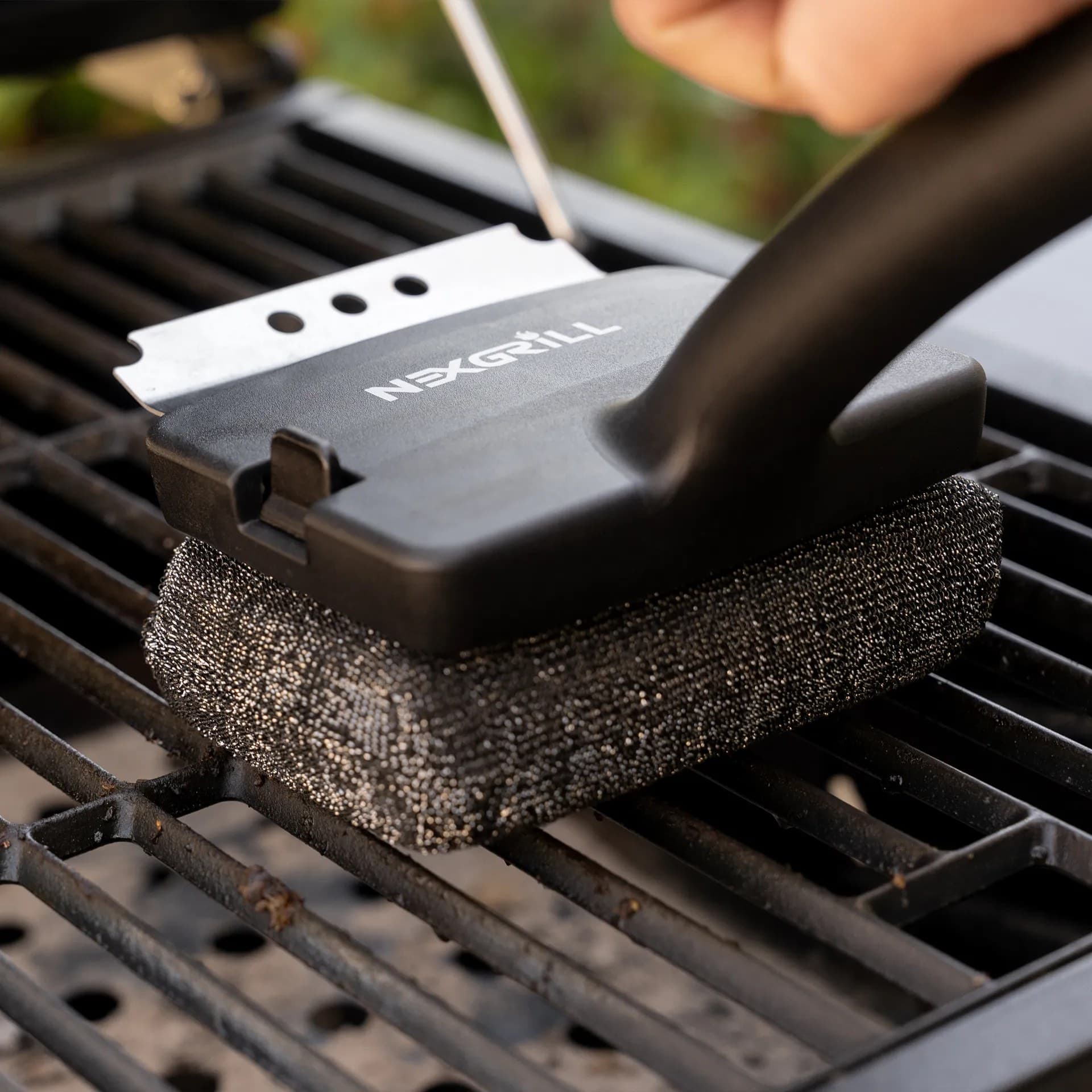
- Using a wire brush on coated grates and stripping the coating
- Storing the grill uncovered through a wet season-bottom seams rust first
- Replacing one dead burner instead of inspecting all six
Annual Reset Checklist: Spiders, Leak Tests, and Seasonal Deep Clean
At the start of each season, remove the burners and brush out the venturi tubes to clear spider webs and grease. Apply soapy water to the tank-to-regulator connection, the regulator, and the manifold, then open the tank valve with the lid open-no bubbles, no leaks. Deep-clean the firebox, inspect the cabinet welds for soft metal, and coat bare spots with high-temp paint. A grill left uncovered through one wet season can develop rust that costs more to fix than the grill is worth.
When the Honest Answer Is a Current Nexgrill Instead
If the firebox is perforated, the cabinet is soft, or the burner set is discontinued and unverified, stop spending. The Gourmet Pro was a good grill for its day, but its day has passed. A current Nexgrill gas grill in the two-to-four-burner range, a Daytona flat-top, or an Oakford pellet or charcoal model gives you a documented parts path and full support. Browse the current Nexgrill catalog and compare specs before you sink another hundred dollars into a discontinued chassis.