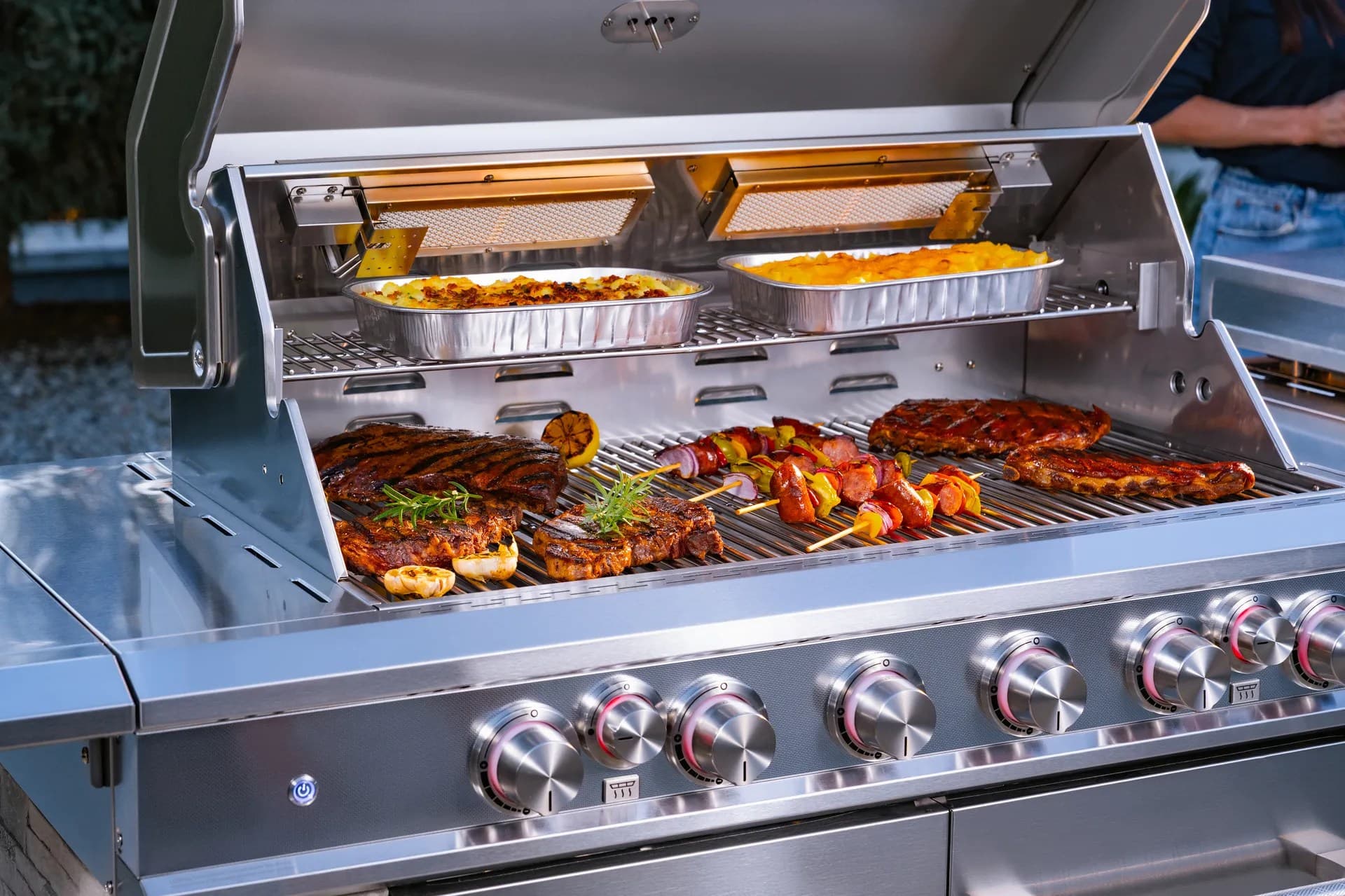
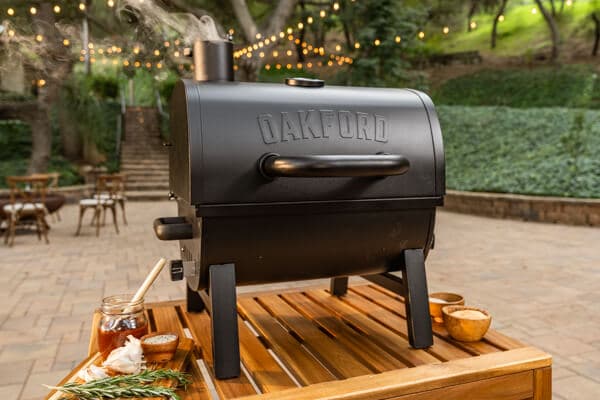
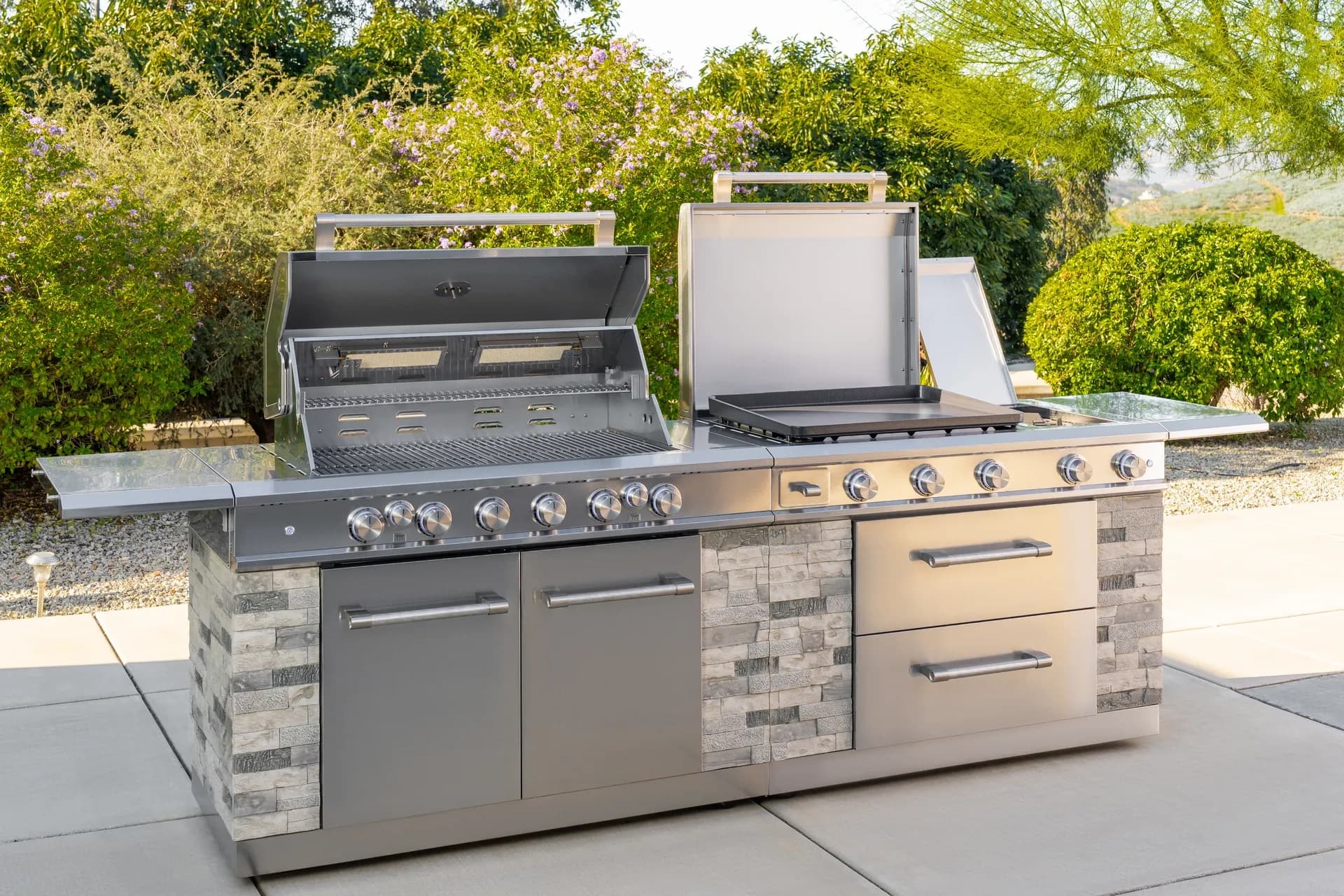
Explore the performance, features, and user experiences of top 5-burner gas grills with griddles.
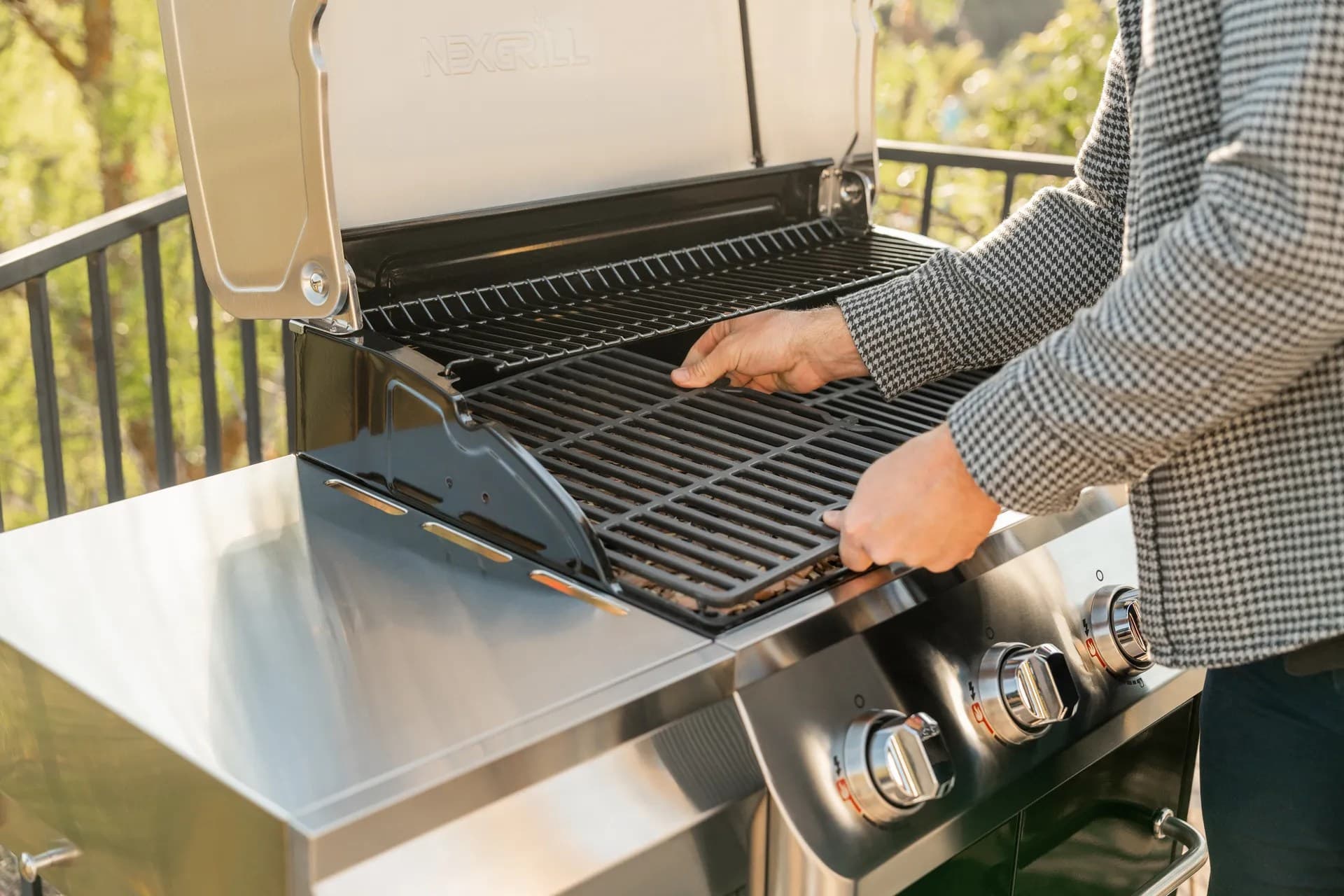
From sizzling breakfasts to smash burgers and teppanyaki-style dinners, the Daytona Pro 5 Burner NitroGuard™ Griddle delivers powerful heat, fast cooking, and a durable cooking surface built for every backyard cookout. Watch how easy outdoor cooking can be.
Here's what sets us apart from the competition
We position ourselves as delivering high-end outdoor cooking features and performance without premium-brand pricing, emphasizing “Quality Grills. Unbelievable Value.”
We offer gas grills, pellet grills, griddles, smokers, pizza ovens, portable/tabletop grills, electric grills, accessories, and replacement parts — allowing customers to stay within one ecosystem for all outdoor cooking needs.
We differentiate ourselves through smart grilling products like the Oakford smart pellet grill, including app-connected cooking controls and modern outdoor cooking technology.

Expert tips, buying guides, comparisons, and inspiration for choosing and getting the most out of your grill.

Practical guides for cleaning, maintenance, common grill issues, and performance optimization.

Step-by-step grilling recipes, cooking techniques, and meal ideas for every occasion and skill level.

Backyard entertaining ideas, seasonal grilling inspiration, and stories that celebrate outdoor cooking culture.

Helpful articles covering grilling tools, cookware, maintenance gear, and must-have accessories for outdoor cooking.

Find griddle recipes, cooking techniques, cleaning tips, and outdoor meal ideas designed for Nexgrill griddles.
Find answers to common questions
Gas grills provide instant heat and precise temperature control, making them easier to use. Charcoal grills offer a smoky flavor and high heat for searing but require more time to heat up and manage.
Pellet grills combine the convenience of gas with the flavor of wood, allowing for smoking, baking, and grilling. Traditional gas grills, however, are quicker to start and often easier to clean.
Charcoal grills typically reach higher temperatures quicker than gas grills, making them better for searing meat. However, high-quality gas grills can also provide adequate heat for effective searing.
Nexgrill offers models designed specifically for gas, charcoal, and pellets, allowing users to choose based on their cooking style and flavor preferences. Each type is built to optimize the characteristics of its respective fuel.
Choosing between gas and charcoal grills depends on your cooking preferences and lifestyle. If you value convenience and quick cooking, a gas grill may suit you better; if you prefer the taste and experience of traditional grilling, a charcoal grill would be ideal.
In This Article
Key Features Overview
User Testimonials
Maintenance Insights
A 5-burner gas grill with a griddle sits in an interesting middle ground for outdoor cooks who want more than a standard grate setup, but do not want to give up the speed and temperature control that makes gas grilling so practical. In one appliance, you get the ability to sear steaks, roast vegetables, and manage indirect heat across multiple zones, while also having a smooth griddle surface ready for breakfast spreads, smash burgers, fried rice, quesadillas, and delicate foods like shrimp or sliced peppers. That flexibility is why these combinations keep showing up in backyard kitchens, tailgating setups, and family patios across the United States.
The appeal of the 5-burner format is not just the extra burner count. It is the way five burners can support better heat mapping across a wider cooking surface. If the griddle section occupies part of the cooktop and the grill grates occupy another section, the extra burner helps maintain usable heat across both zones without forcing the cook to constantly shuffle food around. That matters in real use. A busy weeknight dinner may call for chicken on the grate, onions and peppers on the griddle, and buns warming off to the side. On a weekend, the same setup can handle pancakes for a crowd in the morning and dinner later in the day without switching equipment.
Info: For buyers who cook a wide mix of meals, the griddle half is often the feature that gets used most after the first few weekends. It becomes the zone for foods that would fall through grates or dry out on open flame.
Nexgrill’s brand positioning is built around approachable, inclusive outdoor cooking, and that fits this category well. The right combo grill should serve casual users who want easy dinner solutions, as well as experienced grillers who like to manage multiple heat zones and cook for groups. Nexgrill’s broader product philosophy emphasizes outdoor cooking as a shared experience, and that matters here because a 5-burner grill with a griddle is rarely a solo-use product; it is a social machine. It invites breakfast, lunch, dinner, and the kind of mixed menu that keeps guests engaged around the patio instead of waiting for one course at a time
When comparing top models, the first thing to understand is that the phrase 5-burner gas grill with griddle can describe several product styles. Some units use a dedicated griddle insert alongside grill grates. Others are true flat-top hybrids with a large griddle surface and separate grilling zones. A few emphasize portability and storage, while others focus on maximum cook area and a more permanent patio footprint. That means the best model is not the one with the most eye-catching spec sheet; it is the one that matches how you actually cook.
| Model style | Best for | Strength | Trade-off |
|---|---|---|---|
| 5-burner hybrid grill with side griddle zone | Families who want grill-and-griddle flexibility in one footprint | Fast switching between searing and flat-top cooking | May have less total griddle space than a dedicated flattop |
| Large flat-top griddle grill with five heat zones | Breakfast, stir-fry, and batch cooking | Even surface use and easy food movement | Less open-flame flavor than grate-focused grills |
| Grill with removable griddle insert | Buyers who want versatility without a second appliance | Lower footprint and lower storage demand | Insert can limit surface area and heat consistency |
In the broader market, Weber’s five-burner gas grill lineup is often used as a benchmark for traditional grill performance, while Blackstone is the name many buyers associate with griddle-first cooking. That contrast is helpful because it highlights the core decision. If your priority is open-grate grilling with the option to do griddle work, a Weber-style 5-burner platform may feel more familiar. If your cooking style leans heavily toward flat-top meals, Blackstone’s griddle expertise is a useful reference point. A true grill-and-griddle combo tries to bridge those two worlds, offering enough heat control for steak night while still giving you the smooth surface needed for eggs, pancakes, and chopped vegetable dishes. This makes it especially attractive for households that cook different menus throughout the week rather than repeating the same barbecue pattern over and over.
Warning: A five-burner layout can look powerful on paper, but poor burner spacing or thin metal can create hot spots. Heat quality matters more than burner count alone.
A useful comparison framework is to ask whether you want the grill side to feel primary or whether the griddle side should be the star. If you answer grill-first, look for models that preserve grate performance and reserve the griddle for side dishes and breakfast. If you answer griddle-first, look for more cook surface continuity and easier grease routing. Consumer guides such as Consumer Reports emphasize evaluating heat control, durability, and cleanup rather than focusing on one headline number, which is especially relevant for combo units where the cooking experience can vary significantly by zone
The features that matter most in a 5-burner gas grill with griddle are not always the ones displayed most prominently in product photos. Cook surface layout, burner arrangement, materials, grease management, and recovery time after opening the lid all influence whether the grill feels easy to use or frustrating in real life. For a combo unit, the best purchases tend to be the ones that manage temperature differences gracefully. A burger on the griddle should not scorch because the neighboring burner is running hotter for vegetables, and a chicken breast on the grate should not cook unevenly because the griddle section is stealing too much radiant heat.
| Feature | Why it matters | What good looks like |
|---|---|---|
| Burner layout | Determines heat balance across grill and griddle zones | Independent control and even spacing across the cooking area |
| Cooking material | Affects heat retention and cleanup | Thicker steel or quality coated surfaces that resist warping |
| Ignition system | Impacts first-use convenience and reliability | Fast, consistent startup across all burners |
| Grease management | Essential for safety and maintenance | Channels or trays that move grease away from heat sources |
| Lid and enclosure design | Affects versatility and weather exposure | A lid that helps retain heat without making griddle use awkward |
If you compare this category to Blackstone-style griddles, one practical difference is food movement. On a large flat-top, you can create a breakfast line where eggs, bacon, potatoes, and toast all move around the same plane. On a grill-griddle combo, you gain more contrast: one side can be smoking-hot for searing while the griddle side handles chopped vegetables or delicate items. That can be a real benefit for households that do not want to dedicate outdoor space to two separate appliances. On the other hand, if your cooking is mostly pancakes, fried rice, and smash burgers, a dedicated griddle may still be the more efficient tool. The right answer depends on how often you use each zone, not on which setup seems more versatile in theory.
Material quality is also critical. Outdoor cooking equipment lives in a harsh environment: heat cycles, moisture, grease, UV exposure, and frequent cleaning. Look for solid lid construction, sturdy cart framing, and cooking surfaces that can handle regular scraping and seasoning if the griddle area is steel. Because a combo unit sees both liquid fats and open flame, the grease system should be easy to access and empty. A poor drain design can turn a good grill into a smoky mess after only a few sessions. Finally, consider preheat time and heat recovery. Five burners should not just mean more flame; they should mean the ability to get back to cooking temperature quickly after adding cold food.
For buyers using a 5-burner gas grill with griddle as a center-of-patio appliance, comfort features matter too. Side shelves, utensil hooks, and enough prep space can reduce the number of trips back and forth to the kitchen. That may sound minor, but in practice it determines whether the grill feels like a serious outdoor workstation or a cramped heat source. In a Nexgrill context, that balance between practical utility and accessible value is part of the brand’s appeal, especially for buyers who want dependable performance without overpaying for features they will never use
A grill-and-griddle combo earns its keep when it solves a real cooking problem. Its biggest advantage is that it expands your menu without demanding another propane tank, another cart, or another storage area. You can cook bacon and eggs in the morning, then switch to chicken, vegetables, or fajita fillings at night. That convenience is more than a novelty if your household cooks varied meals or entertains often. The smooth cooking surface also handles foods that would otherwise be awkward on grates, including diced onions, chopped peppers, hibachi-style rice, seafood, and soft sandwich fillings.
Tip: If your favorite recipes involve mixed textures, such as toasted buns, seared protein, and sautéed vegetables, a combo grill often saves time because everything can finish within the same cook session.
There are trade-offs, though. The most obvious is that combo units can ask you to compromise. A dedicated grill usually gives more uninterrupted grate space and may feel better for classic barbecue, while a dedicated griddle gives more room for uniform flat-top cooking. On a combo unit, you may sacrifice some of each to gain both. Another challenge is learning how each section behaves. The griddle side may hold heat differently than the grate side, and the center burners may not match the edge burners perfectly. This means the first few sessions often require experimentation to map your hot and cool spots.
Cleaning expectations also change. A combo grill is not necessarily harder to clean than two separate appliances, but it does ask for more disciplined routine care. The griddle surface needs scraping and occasional oiling if it is seasoned steel, while the grill side needs grate brushing and burn-off attention. Grease can move differently through a combo system, so the owner needs to stay aware of residue buildup in channels, trays, and around burner openings. If you are the type of cook who likes a quick wipe-down and nothing else, a simple two-burner gas grill may feel easier. If you enjoy cooking projects and menu flexibility, the extra care is usually worth it.
Compared with Weber’s five-burner gas grills and Blackstone’s griddle-centered platforms, the combo category makes the most sense for people who sit in the overlap between those worlds. They want burger-night grilling and Saturday-morning breakfast on the same machine. They want one patio appliance that can host a crowd without turning the yard into a storage depot. That is the practical promise of the category. It is not just about more features; it is about reducing friction so the grill gets used more often, by more people, for more types of meals. Try comparing two products side by side below to see which fits best.
Once you have compared two options side by side, the next question is how the grill feels after real people start cooking on it. In this category, user feedback tends to cluster around a few recurring themes: how quickly the griddle heats, whether the grill zones stay stable during busy cooks, how easy it is to clean after greasy food, and whether the appliance feels worth the patio space it occupies. Those impressions matter because a 5-burner gas grill with griddle is often purchased for convenience and versatility, so a great spec sheet is only half the story.
Many owners like the first-hour experience most. The grill feels capable, the griddle opens up new meal options immediately, and the five burners give the impression of having enough control for almost any recipe. Buyers often mention breakfast as the “aha” moment. Eggs, hash browns, bacon, and pancakes are much easier to manage on a flat surface than on open grates, and the ability to keep one zone hot while another stays medium or low becomes genuinely useful. Other users praise dinner flexibility: tortillas warming on the griddle, protein searing on the grate, vegetables finishing in a separate zone, and buns toasting without getting lost in the process.
Info: Real-world satisfaction in this category usually rises when the owner cooks mixed menus. If you mostly grill one item at a time, the combo can feel like overkill.
At the same time, users are candid about the learning curve. The first few cooks often reveal that a griddle zone can run differently than the grate side, especially if you load the surface unevenly or preheat too briefly. That is not unusual, but it means reviewers who expect a one-button, one-temperature solution are sometimes disappointed. More experienced grillers tend to adapt faster because they already think in zones, not just temperatures. They appreciate being able to tailor the cook: one burner for holding, two for searing, another pair for the griddle side, and one burner reserved for recovery when cold food goes down.
User testimonials also tend to split by household size. Larger families and people who entertain often are the most enthusiastic. They see the combo as a time-saver and a crowd-management tool. Smaller households sometimes still love it, but they are more likely to ask whether they really need all the cooking real estate. That is a fair question. If the grill only sees use for one or two burgers at a time, a simpler model can feel more efficient. But if the grill is a weekend centerpiece, the combo earns its space quickly.
A recurring point in reviews of premium brands such as Weber is confidence in traditional grill consistency, while Blackstone receives strong praise from griddle-first owners who love expansive flat-top cooking. A 5-burner gas grill with griddle often wins when the reviewer does not want to choose one camp. It is the “both/and” option. That is why the most positive testimonials often come from households with changing menus, diverse taste preferences, or a habit of cooking for mixed-age groups where breakfast, lunch, and dinner all need different surfaces. Nexgrill’s brand voice leans into that shared-table, everyone’s-invited energy, and the category itself reflects that spirit by making it easy to feed a crowd without narrowing the menu
A 5-burner gas grill with griddle can last longer and cook better when you treat maintenance as part of the cooking process rather than as a chore you postpone. The griddle and the grill surface each need different attention. Grates benefit from brushing and burn-off. Griddle steel often benefits from scraping, light oiling, and careful moisture control. The burner system needs periodic inspection so heat output remains even and ignition stays reliable. Because this appliance combines two cooking styles, the owner should pay attention to both grease pathways and seasoning habits.
| Maintenance task | How often | Why it helps |
|---|---|---|
| Brush grates and scrape griddle after cooking | Every use | Prevents buildup and makes the next cook easier |
| Empty grease tray or cup | Every few cooks, more often for fatty foods | Reduces flare-ups and smoke |
| Check burner ports and ignition | Monthly during active season | Helps maintain even heat and dependable startup |
| Inspect hoses and connections | Seasonally | Supports safe operation and steady fuel delivery |
| Cover the grill when cool | After each outdoor use | Protects against weather and dust |
If the griddle surface is bare steel, seasoning becomes important. That means applying a thin film of oil after cleaning and heating the surface until it bonds into a protective layer. Over time, this improves food release and reduces rust risk. If the surface is coated, follow the product-specific cleaning guidance and avoid abrasive tools that can damage the finish. Either way, the surface should be dried thoroughly before storage. Moisture left on the cooktop is one of the most common causes of premature wear in outdoor cooking equipment.
For the gas side, run short visual checks on flame pattern and burner openings. Uneven flames can point to debris, grease accumulation, or a partially obstructed burner. Clear the area before the problem grows. In a combo unit, this matters even more because a weak burner on one side can make the whole appliance feel imbalanced. It is also smart to keep the cart, shelves, and drip areas clean so airflow is not blocked and grease does not attract unnecessary grime. Consumer-focused buying guides routinely remind shoppers that maintenance and build quality influence long-term satisfaction as much as initial price does, which is especially relevant for larger grills that are expected to handle frequent use
Price in the 5-burner gas grill with griddle category can vary widely in the United States depending on the materials, the ratio of grill to griddle surface, the thickness of the cooking steel, and how much of the cart or cabinet design is included. Entry-level combo units can be appealing because they lower the barrier to trying flat-top cooking, while higher-end models tend to justify their cost with better heat control, heavier construction, and more refined grease management. For shoppers comparing value, the question is not simply what costs less today. It is what still feels useful three seasons from now.
Warning: The cheapest combo grill is not always the best value if the griddle warps quickly or the burners recover slowly. Replacement costs and frustration can erase the savings.
A practical way to think about price is by use case. If you are buying for occasional weekend cooking, an affordable combo that handles standard burgers, vegetables, and breakfast items may be enough. If you plan to cook for larger groups or use the griddle often, paying more for stronger heat distribution and sturdier construction can make sense. The value calculus changes again if the grill replaces multiple appliances. A buyer who would otherwise purchase both a standard gas grill and a standalone griddle may find the combo economically attractive even at a higher upfront price, because one footprint performs two jobs.
Comparisons with Weber and Blackstone help frame expectations. Weber often stands for refined traditional gas grilling, so a similar-price combo should be judged on whether it preserves that core strength while adding a worthwhile flat-top experience. Blackstone, by contrast, sets the standard for griddle-forward cooking, so a combo unit should prove that its griddle zone is genuinely usable and not just a token feature. If it does both well enough, the value proposition becomes strong because the appliance covers more occasions. That versatility is especially important for households that cook breakfast on one day and barbecue on the next, or for families who want one outdoor appliance that can follow them through warm-weather season after warm-weather season.
In Nexgrill’s broader brand context, value is tied to accessibility and practical usefulness rather than luxury for its own sake. That philosophy aligns well with combo grills, where many buyers want a capable, feature-rich setup without paying for status features they will never fully use
If you want a 5-burner gas grill with griddle for the right reasons, the purchase can be excellent. Choose this category if you regularly cook mixed menus, host family meals, or want one outdoor appliance that can handle both classic grilling and flat-top cooking without taking over your patio. The strongest buyers for this product type are people who see outdoor cooking as flexible and social rather than repetitive. They want steak one night, breakfast the next morning, and a quick vegetable-and-protein stir-fry later in the week.
For grill-first cooks, prioritize models that keep grate performance strong and treat the griddle as a secondary but genuinely usable zone. For griddle-first households, look for larger flat-top space, reliable heat recovery, and a grease system that supports repeated cooking sessions without becoming messy. If you want a balanced all-rounder, the best option is usually the one with the most even heat delivery, the most durable materials, and the most intuitive cleanup path. Those details matter more than flashy labels or the absolute highest burner count.
Tip: The most satisfying combo grill is the one you do not have to think about too much. When burners light quickly, temperatures behave predictably, and cleanup is straightforward, the grill gets used more often.
If you are still narrowing the field, compare models side by side based on heat control, materials, cook surface layout, and maintenance demands, then weigh them against the kinds of meals you actually cook at home. A good 5-burner gas grill with griddle should make weeknight cooking simpler and weekend gathering more fun. That is the real standard, and it is the one worth buying against.
Here's what sets us apart
We position ourselves as delivering high-end outdoor cooking features and performance without premium-brand pricing, emphasizing “Quality Grills. Unbelievable Value.”
We offer gas grills, pellet grills, griddles, smokers, pizza ovens, portable/tabletop grills, electric grills, accessories, and replacement parts — allowing customers to stay within one ecosystem for all outdoor cooking needs.
We differentiate ourselves through smart grilling products like the Oakford smart pellet grill, including app-connected cooking controls and modern outdoor cooking technology.
Don't just take our word for it
Keep reading
From our catalog