Portable vs. Stationary Grills: Choosing the Right Fit for Your Outdoor Cooking
A comprehensive guide to selecting between portable and stationary grills based on your lifestyle and cooking needs.
In This Article
Portability and Convenience
Cooking Capacity and Performance
Installation and Maintenance
Introduction
Choosing between portable and stationary grills is less about which one is “better” and more about which one fits the way you actually cook. A portable grill is built for movement, flexibility, and quick setup. A stationary grill is built to stay put, usually on a patio, deck, or outdoor kitchen area, where it can serve as a dependable everyday cooking station. That difference sounds simple, but it affects everything from how often you grill to how much food you can cook at once, how you store the grill, and how much time you want to spend cleaning and setting up before dinner.
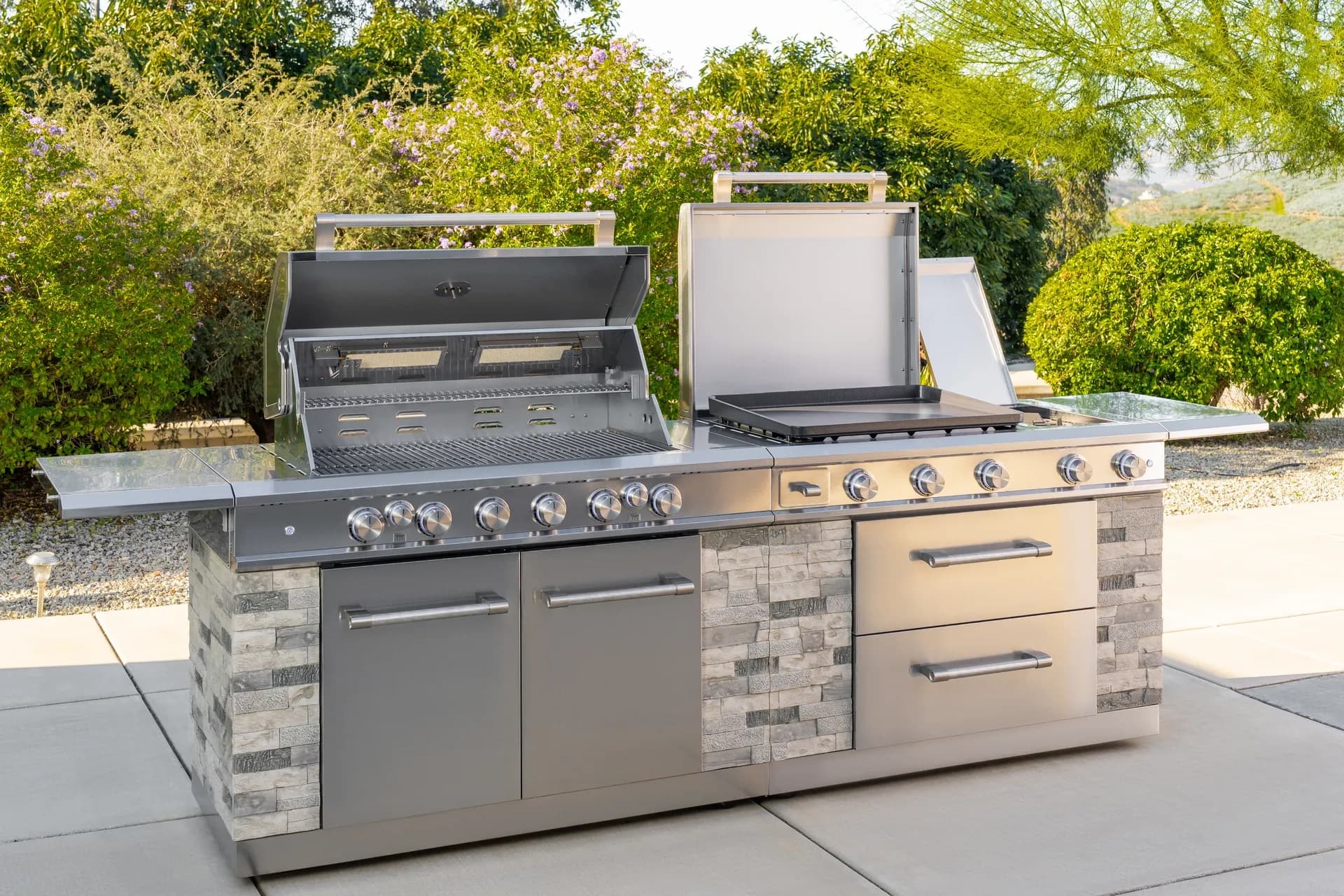
For many households, the right choice depends on the rhythm of the week. A family that grills on Friday nights, takes the grill to tailgates, or wants something easy to store may lean portable. A household that hosts neighbors, cooks for a crowd, or wants a grill to function as a backyard fixture may prefer stationary. Nexgrill’s outdoor cooking lineup reflects that split in real life: compact propane grills and griddles support mobility, while larger multi-burner grills and pellet smokers are better suited to fixed outdoor spaces and more frequent use. The goal is not to chase features for their own sake, but to match the cooking platform to the way you use your outdoor space.
The most common mistake is buying for the patio, not for the routine. If you grill twice a month, portability may matter more than burner count. If you cook for six or more people regularly, fixed capacity usually matters more than easy transport.
In the United States, this decision often comes down to space and convenience. Apartment patios, condo balconies, RV trips, campsite cooking, and seasonal homes all favor compact equipment that can move or store easily. By contrast, suburban backyards, covered patios, and outdoor entertaining spaces usually reward a stationary setup because there is room for larger surfaces, better prep areas, and more stable fuel connections. The answer changes again if you want to sear steaks, cook breakfasts, smoke ribs, or prepare a full meal with side dishes at the same time.
One useful way to think about the choice is to compare lifestyle trade-offs rather than product labels. Portable grills reduce friction: less assembly, easier transport, and faster storage. Stationary grills reduce compromise: more cooking area, better heat zoning, and a more permanent outdoor cooking workflow. Neither approach is universally right. The best fit depends on whether your main priority is mobility or a more complete backyard cooking station.
Portability and Convenience
Portability is the strongest argument for a travel-ready grill, but convenience is more nuanced than simply “easy to carry.” A truly practical portable grill needs to fit into the spaces where real cooking happens: the trunk of a car, a storage closet, a small patio corner, or the back of an RV. It should set up quickly, light without a complicated process, and clean up without turning the end of the meal into a second project. That is why portable grills tend to appeal to people who value spontaneity as much as performance.
A portable grill is especially useful for weekend trips, pregame cooking, camping, fishing cabins, and multi-use outdoor spaces where you cannot leave equipment exposed all season. If you cook in a setting where furniture needs to be moved, storage is limited, or weather exposure is a concern, portability can be the feature that determines whether you grill at all. A smaller propane grill or compact griddle gives you the option to cook when and where the opportunity appears, rather than waiting for a fully set-up backyard station.
Portable models shine when the meal is secondary to the moment. Think tailgate burgers, campsite breakfasts, or a quick steak dinner on a rental patio where you need simple setup and quick packing.
Stationary grills can still be convenient, but their convenience comes from readiness rather than mobility. Once installed and in place, a stationary grill is always available. You do not load it, unload it, or find room to store it in the garage. That matters for frequent cooks who would rather walk outside and start heating than spend time assembling gear. In this sense, a stationary grill can be more convenient for daily use even though it is less convenient to move.
A practical example helps clarify the difference. Suppose one household uses a grill only for tailgates and occasional campsite meals. In that scenario, a portable unit saves space and delivers the flexibility they need. Another household may grill two or three times a week and use the grill for vegetables, burgers, and weeknight dinners. For them, the convenience of a stationary unit often comes from staying ready on the patio, with enough room for tongs, platters, and seasoning nearby. The key is that convenience means different things depending on your cooking habits.
Nexgrill’s portable-style cooking options, including smaller gas grills and foldable cart griddles, are useful for users who want a compact footprint without giving up practical cooking power. Stationary models, such as larger 4-burner grills or pellet smokers, are better when convenience means having a complete outdoor cooking base with more prep space and less day-to-day setup.
Cooking Capacity and Performance
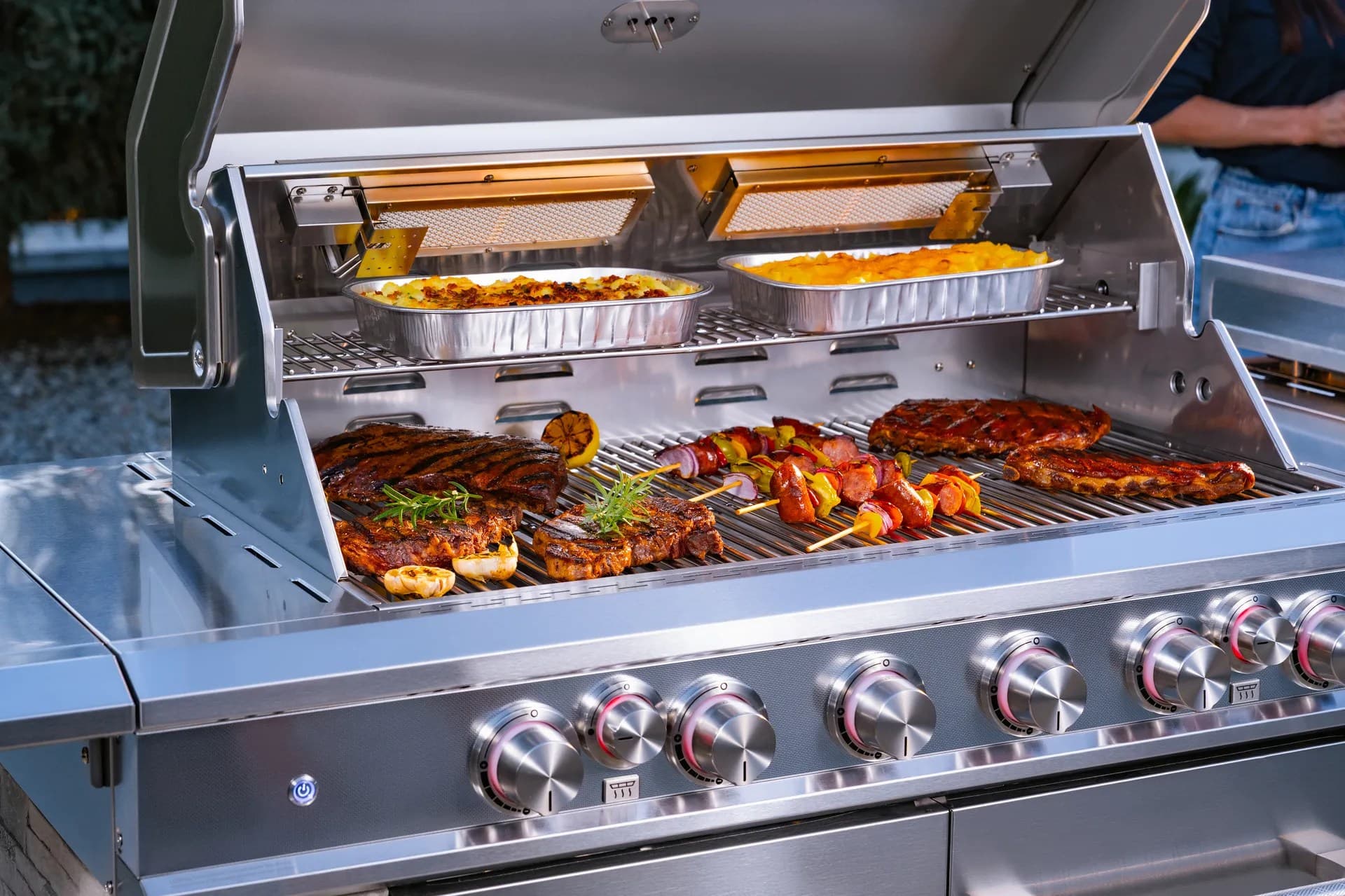
Cooking capacity is where the portable versus stationary decision becomes especially concrete. A compact grill may be excellent for two people, but it can become limiting when you are cooking burgers, vegetables, and sides at the same time. Stationary grills usually provide more usable cooking area, more burners, and better heat control across multiple zones. That makes them better suited to family meals, entertaining, and high-volume cooking where timing matters.
The performance advantage of a stationary grill is not just about size. More burners allow you to create separate hot and cooler zones, which is essential for indirect cooking, searing, and holding food at temperature without overcooking it. If you want to cook chicken thighs on one side while warming buns on another, or sear steaks while keeping vegetables from scorching, a larger fixed grill generally gives you more control. That control can translate into better results, especially for cooks who like to manage several dishes at once.
For multi-course meals, zoning matters more than a single maximum output number.
Portable grills often perform very well for their size, but their limits show up when you need a broader cooking surface or longer cooking sessions. A compact propane grill may sear a few steaks beautifully, yet struggle to manage a large cookout without forcing you to batch food in stages. A portable griddle can be excellent for breakfast, smash burgers, or fajitas, but it still has a finite surface area. That is not a flaw if the grill matches the intended use; it is simply a trade-off.
Stationary grills also tend to support more specialized cooking patterns. A pellet smoker or larger gas grill gives you space for indirect roasting, slow smoking, or alternating between high-heat and low-heat work during the same session. That matters for home cooks who want one outdoor appliance to handle weekday dinners, weekend gatherings, and seasonal cooking projects. By contrast, portable units are often optimized for speed, simplicity, and quick meals rather than all-day barbecue sessions.
For readers comparing actual usage, a simple rule helps: if you often cook for one to four people and value fast setup, portable can be enough. If you regularly cook for five or more, or want to prepare complete meals outdoors, stationary usually wins on capacity and performance. Try comparing two products side by side below to see which fits best:
Installation and Maintenance
Installation and maintenance are often overlooked until the grill is already in the driveway or on the patio. Portable grills usually win on simplicity because they are meant to be used with minimal setup. Many can be assembled quickly, stored easily, and moved without special planning. That makes them appealing to renters, seasonal users, and anyone who does not want outdoor cooking to become a home-improvement project.
Stationary grills require more commitment. Even when assembly is straightforward, they are built to remain in place, which may mean dedicating a specific outdoor area to them. Some stationary setups also benefit from better shelter, more stable footing, or fuel-source planning. If the grill is part of a larger backyard cooking area, you may also need to think about clearance, storage for accessories, and how nearby surfaces handle heat and grease. The payoff is that once the setup is complete, you gain a dependable cooking station that does not need to be relocated.
Do not underestimate storage and cleanup. A grill that is easy to move but awkward to clean can still become inconvenient over time, especially if grease management or ash disposal is part of the routine.
Maintenance also differs by format. Portable grills generally have fewer surfaces to clean and less exposed hardware, so they can be easier to wipe down after use. Their smaller size can make grates, drip trays, and exterior surfaces faster to manage. Stationary grills may require more time simply because they are larger, but they also often provide better access for cooking multiple items and handling messier, higher-volume meals. In practical terms, more cooking capacity usually means more cleanup area.
Weather exposure matters as well. A portable grill can be packed away when not in use, which helps reduce wear from rain, sun, and dust. A stationary grill is more likely to stay outdoors, so a fitted cover and routine cleaning are important for preserving finish and performance. If your climate includes humidity, strong sun, or frequent storms, that difference becomes significant. In a dry garage, portability is easy. On an uncovered patio, storage and protection become part of the decision.
The right choice depends on how much effort you want to spend between meals. If the answer is “very little,” a portable grill may be more forgiving because you can store it quickly and keep it protected. If the answer is “I want a permanent outdoor kitchen-like setup,” stationary is more appropriate, provided you are comfortable with the associated cleaning and weather-care routine.
Cost Considerations
Cost is not just about the sticker price. Portable grills often cost less upfront because they use less material, have smaller cooking surfaces, and require fewer structural components. That lower entry price can be attractive for first-time buyers, students, renters, and families who want outdoor cooking without a large commitment. A compact grill can deliver very solid value if it meets the actual use case.
Stationary grills usually cost more, and that difference reflects size, construction, and feature set. Larger burners, side work areas, enclosed storage, heavier frames, and more substantial cooking surfaces all raise the price. But the investment can make sense if you grill often. When a grill is used several times a week, more capacity and better control can justify the higher cost because it reduces batching, improves meal quality, and supports a wider range of recipes.
Consider storage, replacement frequency, fuel efficiency, and whether the grill will still suit you in two years.
A useful cost lens is expected frequency of use. If you plan to cook outdoors only on vacations, weekend trips, or a few summer nights, paying for a large fixed grill may not add much value. If outdoor cooking is part of your weekly routine, a more substantial stationary model can be a better long-term investment because it reduces frustration and expands what you can cook. That is one reason many households eventually “upgrade” from portable to stationary after realizing how often they actually grill.
Nexgrill’s lineup gives shoppers room to balance cost and capability. A smaller grill or foldable cart griddle can provide an affordable entry point for casual cooks, while larger 4-burner grills and pellet smokers serve buyers who want more capacity and a more permanent outdoor cooking setup. The smarter purchase is usually the one that fits your usage pattern without leaving you to pay for features you will not use.
Flavor and Cooking Results
Flavor is where many people assume the stationary grill will always win, but the reality is more specific. Flavor depends on heat management, fuel type, cooking surface, and how you use the equipment. A compact portable grill can produce excellent searing results for burgers, steaks, vegetables, and quick-cook foods because the smaller chamber can concentrate heat effectively. For short, high-heat meals, portability does not automatically mean compromise.
Stationary grills often have the edge when the cooking process itself contributes to flavor development. Larger cooking zones make it easier to use indirect heat, manage flare-ups, and cook foods slowly enough to build deeper browning without burning the exterior. That matters for chicken pieces, thicker cuts, ribs, and mixed meals where timing and temperature consistency shape the final result. If you like to cook multiple foods with different doneness levels, a fixed grill offers more room to work carefully.
The best flavor comes from matching equipment to technique. Portable grills can sear beautifully; stationary grills usually provide more room for layered cooking methods.
There is also a difference in how forgiving each format is. Stationary grills provide space to move food away from the hottest zone, which can help prevent overcooking. Portable grills may have fewer “rescue” areas, so timing matters more. That can be a benefit for confident cooks who want direct control, but it can be stressful if you are preparing several dishes at once. In other words, the grill’s size influences not only output but also the margin for error.
For practical flavor decisions, think about the foods you cook most often. If your menu is mostly burgers, hot dogs, fajitas, and quick-grilled vegetables, portability can deliver satisfying results. If your menu includes roasts, slow-cooked meats, or full backyard dinners with multiple courses, stationary equipment usually offers the better cooking environment. Nexgrill’s larger grills and pellet smokers are well suited to cooks who want more control over those longer, more deliberate results.
Conclusion
Portable and stationary grills solve different problems, and the right answer depends on your routine, your space, and the kinds of meals you actually want to make. Portable grills are best when mobility, storage, and fast setup matter most. Stationary grills are best when capacity, consistency, and a more permanent outdoor cooking station matter more. If your outdoor cooking is occasional or travel-based, portability is likely the smarter fit. If grilling is part of how you entertain, feed a family, or experiment with more advanced cooking methods, a stationary setup usually gives you more room to grow.
The most useful comparison is not a feature checklist but a lifestyle match. Ask yourself whether you need something you can move, or something you can rely on in one dedicated place. Then compare size, cleanup, fuel use, and cooking style against that answer. For shoppers who want both flexibility and performance, Nexgrill offers options across the spectrum, from compact portable-friendly grills to larger stationary setups designed for regular backyard cooking. The best choice is the one that makes outdoor cooking easier to start and better to repeat.
Introduction
After you have compared a portable grill and a stationary grill side by side, the next step is to think about the conditions they create in real use. On paper, the differences can look straightforward: one moves easily, the other stays put. In practice, those differences shape how you shop, where you store the equipment, how often you cook, and what kind of meals you are likely to make. That is why the portable versus stationary decision is really a decision about cooking habits, not just dimensions.
A portable grill may be the better answer if your grilling life happens in more than one place. That could mean a lake house one weekend, a campsite the next, and a small patio in between. A stationary grill may be the better answer if your outdoor space is already established and you want a dependable anchor for weekly meals. Nexgrill’s outdoor cooking assortment reflects both use cases, with compact propane grills and foldable griddle setups for mobility, plus larger multi-burner grills and pellet smokers for fixed backyard cooking. The real question is not which product category sounds better, but which one lowers friction in your actual routine.
A grill is only “convenient” if it fits your environment. For some buyers that means carrying less; for others it means never having to move the grill again.
This matters especially for United States households balancing storage, weather, and entertaining. In a garage or shed, a portable grill may be easy to protect and bring out when needed. On an exposed patio in a humid or rainy climate, a stationary grill needs a cover and some care, but it also saves the hassle of constant packing and unpacking. If you like to cook outside often, the time you spend setting up may be more important than the time you spend grilling.
The cleanest way to judge the two categories is by asking three questions. Where will the grill live? How often will it be used? And how many people will it need to feed at once? Those answers usually reveal the right category before you even compare brands. The sections below unpack those trade-offs with practical detail so you can choose with confidence rather than guesswork.
Portability and Convenience
Portability sounds like a simple benefit, but in real life it solves several problems at once. A compact grill can be easier to carry, easier to store, easier to protect from the elements, and easier to use in places where a larger grill would be impractical. That combination is especially valuable for people who cook outside only part of the year, rent their homes, move between properties, or want a grill that can travel with them. Portability also reduces the “activation energy” of grilling; if it takes only a few minutes to set up, you are more likely to use it on a weeknight.
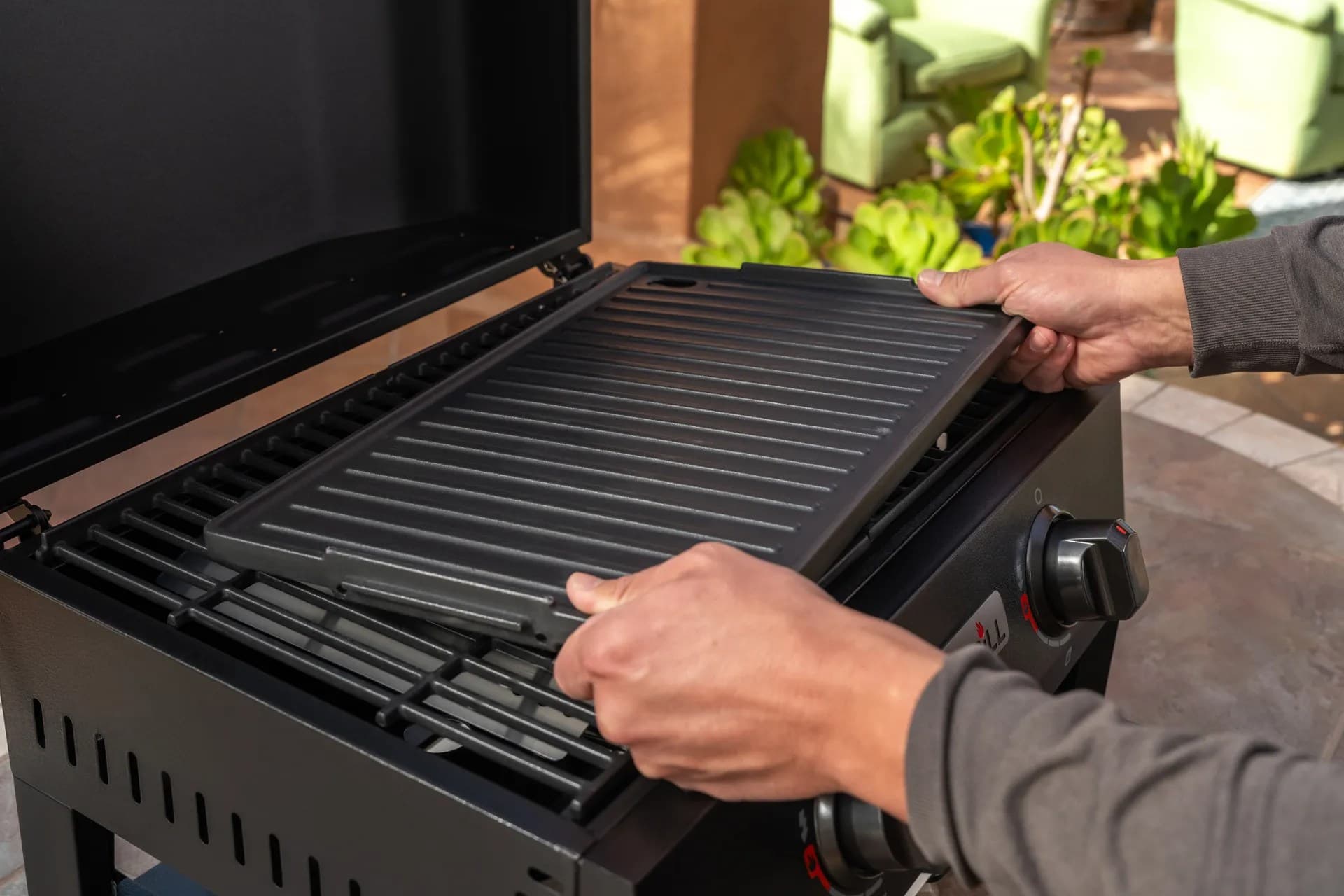
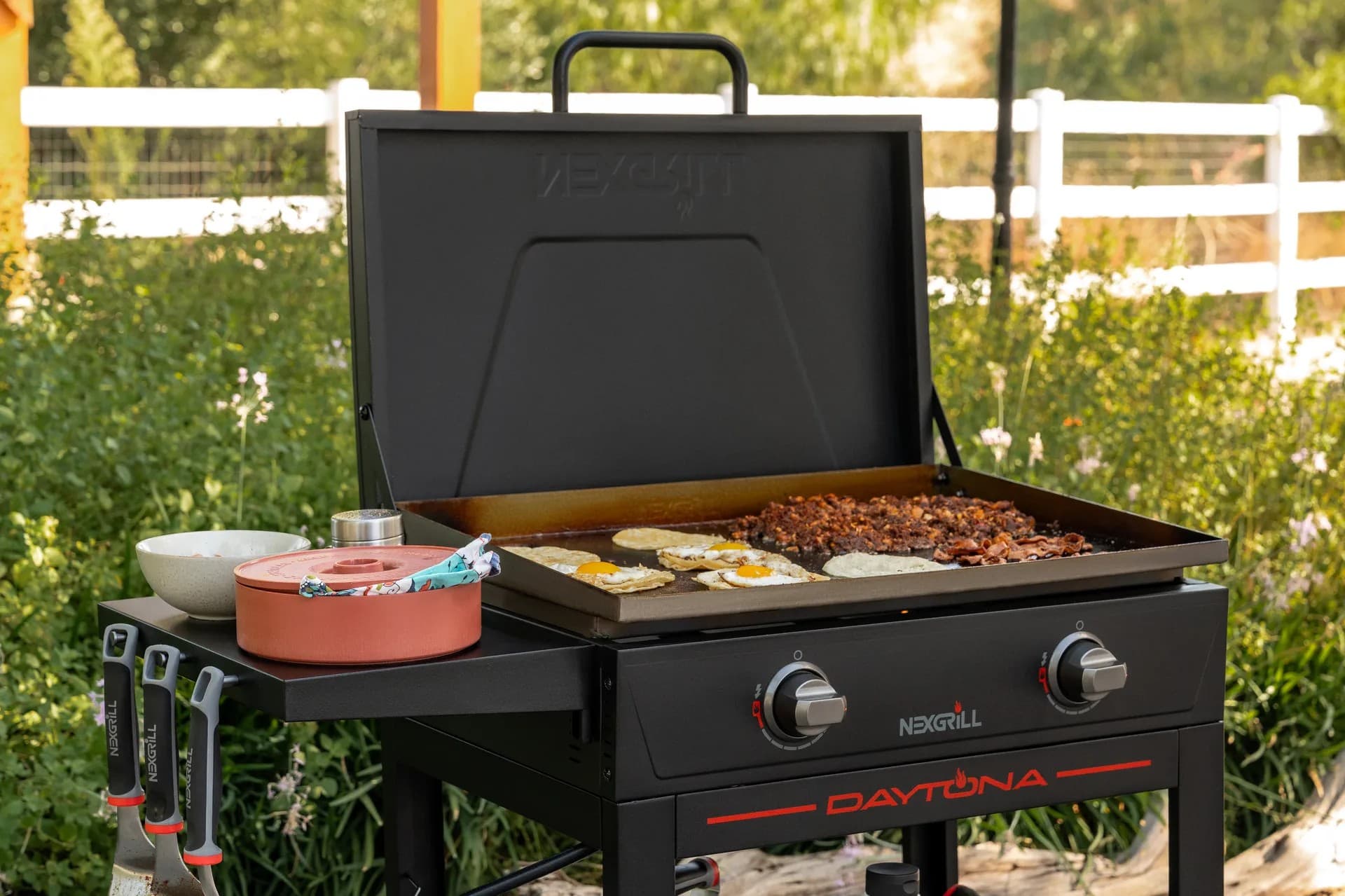
Portable grills are a strong fit for camping, tailgating, road trips, condo patios, and smaller outdoor spaces where permanent placement is not ideal. They are also useful when the cooking environment changes often. A folding cart griddle, for example, can be moved to a garage after use or repositioned on a patio depending on the weather and the layout of the day. Smaller gas grills are likewise practical when you want a straightforward cookout without committing to a large outdoor installation.
Portable grilling is best when the grill has to earn its keep in multiple locations. If you cook away from home even a few times a season, mobility can become a real advantage.
Stationary grills do not offer transport convenience, but they do offer location convenience. Once placed on the patio or integrated into an outdoor cooking area, they are always ready. That matters for households that cook frequently enough to notice the small delays involved in bringing equipment out, connecting fuel, or rearranging the space. A fixed grill can feel more like part of the home because there is no start-up ritual beyond turning it on and preheating it.
Consider two different buyers. One hosts occasional camping weekends and wants a grill that fits in the car and can be packed away afterward. Another cooks outdoors every Sunday for a family of five and wants a setup that never needs to be moved. The first buyer benefits from portability; the second benefits from permanence. Neither buyer is wrong, but the definition of convenience changes completely depending on the cooking pattern.
Cooking Capacity and Performance
If portability is about flexibility, capacity is about how well the grill handles a full meal. Portable grills usually provide enough space for burgers, chicken breasts, fish, and a side or two, but they become less efficient when you need to cook for a crowd. Stationary grills typically offer larger surfaces, multiple burners, and better zone management, which means you can cook at different temperatures at the same time. That is a major advantage for anything beyond a simple weeknight meal.
The difference is especially noticeable during larger gatherings. With a stationary grill, you can sear steaks on one section, warm buns on another, and keep vegetables from overcooking on a cooler edge. You can also move food between direct and indirect heat zones more easily, which is useful for thicker cuts or mixed menus. Portable grills can absolutely produce good food, but they often require more batching and more attention to timing because the compact cooking surface leaves fewer options for temperature management.
A larger grill often makes the entire meal smoother because you can cook multiple items without reshuffling the plan.
Performance also depends on how you define a successful cook. For quick meals, a compact grill can feel efficient and focused. For more complex meals, a stationary grill often performs better because it gives you room to manage heat and timing. The difference shows up when you are cooking breakfast on a griddle, turning over several steaks at once, or trying to finish everything at the same time for a group of guests. A fixed setup simply tends to reduce bottlenecks.
Nexgrill offers examples on both sides of this equation. Smaller gas grills serve cooks who want a practical footprint without overcommitting to size, while larger 4-burner grills and pellet smokers are more aligned with households that want to cook a full spread outdoors. The bigger models are less about show and more about workflow: more usable space means fewer compromises on what you can cook and when you can serve it.
If you want a quick self-check, ask whether you usually grill one protein at a time or prepare a full menu. The first pattern often suits portability. The second usually favors a stationary grill with more burners and more space.
Installation and Maintenance
Installation and maintenance can shift the true cost of ownership more than many buyers expect. Portable grills are typically easier to bring into service because they are designed for minimal setup. You unpack them, place them, connect fuel if needed, and start cooking. Maintenance is often simplified by the smaller size and easier storage. When a grill can be tucked away after use, it spends less time exposed to weather and dust, which can help reduce wear.
Stationary grills require a bit more planning. Even if assembly is straightforward, the permanent footprint means you need to think about location, spacing, and how the grill fits into your outdoor routine. In a backyard with a dedicated cooking area, that is not a burden. In a more compact patio, it may require careful layout. The upside is that once a stationary grill is in place, it becomes part of the environment. There is no carrying, no repacking, and no decision about where to store it after dinner.
Protecting a stationary grill matters more because it stays outdoors longer. Covers, routine cleaning, and checking components after bad weather are part of the ownership routine.
Maintenance differences also show up in the cleanup process. Portable grills are easier to move to a cleaning area, and their smaller components can make post-meal cleanup quicker. Stationary grills can take more time to wipe down because they are larger and often more fully featured, but they may also have better cook zones and grease management for bigger meals. The practical takeaway is that smaller size usually means simpler cleanup, while larger size usually means better cooking flexibility.
The environment where you store the grill matters too. If you have a dry garage, portable equipment can be kept in good condition with little effort. If your grill lives outside year-round, stationary ownership becomes more about routine care. That includes cleaning the grates, emptying drip trays or ash when appropriate, and using a cover consistently. The maintenance burden is not always heavier with stationary grills, but it is more continuous because the grill stays in place.
For many shoppers, this is where the decision becomes personal. If you prefer quick cleanup and easy storage, portability is appealing. If you want a dedicated outdoor fixture and do not mind regular upkeep, stationary is a better fit.
Cost Considerations
Cost comparisons should account for more than purchase price. Portable grills usually have a lower entry cost because they are smaller and simpler. That makes them attractive for buyers who are cautious about spending or who need a grill for occasional use. A lower upfront price can be especially sensible if the grill will travel, be stored often, or serve as a secondary cooking tool rather than the main outdoor appliance.
Stationary grills generally cost more because they provide larger cooking surfaces, more durable materials, and more elaborate burner systems. But that higher price can be justified by how much the grill gets used. If you grill every week, entertain regularly, or cook outdoor meals across multiple courses, the added capacity and convenience may be worth it. In that situation, the extra dollars buy time savings and better workflow, not just a bigger frame.
A grill that is too small, too limited, or too hard to maintain can create hidden costs in time and replacement.
A useful budgeting method is to think in terms of “cost per useful cook.” If you only grill a handful of times each season, a portable option may deliver excellent value. If you use the grill as part of your weekly meal plan, a stationary option may reduce the need to cook in batches or rely on indoor backup methods. That can improve both satisfaction and efficiency over time.
This is also where product fit matters within the Nexgrill lineup. A smaller grill or portable-style griddle can give casual cooks a practical entry point, while larger fixed grills and pellet smokers are better for buyers who want to build a more complete outdoor cooking setup. The right investment is the one that matches not only current spending but future use.
Flavor and Cooking Results
Flavor results depend on more than whether the grill is portable or stationary, but format does influence how you cook. Portable grills can be excellent for quick, direct-heat cooking. Their compact chambers often heat up efficiently, which helps with burgers, sausages, vegetables, and fast-searing cuts of meat. For those foods, portability does not prevent strong results. In some cases, the concentrated heat of a smaller chamber can make the grill feel responsive and efficient.
Stationary grills usually provide more room for layered techniques. That matters when you want to cook with indirect heat, rotate food between zones, or handle a meal that includes several items with different timing requirements. The extra surface area also gives you more control over flare-ups and more room to manage food without crowding. If you value consistency and flexibility during a long cook, that broader working space can improve the final result.
Smaller grills can produce excellent flavor when the menu is simple. Larger grills tend to outperform when the menu is complex and timing-sensitive.
The flavor conversation is also about technique. A portable grill may reward cooks who keep meals simple and direct. A stationary grill can support more ambitious cooking plans, such as multi-item dinners or slower roasting. If your favorite meals are smash burgers and grilled corn, a portable unit may be enough. If you like to cook chicken, sides, and dessert all outdoors, the stationary format usually gives you more room to manage the process well.
Nexgrill’s larger equipment options, including multi-burner grills and pellet smokers, are appealing for cooks who care about repeatable results across longer cooking sessions. Portable options, meanwhile, are a better match for cooks who want to keep the process simple and still get a satisfying sear or quick-cooked meal. The key is not to assume that more size automatically means more flavor; it means more control, which can lead to better flavor when the technique demands it.
Conclusion
Portable and stationary grills are not competing versions of the same idea. They are two different answers to two different sets of needs. Portable grills are strongest when flexibility, storage, and mobility matter most. Stationary grills are strongest when cooking capacity, consistent readiness, and outdoor cooking ambition matter most. If you grill in more than one place or need a grill that disappears into storage when the meal is over, portability will usually feel like the smarter investment. If you cook often and want a permanent part of your outdoor living space, stationary will likely serve you better.
The most useful comparison is to map the grill to your real routine, not your idealized one. Think about whether the grill will travel, how many people you feed, how often you cook, and how much cleanup you are willing to manage. Those questions usually point to the right category quickly. Nexgrill offers options that support both styles of ownership, from compact grill and griddle formats for on-the-go cooking to larger models that function as dependable backyard centers. Once you know which environment you are building for, the choice becomes much clearer.