A comprehensive guide to pricing, features, and popular models.
Here's what sets us apart from the competition
We position ourselves as delivering high-end outdoor cooking features and performance without premium-brand pricing, emphasizing “Quality Grills. Unbelievable Value.”
We offer gas grills, pellet grills, griddles, smokers, pizza ovens, portable/tabletop grills, electric grills, accessories, and replacement parts — allowing customers to stay within one ecosystem for all outdoor cooking needs.
We differentiate ourselves through smart grilling products like the Oakford smart pellet grill, including app-connected cooking controls and modern outdoor cooking technology.

Expert tips, buying guides, comparisons, and inspiration for choosing and getting the most out of your grill.

Practical guides for cleaning, maintenance, common grill issues, and performance optimization.

Step-by-step grilling recipes, cooking techniques, and meal ideas for every occasion and skill level.

Backyard entertaining ideas, seasonal grilling inspiration, and stories that celebrate outdoor cooking culture.

Helpful articles covering grilling tools, cookware, maintenance gear, and must-have accessories for outdoor cooking.

Find griddle recipes, cooking techniques, cleaning tips, and outdoor meal ideas designed for Nexgrill griddles.
Find answers to common questions
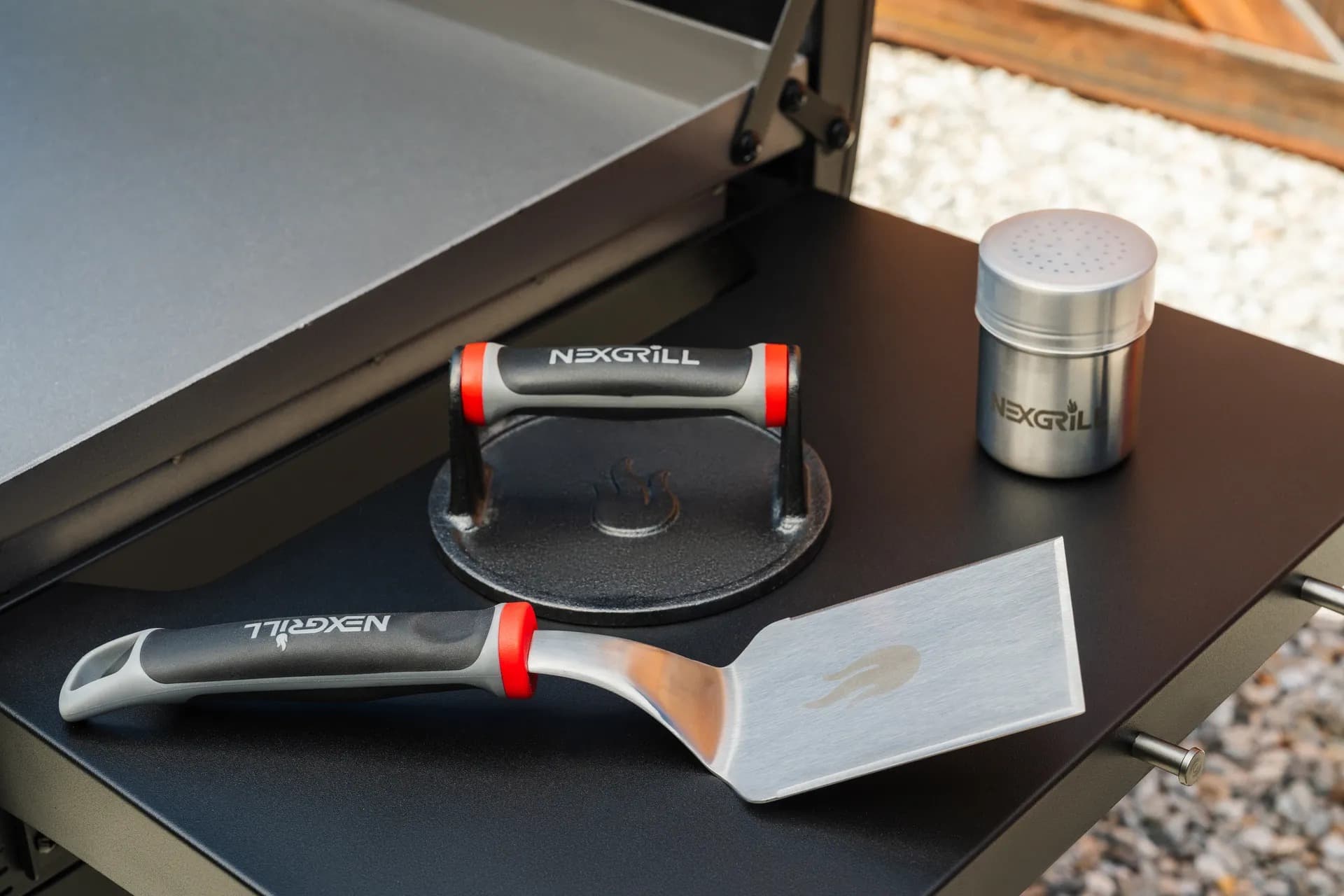
Nexgrill offers a variety of accessories including grill tools, covers, cooking utensils, and replacement parts designed to enhance your grilling experience.
Many Nexgrill accessories are widely compatible with various grill brands, but it is recommended to check the specifications for proper fit and functionality.
To maintain your Nexgrill accessories, regularly clean them with warm soapy water, avoid using abrasive materials that could scratch the surface, and store them in a dry place when not in use.
Yes, Nexgrill accessories can be purchased separately from the grills, allowing customers to customize their grilling setup as needed.
Instructions for using Nexgrill accessories are typically included in the packaging, and additional resources can be found on the Nexgrill website or in the product user manuals.
In This Article
Price Ranges Explained
Key Features
Popular Models
A pizza oven with an integrated smoke chamber sits in a very specific sweet spot: it is built for high-heat pizza making, but it also lets you introduce smoke as part of the cook rather than treating smoky flavor as an afterthought. For shoppers comparing outdoor cooking equipment in the United States, that dual-purpose design changes how the oven is used, how it is installed, and what the final price should mean. You are not just paying for a pizza box that gets hot quickly. You are paying for a system that can hold heat, control airflow, and manage smoke in a way that works for flatbreads, roasted vegetables, fish, chicken, and occasionally a longer barbecue-style cook.
That versatility is what makes the category interesting, but it is also why price comparisons are so wide. A compact countertop unit, a purpose-built wood-fired model, and a larger built-in oven with a smoke chamber can all serve different buyers while looking similar in product photos. Price is shaped by materials, insulation, fuel source, chamber design, and whether the oven is portable or fixed in place. In practical terms, the smoke chamber adds another layer of engineering: it has to move flavor into the cooking space without starving the fire or turning a pizza session into a long, unpredictable smoke session. Buyers who understand that distinction usually end up choosing better.
The smoke chamber is not just a flavor add-on. It affects heat flow, cleanup, and the kinds of food you can cook beyond pizza.
For many households, the appeal is convenience with range. You can launch a pie at very high temperature, then use the residual heat and smoke to finish a cast-iron skillet dish or a tray of vegetables. That makes the oven feel more like an outdoor cooking station than a single-purpose appliance. In this sense, the integrated smoke chamber is similar to the design thinking behind versatile outdoor equipment: one footprint, more cooking possibilities. If you are already comparing outdoor kitchen products, it helps to think about how often you will use smoke flavor, how much patio space you have, and whether the oven needs to live on a cart, a counter, or in a built-in surround.
Another reason the category deserves a closer look is that many buyers research pizza ovens by headline temperature alone and miss the real ownership picture. Smoke chambers can be a value multiplier if you want a more layered flavor profile, but they also add a learning curve. Airflow control, fuel choice, and preheat time matter more than in a basic pizza oven. That is why a price guide should not stop at sticker cost. It should show where the added features make sense, where they become unnecessary, and how they compare with the cost of buying a regular pizza oven plus a separate smoker or grill later.
Typical U.S. price span for pizza ovens with smoke-capable designs, depending on portability, fuel type, and build quality.
The price of a pizza oven with an integrated smoke chamber usually falls into three broad bands in the U.S. budget category, roughly from $300 to $800, is where compact or entry-level outdoor ovens appear. These models often prioritize quick heating and easy setup, and the smoke function may be simpler, with a smaller chamber or a less adjustable airflow path. They are a reasonable fit for shoppers who want occasional pizza nights and some smoky finishing capability without committing to a full outdoor kitchen build.
Mid-range ovens, commonly around $800 to $2,000, are where the category becomes most interesting for long-term owners. This range often includes thicker insulation, better temperature stability, more durable stainless steel construction, and more deliberate smoke chamber integration. Buyers in this band are usually comparing not just output, but how well the oven transitions between pizza heat and lower, smoke-infused cooking. In the U.S. market, this is often the zone where the best value appears because you start getting the engineering benefits that make the smoke chamber easier to use consistently.
Premium or built-in systems can land anywhere from about $2,000 to well over $4,000, especially when cabinetry, masonry surrounds, or outdoor kitchen integration are included. These products cost more because they are designed to be part of a larger cooking environment. The oven body may be heavier, the venting more refined, and the appearance more tailored to permanent installation. Buyers should think of this as a project cost, not just a product cost. The oven itself is only one line item; delivery, mounting, fuel routing, and surrounding construction can easily shift the total upward.
| Price Band | Typical U.S. Range | Best Fit | What You Usually Get |
|---|---|---|---|
| Budget | $300-$800 | Casual use, smaller patios | Simpler materials, lighter build, basic smoke capability |
| Mid-range | $800-$2,000 | Frequent home cooks | Better insulation, stronger heat retention, more usable smoke control |
| Premium / built-in | $2,000-$4,000+ | Outdoor kitchens, heavy use | Heavier construction, installation-friendly design, more refined airflow and finish |
The most important pricing takeaway is that the smoke chamber rarely changes the category from expensive to affordable on its own; instead, it changes the value equation. A well-designed chamber can make a moderate-price oven feel more capable because it expands the menu. A poorly integrated one can leave you paying extra for a feature you only use once or twice. If you are comparing products in the U.S., it helps to ask whether the smoke chamber is engineered for frequent use or merely included as a headline feature.
If a product page leans heavily on smoke flavor but gives little detail on airflow, insulation, or chamber access, treat the price cautiously.
The biggest price drivers are usually the same ones that affect cooking performance. First is construction material. Stainless steel, dense refractory components, and well-insulated shells cost more, but they also tend to hold heat better and last longer in outdoor conditions. Second is fuel type. Wood-fired ovens often appeal to buyers who want authentic flavor and visual appeal, while gas or hybrid setups can add convenience and repeatability. The more controlled and versatile the fuel system, the more the price usually rises.
Smoke chamber engineering is another major factor. Some ovens simply allow wood smoke to pass through a side channel, while others have a more deliberate chamber path that helps expose food to smoke without overwhelming the pizza bake. The design of baffles, vents, doors, and ash management affects both taste and ease of use. A chamber that is easy to access for loading wood and cleaning will usually cost more, but that extra usability often matters after the first few weekends of ownership.
Size matters as well. A larger cooking deck or chamber means more materials, more weight, and often better performance for family-style cooking. Countertop models keep the entry price down, but they also limit the amount of food you can cook at once. Built-in ovens, by contrast, tend to include features intended for permanent placement, such as sturdier framing or a finish that works with outdoor cabinetry. Buyers should remember that a bigger footprint does not always mean a better oven; it means a different ownership experience and usually a higher installation burden.
For most homeowners, insulation and airflow control are more valuable than a flashy spec sheet number.
Accessories and support items also influence the final price. A starter package may include a peel, cover, or stand, while a more bare-bones listing leaves those expenses for later. In a real U.S. shopping scenario, that difference matters because accessories can add several hundred dollars to the project. If you are comparing two ovens that look similar, the better value is often the one that includes the practical extras you would otherwise buy separately.
For shoppers who want to move beyond broad price bands, the next step is to compare actual models side by side below to see which configuration makes the most sense for your space, fuel preference, and cooking style.
Once you have compared two options side by side, the next question is whether the price difference reflects real performance or just branding. In the pizza oven with integrated smoke chamber category, the best comparison is not only about the logo on the front. It is about how the oven behaves in a backyard or outdoor kitchen after the third or fourth use, when preheat time, smoke control, and cleanup become part of the experience. That is where model differences matter most.
Because the market includes everything from compact electric units to larger wood-fired or hybrid ovens, it helps to compare by use case. WPPO is often associated with outdoor pizza ovens that emphasize portability or backyard installation, Chicago Brick Oven is known for heavy-duty, artisan-style builds, and Ninja appeals to users who want countertop convenience. Even when specific smoke-chamber features vary by model, these brands illustrate the trade-offs shoppers encounter: mobility versus permanence, convenience versus thermal mass, and starter price versus long-term cooking depth.
| Model Type | Approx. U.S. Price | Best For | Trade-Off |
|---|---|---|---|
| Countertop electric or compact hybrid | $300-$900 | Small spaces, easy startup | Less capacity and often lighter smoke character |
| Mid-size wood-fired or hybrid | $900-$2,000 | Backyard entertaining, more flavor control | Needs more attention during use |
| Built-in artisanal oven | $2,000-$4,000+ | Outdoor kitchens, frequent cooking | Higher install and material costs |
User reviews across the category tend to cluster around a few themes. Owners of smaller electric models often praise convenience and faster cleanup, but they may note limitations in maximum heat and the depth of smoke flavor. Buyers of heavier wood-fired units more often talk about crust quality, heat retention, and the satisfaction of cooking at high temperatures, while also mentioning a steeper learning curve. Built-in users commonly value appearance and consistency, but their feedback usually hinges on whether the oven was planned into the outdoor kitchen from the start. That planning step matters because a good oven can underperform if airflow, clearance, or fuel access is poorly designed around it.
For a clearer frame, think about three buyer profiles. A casual homeowner who wants weekend pizzas and some smoked vegetables should usually favor a mid-priced portable model with straightforward smoke control. A serious home cook who wants to host often should look at a larger hybrid or wood-fired unit with better insulation and a more functional chamber. A homeowner building a permanent outdoor kitchen should prioritize a built-in oven where the finish, mounting, and venting are designed to work together. That approach makes the price easier to justify because installation is part of the product strategy, not an afterthought.
The best value is usually the model that matches how often you will cook, not the one with the longest spec sheet.
If you are shopping the U.S. market, also watch for what reviewers say about first-cook results versus long-term satisfaction. Some ovens impress on day one but require frequent babysitting to maintain smoke balance. Others may take longer to learn, yet reward the owner with more consistent bake quality and better smoke integration over time. That difference is essential when judging price because a slightly higher upfront cost can be justified if the oven is more predictable and less frustrating to use.
Installation costs vary dramatically depending on whether the oven is portable or built in. A countertop unit may need nothing more than a stable heat-safe surface, which keeps setup cost close to zero beyond the purchase price. A cart-mounted or freestanding oven can add some assembly time, but still remains relatively inexpensive to put into service. Built-in models are different. In the United States, installation can easily add several hundred dollars to several thousand dollars depending on cabinetry, masonry, electrical work, gas line routing, permit requirements, and contractor labor. That is why the price of a built-in pizza oven should always be evaluated as part of an outdoor kitchen project.
Maintenance is also worth budgeting for. Smoke chambers collect residue differently than standard pizza ovens because they manage both intense heat and flavored smoke. Owners should expect more frequent ash removal, more careful interior brushing, and routine checks of vents and seals. If the oven uses gas ignition or hybrid components, there may also be periodic inspection of burners, connections, and starter systems. Protective covers, high-temp brushes, and replacement firebricks or gaskets can add modest recurring costs over time. None of these are deal-breakers, but they should be part of the ownership math.
| Cost Item | Typical U.S. Range | Notes |
|---|---|---|
| Basic setup for portable model | $0-$150 | May include stand assembly, cover, or heat-safe base |
| Delivery and assembly for freestanding unit | $100-$400 | Depends on weight, packaging, and retailer service |
| Built-in installation | $500-$3,000+ | Can rise with masonry, gas, electrical, or permit work |
| Recurring maintenance supplies | $25-$200 annually | Brushes, covers, replacement parts, cleaners |
A lower sticker price can be misleading if the oven needs expensive cabinetry or professional installation to perform safely.
The most practical buying advice is to compare total ownership cost, not just product price. For a portable oven, that means the oven plus accessories and fuel. For a built-in oven, that means the appliance, install, finishing materials, and long-term upkeep. Users who plan for those costs upfront are usually happier because the project feels complete rather than improvised.
A pizza oven with an integrated smoke chamber can be a smart purchase when you want pizza-day speed and broader outdoor cooking flexibility in one setup. The right model is rarely the cheapest one; it is the one whose price matches its construction, smoke control, installation needs, and the way you actually cook. If you value smoky flavor, heat retention, and real versatility, it is worth comparing the full cost before you buy.
Here's what sets us apart
We position ourselves as delivering high-end outdoor cooking features and performance without premium-brand pricing, emphasizing “Quality Grills. Unbelievable Value.”
We offer gas grills, pellet grills, griddles, smokers, pizza ovens, portable/tabletop grills, electric grills, accessories, and replacement parts — allowing customers to stay within one ecosystem for all outdoor cooking needs.
We differentiate ourselves through smart grilling products like the Oakford smart pellet grill, including app-connected cooking controls and modern outdoor cooking technology.
Don't just take our word for it
Keep reading
From our catalog