A comprehensive guide to selecting and maintaining the ideal thermometer for smoking meats.
Here's what sets us apart from the competition
We position ourselves as delivering high-end outdoor cooking features and performance without premium-brand pricing, emphasizing “Quality Grills. Unbelievable Value.”
We offer gas grills, pellet grills, griddles, smokers, pizza ovens, portable/tabletop grills, electric grills, accessories, and replacement parts — allowing customers to stay within one ecosystem for all outdoor cooking needs.
We differentiate ourselves through smart grilling products like the Oakford smart pellet grill, including app-connected cooking controls and modern outdoor cooking technology.

Expert tips, buying guides, comparisons, and inspiration for choosing and getting the most out of your grill.

Practical guides for cleaning, maintenance, common grill issues, and performance optimization.

Step-by-step grilling recipes, cooking techniques, and meal ideas for every occasion and skill level.

Backyard entertaining ideas, seasonal grilling inspiration, and stories that celebrate outdoor cooking culture.

Helpful articles covering grilling tools, cookware, maintenance gear, and must-have accessories for outdoor cooking.

Find griddle recipes, cooking techniques, cleaning tips, and outdoor meal ideas designed for Nexgrill griddles.
Find answers to common questions
Nexgrill offers a variety of accessories including grill tools, covers, cooking utensils, and replacement parts designed to enhance your grilling experience.
Many Nexgrill accessories are widely compatible with various grill brands, but it is recommended to check the specifications for proper fit and functionality.
To maintain your Nexgrill accessories, regularly clean them with warm soapy water, avoid using abrasive materials that could scratch the surface, and store them in a dry place when not in use.
Yes, Nexgrill accessories can be purchased separately from the grills, allowing customers to customize their grilling setup as needed.
Instructions for using Nexgrill accessories are typically included in the packaging, and additional resources can be found on the Nexgrill website or in the product user manuals.
In This Article
Types of Digital Thermometers
Top Thermometer Recommendations
Maintenance and Calibration Tips
A digital thermometer for smoker setups does one job better than guesswork ever can: it tells you what the meat is actually doing while you focus on airflow, fuel, bark, and timing. That matters because smoking is a low-and-slow cooking method where the difference between nearly done and perfectly done can be small, especially on thicker cuts like brisket, pork shoulder, and tri-tip. If you have ever opened a smoker to check on a roast too many times, you already know how quickly heat and smoke can escape. A good thermometer reduces that temptation and gives you a more reliable read on both food temperature and, in many cases, pit temperature.
For Nexgrill readers, the goal is not to chase the most complicated gadget. It is to find a thermometer that fits how you cook. Some backyard cooks want a simple wired probe that stays clipped in place during a long brisket session. Others want wireless monitoring so they can track temperature from inside the house, the patio, or even while prepping sides. The right choice depends on your smoker, your tolerance for tech, and how much precision you want when managing meat finishes for family dinners or weekend cookouts. The best digital thermometer is the one that helps you stay consistent without making smoking feel more stressful.
Accuracy matters most when the food is thick, the cook is long, and the margin for error is small. For smoking, a reliable probe usually beats a flashy display.
The level of precision many serious smokers look for in a quality probe thermometer
The main decision is whether you want a wired or wireless digital thermometer. Wired models use a probe connected by cable to a base unit or display. They are popular because they are dependable, usually less expensive, and do not depend on a strong wireless signal. For long smokes, a wired probe gives you a stable read while the thermometer body stays outside the smoker. That makes them especially useful for beginners who want straightforward monitoring without dealing with app setup, pairing issues, or battery-heavy features.
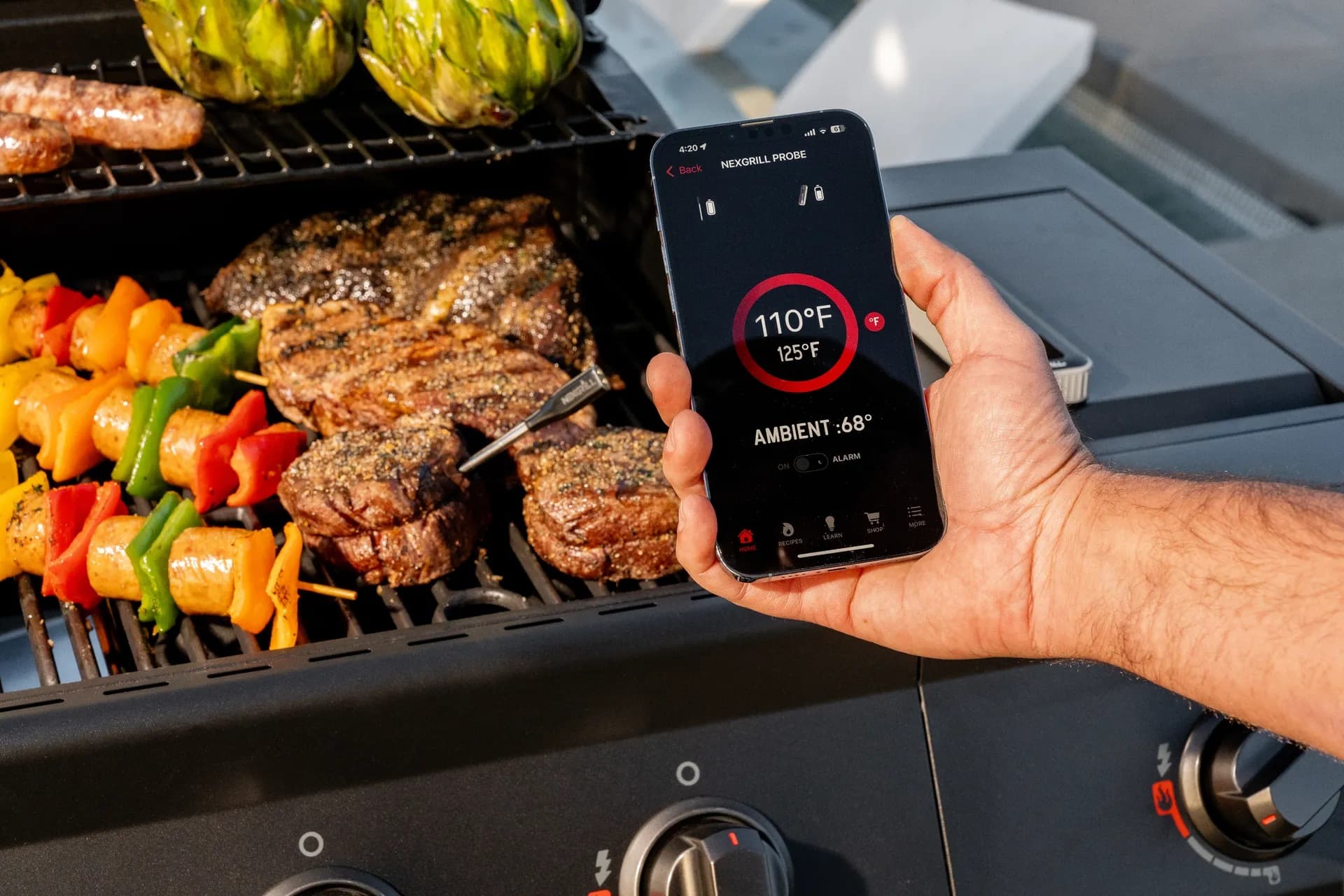
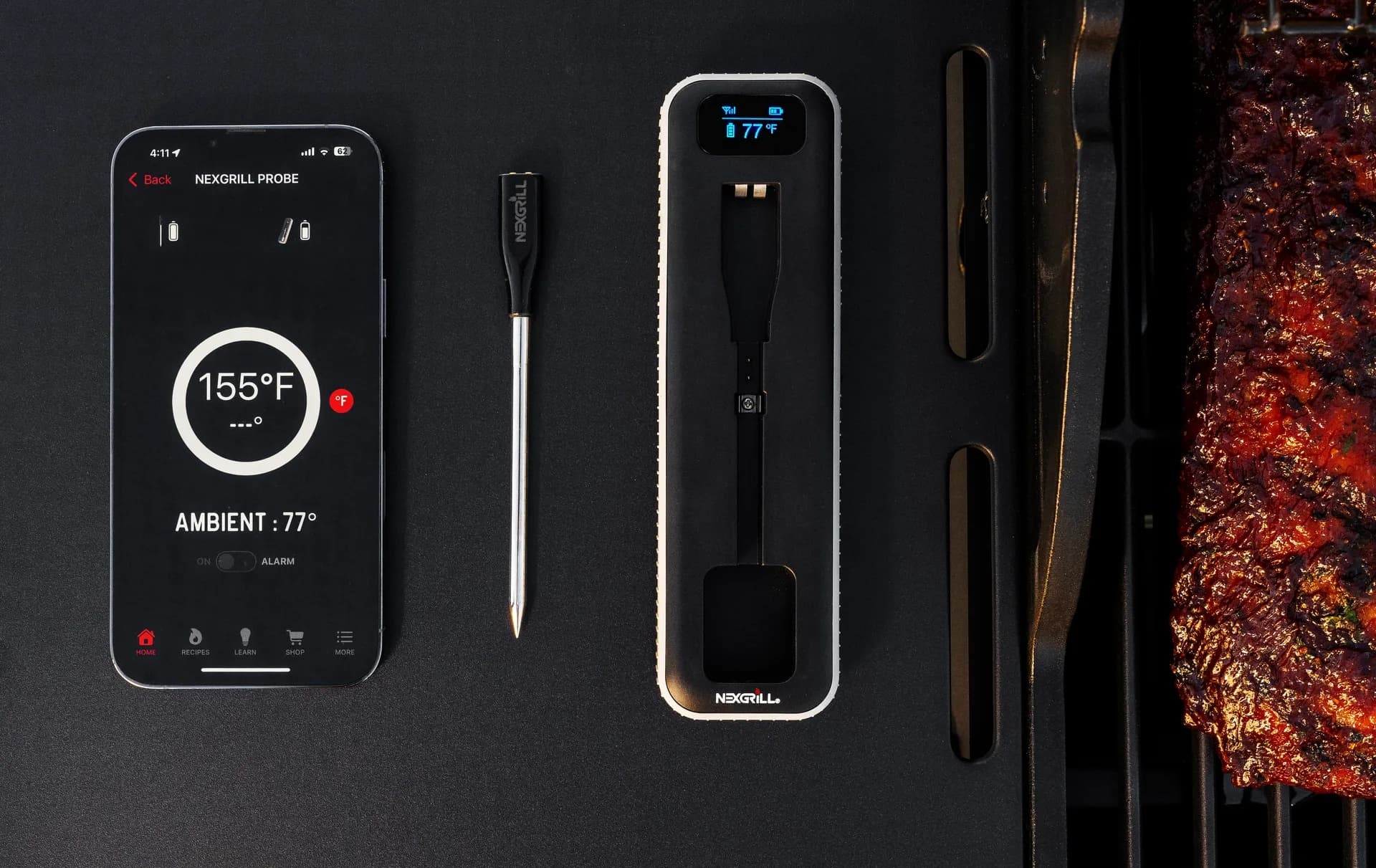
Wireless thermometers remove the cable between the probe and the monitor, and that changes the experience quite a bit. Some systems still use a physical probe with a transmitter; others use Bluetooth or Wi-Fi so you can monitor meat and pit temperatures from a phone. Wireless options are a strong fit for cooks who move around during a session, especially if you are managing a backyard gathering and do not want to stand next to the smoker the whole time. The trade-off is complexity. Wireless units can be more expensive, may require app updates or pairing, and can be affected by distance, interference, or battery life.
There is also a practical difference in how each type behaves during different smoking jobs. A wired thermometer is often ideal for a steady brisket or pork butt because it is simple and dependable over many hours. Wireless models shine when you are cooking chicken, ribs, or multiple items and want alerts for several temperature points without constantly checking the lid. If you frequently step inside to prep sauces or side dishes, wireless monitoring can be a real quality-of-life improvement. If you mostly smoke one cut at a time and prefer fewer variables, wired is often the smarter buy.
| Type | Best For | Pros | Trade-Offs |
|---|---|---|---|
| Wired digital thermometer | Long smokes, beginners, budget-conscious buyers | Reliable signal, often lower cost, simple setup | Cable management, less freedom to move around |
| Wireless digital thermometer | Multi-tasking cooks, frequent entertainers, tech-friendly users | Remote monitoring, alerts, more mobility | Higher cost, battery dependence, app or signal issues |
When comparing popular options, focus on a few names that have earned trust among home smokers and competition-minded cooks. ThermoWorks is often the benchmark for fast response and strong probe performance, while Taylor is widely recognized for approachable pricing and straightforward operation. The best pick depends on whether you want premium speed, app-based convenience, or a simpler setup that gets the job done.
One strong premium route is a ThermoWorks wired probe thermometer such as the Thermapen-style family, which is known for rapid readings and precision. These models are attractive if you regularly verify doneness at the end of a smoke and want confidence when finishing brisket, ribs, or chicken thighs. Expect pricing in the higher range, often roughly USD 100 to USD 200 depending on configuration and accessories. They are a good fit for cooks who value quick reads and high confidence more than bells and whistles.
For wireless convenience, a Wi-Fi or Bluetooth model from a brand like ThermoWorks or another established probe system can be worth the extra spend if you often cook overnight or manage multiple dishes at once. These units typically fall in the mid-to-premium range, often around USD 80 to USD 250 depending on probe count, connectivity, and app features. A dual-probe model is especially practical because you can track both the smoker environment and internal meat temperature at the same time. That is useful for brisket, pork shoulder, and turkey, where pit temperature control matters as much as final doneness.
Taylor models usually serve the value segment well, often landing around USD 20 to USD 60. They are a solid match for casual smokers who want reliable reads without paying for app ecosystems or advanced forecasting. If you smoke a few times a month and want a straightforward tool for ribs, chicken, or salmon, Taylor can be a smart buy. For many home cooks, that balance of cost and usability is more important than premium speed.
If you smoke brisket often, prioritize dual probes and alarm customization. If you mainly cook chicken or smaller cuts, a fast instant-read plus one wired monitor can be enough.
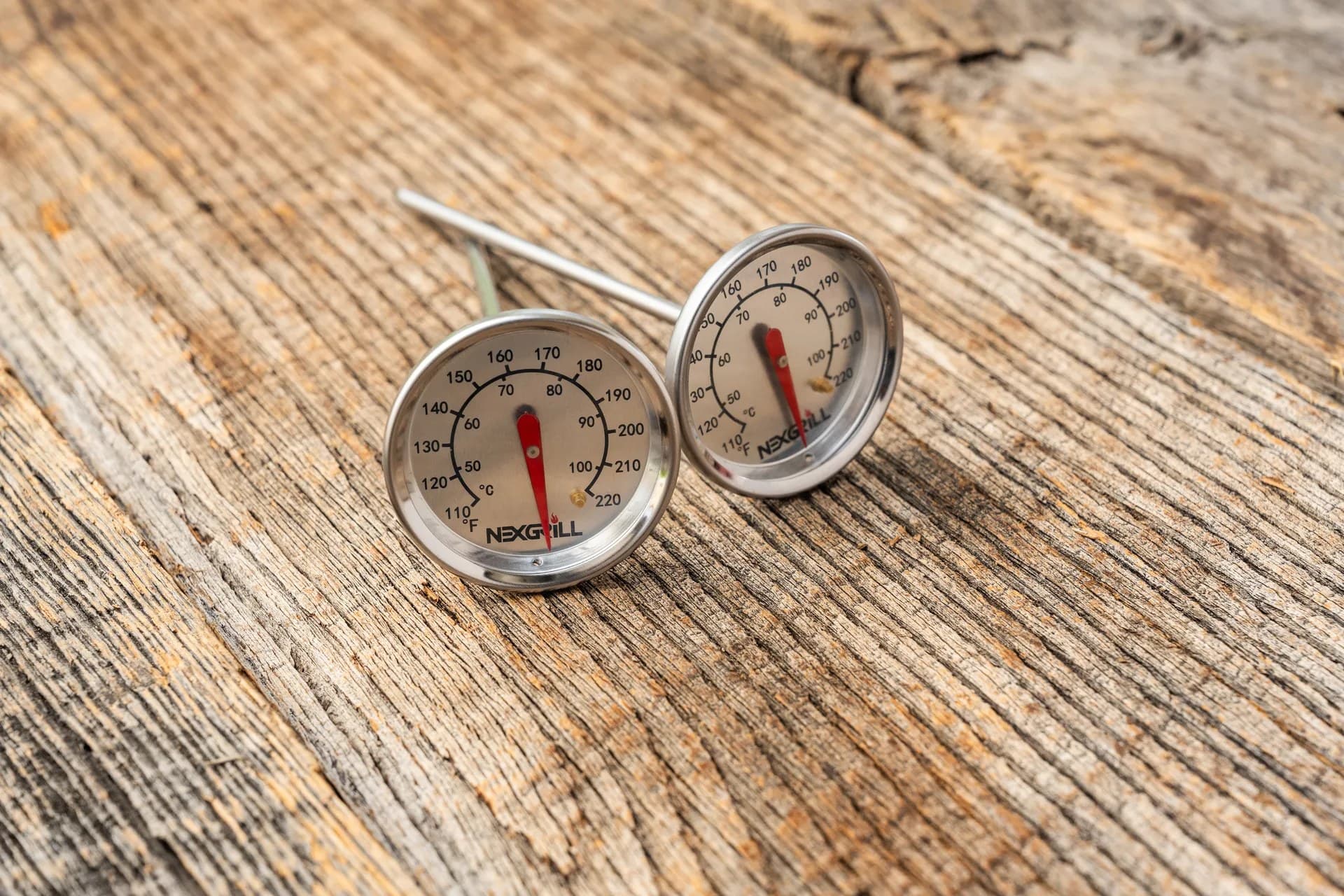
A digital thermometer stays useful only if the probe is clean, the cable is protected, and the unit is checked often. After each cook, wipe the probe with a damp cloth and mild soap solution, then dry it fully before storing it. Grease buildup can slow response time and make readings less trustworthy. For wired models, avoid sharp bends in the cable and do not pinch it in the smoker lid more than necessary; repeated stress can cause internal damage. Wireless probes need their batteries checked regularly so a long smoke is not interrupted by a dead transmitter.
Calibration is equally important. Ice water and boiling water tests are the two most common ways to verify accuracy at home. A properly prepared ice bath should read close to 32°F, while boiling water should be near 212°F at sea level in the United States, though altitude affects the boiling point. If your thermometer is off by more than a small margin, follow the manufacturer’s recalibration steps or note the offset and account for it during cooks. For smoking meat, even a small calibration error can matter when you are trying to hit a precise resting point for brisket or poultry.
Do not calibrate a probe while it is hot from the smoker. Let it return to room temperature first so you are testing the instrument, not heat stress.
If you want a simple ownership routine, store the thermometer in a dry drawer, replace batteries before peak barbecue season, and test the probe before any long cook. That small habit can prevent ruined meals and save you from chasing phantom temperature swings caused by dirty sensors or weak power.
Try comparing two products side by side below to see which fits best:
Once you've weighed two options against each other, the details that matter most become easier to spot. For a digital thermometer for smoker use, the real purchase drivers are accuracy, probe quality, temperature range, alarm behavior, display readability, and how well the device handles a long cooking session. A smoker thermometer does not need to do everything; it needs to do the right things consistently. That means being easy to read in daylight, surviving heat near the pit, and giving dependable alerts when a brisket is approaching wrapping temperature or when chicken needs to come off before drying out.
Accuracy should be your first filter. For most backyard smoking jobs, the difference between a thermometer that is “close enough” and one that is consistently reliable can show up in texture and timing. Brisket is forgiving in some ways, but if you are trying to finish at the right stage for wrapping and resting, a few degrees matter. Chicken, on the other hand, has a much smaller safety and texture window. That is why many experienced smokers prefer thermometers with separate alerts for food and pit temperatures. The pit probe helps you keep the smoker in range, while the food probe tells you when to transition from cooking to resting.
Range and alarm design also matter more than many shoppers expect. A thermometer that reads to high temperatures is useful for searing after a smoke or for hotter offset-style fire management, but the important part is whether the alarm is loud enough to notice over a busy household or a patio gathering. If you cook overnight, customizable alarms and a clear backlit screen are worth paying for. A thermometer that buries alerts in a quiet app notification is not as useful as one that gives a clear buzzer you can hear from indoors.
| Feature | Why It Matters for Smoking | What to Prefer |
|---|---|---|
| Accuracy | Affects doneness and timing | Reliable readings within about 1-2°F |
| Dual probes | Track pit and meat at once | At least two probes for most smokers |
| Alerts | Lets you step away without losing control | Loud alarm with customizable targets |
| Display | Helps you read temps quickly outdoors | Large, backlit screen |
The comparison category is less about crowning one universal winner and more about matching the right tool to the way you smoke. A premium ThermoWorks model is ideal for the griller who wants fast, trustworthy readings and is willing to pay more for speed and precision. The main advantage is confidence: when you are managing a big cut of meat and want to check doneness quickly at the end of the cook, a fast-response probe minimizes how long the smoker lid stays open. Expect to pay more, but you are buying a tool that many experienced cooks treat as a long-term kitchen and patio staple.
Taylor models usually sit in the more approachable value tier. They are not typically chosen for flashy app features, but they can be a very good fit for someone who smokes on weekends and wants reliable readings without a steep learning curve. If your typical cooks are ribs, chicken quarters, or smaller roasts, a simpler Taylor unit can be enough. It keeps the process accessible, and that matters for households that want consistent results without overinvesting in gear they may rarely use.
Wireless systems occupy a different lane. They are best for cooks who want freedom to move around, check alerts from inside the house, or manage longer overnight sessions. They can be especially helpful for brisket because that style of cook often involves long plateaus where there is little to do except wait and monitor. Wireless systems are not automatically better, though. A wired monitor often has fewer failure points, and that simplicity can make it more dependable for new smokers who just want a clear number without app setup headaches.
A practical buying strategy is to choose based on your most common cook, not your most ambitious one. If you smoke brisket a few times a year but usually cook chicken and pork chops, there is little reason to overspend on a top-end remote system. If you host often, multitask during cooks, or like to monitor overnight from another room, wireless monitoring is easier to justify. Price ranges in the United States typically run from roughly USD 20 on the entry side to well above USD 200 for premium multi-probe systems, so the best value is the one that matches your actual usage.
What many home smokers say after switching from guesswork to a quality thermometer is simple: the cook becomes calmer. A common pattern is that brisket sessions stop feeling like a waiting game and become more predictable. One backyard pitmaster might prefer a wired probe because it stays put for ten or twelve hours without needing attention. Another cook may appreciate a wireless setup because it lets them watch a game inside while still knowing when the pork shoulder crosses the target range. In both cases, the thermometer does not make the food magically better; it makes the process easier to manage well.
Users also tend to notice where each style falls short. Wired units are praised for simplicity, but many smokers eventually learn to route cables carefully so they do not crimp at the lid. Wireless users often love the convenience until they forget to charge the base or leave the phone too far from the receiver. That is why experienced cooks often describe thermometers as “dependable if you treat them like tools, not toys.” Their reliability depends partly on how the user stores, charges, and positions them. For smoking chicken, the quick alert function helps prevent overcooking; for brisket, the steady read helps confirm when the collagen has loosened enough for a proper rest.
A practical tip from seasoned smokers is to use the thermometer as a guide, not a substitute for understanding the meat. Probe feel, carryover heat, and resting time still matter. But the thermometer gives you the data to make better decisions, and that is why it remains one of the most valuable accessories in the smoker lineup.
If your digital thermometer seems inaccurate, start with the basics. Check whether the probe is fully inserted, whether the battery is weak, and whether the sensor has been coated with grease or residue. A probe that is dirty or partially damaged can drift enough to confuse a long cook. If the display lags or flickers, replace batteries before assuming the unit has failed. On wireless systems, pairing issues often come down to distance, signal interference, or app permissions rather than a broken thermometer.
Another frequent issue is temperature spikes caused by probe placement. If the probe tip touches metal, the grate, or a fatty pocket, it can read higher or lower than the actual meat temperature. The fix is usually simple: reposition the probe into the thickest part of the cut without contacting bone or pan surfaces. If the smoker temperature itself seems unstable, it may be a fuel or airflow issue rather than a thermometer problem. That distinction saves time and prevents you from replacing a perfectly good probe when the real problem is vent control or fire management.
If a thermometer starts reading erratically during a cook, do not trust the first number you see. Remove it, clean it, test it at room temperature, and confirm the probe position before making a final call.
If problems persist, compare the thermometer to a known reference device in ice water. That quick check often reveals whether the issue is calibration drift or a sensor failure. For most smokers, a small routine of cleaning, battery checks, and occasional calibration keeps the thermometer accurate enough to support better results on everything from weekday chicken to weekend brisket.
Here's what sets us apart
We position ourselves as delivering high-end outdoor cooking features and performance without premium-brand pricing, emphasizing “Quality Grills. Unbelievable Value.”
We offer gas grills, pellet grills, griddles, smokers, pizza ovens, portable/tabletop grills, electric grills, accessories, and replacement parts — allowing customers to stay within one ecosystem for all outdoor cooking needs.
We differentiate ourselves through smart grilling products like the Oakford smart pellet grill, including app-connected cooking controls and modern outdoor cooking technology.
Don't just take our word for it
Keep reading
From our catalog