Understanding the Price of 6-Burner Gas Grills
A comprehensive guide to the cost factors, features, and top models of 6-burner gas grills.

In This Article
Price Range
Key Features
Top Models
Introduction
If you are shopping for a 6-burner gas grill, you are usually shopping for more than “just a bigger grill.” You are buying extra cooking surface, more control over heat zones, and the flexibility to cook for larger groups without feeling cramped. That larger footprint is exactly why the 6-burner category spans a wide price range. Some models are built for straightforward weeknight convenience, while others add premium materials, higher-end ignition systems, side burners, infrared zones, cabinetry, and more refined temperature management. The result is a market where the price tag can tell you a lot, but not everything.
For Nexgrill readers, the most useful way to evaluate a 6-burner gas grill price is to connect cost to real cooking value. In other words: how much usable cooking space are you getting, what is the burner layout doing for you, and which features actually improve the way you cook in a U.S. backyard setting? That is the lens this guide uses. Rather than treating all large grills as the same, it breaks down the price bands, the features that move the number up or down, and the kinds of buyers who benefit most from each tier.
Common U.S. price span for 6-burner gas grills, depending on build quality and features
That spread is wide for a reason. Entry-level 6-burner grills tend to emphasize size and basic functionality. Mid-range models often add sturdier construction, better burners, and more convenient prep features. Premium models can justify their price with materials, heat consistency, and design details that make a difference over years of use. If you are comparing brands like Nexgrill, Royal Gourmet, Kenmore, or Char-Broil, the smartest approach is not to ask which one is “best” in the abstract. It is to ask which one gives you the most practical performance for the meals you actually cook.
Tip: When a 6-burner grill looks unusually cheap, check what is missing first: cabinet doors, grate material, side burner, ignition quality, and total usable cooking area.
For families, hosts, and serious weekend grillers, the goal is usually not to buy the most expensive model. It is to buy enough grill to handle burgers, chicken, vegetables, and a sauce pan at the same time, without overspending on details you will not use. This guide keeps that balance front and center so you can compare 6-burner gas grill prices with confidence and realism.
Price Range of 6-Burner Gas Grills
The price range for 6-burner gas grills in the United States is driven by a mix of size, brand positioning, and feature depth. A basic model can start around $400 to $700, especially during seasonal promotions or closeout sales. Those grills usually offer the core essentials: six burners, a large primary cooking area, and a cart-style frame. They can be a solid fit for buyers who simply need room to cook for a crowd and are willing to accept simpler materials or fewer convenience features.
The most common middle range is roughly $700 to $1,500. This is where many shoppers find the best value balance. In this range, you often start to see thicker grates, better lid construction, enclosed storage, warming racks, side shelves, and more reliable ignition systems. Some grills in this tier also include side burners or a sear zone, which can make the product feel much more versatile without jumping into premium pricing. For many U.S. households, this is the sweet spot because it adds durability and functionality without going overboard.
Premium 6-burner gas grills can land between $1,500 and $4,000 or more. These models often use more stainless steel, heavier frames, and more advanced burner or heat-management layouts. The higher price may also reflect better corrosion resistance, improved temperature consistency, and a more polished overall build. In this tier, you are partly paying for performance and partly paying for the ownership experience: easier cleaning, better-looking cabinets, and more confidence that the grill will hold up in frequent use.
| Price tier | Typical features | Best fit |
|---|---|---|
| $400-$700 | Basic frame, six burners, large cooktop, simpler controls | Budget-minded shoppers who need capacity more than extras |
| $700-$1,500 | Better grates, side shelf or burner, improved ignition, enclosed storage | Most families and frequent hosts |
| $1,500-$4,000+ | Premium materials, stronger durability, refined heat control, higher-end design | Heavy users and buyers prioritizing longevity |
Price also changes depending on propane versus natural gas configuration. Propane models are common in retail because they are easier to move and install quickly. Natural gas models may cost similarly at the point of sale, but the installation path can add to total ownership cost if your patio or deck needs a gas line. That means the sticker price is only part of the real cost. If you need a conversion kit, professional installation, or a dedicated gas connection, budget for the full setup, not just the grill frame itself.
Sales timing matters too. Big-box retailers and online stores often discount large grills during spring kickoff periods, holiday weekends, and end-of-season clearances. A grill that sits at the high end of its range in April may move into a much more attractive price bracket by late summer or fall. That does not automatically make it a better grill, but it can materially improve value if you are flexible on timing.
Key Features to Consider
When buyers compare 6-burner gas grill prices, the temptation is to focus on BTU numbers first. That is understandable, but BTU alone does not define quality. A grill with a high BTU rating can still cook unevenly if the burners, grates, and heat retention design are weak. A lower-BTU grill with better materials and smarter heat control can often feel more responsive and easier to live with. The real question is how the whole system works together.
Warning: A very high BTU number is not automatically a sign of better cooking. Look at burner layout, heat distribution, and grate quality before you pay more.
Cooking area is the first feature worth comparing carefully. Six burners usually mean a generous primary surface, but not all grills convert that into usable space equally well. Some models spread burners in a way that creates flexible zones for direct and indirect cooking. Others devote too much room to trim or side shelves and leave you with less actual cooking real estate than expected. If you cook for large gatherings, pay attention to square inches of primary cooking area, not just overall grill width.
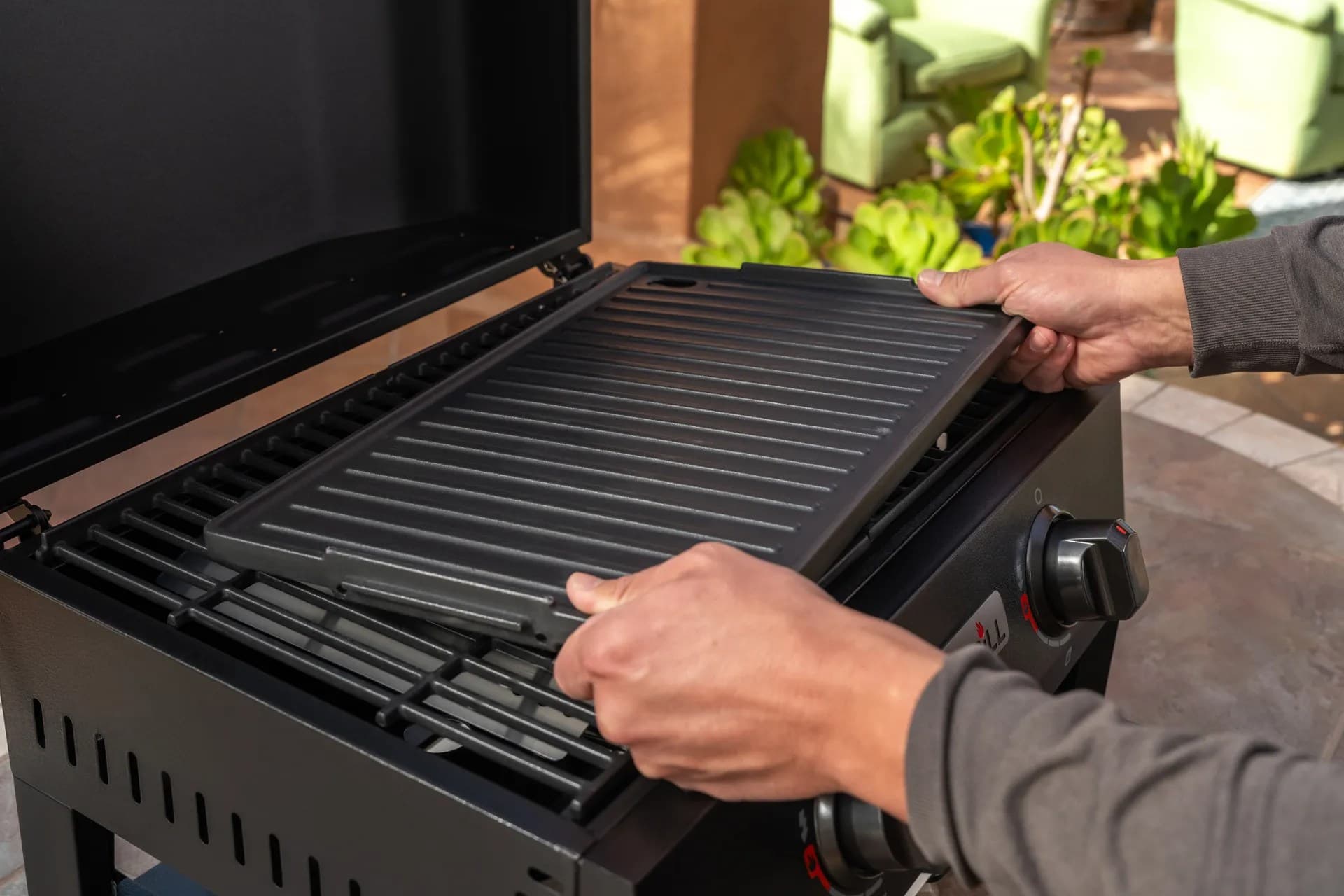
Material quality is another pricing driver. Stainless steel lids, control panels, and burner components generally cost more, but they can improve longevity in humid or coastal U.S. climates. Powder-coated steel can still be a good value, especially in a controlled backyard environment, but shoppers should understand that lower purchase price often comes with more need for protection from rust and weather exposure. The same logic applies to cooking grates. Porcelain-coated cast iron, cast iron, and stainless steel each bring different trade-offs between searing ability, maintenance, and durability.
Side burners and warming features are especially important in a 6-burner grill because the product is often purchased as an outdoor cooking station rather than a simple grill. A side burner lets you keep sauce warm, boil corn, or finish a side dish without running back into the kitchen. A warming rack helps manage timing when cooking for a large group. These may not sound dramatic, but in real cookout use they reduce stress and keep the meal moving.
Ignition system quality also affects value. Push-button ignition is standard on many models, but the consistency of that ignition can vary. Buyers who grill often should look for systems that are easy to relight and simple to service. In practice, a reliable ignition can save time and frustration, especially during busy weekends when the grill is used multiple times in one day.
| Feature | Why it matters | Price impact |
|---|---|---|
| Burner count and layout | Controls heat zones and flexibility | Moderate to high |
| Cooking area | Determines how much food you can cook at once | High |
| Grate material | Affects searing and cleaning | Moderate |
| Side burner | Adds cooking versatility | Moderate |
| Cabinet and frame materials | Affects longevity and appearance | High |
Top 6-Burner Gas Grill Models
The most useful way to compare 6-burner gas grills is to look at the market by brand and build style rather than by logo alone. Nexgrill, Royal Gourmet, Kenmore, and Char-Broil each appeal to slightly different buyers. Some brands emphasize value-first pricing, while others lean into material upgrades or feature density. Because availability changes by retailer and season, model names and specs can vary, but the buying logic stays the same.
Nexgrill is often a strong fit for shoppers who want a practical balance of size, features, and value. The brand is known for accessible outdoor cooking products and broad retail presence, which helps buyers compare multiple configurations in one place. For a 6-burner shopper, Nexgrill tends to make sense when the goal is a roomy, easy-to-understand grill without drifting too far into luxury pricing. That is especially appealing for homeowners who want a dependable patio centerpiece for weekend use and family events.
Royal Gourmet often competes in the value segment with large-format grills that aim to maximize surface area per dollar. Buyers in this lane usually care about getting a lot of grill for the money. The trade-off is that some value-focused models save cost through lighter materials or simpler feature packages, so it is worth reading the fine print on the cart, lid, and grate construction. If you are comparing a lower-priced Royal Gourmet model against a mid-range Nexgrill, ask whether the cheaper price is coming from a meaningful design trade-off or simply from fewer extras.
Kenmore-branded outdoor grills can appeal to shoppers who recognize the name and want a familiar retail experience. In many cases, the appeal is straightforward: broad-store availability, recognizable branding, and enough features to satisfy the average family cook. Char-Broil, by contrast, has historically been associated with mainstream backyard grilling and often provides models that are easy to understand and maintain. A Char-Broil 6-burner option may not always be the flashiest choice, but for many buyers it fits the practical brief of reliable, everyday use.
Tip: Compare the warranty details, grate material, and included accessories before comparing brand names. Those details often explain more of the price difference than the logo on the lid.
Here is the buyer-centered way to think about top models: if your priority is maximum cooking space at the lowest entry price, look at value brands first. If you want a more balanced long-term purchase, compare mid-range models with stronger lids, better grates, and improved controls. If you are buying for frequent entertaining or outdoor cooking as a regular hobby, a premium build can pay off through smoother operation and less frustration over time. In practical terms, the “best” 6-burner grill is the one that matches how often you cook, how many people you feed, and how much weather exposure it will face.
For U.S. buyers, retail channel matters here as well. Large online marketplaces can offer wider model selection and aggressive sale pricing, but you should verify seller reputation and return terms. Big-box stores may provide easier assembly help, local pickup, or more transparent display comparisons. Specialty outdoor retailers may charge more but sometimes offer better guidance and service. That mix of price, support, and convenience should be part of your model comparison.
Where to Buy 6-Burner Gas Grills
The best place to buy a 6-burner gas grill depends on whether your top priority is price, convenience, or after-sale support. Online retailers often have the widest selection and the easiest price comparison. That makes them ideal for shoppers who want to track discounts, compare features side by side, and read customer reviews before deciding. The downside is that shipping large grills can add complexity, and assembly may be left to the buyer unless an added service is offered.
Big-box home improvement stores are another common U.S. option. They can be especially useful if you want to see the grill size in person, check the cart footprint, and understand how much patio space it will occupy. They also often run seasonal promotions that bring large grills into more approachable price ranges. If you are shopping for a 6-burner grill in spring or around major summer holidays, the price at these retailers may be materially lower than the manufacturer’s suggested level.
Local patio, grill, and outdoor-living stores can be worth the extra cost for buyers who value guidance. The staff may help explain burner systems, natural gas conversions, or clearance requirements, and that can be especially helpful for larger grills that need proper spacing and stable setup. Even if the initial price is higher, local service can reduce the chance of buying the wrong configuration for your home.
If you are considering a Nexgrill model, the brand’s own site and retail partners are useful places to compare current product lines, feature sets, and compatible accessories. You can also review Nexgrill’s broader product range to see whether a 6-burner grill is the best match or whether a different configuration would meet your needs more efficiently. The key is to compare the full ownership experience: not just the number on the price tag, but the delivery, assembly, support, and replacement-part access that come with it.
One practical note: for large grills, the total purchase cost often includes more than the grill. Buyers may also spend on a cover, a propane tank if they are choosing propane, a hose and regulator for some natural gas setups, or assembly service. That is why a grill that seems “cheap” at checkout can end up closer to a mid-range total after all setup costs are counted.
Conclusion
A 6-burner gas grill is usually a purchase driven by capacity, convenience, and the desire to cook for more people with less juggling. The price you pay should reflect the way you grill, not just the size of the box. In the U.S. market, the broad pricing range from about $400 to above $4,000 makes it possible to choose a grill that fits a modest budget, a growing family, or a more serious outdoor cooking setup. The best values are usually found where build quality, cooking space, and feature set line up with real use.
If you remember only one thing, make it this: compare the total value, not the burner count alone. Burner layout, grate quality, materials, side features, and retailer support all help explain why one grill costs more than another. Once you understand those trade-offs, shopping for a 6-burner gas grill price becomes much easier and a lot more rewarding. Try comparing two products side by side below to see which fits best:
Understanding the Price Range
Once you have compared two models side by side, the next step is to understand what the asking price is really buying you. With 6-burner gas grills, price usually rises in steps rather than in a smooth line. You are not simply paying more for "more burners." You are paying for stronger frames, better burner systems, more stable heat retention, easier cleanup, and a more comfortable ownership experience over multiple seasons. In the U.S., that means a grill priced at $499 and one priced at $1,299 may both look similar at a glance, yet behave very differently on a windy patio, during a holiday cookout, or after two full summers of use.
One of the biggest drivers of price is the quality of the main cooking platform. A larger six-burner layout naturally costs more to manufacture, but the bigger jump often comes from the surrounding materials: the lid, side shelves, cart, knobs, and fasteners. Stainless steel accents usually cost more than painted steel, and thicker cooking grates often improve heat retention and searing performance. If you cook steaks frequently, that difference matters. If you mainly grill chicken, vegetables, and mixed family meals, you may care more about even heating and easy cleanup than about premium visual finishes. For more information, check out The Ultimate Guide to the Best Gas Grills with Flame Tamers and Ceramic Briquettes.
Info: In this category, the grill’s real value often shows up in how evenly it holds temperature across multiple zones, not in the largest BTU number on the box.
Fuel type also influences the total price picture. Propane grills are usually more straightforward to set up, especially for homeowners who want a fast backyard install. Natural gas grills may cost similarly at the register, but your total project cost can rise if you need a dedicated line run to the cooking area. That is why U.S. buyers should think in terms of total ownership cost, not just MSRP or sale price. A grill that appears less expensive can become more costly once delivery, accessories, hose kits, or installation are included. For tips on maintenance, see Comprehensive Guide to Gas Grill Maintenance.
Retail timing matters too. Outdoor cooking season drives price fluctuations, and large grills often appear in promotional bundles or markdowns during spring launch periods, summer holiday sales, and late-season clearances. A well-timed purchase can save hundreds of dollars, especially on display models or inventory being rotated out for new stock. Still, shoppers should avoid buying purely because a grill is discounted. The key question is whether the cheaper unit still gives you the frame strength, grate quality, and heat control you need.
For buyers focused on value, a good price range is not just "the lowest possible number." It is the lowest price that still covers the basics that matter every time you cook. In practice, that means a large enough cooking area for your typical guest count, burners that can actually be controlled independently, and a construction level that will not feel flimsy after a few uses. If you are shopping for a backyard center piece rather than a once-a-year appliance, that value framing is the right one.
Evaluating Key Features
The most important feature comparison for a 6-burner gas grill is how the burners are organized. Six burners give you the possibility of creating multiple temperature zones, but only if the control layout supports it. A well-designed grill lets you sear on one side, finish indirectly in the middle, and hold finished food warm without overcooking it. That flexibility is a big part of why larger grills earn their price. If the layout is awkward, those extra burners add size without adding much function.
Cooking area should always be read alongside grate material. A large surface made with thin materials can still disappoint if it loses heat too quickly. Cast iron and porcelain-coated cast iron are attractive for searing and temperature retention, while stainless steel grates can be easier to clean and more resistant to wear. Buyers who live in wetter climates or who leave the grill outdoors year-round should pay close attention to corrosion resistance, because the cheapest grill often becomes the most expensive one if replacement parts are needed frequently.
| Feature to inspect | What stronger versions usually provide | Why it can justify a higher price |
|---|---|---|
| Burners | Even flame distribution and easier control | Helps manage multiple foods at once |
| Lid and firebox | Heavier construction and better heat retention | Improves consistency on windy or cold days |
| Side burner | Extra pot or sauce space | Adds flexibility for full meals outdoors |
| Ignition | More reliable start-up | Reduces frustration and repeat lighting attempts |
| Cabinet and cart | Storage and sturdier feel | Improves convenience and long-term use |
BTU output deserves context. Higher BTUs can be useful, but they are not a substitute for good design. If a grill burns fuel quickly without distributing heat evenly, the high output becomes a liability rather than a benefit. Look instead for a balance of output and controllability. In real-world use, that matters more because you need the grill to recover heat after the lid is opened and to hold steady on a half-load as easily as on a full-load cookout.
It is also worth considering whether extra features actually fit your cooking style. A side burner is valuable if you make sauces, beans, or side dishes outdoors. A warming rack helps if you serve in waves. A built-in thermometer can be helpful, though many experienced grillers still rely on their own probe thermometers for accuracy. The goal is to avoid overpaying for features that sound good in the product title but add little to your actual cooking routine.
Comparing Top Models
A fair comparison of top 6-burner models starts with brand positioning. Royal Gourmet often attracts shoppers seeking maximum size for the dollar, and that can be a smart match if your priority is feeding a crowd on a budget. These models are worth a close look when you want room to cook a lot of food but do not need the most premium finishes. The downside is that buyers should inspect the materials carefully, because lower entry price sometimes means thinner components or fewer refinement details.
Nexgrill sits in a compelling middle zone for many buyers. It often appeals to people who want accessible pricing without feeling like they are stepping down into a bare-bones category. That makes it especially relevant to homeowners who grill regularly, host family gatherings, and want a practical balance of features and usability. In the 6-burner segment, that balance is important because the grill is likely to see enough use that comfort and reliability begin to matter as much as the initial sale price. A well-chosen Nexgrill model can make everyday cooking feel easier without pushing the budget into premium territory. For comparison of features, see Gas Grills with Searing Stations: A Beginner's Guide.
Char-Broil is often associated with broad availability and mainstream backyard grilling. For many shoppers, that familiarity is reassuring. It can be a good fit if you want a recognizable brand and a no-nonsense setup experience. The key is to compare the exact model line, because broad branding can hide differences in grate quality, cabinet design, and accessory count. A lower-priced model may suit casual cooking, while a more fully equipped version may be better for frequent entertaining.
Kenmore-branded outdoor grills may appeal to buyers who value name recognition and retail convenience. In this segment, the model comparison often comes down to configuration details rather than brand prestige alone. If two grills look similar but one includes a better side shelf, a sturdier cart, or a more serviceable ignition module, that can be the more important difference than the logo. The best comparison strategy is to create a short checklist: cooking area, burner layout, grate material, ignition, shelf space, and warranty terms.
Warning: Large grills sometimes look alike in photos. Check actual cabinet depth, grate material, and side burner inclusion before assuming two models are truly comparable.
A useful buyer scenario is this: if you host 8 to 12 people on a regular basis and want an everyday grill rather than a seasonal showpiece, a mid-range Nexgrill or Char-Broil model may be the better value than the cheapest possible option. If your main goal is maximum size at the lowest spending level, Royal Gourmet may deserve attention. If you want a familiar retail brand and expect moderate weekend use, Kenmore can be perfectly reasonable. The right answer depends less on the label and more on how the grill will actually be used.
Making an Informed Purchase
A smart purchase starts with a realistic inventory of your cooking habits. Ask how often you grill, how many people you usually feed, and whether you cook in courses or all at once. If you regularly manage burgers, chicken, vegetables, and a side dish together, you will appreciate the flexibility of six burners more than someone who grills for two or three people. On the other hand, if you rarely use the full surface, you may be paying for capacity you do not need.
Next, compare the full cost of ownership. That includes delivery, propane or gas connection costs, a cover, and possibly assembly service. It also includes the less obvious cost of maintenance. Grills with better materials may cost more upfront but require less frequent replacement of burners, grates, or ignition parts. Over time, that can narrow the gap between a budget grill and a higher-quality one.
Tip: If two grills are close in price, choose the one with better grates and a sturdier cart before paying extra for cosmetic stainless trim.
It is also smart to evaluate where and how the grill will live. A grill stored under a roof or covered after each use can get by with less expensive materials than one exposed to rain, sun, and salty coastal air. If your backyard environment is hard on equipment, a slightly more expensive model can be the better financial choice because it is less likely to age quickly. That is especially true for large grills, where replacement costs are more noticeable.
Finally, remember that a good purchase is not only about price but also about fit. A grill that fits your patio, your fuel setup, and your cooking rhythm is worth more than one that simply looks impressive in a product photo. If you can, compare two models on the same criteria and be honest about what you will use. The goal is not to buy the biggest grill on the market. It is to buy the right one for your household and your budget.
Final Thoughts
The price of a 6-burner gas grill makes the most sense when you connect it to real use. In the U.S. market, you can find functional large grills at accessible prices, but the better long-term value usually appears when materials, controls, and cooking layout are aligned with the way you actually cook. Six burners can be a game changer for family dinners and backyard gatherings, but only if the rest of the grill supports that capacity well.
As you narrow your options, compare the construction details that sit behind the sticker price. That is where the real differences live. Once those are clear, the decision becomes much easier: choose the grill that gives you the cooking flexibility you need, the durability you expect, and a price that feels justified for the life of the product.