Exploring the Future of Grilling: Smart Grills with App Technology
Unlock the full potential of your grilling experience with smart technology and mobile app integration.
In This Article
Enhanced Cooking Control
Real-Time Monitoring
Recipe Integration
Introduction to Smart Grills
A smart grill with app support turns a familiar backyard tool into a more responsive cooking system. Instead of standing over the lid and guessing when a steak is ready or whether a pork shoulder needs a few more hours, the grill connects to your phone so you can check temperatures, adjust settings, and follow the cook from inside the house or across the patio. That does not replace good grilling instincts, but it does give you more visibility into what is happening at the grate, which is especially helpful for longer cooks and when you are juggling guests, side dishes, and timing.
The big shift with app-connected grilling is not just convenience. It is confidence. Many home cooks learn by feel and visual cues, but a smart grill can reduce the number of times you open the lid, disturb the heat, or overcorrect when food is progressing well. In practice, that means fewer surprises and more repeatable results. Nexgrill’s brand position around accessible, dependable outdoor cooking fits that idea well: a grill should help people gather, cook, and enjoy the moment rather than forcing the cook to babysit every step. That aligns with Nexgrill’s broader focus on buying a smart grill with app connectivity experiences.
Smart grilling is most useful when you cook beyond quick burgers and dogs, especially for roasts, ribs, chicken halves, and mixed-meal entertaining.
For many United States buyers, the practical question is not whether a smart grill sounds impressive. It is whether app control actually improves everyday cooking enough to justify changing habits. The answer depends on how often you cook, how patient you are with learning a new interface, and whether your grill sessions tend to be short weeknight meals or longer weekend gatherings. If you mostly sear steaks for dinner, a basic grill may be enough. If you want steadier monitoring for brisket, salmon, wings, or a full party spread, app support can become a genuine advantage.
Consumer research on smart grills has consistently focused on the same themes: connectivity, probe accuracy, app clarity, and how well the technology stays useful after the novelty wears off. Those are the right questions to ask because a smart grill is only valuable if the hardware and software work together in a way that feels simple, not technical. A good interface should make the grill easier to understand, not harder.
Key Features of Smart Grills with Apps
When shoppers compare a smart grill with app functionality, they should look beyond the headline claim of Wi-Fi or Bluetooth. The important details sit in how the features work together. Connectivity is only the starting point. The real value comes from temperature graphs, probe alerts, cooking presets, shutdown reminders, and whether the app helps you make better decisions while food is on the heat.
| Feature | Why it matters | What to check in the app |
|---|---|---|
| Wi-Fi connectivity | Lets you monitor the grill from farther away, even inside the house. | Connection stability, login speed, and whether alerts arrive reliably. |
| Bluetooth pairing | Useful for fast setup and short-range cooking sessions. | Pairing simplicity and whether it reconnects without repeating setup. |
| Food probes | Track internal food temperature instead of relying on guesswork. | Probe count, temperature range, and alert customization. |
| Preset recipes | Provides target temps and timing guidance for common cooks. | How flexible the presets are and whether you can save your own settings. |
| Cook history | Helps repeat successful results and learn from past sessions. | Whether logs show temps, time, and probe behavior clearly. |
In real use, the most valuable app features are usually the least flashy. A clear home screen that shows current grate temperature, food probe temperature, and setpoint is worth more than a crowded dashboard full of extras. Likewise, clean push notifications matter more than ornate graphics. If the app warns you early that the temperature is drifting or a food target is nearly reached, you can act before the cook goes off course.
is often enough for simple cooks, but multi-zone or multi-meat meals benefit from more tracking flexibility.
Another detail that separates a useful smart grill from a frustrating one is whether the app is built for actual grilling behavior. A useful app should tolerate brief signal gaps, show your current cook status at a glance, and let you switch between direct heat and slower roasting without forcing a reset. Since many households use grills for family dinners, weekend entertaining, and holiday cooking, the system should be easy enough that a second person can step in and monitor the cook if needed.
Comparing Top Smart Grills and Their App Functionalities
The best way to compare smart grills is to look at the app experience alongside the grill hardware, because the software is only as useful as the cooking platform behind it. A grill with strong sensors but a clumsy app can feel less helpful than a simpler system that is fast, stable, and easy to read. Reviewers across major buying guides repeatedly emphasize the same deciding factors: reliable connection, probe accuracy, and whether the app adds real control or just a screen overlay on top of standard grilling features.
| Comparison point | What strong smart grills usually offer | What to watch for |
|---|---|---|
| App design | Large temperature readouts, simple alerts, easy recipe navigation | Menus that bury core data or require too many taps |
| Remote monitoring | Useful alerts when the grill moves outside target range | Delayed notifications or repeated disconnects |
| Cooking guidance | Preset targets for common proteins and slower cooks | Presets that are too generic for real home cooking |
| Usability | Fast pairing, clear status updates, simple setup | Poor onboarding or confusing account creation |
| Long-session support | Cook timers, multi-hour temp trends, stable alerts | Apps that work for short cooks but feel weak for brisket or ribs |
Among commonly reviewed smart grills, the most helpful distinction is how much the app supports a cook from start to finish. Some products lean toward temperature visibility and a few alert settings, while others emphasize recipe libraries and integrated guided cooking. Buyers who value simplicity may prefer a cleaner interface with fewer extras. Buyers who love learning new techniques may appreciate the deeper recipe and scheduling tools that make the grill feel more like a cooking assistant.
If you often cook for guests, choose the grill whose app makes it easiest to monitor food without repeatedly opening the lid or stepping outside.
A practical buyer should also consider whether the smart features work when the phone is busy, locked, or used by another family member. In a real backyard setting, the best app is one that gives you useful information quickly and does not demand constant attention. That is especially relevant in the United States where many backyard cooks are balancing kids, side dishes, drinks, and weather changes. Try comparing two products side by side below to see which fits best:
User Experience: Feedback on Smart Grill Apps
Once you've weighed two options against each other, the next question is what the day-to-day experience actually feels like. User feedback on smart grill apps tends to follow a clear pattern: people love the convenience when the app is stable and informative, and they lose patience quickly when pairing, alerts, or probe readings become unreliable. That makes usability just as important as feature count. In reviews of app-enabled grills, the strongest praise usually goes to systems that make it easy to monitor long cooks from the kitchen while still staying in control of the final sear or resting stage.
A common theme in user testimonials is that app support changes how people use the grill, not just how they observe it. First-time smart grill owners often say the app helps them relax because they can stop lifting the lid to “check” the food. More experienced grillers like the data trail: probe history, temperature swings, and reminders that help recreate a successful brisket or chicken cook later. The best apps feel almost invisible during a cook, which is exactly the point. They quietly support decisions without becoming a distraction.
The most satisfying user experience is not the most feature-rich one. It is the one that gives clear information fast, then stays out of the way.
Reviews often note two pain points. The first is initial setup: some grills pair quickly, while others require more patience with account creation, firmware updates, or network setup. The second is notification quality: alerts are only useful if they arrive on time and say something actionable. A generic temperature alert can help, but a well-designed app tells you whether the cook is rising too fast, nearing target, or has drifted outside a useful range. Those little details can save a meal.
Maintenance and Troubleshooting for Smart Grills
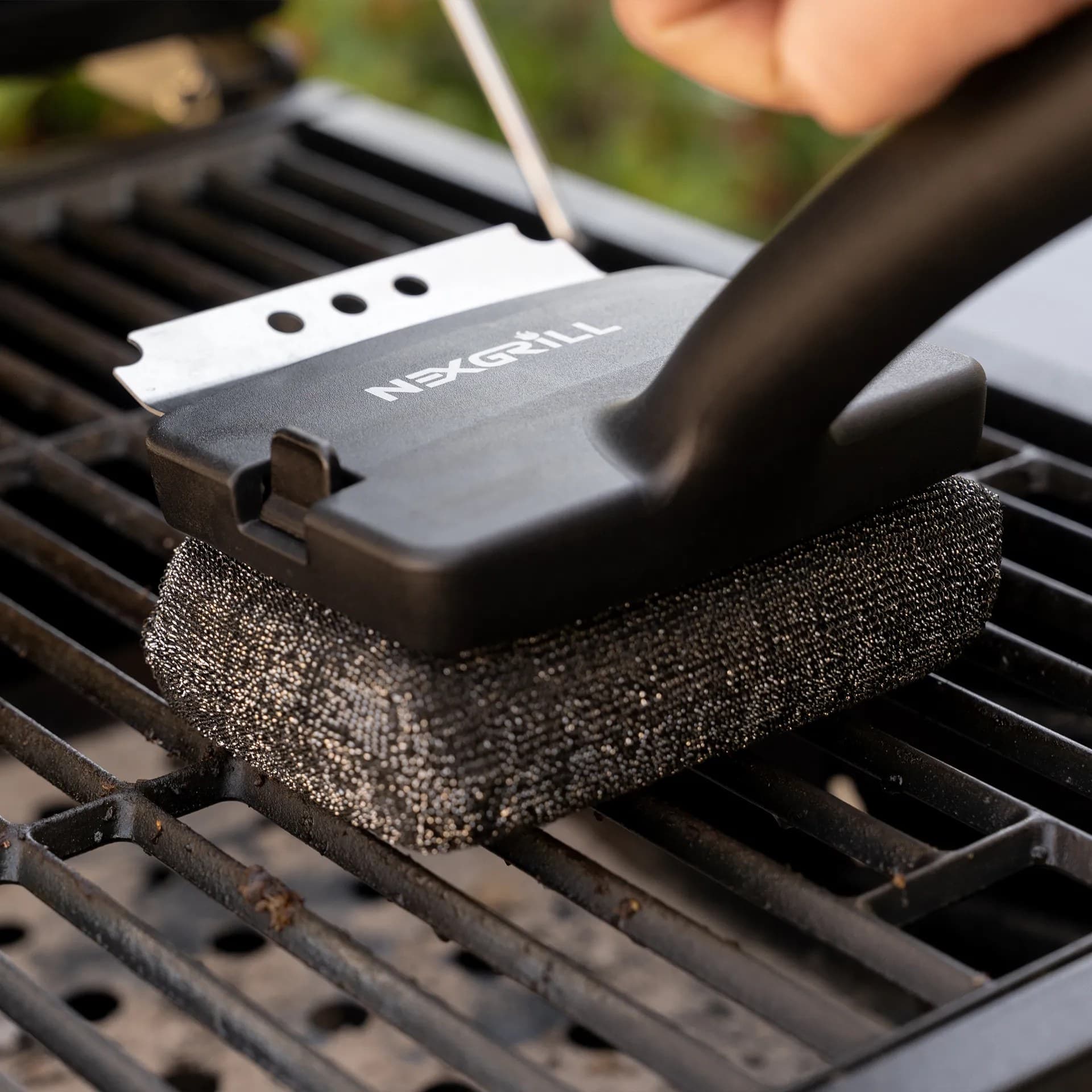
Smart grills still need the same kind of physical care as any outdoor cooking appliance, and the app does not replace routine maintenance. In fact, because smart systems rely on accurate sensors and stable connectivity, basic upkeep becomes even more important. Keeping probes clean, ports dry, vents unobstructed, and the cooking chamber free of buildup helps the grill respond more consistently and helps the app reflect what is really happening inside the unit.
| Issue | Likely cause | What to do |
|---|---|---|
| App will not connect | Weak Wi-Fi signal, outdated firmware, pairing reset needed | Move closer to the router, restart the grill and app, update software |
| Probe reading looks off | Probe damage, grease residue, loose connection | Clean probe gently, re-seat connector, replace if necessary |
| Notifications delayed | Phone settings, battery optimization, app permissions | Allow alerts, disable aggressive power saving, test a sample notification |
| Temperature swings | Lid opening, wind, fuel feed issues, dirty grates | Stabilize environment, clean grates, confirm fuel supply or airflow |
For troubleshooting, a practical sequence helps. Start with the simplest fix first: check the power source, confirm your phone is on the correct network or Bluetooth range, and make sure the app has permissions for notifications. Then inspect the probe and its cable for grease damage or obvious wear. If the grill still behaves inconsistently, refresh the app, restart the device, and look for a firmware update. That order matters because many “serious” problems are actually setup issues.
Do not assume a bad temperature reading is always a grill problem. Phone settings, app permissions, and a dirty probe can be the real cause.
Optimized Recipes for Smart Grilling
Smart grilling shines when the recipe benefits from steady monitoring and staged cooking. That means the best app-friendly recipes usually involve a target temperature, a resting period, or a sequence of direct and indirect heat. Instead of chasing a one-minute sear, use the app to manage the kind of cook where timing, precision, and probe awareness make a visible difference.
For a dependable weeknight recipe, try bone-in chicken thighs with a two-stage approach. Start at medium heat until the skin is crisp, then move to a cooler zone and use the app to track the internal temperature until the meat reaches a safe finishing point. This takes advantage of the app’s monitoring strength without overcomplicating the process. For a weekend crowd, try baby back ribs: season in advance, cook low and slow, and use the app to keep tabs on chamber temperature and meat progression while you prep sides or sauce. For something faster, salmon fillets work well because you can watch the internal temperature closely and pull them before they overcook.
| Smart-grill-friendly recipe | Why it works well | App feature to use |
|---|---|---|
| Chicken thighs | Handles a two-zone cook and benefits from final temp monitoring | Probe alerts and chamber-temp tracking |
| Baby back ribs | Long cook with a clear temperature trail | Timer, history, and steady-temp notifications |
| Salmon fillets | Short cook that rewards precision | Fast alert setup and target-temp tracking |
| Tri-tip or pork tenderloin | Needs a short sear followed by careful pull timing | Custom probe thresholds and rest reminders |
Smart grilling workflow:1. Preheat the grill and confirm the app shows a stable chamber temperature.2. Insert the probe into the thickest part of the food.3. Set your target temperature and alert threshold.4. Cook with the lid closed as much as possible.5. Rest the food after the app signals target temperature.Conclusion: Why a Smart Grill is Worth It
A smart grill with app support is worth considering if you want more control, more consistency, and less guesswork in your outdoor cooking. It is especially useful for cooks that stretch beyond a quick sear and for households that value being able to monitor food without hovering over the grill. The app does not replace skill, but it does make skill easier to apply repeatedly. That is why the strongest smart grill experiences feel practical instead of gimmicky.
For United States buyers, the smartest purchase is the one that matches how you actually cook. If you want simple monitoring and dependable alerts, choose a system that keeps the interface clean. If you enjoy guided cooking and recipe support, pick a platform with stronger app tools and a history of helpful updates. Either way, the right smart grill should make your time outside feel more relaxed, more social, and more rewarding.