The Ultimate Guide to Portable Gas Griddles
Discover how to choose, use, and maintain your perfect portable gas griddle.
In This Article
Top Portable Models
Griddle vs Grill
Troubleshooting Tips
Introduction to Portable Gas Griddles
Portable gas griddles have become a favorite for cooks who want more than a basic burner setup but do not want to commit to a full patio cooking station. They are especially appealing in the United States for backyard breakfasts, campsite meals, tailgates, and smaller outdoor spaces where a larger appliance may not fit. A good portable gas griddle gives you a wide, flat cooking surface, fast heat-up, and the ability to handle foods that would normally be awkward on a grate, such as eggs, pancakes, chopped vegetables, fried rice, and smash burgers.
What makes this category so useful is its balance of flexibility and convenience. The flat surface lets you cook multiple foods at once without worrying about pieces falling through grates, while the gas fuel source makes temperature changes quicker and easier than charcoal. That combination explains why portable gas griddles show up in user reviews as a “weekend workhorse” and a “better breakfast machine than my indoor skillet.” Those comments are not just praise; they point to the real reason many buyers choose a griddle over another portable cooking appliance: it solves more everyday outdoor cooking problems in one compact format.
Portable gas griddles are best when you want even, accessible cooking space more than open-flame grill marks.
For Nexgrill shoppers, this category also fits the brand’s practical, welcoming approach to outdoor cooking. A portable griddle should feel approachable enough for a beginner but capable enough for an experienced cook who wants reliable heat control. That is why many buyers compare size, burner count, portability, and cleanup features before they even look at appearance. In this guide, we will focus on the buying decisions that matter in real use, not just the features that look good in a product photo.
One important thing to keep in mind is that “portable” does not always mean tiny. Some portable gas griddles are designed for tailgates and travel, while others are meant for patios, RV setups, or compact backyards where a foldable cart or smaller footprint matters. When you are narrowing your options, the real question is not simply whether the griddle moves easily. It is whether it moves easily and still gives you enough surface area and heat output for the meals you actually cook.
Most buyers should start with cooking surface and portability, then compare burner power and cleanup.
A practical example helps. If your plan is Saturday breakfast for four, a compact griddle with a manageable cooking zone can outperform a grill because you can cook bacon, eggs, hash browns, and toast-style buns in sequence or side by side. If your plan is burger night for a crowd, a larger portable unit with more burners may make more sense than a smaller model that is easy to carry but cramped when the food starts piling up. The best choice is the one that matches how you cook, not just where you cook.
Top Portable Gas Griddles
When readers ask for the best portable gas griddle, they usually want a short list that makes the decision easier. The truth is that the top option depends on what you value most: portability, cooking volume, temperature control, or overall value. Consumer roundups often reward units that strike a balance between sturdiness, even heating, and compact storage, while user reviews tend to favor models that are simple to ignite, easy to clean, and wide enough for a family meal without taking over the patio. That combination of expert criteria and real-world feedback is the most useful way to compare models. Consumer Reports and The Spruce Eats both emphasize that size, evenness of heat, and ease of assembly are major deciding factors for portable griddles, while Food Network notes that a griddle’s flat cooking surface is what gives it its versatility for foods that need contact with the surface rather than direct flame.
| Model type | Best for | Typical strengths | Watch for |
|---|---|---|---|
| Two-burner portable griddle | Tailgating, couples, small patios | Lightweight, quick setup, easy storage | Less room for batch cooking |
| Foldable-cart portable griddle | Home cooks who want mobility and prep space | Better working height, easier transport than a full outdoor kitchen unit | Takes more garage space than a tabletop model |
| Four-burner portable griddle | Families and frequent entertainers | More zones, better batch cooking, more consistent output across a wider surface | Heavier and less travel-friendly |
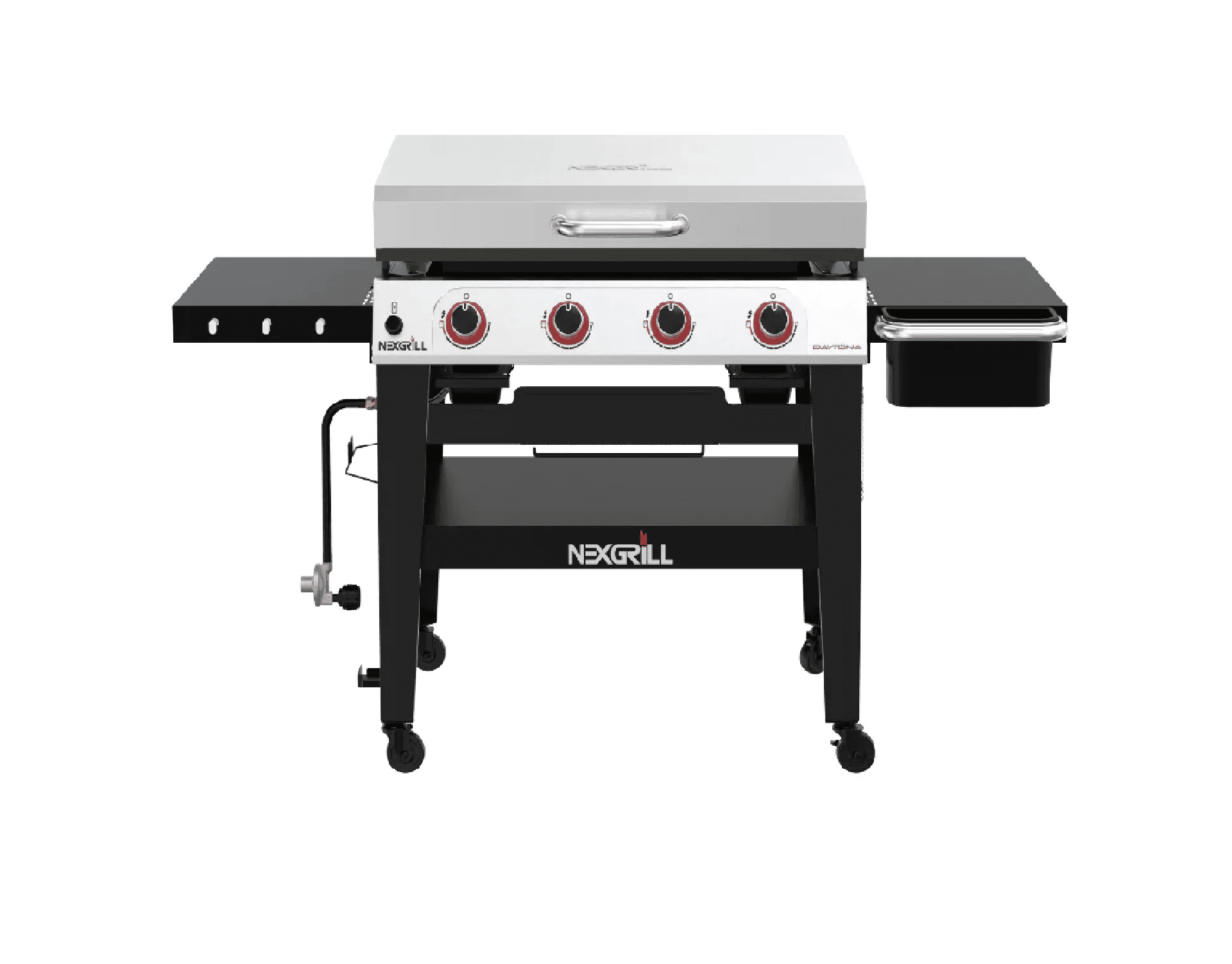
For Nexgrill buyers, the portable side of the griddle lineup is best thought of as a spectrum. A model like the Daytona 2-Burner Propane Gas Griddle with foldable cart is a strong fit if you want a true move-anywhere setup that still feels stable enough for regular weekend use. A two-burner option with a lid is attractive for cooks who want more protection during transport and storage. Stepping up to a four-burner griddle makes more sense when your meals are bigger, your prep style is more ambitious, or you frequently cook multiple items at different temperatures.
If you cook breakfast for a group, choose a wider surface first. If you cook mostly solo or for two, portability may matter more than burner count.
A useful way to read user reviews is to separate “setup satisfaction” from “cooking satisfaction.” Some portable griddles earn high marks because buyers love how quickly they assemble or how easily they pack into a vehicle. Others earn praise because the heat stays even across the surface and food releases cleanly after the seasoning settles in. The strongest products usually do both. When reviews repeatedly mention the same strengths, such as sturdy knobs, manageable grease cleanup, or dependable ignition, that is a better sign than a vague star rating alone.
Gas Griddle vs. Gas Grill
A gas griddle and a gas grill are both useful outdoor tools, but they are built for different cooking results. A gas grill uses open grates, so food gets direct exposure to flame and airflow. That design is excellent for searing steaks, charring vegetables, and creating grill marks. A gas griddle uses a flat plate, which traps juices, keeps small items from falling through, and spreads the heat across a continuous surface. That makes it better for delicate or mixed foods and for meals where you want the food to cook in its own rendered fat or with a little oil on the surface.
The biggest difference is control. On a grill, you manage heat by moving food around the grate or adjusting burners below. On a griddle, you manage heat by using different zones across the flat surface. That gives you a lot of flexibility for breakfast foods, stir-fry ingredients, cheesesteaks, chopped chicken, and smashed patties. If you are comparing the two for a portable setup, ask yourself whether you want open-flame flavor and char or broad-surface cooking and easier handling of smaller items.
If your menu includes eggs, pancakes, onions, or mixed breakfast items, a portable gas griddle is usually the more forgiving choice.
There is also a cleanup difference that many first-time buyers notice immediately. Grills collect drippings beneath the grates, while griddles collect them on the surface and in the grease management path. That can make griddles feel easier after foods like bacon or smashed burgers, but only if you wipe the surface while it is still warm and keep the grease tray clear. So while a griddle may seem simpler, it still rewards a thoughtful cleaning routine.
Common Issues & Troubleshooting
Most portable gas griddle issues are not dramatic; they are usually small setup or maintenance problems that affect heat, ignition, or food release. The good news is that many of the complaints you see in user reviews have straightforward fixes. Uneven heating often comes from preheating too briefly or from wind interfering with one side of the cooktop. If one burner seems weaker than the others, check the fuel source, regulator connection, and burner ports before assuming the appliance itself is faulty.
| Problem | Likely cause | Practical fix |
|---|---|---|
| Griddle won’t ignite | Low fuel, loose connection, igniter issue | Confirm propane supply, reseat the connection, test ignition again |
| Hot spots on one side | Uneven preheat, wind, burner imbalance | Preheat longer, shield from wind, inspect burner ports |
| Food sticks to the surface | Seasoning not built up or heat too low | Add a light oil layer and let the surface fully heat |
| Grease pooling | Drain path blocked or griddle not leveled | Clear the grease channel and check surface leveling |
A common user review theme is, “It worked better after the second or third use.” That often happens because the cooktop seasoning improves, the owner learns the heat pattern, and the preheat time becomes more consistent. Another frequent comment is that the first cook felt uneven until the griddle was positioned in a less windy area. Portable products are more sensitive to outdoor conditions than large built-in setups, so location matters.
If the food sticks, do not immediately blame the surface. The issue may be that the griddle was not fully heated before cooking, or that the oil was added too late. If the flame seems unstable, shut the unit down, inspect the propane setup, and restart with a clean connection. For persistent issues, the safest path is to follow the product instructions carefully rather than forcing a workaround.
Many portable griddle problems are solved by better heat-up habits, wind protection, and routine grease cleanup.
Try comparing two products side by side below to see which fits best:
Griddle vs. Flat Top
Once you've weighed two options against each other, the next question is often whether you are really comparing a griddle or a flat top, because the terms are related but not always used the same way. In many everyday conversations, “flat top” describes the style of cooking surface, while “griddle” describes the appliance or cooking category. Food Network explains that a griddle is essentially a flat cooking surface designed for foods that benefit from contact heat rather than open flame, which is why it is so useful for breakfast foods, sandwiches, and finely chopped ingredients.
In practical terms, a flat top often refers to a larger commercial-style surface, while a portable griddle is usually the home-friendly, mobile version of that idea. The cooking behavior is similar, but the frame, cart, burner layout, and portability can vary. If you want to cook outside in a compact space, a portable gas griddle gives you the flat-top experience without needing a built-in or restaurant-sized unit. If you are comparing models, pay attention to the cooktop material, heat zone layout, grease drainage, and whether the unit is designed for travel or for backyard use with occasional movement.
The most useful distinction is simple: a flat top describes the surface, while a portable gas griddle describes the moveable appliance built around it.
That distinction matters because the surface alone does not tell you how user-friendly the product will be. A well-designed portable griddle should have stable legs or a cart, a sensible grease path, and burners that heat consistently from edge to edge. That is the difference between a surface that merely looks flat and one that actually cooks well in the real world.
Usage Scenarios for Portable Gas Griddles
Portable gas griddles shine in settings where flexibility and shared meals matter. At a campsite, they are excellent for breakfast because you can cook several items at once without juggling multiple pans. At a tailgate, they help you keep food moving quickly for a group, especially when you need a fast turnaround between batches. At home, they work well on patios or in small outdoor kitchens when you want the freedom to cook outside without committing to a permanent installation.
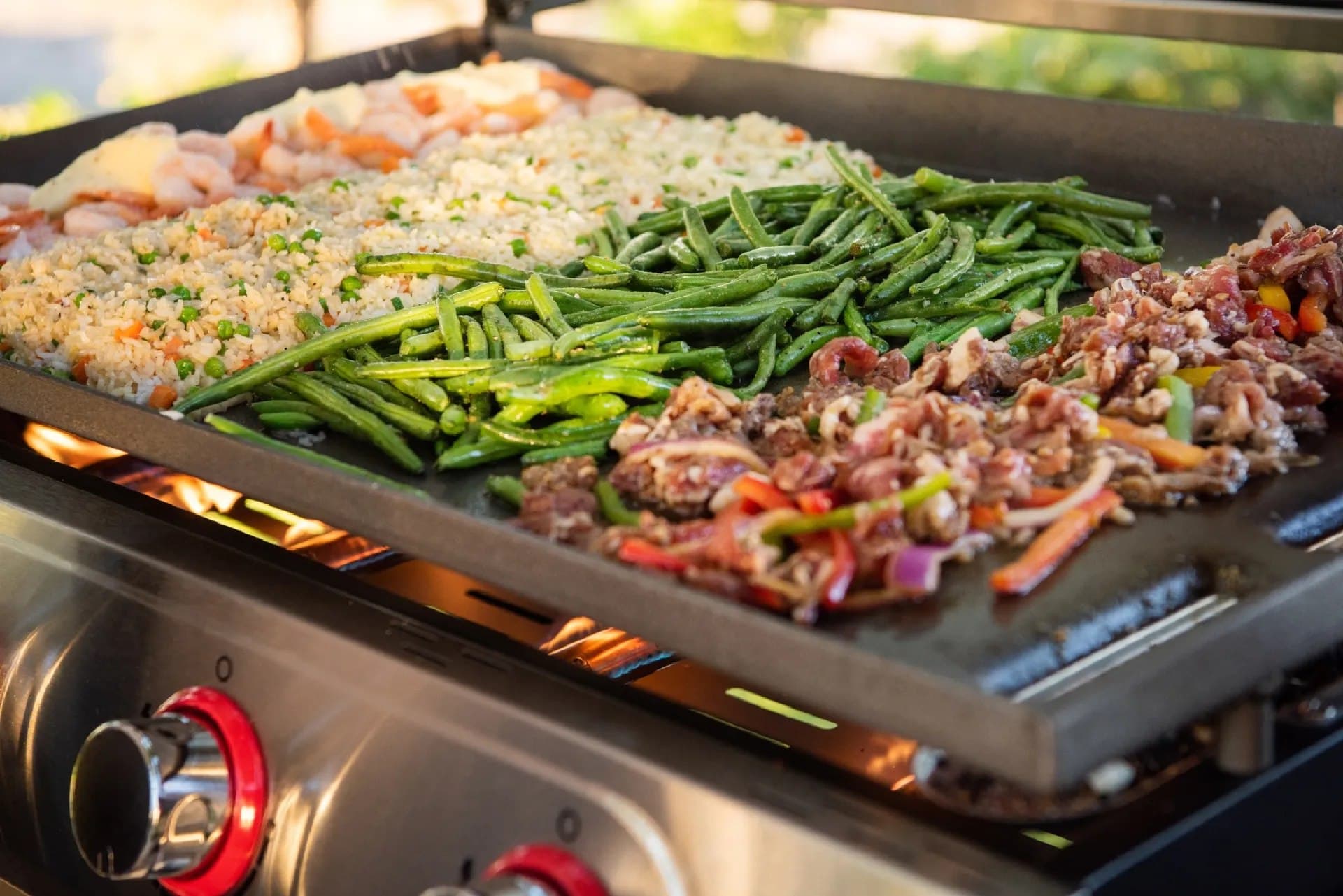
The smartest portable griddle users think in meal formats rather than individual recipes. For camping, that might mean one batch of potatoes, one pan-style protein, and a warm resting zone. For tailgating, it may mean a fast assembly line where buns toast on one side while patties or chopped meat cook on the other. For home use, it might be dinner for four with vegetables, shrimp, and rice cooked in quick succession. In each case, the flat surface makes timing easier because you can visually manage the whole cook at once.
Maintenance Tips
Good maintenance starts the moment the food comes off the griddle. While the surface is still warm, scrape residue toward the grease channel, wipe it clean, and avoid letting sticky sugar or sauce harden overnight. After the unit cools, empty the grease tray and check that the ports, knobs, and fuel connection are clean and dry. For portable models, storage matters just as much as cleaning because these units often travel in trucks, garages, or RV compartments where dust and moisture can collect.
Do not store a portable gas griddle with a dirty cooktop or a full grease tray, especially if it will sit unused for more than a few days.
For best results, keep the griddle covered when not in use and inspect it regularly for wear after travel. If the surface is seasoned, treat it like a cooking tool rather than a countertop: avoid abrasive cleaners that strip the finish, and restore a light oil layer after cleaning when needed. Consumer-oriented product roundups consistently favor portable griddles that are simple to clean and hold up well after repeated outdoor use, which is a reminder that maintenance is part of the ownership experience, not an extra chore.
Conclusion
A portable gas griddle is at its best when it matches your cooking style, your space, and your travel habits. If you want open-flame char, a grill may still be your main tool. If you want versatile flat-surface cooking for breakfast, mixed dishes, and group meals, a portable griddle deserves serious consideration. Compare surface size, burner layout, cleanup, and portability, then choose the model that fits how you actually cook.