The Ultimate Review of Pellet Grills with Fold-Down Front Tables
Explore the best pellet grills designed for convenience and functionality.
In This Article
Workspace Optimization
Top Brands Compared
User Experiences
Introduction to Pellet Grills with Fold-Down Tables
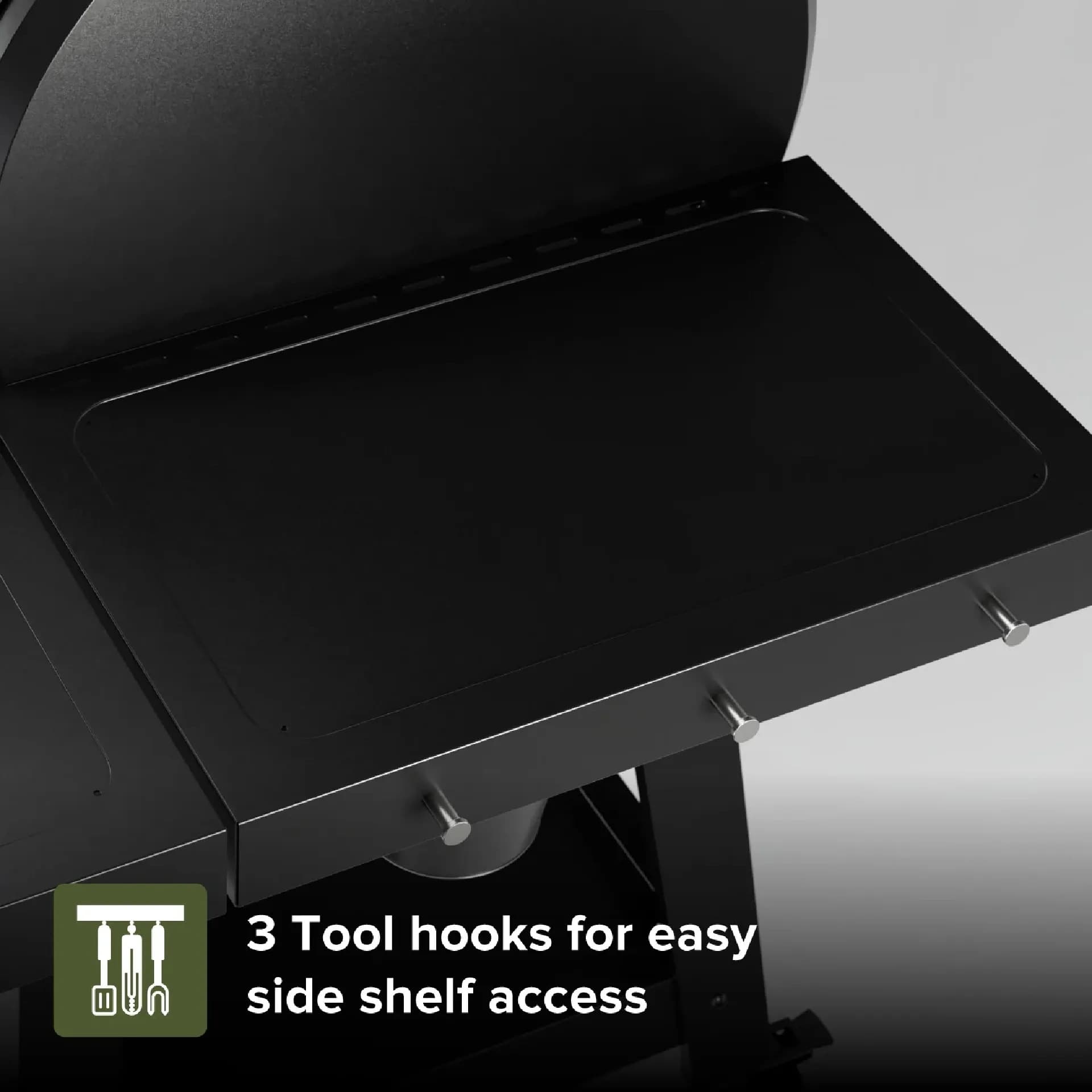
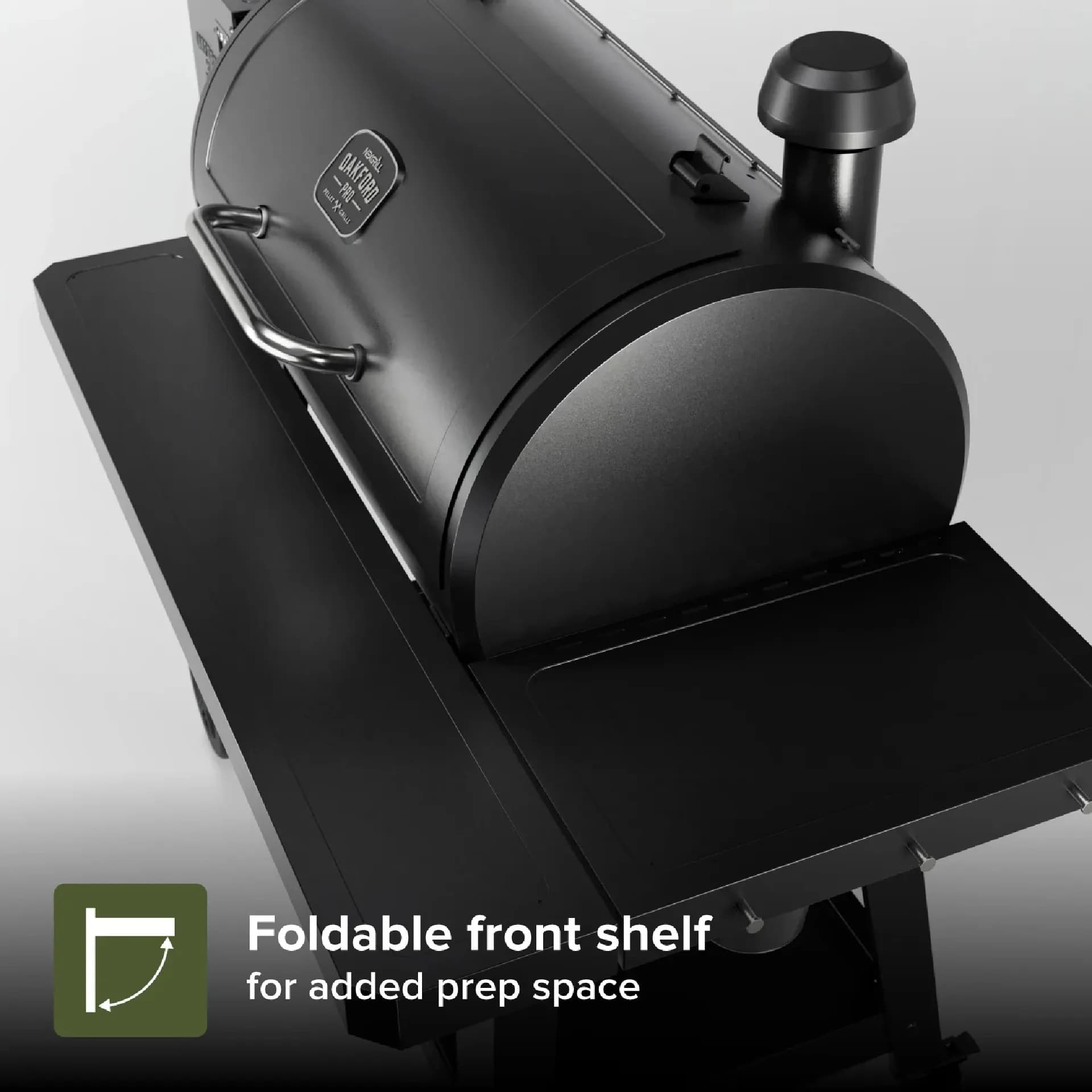
A pellet grill with a fold-down front table solves a very practical problem that most grill owners run into sooner or later: where do you put the tray, seasoning, tongs, thermometer, and finished food while you cook? On paper, a grill’s combustion system may get most of the attention, but in day-to-day use, workspace often decides whether grilling feels relaxed or cramped. A fold-down front table adds temporary prep space exactly when you need it, then folds away when storage space matters more than surface area.
That balance makes this category especially appealing to backyard cooks who want a cleaner patio footprint without giving up convenience. For many pellet grill owners, the front table becomes the landing zone for a pan of vegetables, a basting brush, a foil boat for ribs, or a plate of buns waiting for the rest of the meal. It can also reduce trips back and forth to the kitchen, which matters most when you’re juggling multiple items on a smoker that rewards patience and timing. A small feature like this can have a disproportionate effect on how organized the whole cook feels.
The best review metric is not just smoke output or hopper size. With fold-down-table models, you also need to judge how stable the table feels under real use, not just how it looks in product photos.
This review focuses on how fold-down tables change the ownership experience, not simply on which brands are most recognizable. Traeger, Pit Boss, and Weber all approach the idea differently, and those differences matter if you care about patio flow, build quality, and how often you cook. Some front tables are built to act as a true prep station. Others are more like an auxiliary shelf that helps with one or two items at a time. Knowing the difference can save you from buying a grill that has the right headline feature but not the right usability.
In the real world, a fold-down front table is most valuable during the moments when the grill is busiest. Think about a Saturday cook where you’re smoking chicken thighs, searing vegetables, and monitoring sauce at the same time. That front table becomes the bridge between prep and plating. It can also be useful for smaller patios because it gives you work surface only when needed. If your outdoor area doubles as seating space, the ability to fold the table down after cooking can help the grill feel less permanent and bulky.
Top Pellet Grills Featuring Fold-Down Tables
The strongest pellet grills with fold-down front tables usually combine a dependable cooking system with a table that is large enough to be useful but not so large that it dominates the footprint. In this category, Traeger is often associated with polished fit and finish, Weber with refined control and thoughtful engineering, and Pit Boss with a value-driven approach that aims to give buyers more workspace for the price. Each brand has models that can appeal to different cooks, but their priorities are not identical.
| Brand | Typical Table Approach | Best For | Notable Trade-Off |
|---|---|---|---|
| Traeger | Integrated folding front shelf on select models | Owners who want a clean, premium-looking setup | Often less focused on sheer workspace size than on finish and usability |
| Pit Boss | Functional fold-down or folding front shelf on certain pellet grills | Buyers who want utility and a stronger price-to-feature balance | Feature-rich value can mean more assembly and a busier design |
| Weber | Select accessory or integrated prep surfaces depending on model | Users who prioritize control, engineering, and cleaner workflow | Workspace layout may feel more selective than expansive |
A useful way to think about the top options is by cooking style. If you’re the kind of griller who sets up a full prep line outside before lighting the grill, a larger and sturdier fold-down shelf may matter more than a flashy controller. If you mostly cook weeknight dinners and want the grill to tuck away neatly between uses, a more compact shelf that folds down cleanly might be the smarter choice. If you tend to smoke for long periods and stage multiple food items at once, you will likely value a front table that does not wobble when pressure is placed on it.
There is also a meaningful difference between a front table that feels like an add-on and one that feels like part of the grill’s design. The latter usually folds more smoothly, aligns better with the body, and avoids awkward gaps where food debris can collect. The best models are the ones where the fold-down mechanism feels intuitive rather than gimmicky. That matters because if a feature takes extra effort to deploy, many owners stop using it.
When a grill’s front shelf is genuinely helpful, it shortens the distance between prep, cooking, and serving. That is what makes the feature worth paying attention to in a review.
Key Features of Fold-Down Front Tables
The first thing to evaluate is usable surface area, not just whether the table exists. Some fold-down shelves are broad enough for a cutting board, a pair of trays, and a seasoning setup. Others are better suited to one plate at a time. If you regularly cook for a family or host guests, a narrow shelf can disappear as a serious limitation once the food starts moving. For solo grilling or small household meals, though, a more modest shelf may be perfectly adequate.
Material matters just as much. Powder-coated steel can deliver solid everyday utility, while stainless steel surfaces are easier to wipe down and tend to fit a more premium look. The practical question is how the table handles heat, moisture, and repeated folding. A good fold-down shelf should feel secure when extended and should not shift noticeably when you set down a heavy tray. Hardware quality is just as important as the surface itself because hinges, brackets, and locking points determine whether the table remains stable over time.
Ease of use is another key factor. A front table should fold down with minimal resistance and lock back into place without fighting the grill body. If the mechanism is awkward, you will likely leave it in one position and lose the benefit of the feature. Many owners overlook this detail during purchase, only to realize later that the table is most valuable when it is easy enough to use for every cook, not just special occasions.
| Feature | Why It Matters | What to Look For |
|---|---|---|
| Table width | Determines how many tools or dishes fit at once | Enough room for a tray or cutting board without crowding |
| Hinge strength | Affects stability and durability | Smooth movement and a secure lock when extended |
| Surface material | Influences cleaning and appearance | Powder-coated or stainless finish that wipes clean easily |
| Fold mechanism | Affects how often the shelf actually gets used | Simple, intuitive folding with no awkward alignment issues |
Another detail that deserves attention is how the shelf interacts with the hopper lid, controller, and overall grill layout. If the table blocks access to other parts of the grill or makes opening the lid awkward, the convenience advantage drops fast. The best designs preserve the natural flow of cooking: grab food, season on the table, move it to the grates, then rest finished items without creating clutter.
User Experiences and Testimonials
Owners tend to describe fold-down tables in very practical terms. The comments that come up again and again are about convenience, patience, and pace. Users like having a spot for rubs, butter, tongs, and foil, especially during longer cooks where small tasks add up. Many also appreciate that the table reduces the need for a separate side cart or outdoor prep station. For smaller decks and apartment patios, the ability to fold the table away after cooking is often mentioned as a major space saver.
At the same time, the most useful user feedback is not always glowing. Some buyers find that a shelf looks larger in pictures than it feels in use. Others notice that a table can be technically fold-down but still awkward to set up if it needs both hands or does not lock firmly. These are exactly the kinds of reviews that matter because they reveal how the product behaves after the novelty wears off. If a shelf makes the difference between a calm cook and a cluttered one, you want to know that before purchase.
Across brands, Traeger owners often praise a refined overall feel, particularly when the fold-down shelf is designed to match the rest of the grill’s appearance. Pit Boss users often speak to the sense that they are getting a lot of practical function for the money, which can be especially appealing if workspace is a priority. Weber feedback often centers on confidence in fit, finish, and a thoughtful cooking experience, even when the storage layout is not the largest in class. Those impressions do not replace a direct comparison, but they help explain why certain users become loyal to one brand over another.
A review that only praises features without mentioning setup friction, shelf stability, or real prep space is usually not telling the whole story.
The best user stories are often the simplest ones. Someone explains that they can finally keep seasoning bottles and a thermometer within reach. Another mentions that they can fit the entire meal staging process outside instead of running indoors for every step. Those are meaningful improvements because they change how the grill is used, not just how it appears in a listing. When enough reviewers report the same benefit, the feature starts to look less like a nice extra and more like part of the grill’s core value.
Try comparing two products side by side below to see which fits best:
Installation Process and Compatibility
Once you've compared two options, the next question is how easy it will be to live with the table every time you cook. Installation matters because a fold-down front shelf only helps if it mounts securely, aligns correctly, and does not interfere with normal grill operation. For some pellet grills, the table is integrated from the factory. For others, it may be an accessory or add-on that requires a few basic tools and a careful read of the instructions. That distinction changes the experience quite a bit. A built-in shelf usually feels cleaner and is less likely to create fit issues, while an aftermarket addition can give you more flexibility but may demand a little patience during setup.
Compatibility is the key word here. Before buying, you want to confirm that the shelf is designed for your exact grill model rather than simply looking similar in a photo. Small differences in frame geometry, fastener placement, and hopper shape can make two grills that look related behave very differently during installation. If the table depends on specific brackets or side wall thickness, guessing is a bad idea. The safest approach is to verify model fit against the manufacturer’s fitment information or the retailer’s product listing. That extra minute can prevent a frustrating return later.
| Installation Check | Why It Matters | Good Sign |
|---|---|---|
| Mounting points | Determines whether the shelf fits securely | Pre-drilled, clearly labeled locations |
| Hardware quality | Affects long-term stability | Bolts and brackets that seat tightly without forcing |
| Clearance | Prevents interference with lid or hopper access | Shelf folds without blocking normal movement |
| Locking action | Keeps the table usable during prep | Shelf locks into place with little wobble |
A practical installation process usually begins with laying out all parts, matching the bracket orientation to the grill body, and hand-tightening before final alignment. The goal is to make sure the shelf sits level and opens smoothly before you fully tighten the fasteners. If the grill is already assembled, you may want to move it to a stable workspace with enough room to access the front and sides. That helps avoid fighting the grill while trying to attach hardware underneath or behind the body.
If you plan to use the shelf for heavier items such as a cast-iron pan or a large tray, pay attention to the load instructions if provided. Even when the shelf is sturdy, there is a difference between handling a quick seasoning set and supporting a full prep station. Think of installation not just as a one-time task, but as part of how the grill will actually function in your routine. A shelf that installs neatly but sticks when folded can become annoying quickly. Smooth mechanics are worth more than an impressive-looking hinge.
Brand Comparison: Traeger vs. Pit Boss vs. Weber
Traeger, Pit Boss, and Weber all attract different types of pellet-grill shoppers, and the fold-down table feature highlights those differences clearly. Traeger often appeals to users who want a polished ownership experience and a premium brand feel. If your grill sits in a visible part of the backyard and you care about how it presents, Traeger’s style can be compelling. The trade-off is that the table feature may feel more integrated and refined than oversized, which is a plus for some buyers and a limitation for others.
Pit Boss usually stands out to shoppers who want broad function and practical value. In this category, a fold-down table can feel especially worthwhile because it adds real utility without asking buyers to pay for a lot of decorative extras. Many Pit Boss shoppers are looking for the best mix of smoke capability, usable cooking space, and overall affordability. If that sounds like your priority, the brand’s approach to workspace may make a lot of sense. The main thing to watch is whether the model you choose gives you the table size and stability you want, since value-oriented grills can vary widely by series.
Weber brings a different kind of confidence. The brand often emphasizes engineering discipline, control, and clean performance. In practical terms, that means the front table may be less about maximizing every inch of surface and more about supporting a smooth cooking workflow. If you appreciate tidy design and predictable operation, Weber can be a strong fit. For buyers who want a clutter-free setup and are willing to prioritize finish and function over brute-size workspace, it deserves serious consideration.
The right brand is usually the one that matches how you cook: Traeger for a polished feel, Pit Boss for value-focused utility, and Weber for engineered simplicity.
A direct comparison is most useful when you ask one simple question: which shelf helps you cook better, not just store more stuff? Traeger may offer the most visually refined setup, Pit Boss may deliver the most workspace per dollar, and Weber may offer the most disciplined overall layout. That difference is subtle in product photos but obvious after a few real cooks. If you like staging rubs, foil, probe thermometers, and serving trays outside, measure the way each brand’s shelf would support that habit. If you mainly need a place for one plate and a pair of tongs, a less expansive but more elegant setup may be enough.
Maintenance Tips for Pellet Grills with Fold-Down Tables
Maintenance is where the fold-down design really pays off, because the moving parts need a little more attention than a fixed shelf. The good news is that most of the care is straightforward. After a cook, wipe the table surface while it is still warm enough to release grease but cool enough to touch safely. Food splatter, sauce residue, and seasoning buildup can collect around hinge areas if ignored. A soft cloth and mild cleaner are usually enough for regular care, and a dry towel afterward helps reduce water spots on metal surfaces.
It is also smart to inspect the table hardware periodically. Check for loose bolts, stiff hinges, or any rust developing around fasteners. If the shelf starts to feel wobbly, address it early before the movement stresses the bracket. For grills stored outdoors, a cover can help protect both the cooking chamber and the front table from weather exposure. Folding the shelf down before covering the grill often creates a cleaner fit and reduces accidental bending or pressure on the hinge mechanism.
Do not treat the fold-down shelf like a disposable accessory. If the hardware loosens over time, the problem usually gets worse, not better.
Cleaning around the table hinges deserves special attention because grease and dust can work together to create gritty resistance. If you notice the shelf folding less smoothly, clear the joint area before it becomes a bigger issue. Avoid aggressive scrubbing pads on coated finishes, since they can dull the surface and make the shelf look older faster. For stainless surfaces, a gentle cleaner that leaves the finish looking even is usually the best option. The goal is simple: keep the shelf functional, easy to deploy, and ready for the next cook.
For owners who cook frequently, a good routine is to make the shelf part of the same post-cook habit you use for the grates and drip tray. That way, the fold-down table does not become a separate task you forget. If you use the grill for long smokes, remember that the table may also collect ash dust and bits of pellet residue, so a quick wipe before and after long cooks can help keep everything tidy. Over time, that small habit preserves both appearance and function.
Conclusion: Making the Right Choice
A pellet grill with a fold-down front table is worth considering if you care about more than smoking performance alone. The feature adds practical prep space, improves outdoor workflow, and can make a grill feel far easier to live with in a real backyard environment. For some buyers, that extra room is a nice convenience. For others, especially anyone working in a smaller patio area, it is the difference between a cluttered cook and a smooth one.
The best choice comes down to your habits. If you want the cleanest look and a polished overall feel, Traeger is often the most appealing place to start. If you want a strong value proposition with usable workspace, Pit Boss deserves a close look. If you prefer a disciplined layout and thoughtful engineering, Weber may be the best fit. In each case, the table should be judged by how often it will actually help you cook, not by whether it appears in the model name.
Before buying, think through three things: how much prep surface you need, how stable the shelf feels when extended, and whether the grill layout supports easy cooking flow. Those three checks will tell you more than a glossy product page ever could. If you approach the purchase this way, you are far more likely to end up with a pellet grill that feels useful every weekend, not just impressive on arrival.