Nexgrill Oakford 28A Review: How to Evaluate an Oakford Pit in One Afternoon
A hands-on review method for Oakford-series pellet and charcoal grills - including how to handle a '28A' label the catalogue doesn't list.
In This Article
Verify the Label First
Pellet-Specific Checks
One-Page Checklist
Nexgrill Oakford 28A Review: What This Guide Can Honestly Tell You
If you searched for a Nexgrill Oakford 28A review, you deserve a straight answer before a spec sheet: as of this writing, Nexgrill's public catalogue documents three Oakford models - the Oakford 875 Pro pellet smoker grill, the Oakford 1125 Pro pellet smoker grill, and the Oakford Homestead 24 heavy-duty charcoal grill. No product page, manual, or parts diagram we can verify uses the designation "28A." That does not automatically mean the grill in front of you is fake. It means you should treat "28A" as an unverified label and evaluate the actual hardware, which this guide teaches you to do in a single afternoon.
Nexgrill has been building outdoor cooking equipment since 1993, is headquartered in California, sells under the Nexgrill and KitchenAid brands, and merged with Megamaster to form Global Leisure. Its Oakford line is its premium-in-house badge - pellet smokers with digital controllers on the Pro side and a cast-iron-grate charcoal cooker on the Homestead side. Because Oakfords are sold heavily through Home Depot and the used marketplace, model labels get scrambled by resale listings, marketplace titles, and stickers that fall off. The method below works regardless of what the listing says.
What the Oakford Family Actually Contains (And Why '28A' Needs Verifying)
Three documented siblings matter for your review, and knowing how they differ tells you what a "28A" would even be. The two Pro pellet models are the same platform scaled up: the 875 and 1125 are reverse-flow-style pellet smoker grills with a hopper, auger feed, fire pot, and digital controller, and the numbers in their names track cook-chamber size. The Homestead 24 is a different animal entirely - a charcoal kettle-style cooker with cast iron grates and manual vent control, no auger, no controller, no pellet hopper.
The letter suffix in Nexgrill naming (as seen in strings like 720-1046A) usually denotes a revision, retailer variant, or parts-run change. Because no documented Oakford page carries "28A," treat any such suffix as something to confirm against the rating plate and Nexgrill's own listing - never as proof I, or any reviewer, know its spec.
Where the Real Oakford Models Sit: A Reference Table
Use this table as your baseline. If the grill you're evaluating matches one row, you can map it to a real manual and parts list. If it matches none, proceed to the physical checks anyway - just know the documentation trail is thinner.
| Model | Fuel / category | Notable features | Review focus |
|---|---|---|---|
| Oakford 875 Pro | Wood pellet smoker | Digital controller, auger/fire pot, hopper; often bundled with a cover | Auger, fire pot, probe accuracy |
| Oakford 1125 Pro | Wood pellet smoker | Larger cook chamber on the same Pro platform | Same checks; confirm larger-drum heat consistency |
| Oakford Homestead 24 | Charcoal | Cast iron grates, manual vent control, black finish | Grate condition, vent free-play, ash management |
Note what this table deliberately omits: BTUs, weight, and a 28A column. Publishing a spec row for an undocumented model would be invention dressed as research, which is exactly the failure reviewers should avoid.
Prerequisites: What to Have in Hand Before You Walk Up to the Grill
- A phone with a working camera and a notes app - you'll photograph and transcribe the rating plate.
- A flashlight (pellet fire pots hide ash cement; charcoal bowls hide rust) and a small screwdriver for cabinet access.
- A multi-tool or pliers to manually turn the auger and rock the vents.
- If the grill is used: the seller's listing saved as a screenshot, and your return-window deadline written down.
- A short pellet sample you trust - 20 minutes of your own fuel removes one variable from a first cook.
Do not buy or accept delivery of a used Oakford without opening the hopper and looking into the fire pot. Ash that has fused into a hard puck or old pellets that swelled and jammed the auger is the single most expensive surprise on these grills.
Step 1 - Photograph the Rating Plate and Copy Every Line Verbatim
On pellet Pro models the rating plate is typically on the rear leg or the back of the cart frame; on the Homestead it tends to sit low on the bowl or cart. Photograph it, then type every line - not just the model string. You want the full alphanumeric (including any "28A"), the serial, gas or electrical ratings, and any retailer-specific codes. Transcribe character by character; an O versus 0 or an 8 versus B is the difference between a real parts match and a dead end.
Step 2 - Match the String Against Nexgrill's Product and Parts Pages
Take your exact string to the full Nexgrill product catalogue and search it. If nothing matches, fall back to a keyword search on the basket, controller, or fire-pot part number stamped inside the grill. A 28A string that resolves to no manual and no parts diagram is a yellow flag, not a red one - it may be a marketplace title, a store SKU, or a typo. What it cannot be is a verified Oakford spec, because Nexgrill doesn't publish one.
Step 3 - Open the Hopper, Turn the Auger, and Inspect the Fire Pot
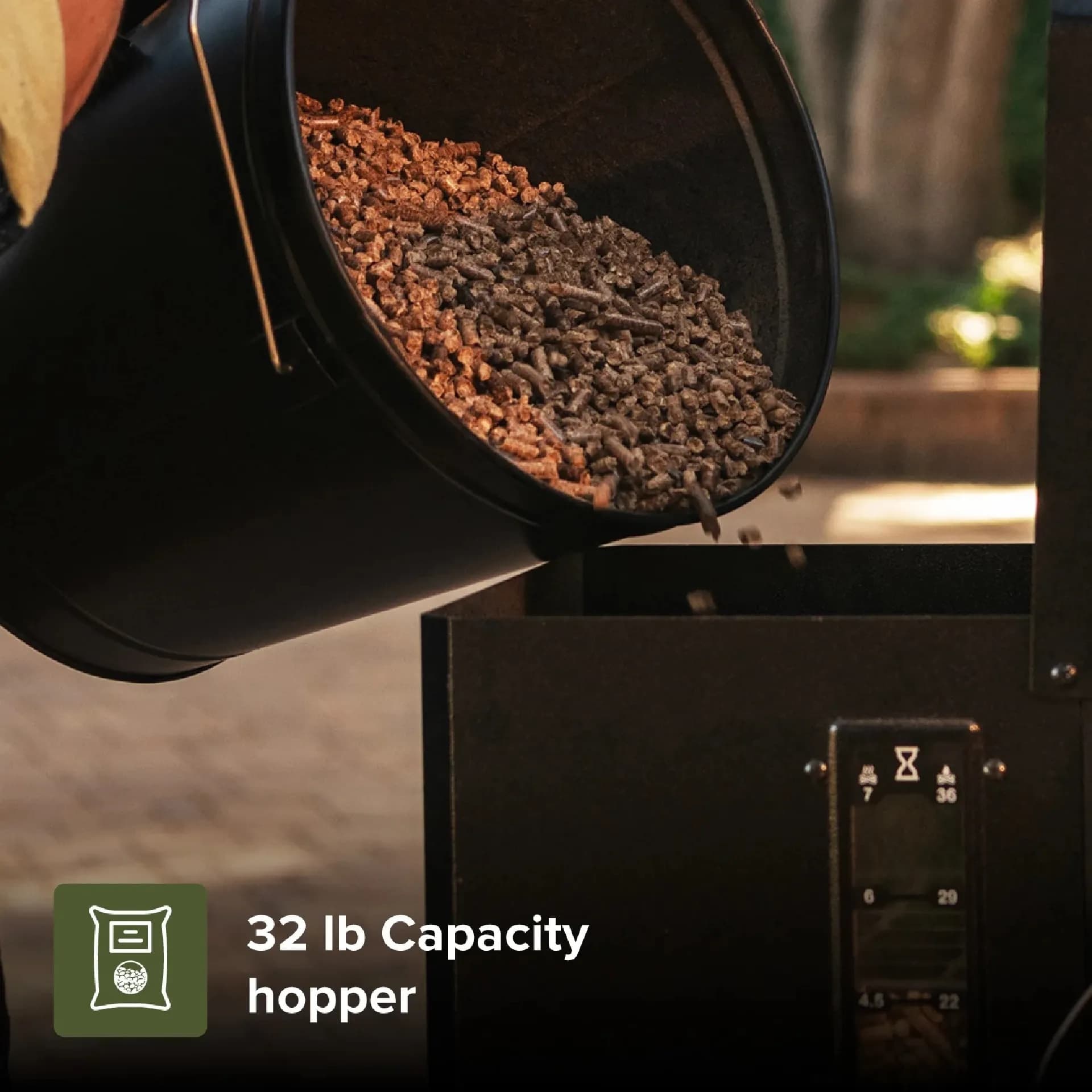
This is the pellet-specific heart of the review. Empty the hopper and shine the flashlight into the auger chute - you're looking for swollen, dusty, or bridged pellets. Manually rotate the auger (with the unit unplugged) and feel for binding. Then open the fire-pot access: a clean pot shows loose ash you can brush out; a failing one shows fused clinker or a rusted pot wall. Also check the hopper lid gasket for tears, since a poor seal lets moisture in and turns a good grill into an auger-jam machine.
Step 4 - Test the Controller, Probe Placement, and Lid Gasket
Power the controller and read the display under load - note any error codes and whether the set temperature and the actual probe reading agree at room temperature. Ice-bath the meat probe: it should read near 32°F (0°C) within a few degrees; a probe that's off by 15°F will ruin a brisket. Run a fingertip check around the lid gasket for smoke leaks, and confirm the lid closes square without a gap on one side.
Step 5 - Check Cart Stability, Grates, and Drip Management
Rock the cart to feel for a wobbly leg or a bent caster. On the Homestead 24, examine the cast iron grates for pitting and confirm the vent control moves through its full range without seizing. On any grill, look for a proper drip pan or grease channel - a missing or badly placed pan is how used Oakfords become grease fires. Try comparing two Oakford options side by side below to see which fits best:
Once You've Weighed Two Options Against Each Other, Here's What Else Matters
Comparing an 875 Pro against an 1125 Pro, or either pellet pit against a Homestead 24, tells you which platform fits your yard. But the numbers on a comparison card don't capture the two things that most often disappoint new pellet owners: a grill that was never burned in properly, and a controller or auger fault discovered after the return window shut. Steps 6 and 7 close that gap, and the checklist below turns the whole afternoon into a pass/fail verdict you can act on.
Step 6 - Burn-In and Season Before the First Real Cook
New and used pellet grills both benefit from a proper burn-in at a moderate, not maximum, set point - roughly 350-400°F - for 30 to 45 minutes with the lid closed. This cures the paint, drives off manufacturing oils, and, critically, gives the auger and controller a low-stakes cycle to prove they feed fuel evenly. Watch the temperature readout for wild swings; a 50°F± swing around your set point during burn-in is a normal learning curve, while a controller that climbs past set point and keeps going suggests a probe or feed issue. For charcoal Homesteads, the equivalent is a light, even chimney of coals with the vents half-open to learn its vent-to-temperature response before you trust it with food.
Do your burn-in while the return window is still open. A controller fault found on day two costs you a phone call; found on day 31, it costs you the grill.
Step 7 - Run a Controlled First Cook as Your Final Test
Pick an inexpensive, forgiving cut - chicken thighs or a pork shoulder - and cook it with a trusted probe beside the grill's own. Log the grill's displayed temp versus your calibrated reading every 20 minutes for the first hour. This exposes the two pellet failure patterns reviewers keep finding: a factory probe reading 10-25°F hot, which quietly overcooks everything, and uneven chamber heat where the right side runs hotter than the left. On the Homestead, cook a batch of burgers over a two-zone set-up to confirm the vent control actually throttles airflow. If the cook holds within about ±15°F of target, the grill passed.
The Mistakes That Sink an Oakford Purchase
- Trusting the listing title over the rating plate. Marketplace "28A" labels, store SKUs, and seller guesses drift from reality. The plate wins every time.
- Buying used without opening the hopper. Inspecting the fire pot and turning the auger by hand reveals jams a photo never shows.
- No drip plan. Grease that pools in a chamber instead of draining is a fire waiting to happen - confirm the pan and channel before lighting up.
- Skipping the controller and probe test before the window closes. The electronics are the priciest repair; test them first, not last.
- Storing pellets in the hopper long-term. Humidity turns a $15 bag of pellets into an auger jam. Empty the hopper if the grill will sit more than a couple of weeks.
The One-Page Oakford Review Checklist
OAKFORD AFTERNOON REVIEW - PASS/FAIL
[ ] Rating plate photographed; every line transcribed verbatim
[ ] Model string searched on Nexgrill product + parts pages
[ ] Pellet: hopper empty, auger turns freely, no bridged/swollen pellets
[ ] Pellet: fire pot clean, no fused clinker, pot walls sound
[ ] Pellet: hopper lid gasket intact; controller displays, no error codes
[ ] Probe reads ~32F in an ice bath
[ ] Lid closes square; gasket shows no smoke-leak gaps
[ ] Cart stable, casters sound; Homestead vents move full range
[ ] Grates inspected (cast iron pitting on Homestead 24)
[ ] Drip pan / grease channel present and seated
[ ] Burn-in run at ~350-400F for 30-45 min, window still open
[ ] Controlled first cook logged; factory probe within ~15F of target
Print it, carry it, and score each line yes or no. Anything you cannot tick is a question to raise with the seller or Nexgrill before money changes hands.
Which Oakford Suits You? Three Buyer Profiles
Use the physical review to confirm the grill is sound, then let your cooking style pick the model. As a rough US budget guide (estimates - check current retail and used pricing), a used 875 Pro often lands in the low-to-mid hundreds of USD while a new 1125 Pro sits above it; treat these as ranges, not quotes.
| Buyer profile | Cook habits | Best Oakford match |
|---|---|---|
| Weekend pellet newcomer | Ribs, chicken, an occasional brisket for 4-6 people | Oakford 875 Pro - full controller and auger features at the lower end of the platform |
| Frequent large-batch host | Multiple cuts, big gatherings, longer smoke sessions | Oakford 1125 Pro - larger chamber on the same Pro hardware |
| Hands-on charcoal traditionalist | Burgers, steaks, vent control and cast-iron sear | Oakford Homestead 24 - manual vents, cast iron grates, no electronics |
If a seller's "28A" grill turns out to match none of these, ask Nexgrill directly through its contact page with your rating-plate photo.