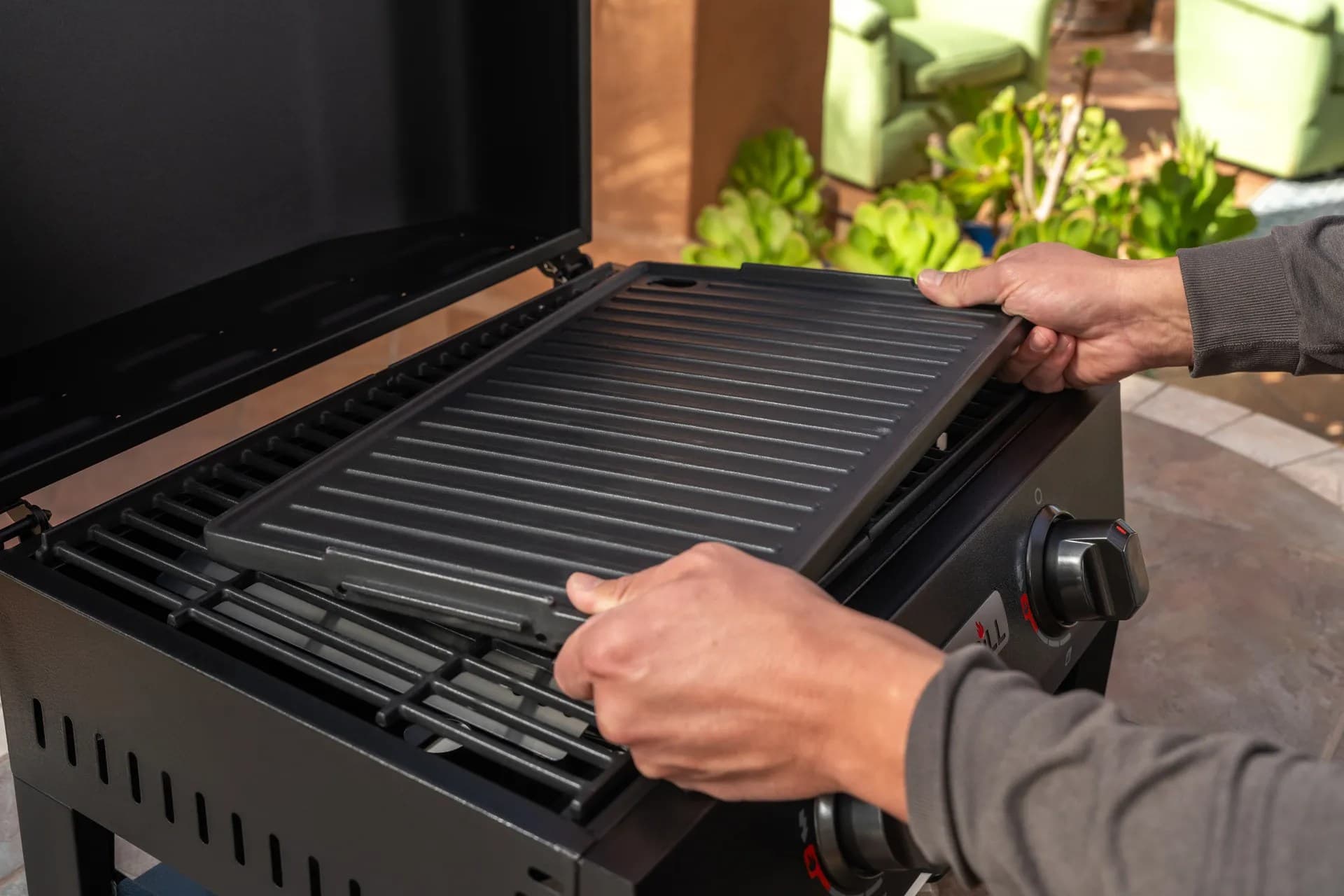
Nexgrill Fortress 2-Burner Manual: Safe Startup and Shutdown, Step by Step
A plain-language walkthrough of the ignition order, soapy-water leak test, and shutdown sequence for your Fortress 2-burner propane grill - plus the mistakes that cause weak flames and flare-ups.
In This Article
Tank Valve First, Then Burner
Leak Test Every Tank Swap
Shutdown Is the Reverse
Nexgrill Fortress 2-Burner Manual: What the Startup Sequence Actually Requires
If you own a Nexgrill Fortress two-burner propane grill and the manual has disappeared into a drawer, the part you actually need is the operating sequence - the order in which the tank valve, burner knobs, and igniter come into play. That order is not arbitrary. On a compact two-burner cart, the regulator and hose sit low, close to the ground, and propane is heavier than air. A small leak near the base of the cart pools rather than drifts away, which is why ignition order and leak checks exist in the first place.
This walkthrough runs through the full arc: what to confirm before you open the tank, six numbered startup steps, the reversed shutdown sequence, and the handful of mistakes that most often cause weak flames, yellow tips, or a burner that simply will not catch. Picture a reader who just wheeled a Fortress two-burner onto a wooden deck, is cooking for two, and is not fully comfortable with the propane connection. That is the scenario this sequence is written for.
Fortress is a line name that spans several two-burner SKUs. Confirm the exact sequence against the manual for your specific model before your first cook.
Before You Touch the Tank: Prerequisites for a Safe First Light
Four things should be true before any propane valve opens. Skip them and every later step becomes guesswork.
- All burner knobs are in the OFF position - on most Nexgrill knobs that means turned fully clockwise until they stop.
- The lid is open. Not cracked, not propped - fully open.
- The grill sits on a level surface, at least a few feet from walls, railing, and anything combustible overhead.
- The hose and regulator are fully seated and free of visible cracks, kinks, or chew marks.
That last point matters more on a two-burner than on a large cart grill. The hose run is short, so a kink at the regulator elbow is easy to create while maneuvering the grill into position. Give the hose a gentle flex by hand and look for stiff spots or cracking near the crimp fittings.
The regulator nut connects to the tank valve by hand. Hand-tight is the target - a wrench risks deforming the fitting and creating the leak you are trying to avoid.
How to Light a Nexgrill Fortress 2-Burner in the Correct Order
The standard propane ignition order is: tank valve first, then the burner knob, then the igniter. Reversing any of those three - particularly clicking the igniter before the gas path is open, or opening the knob before the tank - is the single most common owner error.
Step 1: Inspect the Hose, Regulator, and Tank Connection
With the lid open and knobs off, check the full gas path from the tank collar to the burner manifold. Look for abrasion, grease cracking, or anything that looks like it has been pinched. Confirm the regulator nut threads onto the tank valve smoothly by hand - if it fights you, the threads are crossed, and forcing it will not seal.
Step 2: Confirm Every Burner Knob Is Off Before the Tank Valve Opens
Push each knob clockwise until it stops and leave it there. This step protects the leak test that follows: with knobs open, gas travels into the burner tubes and you cannot isolate a hose-side leak from a manifold-side one.
Step 3: Open the Tank Valve Slowly - and Why That Matters
Turn the tank valve counterclockwise one quarter to one half turn and pause. Opening a propane valve quickly can trip the excess-flow device inside the regulator, which chokes the gas supply and produces exactly the weak flame people mistake for an empty tank. Open slowly, listen, and then open fully.
Step 4: Leak-Test the Regulator and Tank Connection With Soapy Water
Mix a small amount of dish soap with water and brush or spray it onto the tank valve, the regulator nut, and the hose crimps. Watch for growing bubbles. A steady stream of bubbles means gas is escaping - close the tank valve, re-seat the connection, and retest. Do this at every tank swap, not just the first one, and never use a flame to check for leaks.
Step 5: Lid Open, One Burner to Start, Then the Igniter
Press and turn the left burner knob to its light position, then push the igniter button. On piezo-ignition Fortress models you may need to push the igniter several times in quick succession. Light only one burner at first - the cross-ignition channel between two burners is reliable on a warm manifold but not on a cold start.
Step 6: Confirm the Flame, Light the Second Burner, Then Preheat
Look for a blue flame with a defined inner cone. Once the first burner holds steady, light the second by turning its knob to the light position - it should catch off the first burner, but use the igniter if it does not. Close the lid and preheat about 10 to 15 minutes before cooking.
Never light a two-burner with the lid closed. Gas can collect under a closed lid and flash when ignition occurs, and it will not dissipate through the lid.
The Correct Shutdown Order for a Propane Grill (and Why It's Reversed)
Shutdown is the startup sequence run backward: burner knobs off first, flames visually confirmed out, and only then the tank valve closed. If you close the tank first, residual propane in the hose and manifold has nowhere to go and slowly bleeds through the burners after you walk away.
| Stage | Startup order | Shutdown order |
|---|---|---|
| 1 | Inspect hose and regulator | Turn both burner knobs fully clockwise to OFF |
| 2 | Confirm knobs are OFF | Watch and listen until flames are fully out |
| 3 | Open tank valve slowly | Close the tank valve |
| 4 | Soapy-water leak test | Close the lid and let the grill cool |
| 5 | Light one burner, lid open | Clean grates once cool enough to handle |
| 6 | Light second burner, preheat | Disconnect tank if storing long term |
“Off” on many Nexgrill knobs is fully clockwise and can feel ambiguous at the end of its travel. Rather than trusting the knob position alone, confirm flame-out two ways: look at the burner through the open lid and listen for the sound of moving gas. Only then close the tank valve.
Where You Place the Grill Matters as Much as How You Light It
On a wooden deck, placement is a safety component, not an aesthetic choice. Give the cart clearance from the house wall and railing so heat and any pooling propane have room, keep it out from under an overhang, and never set it where the hose runs across a walking path. Because propane settles low, a level surface that lets air move under the cart is genuinely better than a tight corner that traps it.
Try comparing two products side by side below to see which fits best:
Once You've Weighed Two Options Against Each Other, Here's What Else Matters
A comparison narrows the field, but ownership on a Fortress two-burner comes down to a handful of operational habits: how you handle a stubborn burner, how you store the tank between cooks, and when you stop reusing a hose. Those are the decisions that determine whether the grill lights cleanly on a Tuesday night in March or turns into a project.
Weak or Yellow Flame After Opening the Tank Valve? Start Here
A weak flame immediately after you open the tank is almost never a bad regulator. The usual culprit is the excess-flow device inside the regulator, tripped because the valve was opened quickly. Close the tank valve, turn both burner knobs off, wait a moment, then reopen the tank valve slowly - a quarter turn, pause, then full.
Yellow tipping is a different signal. It points to blocked burner ports, often from grease or an insect nest in the tube. With the lid open and the tank closed, brush the burner tube openings and check that the air shutter (where your model has one) has not shifted. A flame that is strong on one end of a burner and weak on the other usually means partial blockage rather than a supply problem.
Spider nests in burner tubes are a recurring spring issue on any grill stored outdoors. Check the tubes before the first cook of the season, not after the first weak flame.
If a Burner Won't Light: The Retry Window and the 5-Minute Rule
Clicking the igniter repeatedly while a burner refuses to light is the behavior that turns a nuisance into an incident. Gas that has passed through an unlit burner is sitting in the firebox and under the lid area. The sequence to follow:
- Turn the burner knob fully clockwise to OFF.
- Leave the lid open.
- Wait for the accumulated gas to clear - commonly cited as about 5 minutes, though treat that as an approximate figure and check your manual.
- Then retry once, following the normal startup order from Step 5.
If the burner still will not catch, do not keep cycling. Check the igniter electrode gap and cleanliness, confirm the burner tube is seated over the valve orifice, and verify the tank is not near empty. A full tank that has been left connected in cold weather can also deliver a weak initial flame - cold reduces propane pressure.
Five Startup Mistakes Fortress 2-Burner Owners Make Most Often
- Lighting with the lid down. Trapped gas under a closed lid can flash. Every ignition attempt starts with the lid open.
- Opening the tank valve fast. This trips the excess-flow device and creates the weak-flame symptom people chase for weeks.
- Reversing the shutdown. Closing the tank before the burner knobs leaves propane in the hose with nowhere to go.
- Treating a knob position as proof of flame-out. Confirm visually and by sound before closing the tank valve.
- Skipping the leak test after a tank swap. A fresh connection is exactly when a leak is most likely, not least.
Never store the grill with the tank valve open or the regulator attached for long periods. Close the valve after every cook, and disconnect the tank for off-season storage.
Pre-Cook and Post-Cook Checklists for Your Fortress 2-Burner
| Before cooking | After cooking |
|---|---|
| Knobs off, lid open, grill clear of combustibles | Both knobs fully clockwise to OFF |
| Hose and regulator inspected for cracks or kinks | Flames confirmed out by sight and sound |
| Tank valve opened slowly, leak test done at last swap | Tank valve closed |
| Left burner lit first, then the right | Lid closed, grill cooled before covering |
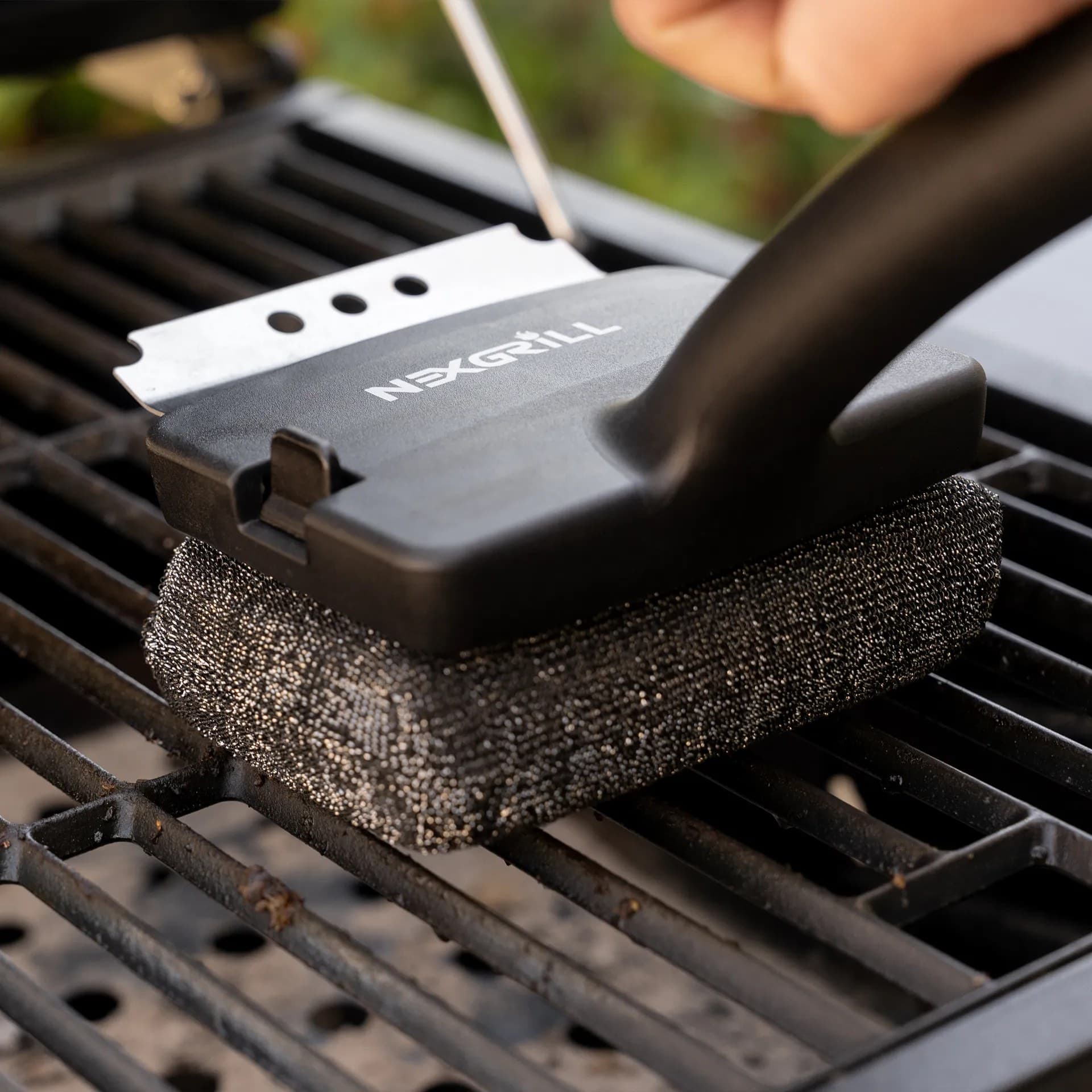
| 10 to 15 minute preheat with lid down | Grates brushed once cool enough to handle |
Storing the Tank and the Grill Between Cooks
Because propane is heavier than air, a tank stored in a closed garage or at the base of the cart is a pooling hazard if it vents. Store the cylinder upright, in a well-ventilated area, out of direct sun, and never on its side or in a car trunk on a warm day. If you store the grill outdoors with the tank attached, close the tank valve after every cook rather than relying on the burner knobs.
A grill cover is worth using on a Fortress two-burner because the cart footprint is small enough that a cover fits properly - a loose cover on a large grill traps moisture, but a snug one keeps rain and debris out of the burner tubes and the igniter housing.
When to Replace the Hose or Regulator Instead of Reusing It
Hoses and regulators are consumables. Replace the hose and regulator assembly if you see cracking, if the hose has been pinched hard enough to leave a crease, if the regulator nut no longer threads smoothly by hand, or if a soapy-water test keeps bubbling after you re-seat the connection. Replacement assemblies are inexpensive - typically well under $40 USD at retail - and far cheaper than chasing a persistent weak-flame problem caused by a failing regulator.
For model-specific parts and replacement intervals, confirm against your manual for the exact SKU. Nexgrill's support channel is the fastest route to the correct manual for your Fortress model if you cannot find the printed copy.
Sources
- Nexgrill - official site and product support entry point
- Nexgrill - About Us (founded 1993, California headquarters, Global Leisure context)
- Nexgrill - Contact and customer support (request the manual for your exact SKU)
- U.S. Consumer Product Safety Commission - consumer safety guidance hub
- National Fire Protection Association - grilling safety tips
- PHMSA (U.S. DOT) - propane cylinder safety and storage guidance