Ultimate Grilling Times and Temperature Chart
Your comprehensive guide to grilling temperatures, cook times, and safe internal temperatures.
In This Article
Perfectly Cooked Meats
Safe Cooking Temperatures
Quick Reference Charts
How to Use This Grilling Temperature Chart
A grilling-times-temperature-chart is most useful when you read it in layers: first choose the heat level, then the food, then check the internal temperature before you decide it is done. That order matters because cook time changes with cut thickness, starting temperature, wind, lid position, and whether you are using direct or indirect heat. If you only rely on minutes per side, you can end up with chicken that is still undercooked in the center or steak that is past your preferred doneness even though the outside looks perfect.
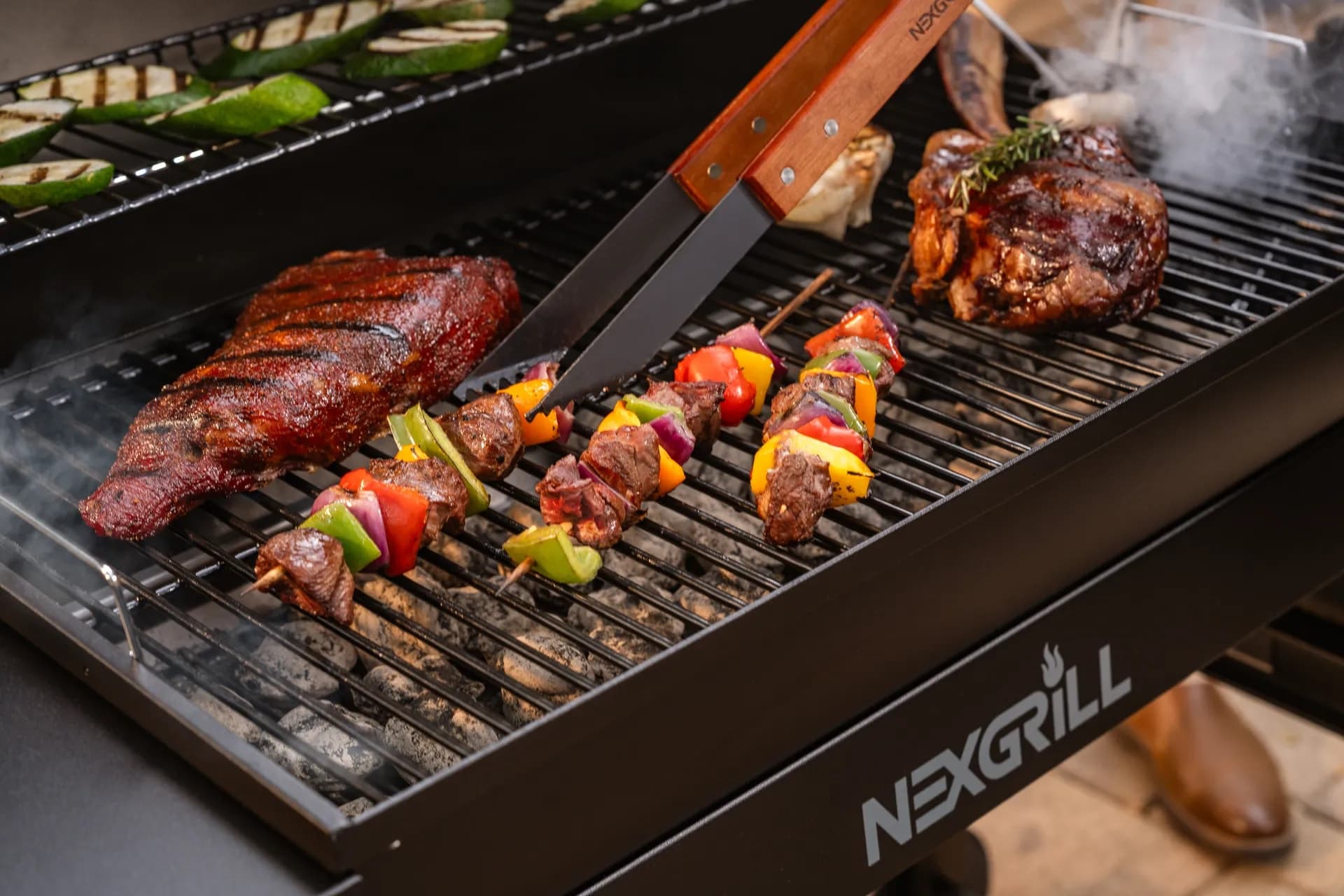
Use this guide as a practical field reference for Nexgrill gas, charcoal, pellet, and griddle-style cooking. The chart is designed for everyday United States backyard grilling, so the temperatures are shown in Fahrenheit and the timing ranges are meant as starting points, not guarantees. A thinner burger patty may finish faster than the range shown, while a thick bone-in chicken piece may need extra time even if your grill is holding steady heat. Think of the chart as a decision tool, not a stopwatch.
Best practice: preheat the grill first, then start timing only after the grates are hot enough to sear and release food cleanly.
Safe internal temperature for whole cuts of beef, pork, veal, and lamb, followed by a 3-minute rest
Understanding Grill Heat Levels
Most recipes use heat labels rather than exact burner settings, so it helps to translate them into approximate surface temperatures. High heat is roughly 450-650°F and is used for quick searing, burgers, thin steaks, shrimp, and vegetables that need fast browning. Medium-high heat usually falls between 375-450°F and is the workhorse zone for most grilling jobs. Medium heat sits around 325-375°F and is better for thicker cuts, bone-in chicken, and foods that need more time without burning. Low heat, typically below 325°F, is used for gentle finishing, warming, or moving food away from flare-prone direct flame.
On a gas grill, these heat levels are usually easier to control with burner knobs. On charcoal, you manage them by the amount of lit charcoal, the vent openings, and the distance between food and coals. Pellets often behave like a steady medium or medium-high zone once the grill reaches target temperature. The key is to match the food to the heat, not force every ingredient into the same setting.
| Heat Level | Approx. Temp | Best For | What It Looks Like |
|---|---|---|---|
| High | 450-650°F | Thin steaks, burgers, shrimp, peppers | Fast browning, strong sear, short cook window |
| Medium-high | 375-450°F | Chicken breasts, pork chops, salmon, vegetables | Good color with manageable pace |
| Medium | 325-375°F | Thicker chicken, sausages, indirect finishing | Steady cooking without rapid scorching |
| Low | Below 325°F | Holding, warming, finishing delicate items | Gentle heat, slower color development |
Comprehensive Cooking Times and Internal Temperatures
For a quick home-use reference, start with the combination chart below. Times assume a preheated grill, food removed from the refrigerator 15 to 30 minutes ahead of cooking, and the lid used when appropriate to stabilize temperature. If your grill runs hot or if you are cooking in cold or windy conditions, expect the upper end of the range to be more realistic. Internal temperature is what decides doneness and safety; cook time is only the path to get there.
| Food | Grill Heat | Typical Time | Target Internal Temp | Rest |
|---|---|---|---|---|
| Steak, 1 inch | High | 4-6 min per side | See doneness chart | 3-5 min |
| Chicken breast | Medium-high | 6-8 min per side | 165°F | 3 min |
| Chicken thighs, bone-in | Medium | 10-14 min per side | 165°F | 5 min |
| Burger patties, 1/2 inch | High | 3-5 min per side | 160°F | 2-3 min |
| Salmon fillet | Medium-high | 4-6 min per side | 145°F | 2 min |
| Shrimp, large | High | 2-3 min per side | Opaque and firm, about 145°F | No rest needed |
| Vegetable skewers | Medium-high | 8-12 min total | Tender-crisp | 1-2 min |
Doneness Levels for Steaks
Steak doneness is easiest to manage when you think in temperatures first and appearance second. Rare steak usually finishes around 120-130°F, medium-rare around 130-135°F, medium around 135-145°F, medium-well around 145-155°F, and well done around 160-170°F. Because steak continues to cook after it leaves the grill, remove it a few degrees before your final target and let it rest so the carryover heat finishes the job. A thick strip steak may climb 5 degrees or more during rest, especially if the grill was very hot.
| Doneness | Pull From Grill At | Final Temp After Rest |
|---|---|---|
| Rare | 115-120°F | 120-130°F |
| Medium-rare | 125-130°F | 130-135°F |
| Medium | 135-140°F | 135-145°F |
| Medium-well | 145-150°F | 145-155°F |
| Well done | 155-165°F | 160-170°F |
Food Safety Guidelines
Safe grilling is about temperature, time, and handling. Whole cuts of beef, pork, veal, and lamb are generally considered safe at 145°F with a 3-minute rest, while poultry should reach 165°F. Ground meats should reach 160°F because grinding can distribute bacteria throughout the product. Fish is commonly cooked to 145°F, or until it turns opaque and flakes easily with a fork. These guidelines are especially important when you are cooking for a mixed group where some people prefer different doneness levels.
Do not use color alone to judge safety. Some meats brown before they are fully cooked, and some stay pink even after reaching a safe temperature.
If you are smoking or holding foods in the 40-140°F danger zone, keep track of total time. As a practical rule, food should not remain in that zone for more than 4 hours in total. That window includes prep, smoking, and any stalled warm periods. When in doubt, use a thermometer and a timer together.
Tips for Successful Grilling
Successful grilling starts before the food hits the grate. Preheat long enough for the cooking surface to stabilize, oil the grates lightly if needed, and organize food by thickness so items finish together. For example, place chicken breasts of similar size on the same zone and keep vegetables on the cooler edge if they brown too quickly. For thicker cuts, start over direct heat for color, then move to indirect heat to finish without burning the outside.
Tip: set up a two-zone fire on charcoal or split burners on gas so you can move food as soon as the outside color looks right.
Try comparing two products side by side below to see which fits best:
Utilizing Thermometers for Perfect Cooking
Once you have the chart in hand, the fastest way to improve consistency is to use a thermometer every time you grill. An instant-read thermometer is ideal for checking the final internal temperature near the end of cooking, while a leave-in probe is useful for longer cooks or larger cuts. Insert the probe into the thickest part of the food, avoid bones and pockets of fat, and give it a moment to stabilize before you decide whether to pull the food from the grill. If you are cooking more than one piece of meat, check the smallest or thinnest item first because it usually finishes earlier.
Thermometers are especially valuable because grill surface heat and internal food temperature are not the same thing. A grate may read very hot, but if the center of the meat has not reached the target temperature, the food is not finished. The opposite is true as well: a food can reach a safe internal temperature sooner than expected if it started out at room temperature or if the grill has a strong heat spike. For the most reliable results, combine time, touch, and temperature instead of depending on any one signal.
For mixed grills, check the piece with the slowest heat response first, such as the thickest chicken breast or the center steak in a crowded grill.
Effects of Altitude and Weather on Cooking Times
Altitude and weather can change grilling results more than many home cooks expect. At higher altitudes, lower air pressure can affect moisture loss and timing, so foods may dry out faster even when they are not dramatically faster to cook. Cold air, heavy wind, and damp conditions can also extend cooking time because the grill has to work harder to maintain its target temperature. If you are grilling in winter or on a windy patio, allow a longer preheat, keep the lid closed as much as possible, and expect temperature swings after every lid lift.
In practical terms, it is smarter to watch the internal temperature than to chase a perfect time estimate. A chicken breast that normally finishes in 14 minutes may need several more minutes on a cold day, while a thin steak over a very hot charcoal bed may finish sooner than the chart predicts. If the weather is extreme, use the chart as a starting point and adjust your timing in small increments of 2 to 3 minutes, checking temperature after each interval.
| Condition | Likely Effect | What to Do |
|---|---|---|
| Cold weather | Longer preheat and slower recovery | Close lid, preheat longer, add time in small increments |
| Wind | Heat loss and uneven hotspots | Shield the grill and keep lid closed between checks |
| High altitude | Faster moisture loss, drier texture risk | Use thermometer early and rest food before slicing |
Direct vs. Indirect Heat Explained
Direct heat means food is placed over the heat source. It is the method you want for quick searing, thin steaks, burgers, and vegetables that benefit from browning. Indirect heat places food away from the flame or coals so it cooks more gently, which is better for thick chicken pieces, pork chops, whole fish, and foods that need to cook through without scorching the outside. Most successful backyard grilling uses both methods in sequence: start with direct heat for color, then move to indirect heat to finish at the proper internal temperature.
A lid helps indirect cooking by turning the grill into a controlled oven-like environment. Lid on is usually the right move for thicker items and bone-in cuts; lid off is better for very fast searing, flare-up management, and monitoring delicate foods closely. If you are working with a Nexgrill setup that has multiple burners, one burner can create a hotter side while another acts as a finishing zone. On charcoal, pushing coals to one side creates a similar two-zone layout.
Use direct heat for color, then indirect heat for control. That sequence is the easiest way to avoid burnt outsides and underdone centers.
Printable Grilling Temperature Chart
If you want a simple version to save on your phone or print for the patio, use this condensed chart. It is intentionally short so it works as a quick-reference checklist while you cook. For best results, place it near your grill prep area and pair it with an instant-read thermometer. The chart is most effective when you use it to confirm a final temp after cooking time gets you close.
| Food | Heat | Time | Safe Temp / Doneness |
|---|---|---|---|
| Steak, 1 inch | High | 4-6 min/side | Rare 120-130°F; medium-rare 130-135°F; medium 135-145°F |
| Chicken breast | Medium-high | 6-8 min/side | 165°F |
| Pork chop | Medium-high | 5-7 min/side | 145°F, rest 3 min |
| Ground beef burger | High | 3-5 min/side | 160°F |
| Fish fillet | Medium-high | 4-6 min/side | 145°F |
| Vegetables | Medium-high | 8-12 min total | Tender-crisp |
Common Grilling Mistakes to Avoid
The most common grilling mistake is trusting time alone. A second mistake is lifting the lid repeatedly, which drops heat and stretches the cook time. People also underestimate carryover cooking and cut into meat too soon, losing juices before the resting period can do its work. Another issue is crowding the grate; when food is packed too tightly, the grill loses airflow and browning becomes uneven. Finally, many cooks pull meat based on appearance instead of temperature, especially with chicken and burgers where color is not a dependable safety cue.
Avoiding these mistakes is less about technique perfection and more about building a repeatable habit. Preheat properly, use a thermometer, keep a two-zone setup when possible, and let food rest before slicing. If you are cooking large batches, stagger the start times so every item finishes in its ideal window instead of all at once. That simple discipline produces better texture, safer doneness, and more consistent results across different grill styles.
If you remember only one rule, make it this: time gets you close, but temperature tells you when the food is actually ready.