Essential Grilling Times and Temperatures for Perfect Results
Your ultimate guide to grilling meats safely and effectively.
In This Article
Safe Internal Temperatures
Doneness Levels Explained
Grilling Techniques
Introduction to Grilling Times and Temperatures
The easiest way to cook better food on a grill is to stop treating time and temperature as separate ideas. In practice, they work together: the heat zone you choose determines how fast the exterior browns, while the internal temperature tells you when the food is actually ready. If you’re cooking steaks, chicken, pork, fish, or vegetables, a simple system will save you from guesswork and from overcooking food that should have come off the grate sooner.
A practical grilling routine starts with three tools: a preheated grill, an instant-read thermometer, and a quick reference for safe internal temperatures. The USDA’s safe minimums are the non-negotiable baseline for poultry, seafood, and ground meats, while beef and pork can be cooked to different doneness levels depending on the cut and your preference. That means your target for a ribeye is not the same as your target for chicken breast, and your grilling time should always be adjusted to thickness rather than to a rigid clock alone.
Tip: Use time as a starting estimate, not the finish line. The thermometer decides when food is done.
If you want repeatable results, think in layers. First, choose the right heat level. Low heat works for delicate or thicker foods that need time to cook through. Medium heat is a good all-purpose setting for many proteins. High heat is best for searing, quick-cooking cuts, and getting strong grill marks before lowering the heat to finish. Once you understand those relationships, the rest of grilling becomes much more predictable.
An instant-read thermometer does more to improve results than chasing exact minutes alone.
How to Use the Grilling Time Chart
Use the chart below the same way experienced grillers do: start with the meat type, check the thickness, and match it to the heat zone. Thin items like shrimp or cut vegetables cook quickly over high heat, while chicken parts and thicker pork chops usually benefit from a mix of direct heat and a gentler finish. The chart is built for the United States context and assumes a preheated grill, food brought close to room temperature, and a lid used when appropriate.
To make the chart practical, keep these steps in order. First, preheat the grill until the grates are ready to sear. Second, oil the food lightly rather than flooding the grates. Third, place the food in the heat zone that matches the cut. Fourth, start checking internal temperature a few minutes before the estimated finish time. That last step matters because grill brands, wind, outdoor temperature, and lid behavior all change cooking speed.
- Use thickness, not weight, as your main time guide for steaks and chops.
- Use the thermometer early for chicken, pork, and seafood so you do not overshoot safety targets.
- Hold back from slicing immediately; resting changes the final result more than most people expect.
| Food | Typical Heat Zone | Approx. Time | Target Internal Temp |
|---|---|---|---|
| Chicken breast, boneless | Medium to medium-high | 12-18 minutes | 165°F |
| Chicken thighs, bone-in | Medium with finish zone | 25-35 minutes | 165°F |
| Pork chops, 1-inch | Medium-high | 8-12 minutes | 145°F plus rest |
| Steak, 1-inch | High | 8-12 minutes | Varies by doneness |
| Salmon fillet | Medium | 8-12 minutes | 145°F or desired flake |
| Shrimp, jumbo | High | 4-6 minutes | Opaque and firm |
Safe Internal Temperatures for Different Meats
The safest grilling strategy is to know the finishing temperature before the food ever hits the grates. According to USDA guidance, whole cuts of beef, pork, veal, and lamb should reach 145°F followed by a 3-minute rest, while ground meats need 160°F and poultry needs 165°F. Fish and shellfish are generally considered done at 145°F or when the flesh turns opaque and flakes easily. These are the temperatures that matter most when you are cooking for a group because they take uncertainty out of the equation.
This is also where the idea of “safe” and “preferred doneness” can diverge. A burger is not like a steak. Ground meat must be cooked to 160°F because grinding moves surface bacteria throughout the mixture. Whole steaks can be cooked lower if you prefer medium-rare because the exterior is what gets the highest heat exposure. Poultry, by contrast, should always reach 165°F in the thickest part, and that reading should be taken away from the bone for bone-in cuts.
Warning: For safety, do not judge doneness by color alone. Color changes faster than the center temperature, especially in pork and poultry.
| Protein | USDA Safe Minimum | Notes |
|---|---|---|
| Whole beef, pork, veal, lamb | 145°F | Rest 3 minutes before slicing |
| Ground beef, ground pork, ground lamb | 160°F | Use an instant-read thermometer in the center |
| Chicken and turkey | 165°F | Check the thickest part, away from bone |
| Fish | 145°F | Fish should flake easily with a fork |
| Shellfish | 145°F | Shells open and flesh turns opaque |
Understanding Doneness Levels for Beef and Pork
Doneness levels are most useful for beef and some pork cuts because many cooks want a specific texture, not just a safe endpoint. For steak, rare usually lands around 125°F to 130°F, medium-rare around 130°F to 135°F, medium around 140°F to 145°F, medium-well around 150°F to 155°F, and well-done at 160°F or above. Because the temperature rises a few degrees while resting, many grillers pull the steak slightly earlier than the final target.
For pork, modern cuts are often far better at 145°F than older habits suggested. A pork chop cooked to 145°F and rested properly can stay juicy without feeling underdone, especially if the chop is thick enough to hold heat. If you want a firmer texture, you can continue cooking to a slightly higher temperature, but once you pass the ideal point the chop dries out quickly. That is why a thermometer is essential for pork loin, center-cut chops, and tenderloin.
- Rare steak: cool red center, very soft texture.
- Medium-rare steak: warm red center, ideal for many ribeyes and strip steaks.
- Medium pork: firmer bite, but still should begin from the 145°F safety baseline.
- Well-done steak: fully browned center, least forgiving if overcooked further.
Grill Time Chart: Meats, Thickness, and Heat Zones
The most reliable grilling time chart ties together thickness, heat zone, and target temperature. A 1-inch steak over high heat may finish in 8 to 12 minutes, but a thicker chop or bone-in chicken piece needs a different approach because the center heats more slowly than the surface. If you have a lid, closing it helps even out heat and gives you more control, especially when finishing thicker items over indirect heat.
| Item | Thickness | Heat Zone | Approx. Time | Finish Temp |
|---|---|---|---|---|
| Steak | 1 inch | High direct heat | 8-12 minutes | 125-160°F depending on doneness |
| Pork chop | 1 inch | Medium-high direct heat | 8-12 minutes | 145°F plus rest |
| Chicken breast | 6-8 oz, even thickness | Medium then indirect finish | 12-18 minutes | 165°F |
| Chicken thighs | Bone-in | Medium and indirect | 25-35 minutes | 165°F |
| Salmon | 1 inch | Medium direct heat | 8-12 minutes | 145°F |
| Shrimp | Large to jumbo | High direct heat | 4-6 minutes | Opaque and firm |
For a steakhouse-style steak, the memorable “3-3-3 rule” is a useful shorthand: sear for 3 minutes on the first side, flip for 3 minutes on the second side, then finish with about 3 minutes of resting or final gentle heat depending on thickness and desired doneness. It is a shortcut, not a law, but it helps beginners stop overhandling the meat. Try comparing two products side by side below to see which fits best:
Direct vs. Indirect Heat: What You Need to Know
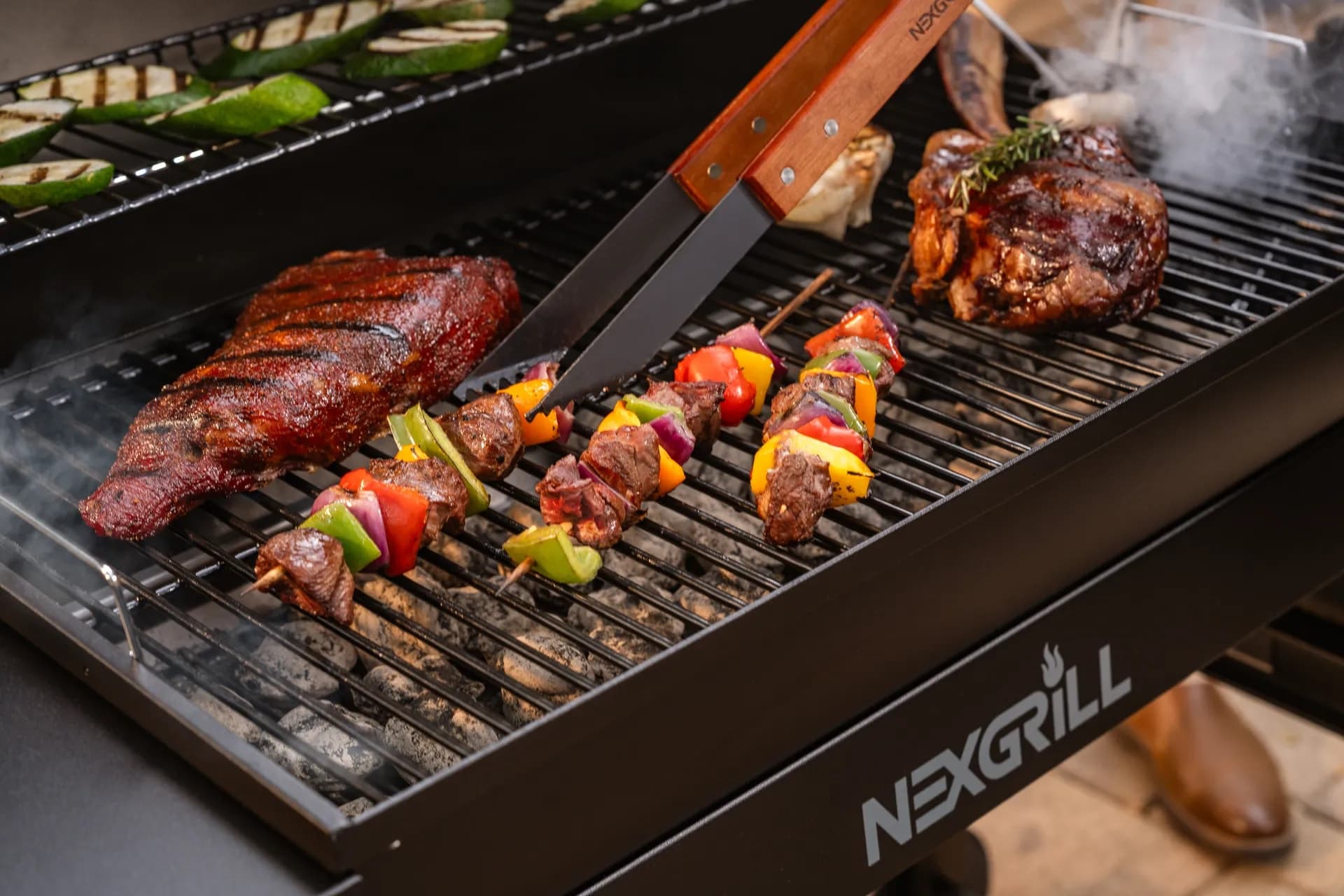
Once you have the time chart in hand, the next step is deciding where on the grill the food belongs. Direct heat means the food sits over the flame, coals, or hottest part of the cooker. Indirect heat means the food is placed away from that intense source so the chamber acts more like an oven. Direct heat is best for quick sears, browning, and thin foods. Indirect heat is the safer way to finish thicker cuts without burning the outside before the center catches up.
A good rule is to think in two stages. Use direct heat to develop color and flavor, then move thicker cuts to indirect heat if they need more time. That method works especially well for bone-in chicken, thick pork chops, and steaks over 1.5 inches thick. On pellet grills, the same idea applies even though the heat source is more evenly distributed; on charcoal, it often means banking coals to one side; on gas, it means leaving one or more burners off to create a cooler zone.
Info: If the outside is browning too fast, move the food to indirect heat immediately and close the lid to finish gently.
Establishing Heat Zones on Your Grill
Most grilling problems start with an unclear fire setup. Instead of guessing, build zones on purpose. Low heat generally sits around 225°F to 300°F and is useful for slow finishing and gentle warming. Medium heat lands around 350°F to 400°F and works for most chicken pieces, chops, and fish. High heat is roughly 450°F to 550°F and is the place to sear steaks, char vegetables quickly, or get crispy edges on burgers and shellfish.
If you are using gas, preheat the grill with the lid closed for about 10 to 15 minutes until the grate is hot and the chamber stabilizes. Charcoal usually needs about 15 to 20 minutes after lighting, depending on airflow and briquette type. Pellet grills often need a similar warm-up window before the display temperature matches the actual grate environment. In cold weather, add a few minutes. In very hot weather, especially when the air is above 100°F, expect the grill to climb faster and watch the lid more carefully so you do not overshoot the target by accident.
| Heat Zone | Approx. Surface Temp | Best Use |
|---|---|---|
| Low | 225-300°F | Indirect finishing, warming, longer cooks |
| Medium | 350-400°F | Chicken, fish, chops, mixed cooking |
| High | 450-550°F | Searing, burgers, quick-cooking foods |
Rest Times and Carryover Cooking Explained
Resting is not optional if you want the best texture. As meat comes off the grill, heat continues moving inward from the exterior, which is why the center temperature can rise another 3°F to 10°F during the rest period depending on thickness. That rise is called carryover cooking, and it is one of the reasons experienced cooks pull meat slightly before the final target.
For whole beef and pork cuts, the USDA’s 145°F rule includes a 3-minute rest. For steaks and thicker chops, a 5 to 10 minute rest can improve juiciness and make slicing cleaner. Chicken benefits from a shorter rest, usually around 5 minutes, while larger roasts may need even longer. Fish should rest briefly, just long enough to settle the juices without losing heat. If you cut too early, the moisture runs out onto the board instead of staying in the meat.
Tip: Rest steaks loosely tented with foil, not tightly wrapped. Tight foil traps steam and can soften the crust you just built.
Common Mistakes to Avoid When Grilling
The biggest mistake is trusting the clock more than the thermometer. Another common error is flipping too often, which slows browning and makes it harder to build a good crust. Crowding the grill is also a problem because it drops the surface temperature and turns searing into steaming. Finally, many grillers forget that food continues to cook after it leaves the grate, so they overshoot the target by leaving items on “just a little longer.”
- Do not cut into meat to check doneness; that releases juices and gives a false read.
- Do not use the same timing for thin cutlets and thick bone-in pieces.
- Do not skip the preheat; cold grates stick and brown poorly.
- Do not assume burger color means safety; ground meat needs 160°F.
Printable Grilling Time and Temperature Chart
Use this compact chart as a quick reference before you head outside. It combines the most useful targets for weeknight cooking, backyard cookouts, and last-minute menu planning. If the weather is cold, windy, or wet, add a few minutes. If the day is extremely hot, shorten preheat time slightly and watch the food closely because the grill can spike faster than expected.
Quick Reference
- Steak, 1 inch: High heat, 8-12 min, 125-160°F depending on doneness
- Pork chop, 1 inch: Medium-high heat, 8-12 min, 145°F plus 3 min rest
- Chicken breast: Medium heat, 12-18 min, 165°F
- Chicken thighs, bone-in: Medium/indirect, 25-35 min, 165°F
- Salmon, 1 inch: Medium heat, 8-12 min, 145°F
- Shrimp: High heat, 4-6 min, opaque and firm
- Gas grill preheat: 10-15 min with lid closed
- Charcoal grill preheat: 15-20 min until coals are ashed over
Warning: A thermometer is the only dependable way to confirm safety and avoid overcooking, especially with poultry and ground meat.