Griddle vs Grill: Which is Right for You?
Explore the key differences and benefits of griddles and grills to enhance your cooking experience.
In This Article
Cooking Techniques
Flavor Profiles
Health Considerations
Introduction
Choosing between a griddle and a grill is less about which tool is better in the abstract and more about which one matches the way you actually cook. A grill excels when you want fire-kissed flavor, visible char, and the dramatic sear marks many backyard cooks love. A griddle shines when you want a flat, even cooking surface that can handle delicate foods, chopped ingredients, breakfast spreads, and high-volume cooking without losing control over smaller pieces. The difference matters because the cooking surface changes how heat reaches food, how fat behaves, and what texture you get at the finish.
For many home cooks in the United States, the decision comes down to everyday use. If you often cook steaks, burgers, vegetables, and skewers outdoors, a grill can feel like the natural choice. If you cook smash burgers, eggs, pancakes, fried rice, quesadillas, or a full brunch spread, a griddle often makes the process easier and more consistent. Nexgrill’s broader outdoor cooking lineup reflects that reality: some cooks want the classic open-flame experience, while others want the flexibility of a flat-top surface for everything from breakfast to dinner service. The best choice is the one that fits your food, your pace, and your preferred finish.
The clearest way to think about this comparison is simple: grills build flavor through exposure to open heat, while griddles build control through even contact heat.
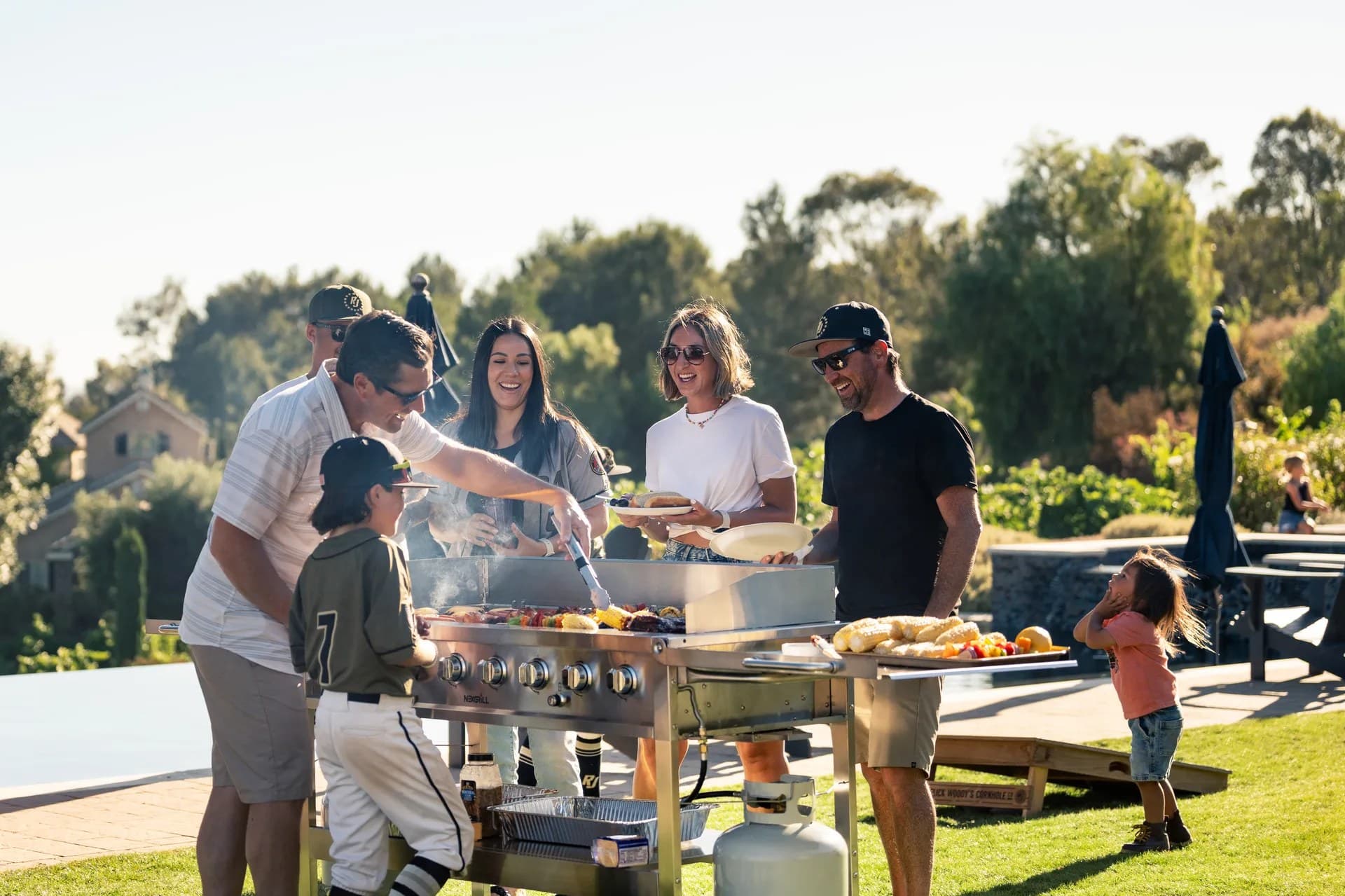
That distinction becomes even more important when you cook for a crowd. A grill is ideal when you want to manage a few larger items at once and let drippings fall away. A griddle is better when you need to cook multiple small items together, keep sauces and oils contained, or move quickly between ingredients. If you are shopping for your first outdoor cooker, or deciding whether to add a second surface to your setup, understanding the fundamentals will save you from buying a tool that looks versatile but feels frustrating for the meals you make most often.
Definition and Function
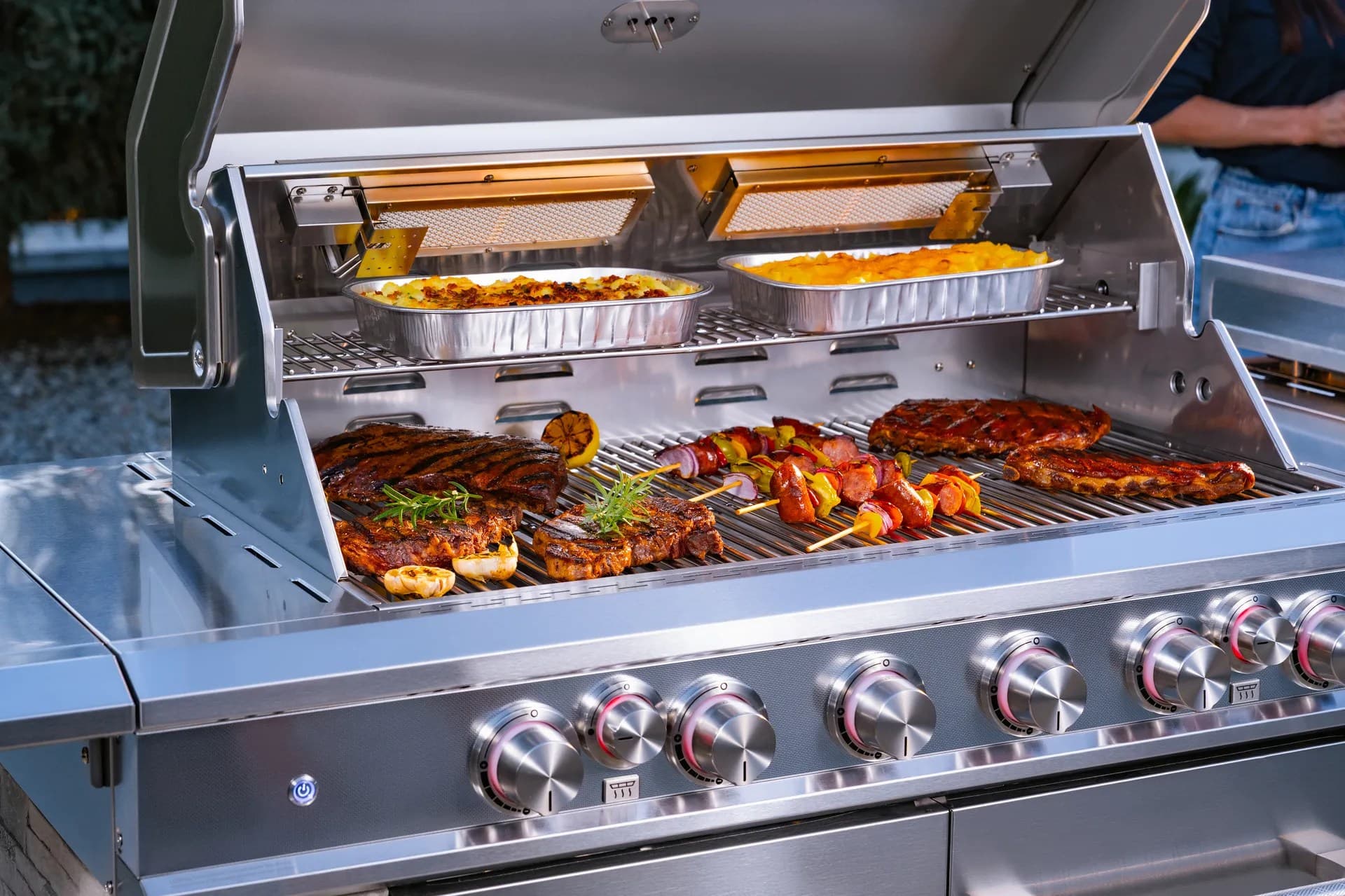
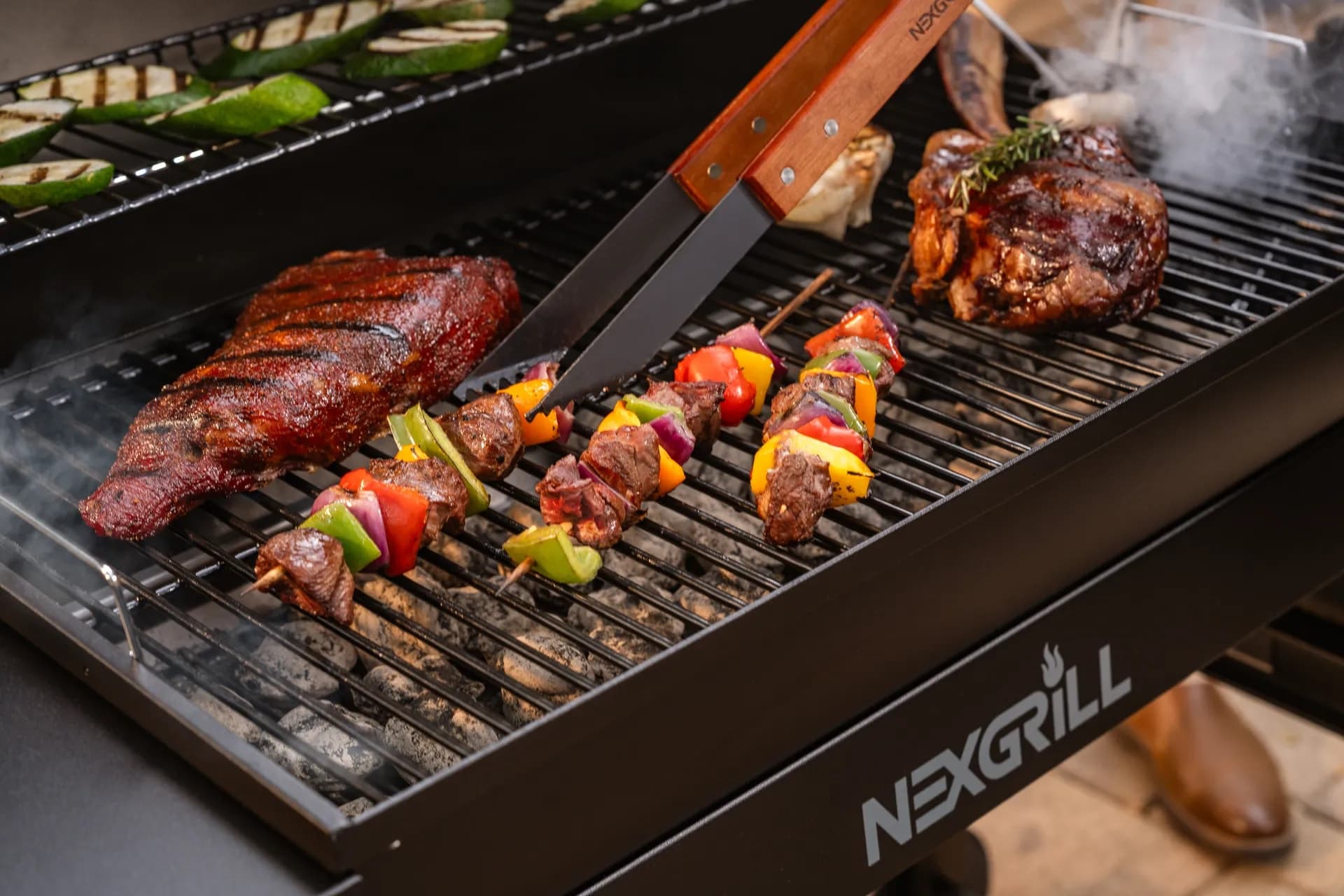
A grill is an open cooking surface, usually with grates over a heat source, that lets food cook by radiant heat, convection, and direct contact with hot metal. The open spaces between the grates are part of the design, because they allow fat and juices to drip down away from the food. That dripping action is one reason grilled foods often taste smoky and develop a more pronounced browned exterior. Grills are especially good at searing steaks, charring vegetables, toasting buns, and cooking foods that benefit from direct exposure to heat.
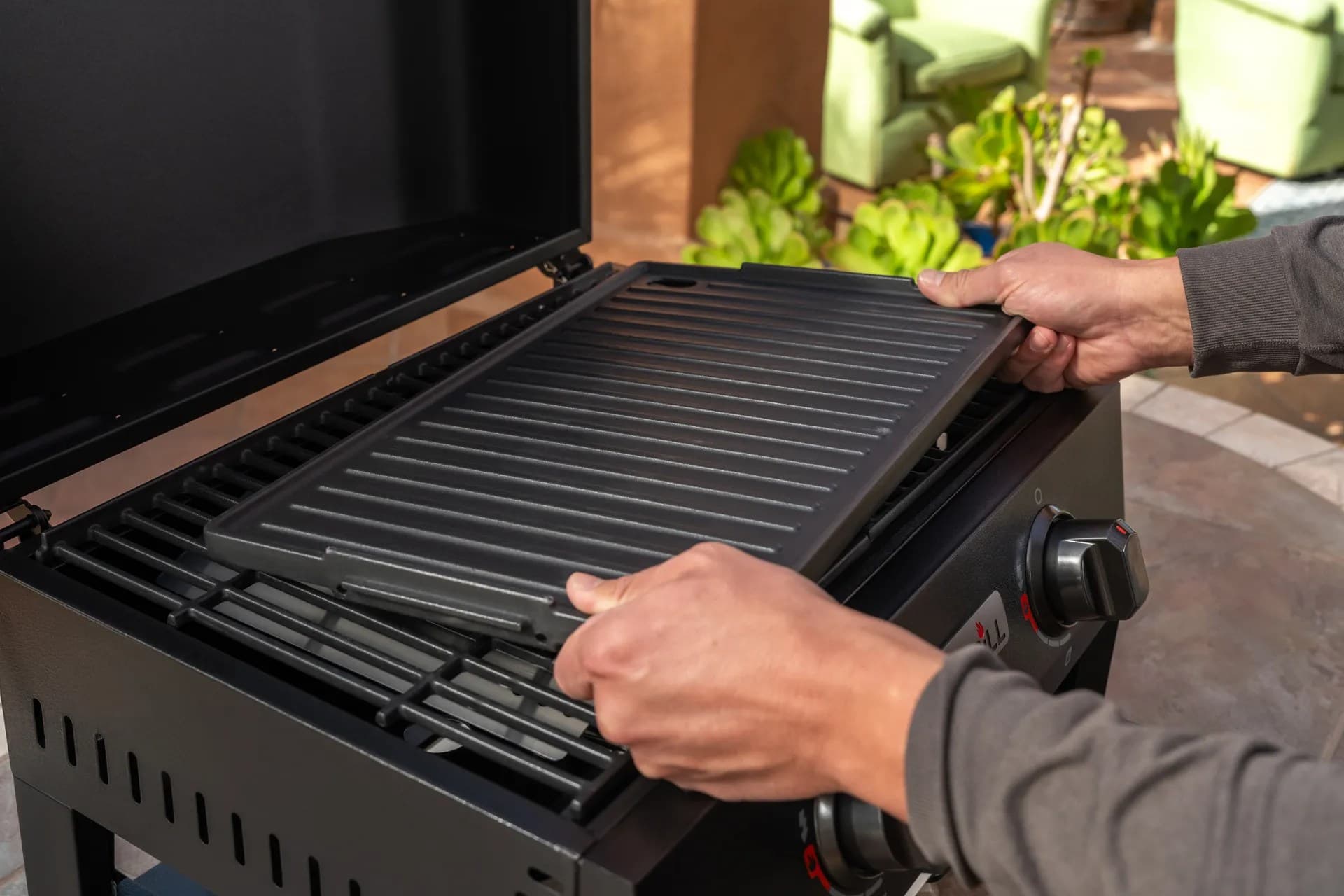
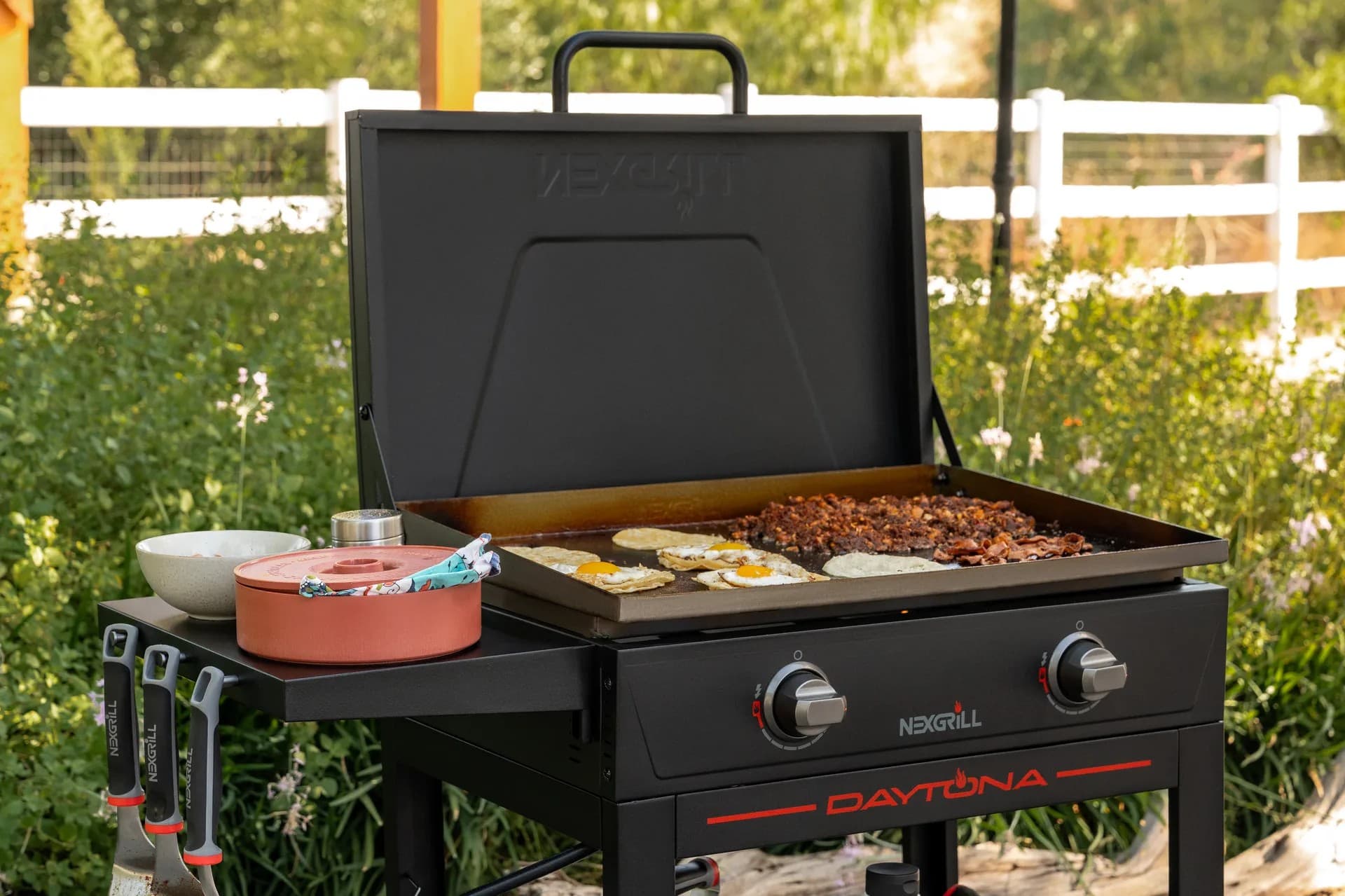
A griddle is a flat cooking surface heated from below, with no open gaps. Food sits on the plate and cooks by direct contact, so heat spreads more evenly across the bottom of whatever you are preparing. That makes griddles especially useful for pancakes, eggs, bacon, chopped vegetables, smash burgers, grilled cheese, hash browns, and mixed dishes where you want to keep everything contained on the same surface. On a griddle, sauces and fats stay in the pan area instead of falling through a grate, which changes both the cooking method and the final texture.
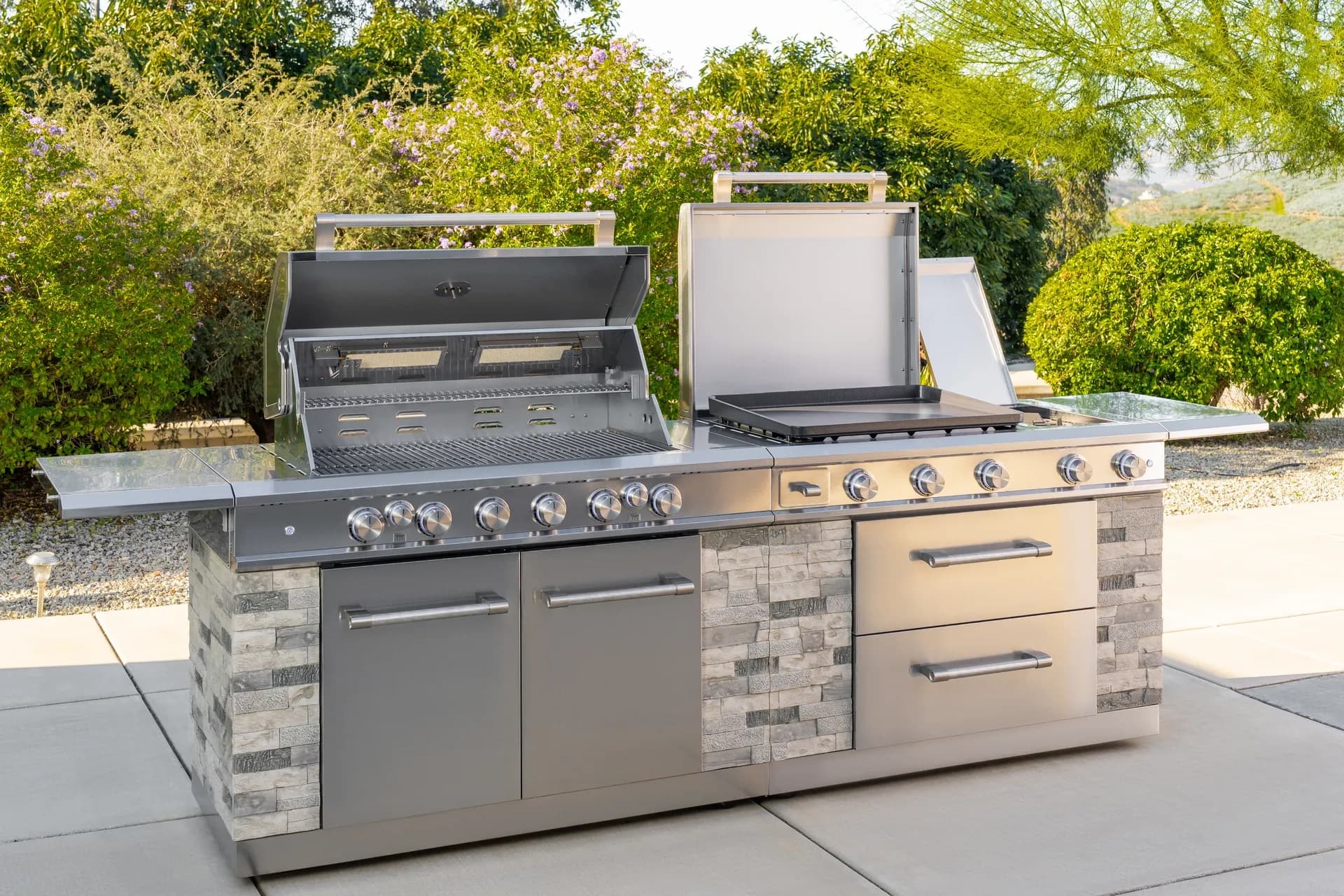
Core cooking surfaces: open grates for a grill, flat plate for a griddle
Functionally, the two tools solve different problems. A grill is built for separation, airflow, and flavor development. A griddle is built for contact, evenness, and control. If you want to cook one thick ribeye at a time and pull it when the center is right, a grill is a natural fit. If you want to cook six breakfast sandwiches, two types of eggs, and a side of hash browns in the same window, a griddle is more efficient. In practical terms, the choice affects batch size, cleanup style, heat management, and the foods that feel effortless versus finicky. Nexgrill buyers often find that once they define the meal pattern first, the right surface becomes obvious.
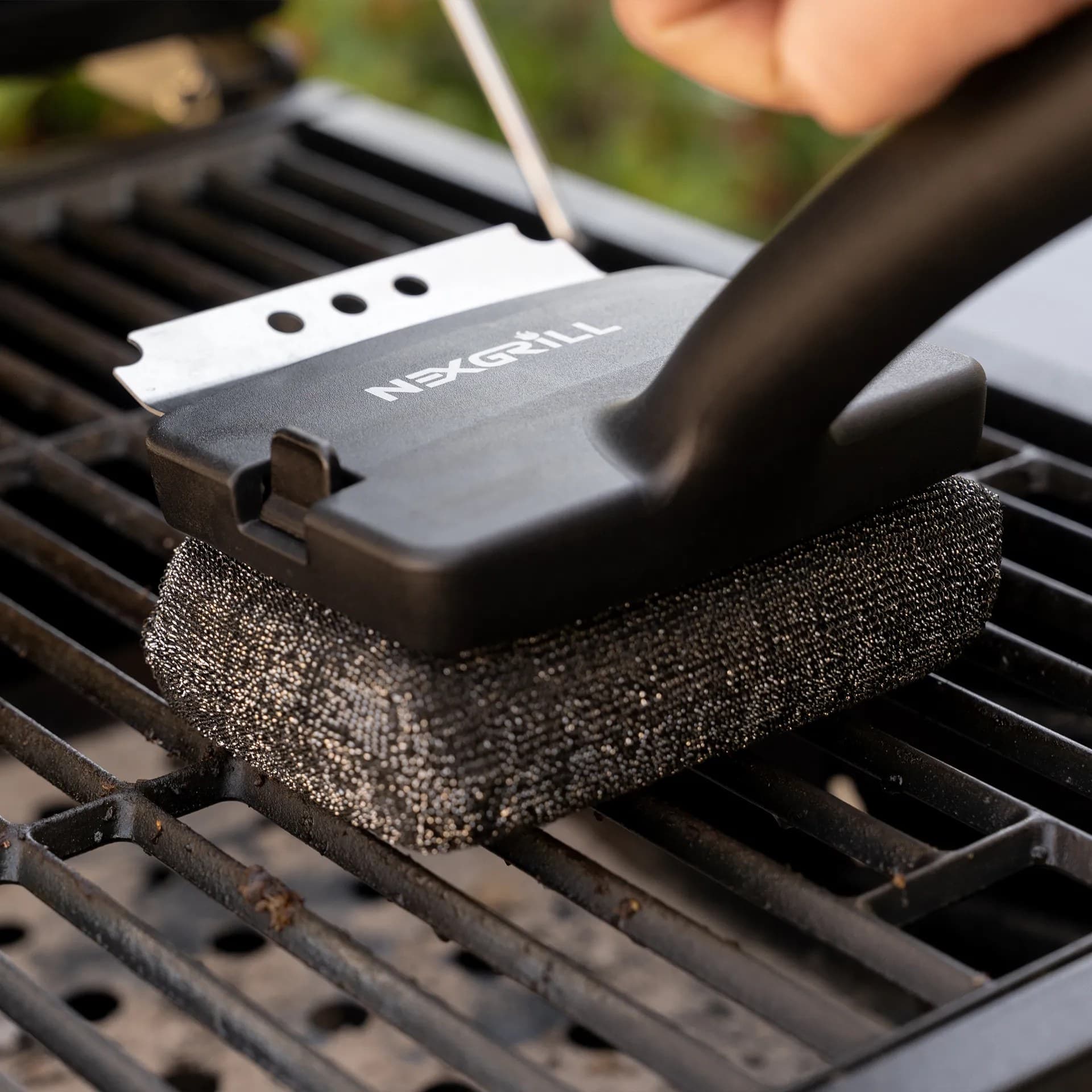
There is also a portability and maintenance angle. A grill tends to need regular grate cleaning and ash or grease management depending on fuel type. A griddle needs seasoning, scraping, and careful oil control, but the flat surface makes it easier to move food around and keep small ingredients from falling away. Neither option is inherently simpler in every situation; each one is simpler for the right kind of cook.
Cooking Techniques
The biggest difference in technique is how heat interacts with food. On a grill, the cook usually preheats the grates, oils the food or surface lightly, and places items directly over a hot zone or cooler zone depending on the recipe. This works especially well for thicker cuts of meat and vegetables that can withstand higher direct heat. A grill gives you the classic sear-and-flip rhythm: place, sear, rotate, and finish to temperature. For indirect cooking, you can shift food away from the hottest part of the surface and close the lid if your grill design supports it.
On a griddle, the technique is usually more about control and surface prep. You preheat the flat top until the heat is even, add a small amount of oil or fat if the recipe needs it, and then place food directly onto the plate. Because the heat is more continuous, timing matters differently. Thin proteins, chopped vegetables, breakfast foods, and starches cook quickly and evenly. A griddle is especially effective for smash burgers because the flat contact helps maximize crust formation over a broad surface area. For fried rice, fajita vegetables, or breakfast items, the flat top lets you move ingredients around with spatulas and combine them at the right stage.
A common mistake is using grill habits on a griddle, or griddle habits on a grill. The surfaces reward different motions: grills reward restraint and spacing; griddles reward movement and timing.
Temperature control also feels different. A grill often has hotter zones over the burners or coals and cooler zones at the edges, which is helpful for two-stage cooking. A griddle can still have hot and cool areas, but the cooking experience is generally flatter and more uniform. That uniformity matters when you are cooking eggs or pancakes, because you do not want one part of the batch burning while another stays pale. It also matters for high-volume cooking, where the same temperature across a large surface helps multiple foods finish together.
For home cooks trying to decide what to buy, technique should lead the discussion. If your idea of a great weekend meal involves a steak with a crust, asparagus with char, and corn with a little smoke, the grill wins. If your ideal meal is a breakfast-for-dinner spread, a brunch board, or a fast dinner where onions, peppers, and sliced chicken all cook together, the griddle is the stronger match. The more you cook for groups, the more that distinction matters because workflow starts to matter as much as flavor.
Some cooks build a two-surface routine: grill for the protein, griddle for the sides or breakfast components. That combination is popular because it lets each tool do what it does best instead of forcing one surface to handle every task. If you are deciding between one or the other, think first about the recipes you repeat most often rather than the one impressive meal you make once a year.
Flavor and Texture Comparison
Flavor is where many people first notice the difference. Grill flavor comes from open heat, browning, and the aromatic effect of fat hitting the heat source below. That creates the familiar smoky, slightly charred profile associated with outdoor cooking. You also get defined marks and a firmer exterior on meats and vegetables. For many cooks, that char is not just visual; it is part of the flavor identity of grilled food.
A griddle produces a cleaner, more even flavor profile. Because food stays in contact with a flat plate, you get strong browning where it touches the surface, but not the same open-char character you get on a grill. That can be an advantage with foods that might dry out or fall apart on grates. Eggs stay tender, onions soften evenly, and burgers can develop a crisp crust without losing juices into the fire below. The texture is often more uniform and less smoky, which some people prefer for breakfast foods and delicate ingredients.
If you want bite, char, and visible grill marks, choose the grill. If you want a browned, evenly cooked surface with fewer texture surprises, choose the griddle.
Texture differences also show up in the crust. On a grill, crust tends to form in discrete contact points, while the rest of the surface may have a drier, more open finish. On a griddle, crust can be wider and more continuous because the whole underside is in contact with a heated plate. That is why smash burgers are such a strong griddle recipe: the flat-top surface allows broad contact and a crisp edge. By contrast, a thick steak may be better on a grill because the open flame environment gives you the seared exterior many steak lovers want.
If you are cooking vegetables, the choice depends on the goal. Grilled zucchini, peppers, and asparagus develop smoky edges and a more assertive char. On a griddle, the same vegetables turn softer, sweeter, and more evenly caramelized. Neither result is right or wrong; they are simply different tools for different outcomes. That is why serious home cooks often say the question is not which tastes better, but which flavor profile fits the dish.
A practical way to think about it is this: the grill adds outdoor character, while the griddle adds control. If your meal depends on bold texture contrast, the grill is usually more satisfying. If your meal depends on smooth consistency and precise doneness across multiple ingredients, the griddle is often the better bet.
Health Considerations
When people ask whether a griddle or grill is healthier, the answer depends on what you mean by healthier and how you cook. A grill lets fat drip away from food, which can reduce the amount of rendered grease staying on the surface. That feature is one reason many people associate grilling with lighter meals. It is also easier to cook lean proteins and vegetables on a grill with minimal added fat. However, using high heat and open flame can create more flare-ups if too much fat drips at once, so proper heat management still matters.
A griddle keeps more of the cooking fat on the surface, which can be useful when you want food to brown without sticking. The tradeoff is that you often use more oil, butter, or other fats to manage the flat surface and keep foods moving. That does not automatically make griddle cooking less healthy, but it does change the profile of the meal. If you are making eggs, vegetables, or lean proteins, you can still keep the fat level modest. If you are cooking smash burgers, fried rice, or breakfast hash, the griddle naturally lends itself to a richer style of cooking.
For lighter meals, the grill often makes fat management easier. For controlled browning with less flare-up risk, the griddle gives you more contained cooking.
Temperature is another health-related factor because it influences both browning and the risk of overcooking. A grill can run very hot, which is useful for searing but can also encourage charring if left unattended. A griddle’s even surface can help reduce guesswork because food cooks more consistently across the plate. That consistency may make it easier to avoid burning smaller items or drying out lean proteins. On the other hand, griddles can hold onto grease from multiple foods during a full cook, so scraping and proper cleaning matter after the meal.
From a food-safety perspective, both surfaces can perform well when used correctly. The key is knowing your target temperatures and not overcrowding the surface. A crowded grill or griddle can trap moisture and slow browning, which affects both texture and doneness. For families or hosts cooking for groups, the better health choice is often the surface that helps you cook the meal evenly and safely without excessive oil, flare-ups, or repeated overcooking. In that sense, the right tool is the one that gives you consistency with the least friction.
If you are comparing a griddle and grill for everyday use, think beyond labels like “healthy” or “indulgent.” A grill can support lean, lightly dressed meals. A griddle can support carefully portioned, balanced meals too. The difference is in how the fat behaves, how the surface cooks, and how much control you want over the final texture.
Try comparing two products side by side below to see which fits best:
User Experiences
Once you have compared a few options side by side, the next question is how real cooks actually live with each surface day to day. User experiences are useful here because griddle and grill preferences tend to become very personal after the first few meals. A family that cooks Saturday breakfast for six may swear by the griddle because it handles eggs, bacon, and pancakes without forcing anyone to wait. Another household may prefer a grill because it gives them the flavor profile they expect for steaks, chicken thighs, and vegetables cooked outside. Those preferences are not abstract; they come from how the surfaces perform under real time pressure.
One common theme from backyard cooks is that the griddle feels more forgiving for mixed meals. When vegetables, protein, and starch need to finish together, the flat top makes sequencing easier. A home cook can move ingredients around, reclaim space quickly, and keep sauces or butter where they belong. That makes the griddle feel less like a single-purpose tool and more like a flexible outdoor skillet. In contrast, grill users often talk about the satisfaction of clear grill marks, the smell of smoke, and the way a steak or burger looks when it comes off the grate. The experience is not just about eating; it is about the ritual.
A practical pattern many families discover is this: the griddle wins for mixed, high-volume meals; the grill wins when the meal itself is the centerpiece.
Another useful way to think about user experience is cleanup. Griddle owners often appreciate being able to scrape food residue into a grease collection area and reset the surface after cooking. Grill owners may prefer the simpler visual cleanup of grates, but they also have to contend with drippings, charred bits, and cleaning between the bars. In daily use, whichever surface aligns with your cleanup tolerance becomes the one you use more often. A great cooking tool that feels annoying after dinner often gets sidelined, no matter how good it looks on paper.
In Nexgrill’s world, that is why the distinction matters for product selection. The right choice is not only about power or size. It is about what the surface encourages you to cook repeatedly. If your neighbors come over and you want to make a fast batch of cheesesteaks, the griddle is likely to be the crowd-pleaser. If your Saturday tradition is a couple of ribeyes, grilled asparagus, and toasted buns, the grill gives you the classic result that feels worth the setup.
A final user takeaway is that many cooks do not replace one with the other; they change priorities. Beginners often start with the surface that best matches the foods they cook most often, then add the second type later if their menu expands. That progression makes sense because the difference between griddle and grill becomes most obvious in practice, not theory. Once you know how each tool behaves with your actual recipes, the right investment becomes much easier to justify.
Conclusion
The simplest answer to griddle vs grill is that they are built for different kinds of cooking. Choose a grill if you want char, smoke, and an open-flame finish. Choose a griddle if you want even contact heat, stronger control over small or delicate foods, and easier handling of mixed meals. The best fit is the one that matches your most common recipes, not the one that sounds better in the abstract.
If you are still deciding, think about the foods you make most often, the texture you enjoy most, and how much control you want during the cook. That practical lens will usually point you to the right surface faster than any spec sheet.