Buy Grill Spatula and Tongs Set: How to Pick the 2-Piece Core Tools
A practical how-to for replacing a bent turner and a dead-spring tongs with a set that actually fits your gas, charcoal, pellet, or flat-top grill.
In This Article
Two Tools, Not a Kit
Match Length to Grill
Check Lock and Blade Gauge
A 2-piece spatula + tongs set is the workhorse core of any grill. This guide assumes you're replacing a bent turner and tongs with a dead spring, not assembling a beginner toolkit. We'll cover prerequisites, a five-step selection process, feature deep-dives, and what actually fails first.
Why a Two-Piece Spatula and Tongs Set Beats a 30-Piece Kit
A 30-piece kit feels like value - until you realize 20 of those pieces never leave the case. A two-piece set of a grill spatula and tongs covers 90% of actual cooking tasks: flipping burgers, moving chicken, turning vegetables, and pulling corn off the grate. The rest - basting brushes, skewers, corn holders - are occasional-use items you can add later if needed.
When you buy a kit, the per-tool quality drops. That stamped spatula with a hollow handle costs the manufacturer $1.50 to make. The tongs lock with a thin wire ring that jams after three washes. For the same $25-$30, a two-piece set gets you a thicker-gauge blade and a better spring mechanism because the tool count is smaller. Fewer duplicates also mean less drawer clutter - a real issue for apartment grillers or anyone with a single kitchen drawer.
Replacement is easier, too. If your spatula bends, you buy a spatula. If your tongs spring dies, you buy tongs. You're not re-buying the whole kit.
Before You Buy: Three Things to Check on Your Grill
Grate Material and Cook Surface
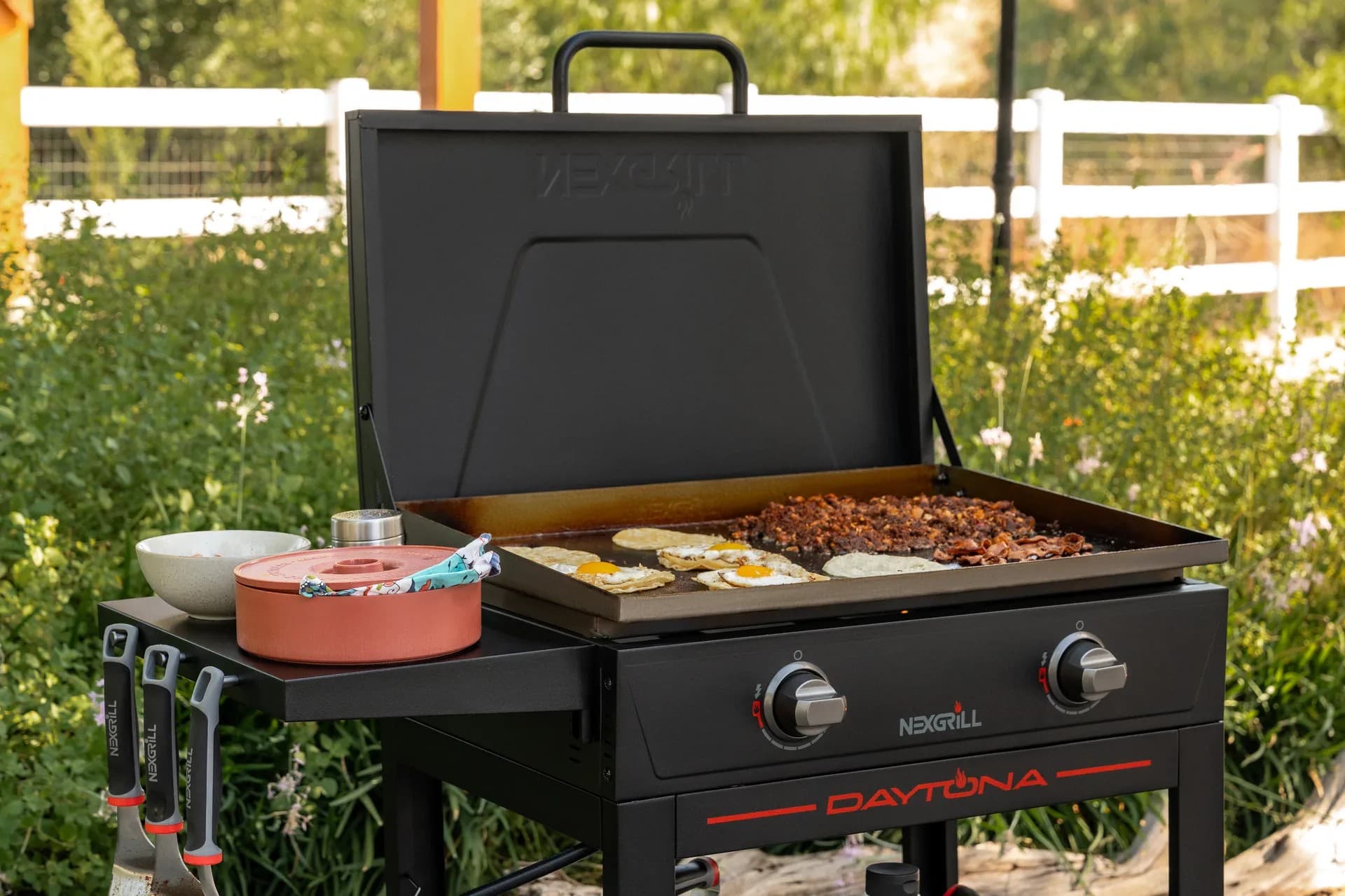
Cast iron and stainless steel grates handle metal turners and tongs without issue. Ceramic or porcelain-enameled grates are harder - a sharp-cornered spatula can chip the coating, and a stab with sharp tongs will do the same. If you have enameled grates, look for a smooth, beveled spatula edge and flat-edged tongs rather than serrated. Flat-top griddles (like the Daytona series) are usually cold-rolled steel or stainless - metal tools are fine, but avoid dragging a sharp corner across the surface.
Cook Chamber Depth and Flare-Up Risk
Measure from the grate to the top of the firebox opening. A deep chamber (over 8 inches) means you can use 16-inch tools. A shallow chamber or a kettle-style charcoal grill needs 18-inch tongs to keep your forearm out of the heat when a flare-up rolls through. Pellet smokers with side shelves also benefit from longer tongs - you're often reaching across a hot lid.
Drawer Space and Indoor Crossover
A 12-inch spatula and 12-inch tongs fit a standard kitchen drawer (typical interior depth is 12-14 inches). A 16-inch or 18-inch tool generally does not. If you want one set that lives in the kitchen and moves outside on weekends, buy 12-inch. If your tools live in a grill cabinet or a dedicated outdoor bin, go longer.
How to Pick a Spatula and Tongs Set in Five Steps
Step 1 - Measure the Spatula Head Against Your Food
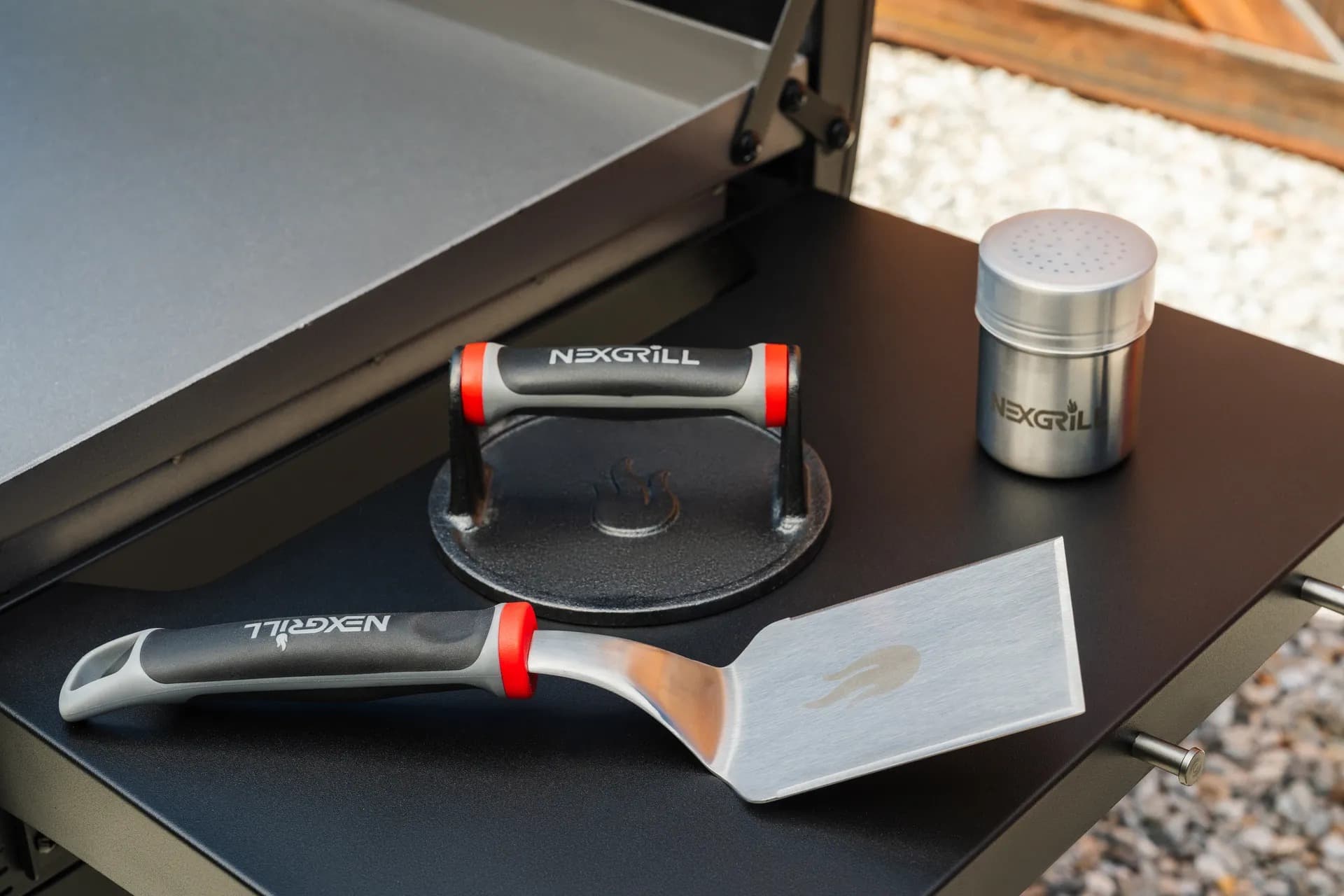
A standard turner head is 3-4 inches wide. If you cook smash burgers, you want a 3.5-4 inch head with a flat bottom - it presses more evenly. For fish fillets, a narrower head (3 inches or less) lets you slide under without tearing. The 4-in-1 turner (wide head, beveled edge, serrated cutting edge, bottle opener) is the most versatile single tool, but the cutting edge is only useful if it's actually sharp; many budget versions are decorative.
Step 2 - Choose Tong Length by Grill Type
Use 12-inch tongs for indoor cooking, small portable grills, and any shallow firebox. Use 16-inch tongs for standard backyard gas grills - this is the most common size and keeps your hand about 14 inches from the grate. Use 18-inch tongs for charcoal kettles, pellet smokers, and large flat-tops where flare-ups or high radiant heat are a factor. If you're buying one pair, 16-inch covers the widest range.
Silicone tips are rated ~450-600°F per manufacturer spec sheets. That's fine for sautéing and moving vegetables, but for direct sear-zone contact on a 600°F+ flat-top or cast iron, all-metal tongs are the safer choice.
Step 3 - Test the Lock and Spring Tension
The locking mechanism is the #1 failure point. Ring-pull locks (slide the ring up to close) are common but jam if grease gets into the slider. Tab-slide locks are more reliable long-term. Spring tension should feel firm but not stiff - if you can close the tongs with two fingers and they spring back fully, that's the right feel. Scissor-style tongs (also called BBQ tongs) use a different pivot and rarely lock, which makes storage harder.
Step 4 - Decide on Handle Material vs. Your Dishwasher
Wood, rosewood, and PVC handles insulate heat well but dry, crack, and loosen rivets in the dishwasher. All-metal handles are dishwasher-safe but conduct heat - you'll want a glove or a wait period after searing. TPR (thermoplastic rubber) handles are a middle ground: better heat resistance than wood, but still not always dishwasher-rated. Check the manufacturer's care instructions; if it says hand-wash only, believe it.
Step 5 - Set a Price Ceiling by How Often You Grill
A budget $10-$20 set works for occasional grillers (a few times per month). A mid-range $20-$30 set with thicker-gauge stainless and a locking tong is the sweet spot for weekly grillers. Premium $30-$40+ sets from Weber, OXO, and Cuisinart add better springs, forged blades, and nicer finishes. If you grill year-round, the premium tier pays off in fewer replacements.
Spatula Feature Stack: What the 4-in-1 Turner Actually Does
A 4-in-1 turner typically includes: a wide head for flipping, one beveled edge for sliding under food, one serrated edge for cutting, and a bottle opener cut into the neck. The wide head is the most valuable feature - it supports a burger or a fish fillet without bending. The bottle opener is a nice extra but rarely the deciding factor. The serrated edge only matters if it's sharp; test it on a piece of paper before buying if you can. What you really want is a thick blade (1.5-2 mm) that won't flex when you press down on a smash burger. Thin stamped blades (under 1 mm) bend under pressure and are the main reason spatulas fail mid-season.
Tongs Grip Styles: Scalloped, Flat, and Silicone-Tipped
Scalloped or serrated tongs grip corn, asparagus, and sausage without slipping. Flat or smooth tongs are better for delicate fish and scallops because they don't tear the surface. Silicone-tipped tongs add grip and protect non-stick surfaces, but they're limited by heat rating (typically 450-600°F) and the tips can wear or peel over time. For most backyard grillers, a single pair of scalloped stainless tongs covers the widest range. If you cook a lot of fish, add a flat pair later.
Price Tiers for a Two-Piece Set (USD)
| Tier | Price Range | What You Get | Best For |
|---|---|---|---|
| Budget | $10-$20 | Thin stamped blade, basic locking tong, wood or plastic handles | Occasional grilling (1-2 times/month) |
| Mid-Range | $20-$30 | Thicker stainless blade, reliable tab-slide lock, TPR or metal handles | Weekly grillers, mixed gas/charcoal use |
| Premium | $30-$40+ | Forged blade, strong spring, branded (Weber, OXO, Cuisinart), dishwasher-safe options | Year-round grillers, frequent entertainers |
Prices are estimates based on typical U.S. retail listings; sales and bundle pricing vary. A mid-range set is the best default for most households.
Compare Two Sets Side by Side to See Which Fits Your Grill
You now know the key specs: blade thickness, tong length, lock style, handle material, and heat rating. The fastest way to decide is to put two specific sets next to each other and compare. Use the comparison tool below to select two products and see how they stack up for your grill type and cooking style.
Once You've Weighed Two Options, Here's What Else Matters
Comparing two sets side by side usually settles the material and length question. What remains is matching the set to your actual grill and cooking habits. A set that's perfect for a gas grill may frustrate you on a charcoal kettle, and a set that works indoors may not survive a flat-top sear. Here's how to think through the remaining variables.
Matching the Set to Your Grill Type
Gas Grills
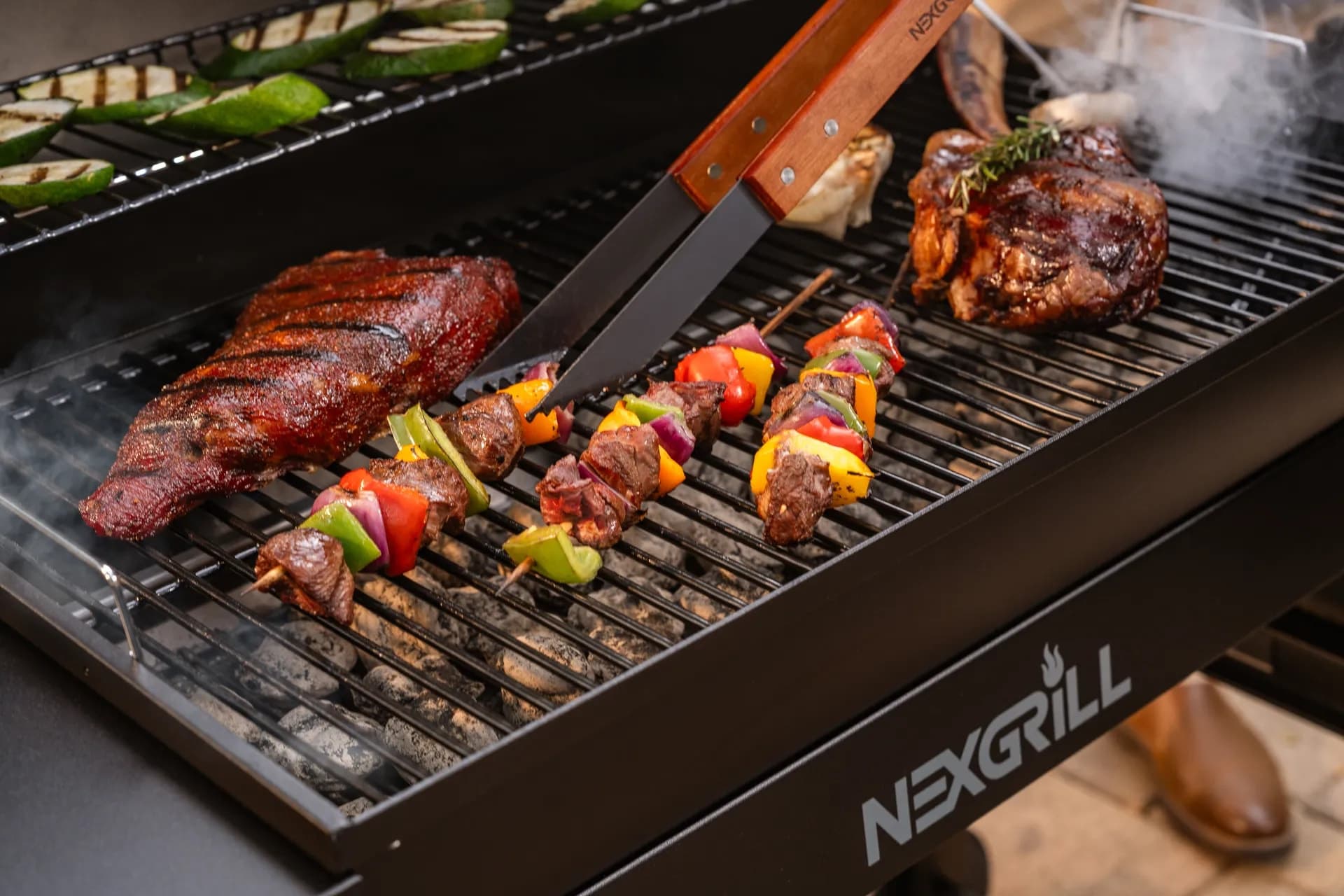
Standard backyard gas grills (like Nexgrill's 4-burner models) have a moderate cook chamber depth and predictable heat. A 16-inch spatula and 16-inch tongs are the gold standard here. If your gas grill has a side burner, a 12-inch spatula is handy for moving pans, but 16-inch still works. For gas, prioritize a spatula with a beveled edge (for sliding under burgers) and tongs with scalloped grips (for turning sausages and chicken).
Charcoal and Pellet Smokers
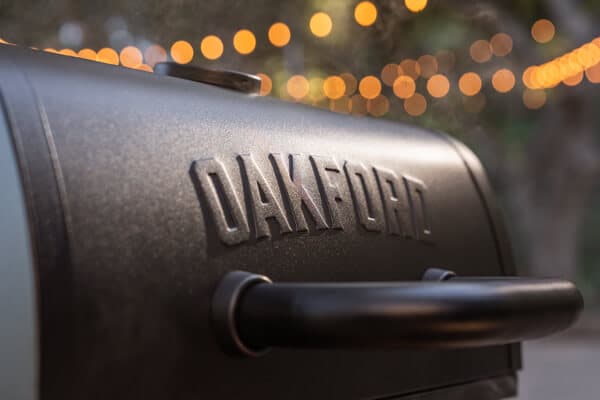
Charcoal kettles and pellet smokers (like the Oakford series) run hotter at the grate and often have deeper chambers. Go with 18-inch tongs to keep your knuckles clear of flare-ups and hot lids. An 18-inch spatula is less common but available; a 16-inch spatula is usually enough because you're not reaching as far for flipping. For pellet smokers, avoid silicone-tipped tongs - the radiant heat from the lid can exceed their rating.
Flat-Top Griddles and Cast Iron
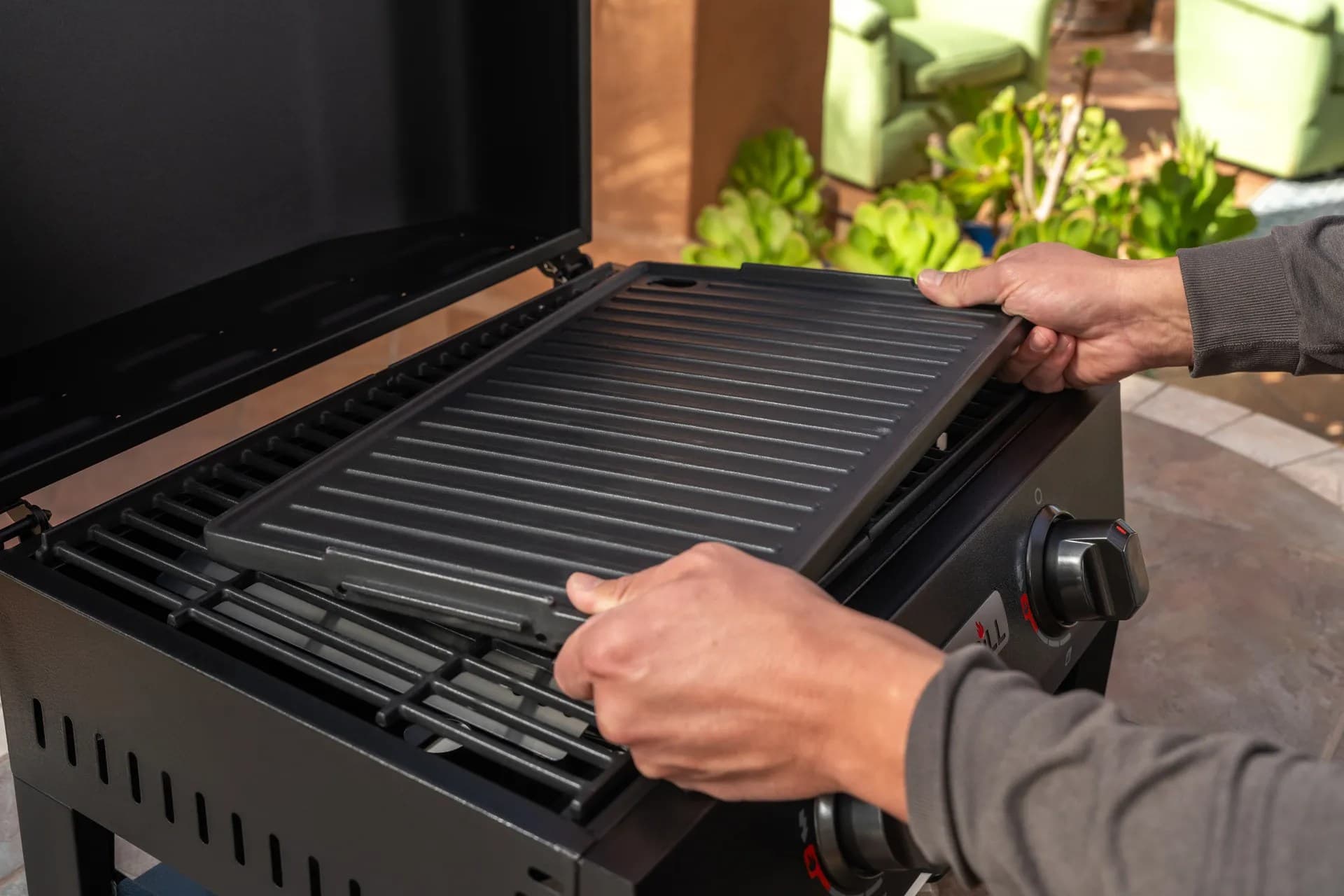
Flat-top griddles (like the Daytona series) and cast iron cooking surfaces get very hot - often 500-600°F across the whole surface. All-metal tools are the right call. A stiff spatula with a straight edge is essential for scraping and flipping on a flat-top. Tongs should be all-metal with a strong spring; silicone tips will degrade quickly at these temperatures. If you use a burger press, you need a spatula with a thick blade (1.5-2 mm) that won't flex.
Six Common Mistakes When Buying Grill Tongs and Spatulas
- Buying a kit for tool count. You'll pay for 30 tools and use two. Put the budget into a better two-piece set.
- Ignoring tong length for your grill type. 12-inch tongs on a charcoal kettle mean singed knuckles. Match length to chamber depth and flare-up risk.
- Assuming all stainless is rust-proof. Grade and finish vary. 304 stainless resists rust better than 430; dishwasher cycles and neglect cause spotting on either.
- Trusting a jamming locking ring or soft spring. Test the lock before buying. A tab-slide lock is more reliable than a ring-pull.
- Using silicone tips for direct high-heat searing. Silicone is rated 450-600°F per manufacturer specs; a screaming-hot flat-top will exceed that.
- Putting wood or rosewood handles in the dishwasher. Heat and detergent dry the wood, crack it, and loosen rivets. Hand-wash those.
Tip: After every cook, wipe the spatula blade and tong tips with a damp cloth while the grill is still warm. This prevents grease buildup that can jam locks and gum up springs.
Care, Cleaning, and Rust: What Actually Shortens Tool Life
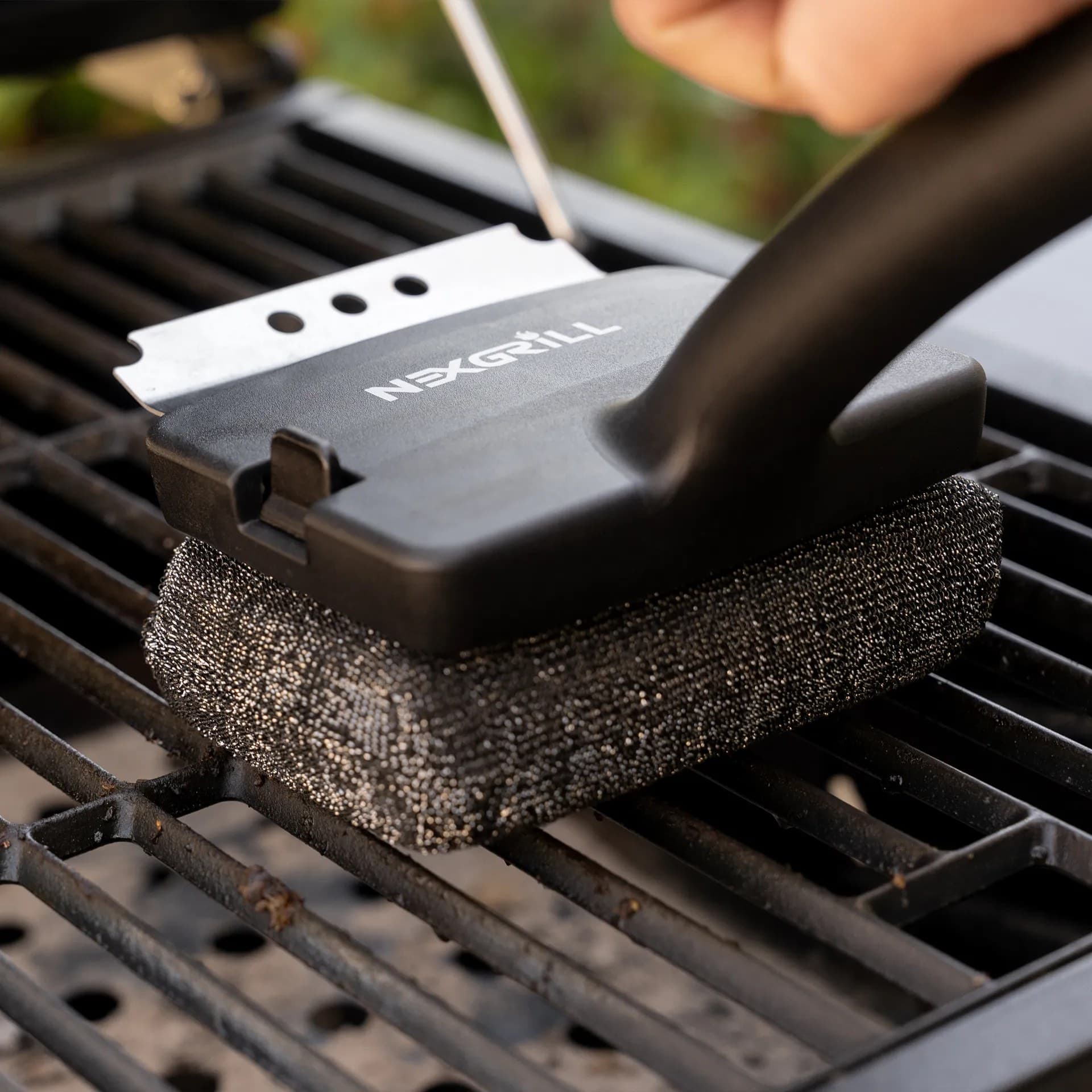
Three things kill grill tools early: heat cycling, moisture, and dishwasher detergent. Heat cycling (repeatedly heating and cooling the metal) can warp thin blades and weaken springs. Moisture - especially if you store tools outside - causes surface rust even on stainless. Dishwasher detergent is abrasive and accelerates handle and rivet wear. The practical routine: hand-wash with warm soapy water, dry immediately, and store in a covered bin or indoors. If you must use a dishwasher, stick to all-metal tools and accept that the finish will dull over time. For rust prevention, a light coat of food-safe oil on the blade after drying helps, especially in humid climates.
Brand Landscape: Weber, OXO, Cuisinart, GrillPro, and Nexgrill
Weber and OXO are the most common premium picks for 2-piece sets; both offer solid springs and dishwasher-safe stainless options. Cuisinart competes closely on price and often includes a better spatula edge. GrillPro sits in the mid-range with reliable basics. Nexgrill, known for its grills and griddles, also offers tool accessories that pair with its lineup - worth checking if you want a cohesive setup. Generic sets from big-box stores can work if you inspect the blade gauge and lock before buying. Brand isn't everything; a well-built generic at $22 can outperform a poorly made branded set at $35.
Who Is This Set For? Three Buyer Profiles
| Profile | Grill Type | Recommended Specs | Price Tier |
|---|---|---|---|
| Weeknight gas griller | 4-burner gas | 16 in spatula, 16 in tongs, scalloped grip, tab-slide lock | Mid-range ($20-$30) |
| Charcoal/pellet enthusiast | Kettle or pellet smoker | 16 in spatula, 18 in tongs, all-metal, strong spring | Mid to premium ($25-$40) |
| Flat-top griddler | Griddle or cast iron | Thick blade (1.5-2 mm), straight edge, all-metal tongs | Premium ($30-$40+) |
If you cook on multiple grill types, buy the longer tongs (18 in) and a 16-inch spatula - that combination covers the most scenarios.
Final Checklist Before You Add to Cart
- Blade thickness and edge type: 1.5-2 mm for smash burgers; beveled edge for enameled grates.
- Tong length vs. grill type: 16 in for gas, 18 in for charcoal/pellet.
- Lock style: tab-slide beats ring-pull for reliability.
- Handle material vs. dishwasher habits: all-metal if you dishwasher; wood/PVC if you hand-wash.
- Heat rating if silicone: 450-600°F per manufacturer spec; skip for direct sear zones.
- Price tier vs. frequency of grilling: mid-range for weekly use, premium for year-round.
For a deeper look at Nexgrill's grill and griddle lineup - which can help you match tool length to your specific model - visit the Nexgrill all products page.