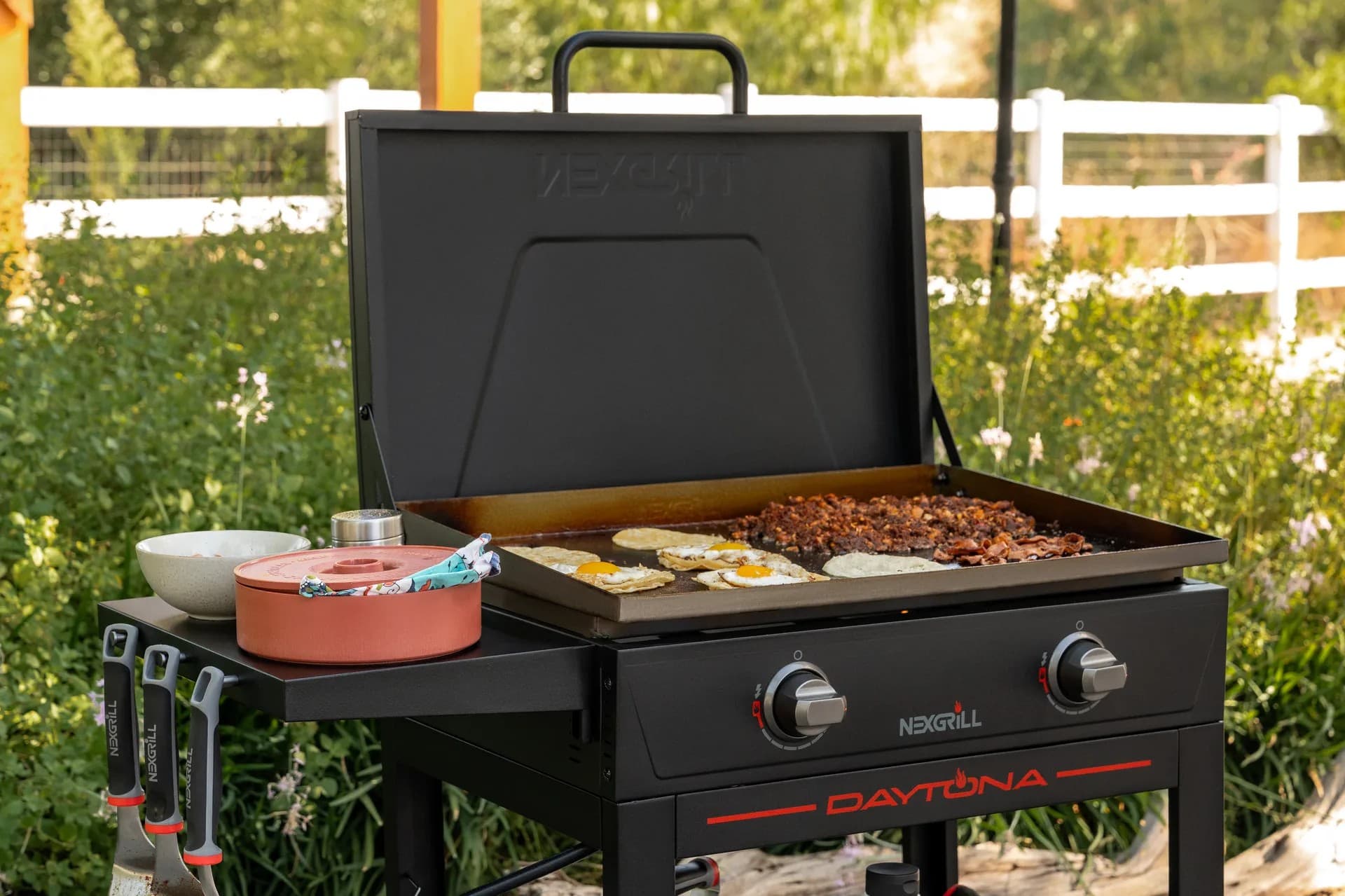
How to Secure Grill Covers for Maximum Protection
Ensure your grill stays safe and clean with these effective cover securing techniques.
In This Article
Why Secure Your Grill Cover?
Types of Grill Covers
Secure Methods to Use
Understanding the Importance of Grill Cover Security
A grill cover does more than hide your equipment from view. It acts as the first line of defense against rain, snow, UV exposure, dust, pollen, tree sap, and wind-blown debris. But a cover only works when it stays where it belongs. If the cover lifts, flaps, or blows off during a storm, the grill beneath it can end up exposed for hours or even days, which defeats the purpose of covering it in the first place. For homeowners who keep a grill on a patio, deck, balcony, or open backyard pad, securing the cover is not a minor detail. It is part of protecting the investment you already made in the grill itself.
Nexgrill’s brand approach emphasizes dependable outdoor living and practical value, which makes cover management a natural extension of grill ownership. A covered grill is easier to keep ready for use, and a well-managed cover helps preserve both the appearance and performance of the cooking station. That matters whether you grill a few times a month or rely on your setup for weekend gatherings with family and friends. In Nexgrill’s own brand language, the outdoor cooking experience is about bringing people together and being dependable through changing conditions, and that same mindset applies to protecting the equipment between uses .
Can turn a weather shield into a wind sail in one storm
Info: A properly secured cover helps reduce rubbing, edge wear, and corner stress, which are common failure points on covers that repeatedly shift in the wind.
It is also important to think about what can happen when a cover does not fit securely. A cover that rides up at the bottom can let moisture collect on the grill body, especially around lid seams, control knobs, side shelves, and cart openings. If the fabric repeatedly flexes in the same places, small abrasions can develop into tears. Over time, a cover that seems “good enough” in calm weather can become an expensive replacement because it was never anchored correctly. That is why the best approach is to think of securing the cover as a routine step, not an afterthought.
There is also a practical comfort factor. A cover that stays in place is easier to remove and replace quickly, which means you are more likely to use it consistently. When a cover is annoying to handle, many owners stop using it, and the grill becomes more vulnerable to weathering, insect nesting, and dust buildup. A simple securing method, chosen for the shape and location of your grill, can make protection feel effortless rather than burdensome.
Choosing the Right Grill Cover for Your Needs
The best securing method starts with the right cover. Not every cover behaves the same way, and a method that works on a lightweight fabric cover for a compact two-burner grill may not be enough for a larger cart-style model or a grilling station with side shelves. The first decision is size. A cover should follow the outline of the grill without hanging so loosely that it catches wind. At the same time, it should not be stretched so tightly that it strains seams or prevents full coverage at the bottom. The goal is a balanced fit that leaves enough room for the grill’s shape while still hugging it closely enough to resist movement.
Material matters too. Heavier fabrics and lined covers usually hold position better than very thin materials, especially in areas where afternoon breezes are common. A more substantial cover also tends to drape more smoothly, which reduces the chance that a gust will get underneath it. If your grill sits in a fully exposed yard or on an elevated deck, a sturdier cover may be worth the extra cost because it is easier to secure and less likely to balloon.
| Cover Type | Best For | Security Advantage |
|---|---|---|
| Lightweight polyester | Mild climates and occasional use | Easy to handle, but may need extra anchoring in wind |
| Heavy-duty lined cover | Exposed patios and frequent storms | Better drape and stronger resistance to flapping |
| Fitted custom-style cover | Grills with shelves, smokers, or carts | Closer fit reduces wind lift at the edges |
When choosing a cover, look closely at the details that help it stay put: drawstrings, Velcro straps, buckles, elastic hems, weighted corners, and venting. Vents are especially useful because they help manage trapped air. Without airflow, a cover can puff up like a sail, even if it seems snug at ground level. If you live in a region where sudden gusts are common, such as open suburban lots or coastal areas, vented construction paired with a secure fastening method is often more effective than sheer weight alone.
Tip: If your grill has side shelves or a rear-mounted propane tank, choose a cover shaped for those features instead of forcing a generic rectangle to do the job.
This is also where Nexgrill’s product philosophy is useful context. The brand’s outdoor cooking lineup is built around practical use, value, and different grill formats for different households, from compact configurations to larger backyard setups . The same logic applies to covers: the better the cover matches the actual grill silhouette, the less work you will need to do to keep it secure.
Common Weather Challenges and Their Impact on Grills
Weather is the main reason a grill cover needs to be anchored properly. Wind is the most obvious challenge, but it is not the only one. Wind pressure can enter under the hem, lift the cover from a corner, and start a rippling effect that loosens the rest of the fabric. Once that starts, the cover can shift repeatedly during the day, creating wear along seams and contact points. Rain is a different problem. Water does not just sit on the cover; it can pool in low spots, stretch the material, and increase the chance of sagging. If the cover sags enough, runoff can direct water toward the grill body rather than away from it.
Sun exposure also deserves attention. UV rays gradually weaken many outdoor fabrics, especially if the cover is constantly moving and rubbing against the grill. A cover that is secured well usually lasts longer because it moves less and avoids repeated friction. In snowy climates, the issue is weight. Snow accumulation can press a cover down in ways that create strain on seams or cause ice to cling to the fabric. Even in dry regions, dust and pollen can settle into the cover’s folds and make the material dirtier and stiffer over time.
For homeowners in the United States, the actual challenge depends a lot on season and region. A breezy spring in the Midwest creates a different problem from a humid summer in the Southeast or a rainy winter on the Pacific coast. That is why securing techniques should not be treated as one-size-fits-all. In highly exposed areas, the best strategy is often a combination of fit, tie-downs, and placement. In more sheltered patios, a snug fit may be enough on its own most days, but the system should still be ready for storms.
Warning: A cover that traps standing water or snow for too long can create heavier stress than an uncovered grill would face in normal conditions. Check it after major weather events.
Another overlooked issue is pests. If a cover billows or shifts at the base, it can leave openings for insects, spiders, and small animals to explore the grill cabinet or warming spaces. That can become a cleanup problem the next time you cook. A secure cover reduces these gaps and makes the grill less inviting as shelter. In practical terms, that means a more pleasant first-use experience after the grill has sat idle for a week or a month.
How to Properly Measure and Fit Your Grill Cover
Proper measurement is one of the simplest ways to improve cover security because a close fit starts with the right dimensions. Measure the grill from the widest points, not just the main firebox. Include side shelves if they do not fold down, the height from the ground to the tallest point, and any rear extensions or shelves that change the silhouette. If you have a cart-style grill or a model with a side burner, measure the full footprint before shopping for a cover. A common mistake is buying based only on grill width, which leads to a cover that looks close on paper but rides too high, too low, or too loosely in use.
For the best fit, aim for a cover that drapes fully over the grill and reaches the lower body or cart base without dragging excessively on the ground. Excess length can catch wind and collect dirt, while too little length leaves the lower panels exposed to rain splash and dust. If a cover has adjustable straps, the attachment points should land where they can grip firmly without cutting into the fabric or interfering with knobs and handles. On some grills, you may need to experiment slightly with front-versus-back positioning to keep vents aligned and hems even.
| Measurement Point | Why It Matters | What to Check |
|---|---|---|
| Width | Determines side-to-side coverage | Include shelves and handle clearance |
| Depth | Affects front and back drape | Account for knobs, tanks, and rear vents |
| Height | Prevents exposed tops and stretched seams | Measure the tallest point, not just the lid |
A useful fitting habit is to install the cover on a dry day, then stand back and inspect the way it hangs. The bottom edge should sit evenly. The fabric should not form a large pocket on one side or billow upward at the top. If it does, adjust the orientation or tighten the secure points before the next windy day. The time spent on fit pays off every time the weather turns rough.
Try comparing two products side by side below to see which fits best:
Effective Methods to Secure Your Grill Cover
Once you have compared two cover options and identified the best shape for your grill, the next step is making sure it stays in place during everyday use and sudden weather changes. The most effective securing method is rarely a single trick. In practice, it is usually a combination of fit, attachment, and placement. A cover that already fits closely needs less force to stay on, while a loose cover may require straps, cords, weights, or a more sheltered setup. The goal is not to over-engineer the solution, but to choose a method that matches the exposure level of your patio and the design of your grill.
If your cover includes built-in straps, start with those. They are the cleanest way to secure the cover because they are designed for the cover’s own seam layout. Pull them snug enough to stop movement, but not so tight that the fabric bunches or twists. On grills with cabinets or lower frames, straps often perform better when positioned low on the body where wind can get leverage. If your cover has buckles or clips, fasten them on the leeward side when possible so the wind cannot easily force them open.
Info: The most secure covers are the ones that reduce airflow under the hem, not just the ones that feel heavy.
For grills that sit in open spaces, elastic hems can be a simple but effective aid. They help the lower edge grip the shape of the cart and reduce the chance of a corner lifting. However, elasticity can weaken over time, so it should be checked periodically rather than assumed to work forever. Drawstrings can also be helpful, especially on rounded or irregular grill shapes. When tightening a drawstring, look for even tension around the base instead of pulling one side harder than the other. Uneven tightening can tilt the cover and create a gap where wind can enter.
Some owners use discreet counterweights at the hem in especially windy locations. This can be practical when a cover sits on a smooth surface such as concrete or composite decking. If you take this route, make sure the weights do not abrade the fabric or block drainage. The point is to add resistance to lift, not to create pressure points that damage the cover. Another helpful tactic is placing the grill itself where existing structures offer protection. A wall, fence, or pergola column can act as a wind break, but only if the cover still has enough clearance to avoid constant rubbing.
Warning: Do not cinch a cover so tightly that it traps sharp folds against knobs, handles, or temperature displays. Long-term rubbing can wear through the cover faster than loose air movement.
For many households, the simplest practical routine is this: place the cover from the highest point down, smooth the fabric so no air pockets remain, secure the bottom straps or drawcords, and then check the back and sides for any lifting edges. If a corner is fluttering, fix that immediately rather than waiting for the next weather event. Small adjustments are more effective than major repairs after the fact.
Tips for Maintaining Your Grill Cover
A grill cover that is properly secured still needs basic care if you want it to keep doing its job. Dirt buildup is one of the most common reasons covers start to fail early. Dust, pollen, and grease residue can settle into the fabric, making it less flexible and more prone to sticking in folds. A cover that gets sticky or stiff can catch more wind and become harder to secure. That is why occasional cleaning matters as much as the initial fit.
The best maintenance routine is straightforward. Shake off loose debris before removing the cover, and wipe down areas where water, sap, or bird droppings have collected. If the manufacturer allows it, use mild soap and water rather than harsh chemicals that can strip protective coatings. Let the cover dry fully before placing it back on the grill so trapped moisture does not create odor, mildew, or damp spots that might encourage corrosion nearby. This is especially important in humid regions or after a long rainy stretch.
| Maintenance Task | How Often | Why It Helps Security |
|---|---|---|
| Shake out debris | Weekly or after storms | Prevents added weight and uneven sagging |
| Check straps and seams | Monthly | Catches loosening before a windy day |
| Clean surface residue | As needed | Reduces fabric wear and mildew risk |
Inspect the attachment points regularly. Straps can fray, clips can loosen, and elastic can lose snap. If a secure point is failing, replace or repair it before the next season rather than waiting for a major storm to reveal the problem. Also check the lower hem for abrasion where it meets deck edges, pavers, or rough concrete. A small patch or a minor adjustment can add a lot of life to the cover if you catch wear early.
Another useful habit is storing the cover correctly when it is not on the grill. Folding it the same way every time can create sharp creases that weaken the fabric. Rolling it loosely or folding it with less tension helps preserve the material. If you live in an area with frequent thunderstorms or strong seasonal winds, it can also be smart to keep a backup securing accessory on hand so you are not scrambling when the weather forecast changes. Tip: A clean, dry cover lasts longer and stays easier to manage, which makes you more likely to secure it properly every time.
Tip: A clean, dry cover lasts longer and stays easier to manage, which makes you more likely to secure it properly every time.
Seasonal Considerations for Grill Cover Security
The best way to secure a grill cover changes with the season. In spring, high winds and pollen are the main concerns. Pollen can make a cover feel gritty, which increases surface friction and can leave residue on the grill shell. Secure the cover firmly, but make sure you can still remove it quickly for spontaneous cooking on warmer days. In summer, UV exposure and frequent afternoon storms become the bigger issue. A snug fit with venting is helpful because the cover may be on and off more often, and repeated handling means the fastening points need to be easy to use.
Fall introduces leaves, acorns, and heavier debris. If your grill sits under a tree, a loose cover can collect organic matter in the seams, which can hold moisture and create stains. This is also the time when outdoor cooking often continues later in the evening, so a cover that is easy to secure after a meal helps keep the routine consistent. In winter, the focus shifts to moisture and weight. Snow and freeze-thaw cycles can strain seams, particularly if water gets trapped in low points. A cover should be checked after every major snow event or ice storm so you can remove excess load before it settles.
Warning: In winter, never ignore a cover that has frozen to the grill or base. Forcing it off roughly can tear both the cover and the fabric edge.
Regional climate also changes the approach. In coastal areas, constant breeze and salt air may justify more frequent inspection, since salt can accelerate wear on exposed hardware and fabric edges. In the desert or Southwest, heat and sunlight can make the cover material brittle faster, which means you want a method that avoids overstretching the fabric. In humid Gulf or Atlantic climates, mildew prevention is just as important as anchoring, because dampness trapped under a poorly vented cover can shorten the life of both the cover and the grill’s exterior finish.
This seasonal perspective also helps with timing. Before the strongest weather season in your area begins, do a full inspection of the cover, fasteners, and fit. If you know storms are common in spring or fall, make adjustments earlier rather than waiting until the first rough night. That habit prevents rushed fixes and keeps the grill ready for use whenever the weather clears.
Conclusion: The Value of Proper Grill Cover Management
Proper grill cover management is really about preserving convenience, cleanliness, and confidence. When the cover fits well, stays secure, and is maintained with basic care, the grill is easier to keep ready for the next cookout. That means less time dealing with moisture, less cleanup before cooking, and fewer worries after a windy night or sudden downpour. A secure cover also supports the long-term condition of the grill by reducing the chance of cosmetic wear and weather exposure.
The most effective approach is not complicated. Choose a cover that fits the grill’s real dimensions, use the securing features it came with, add support if your climate demands it, and inspect the cover often enough to catch small changes before they become problems. For Nexgrill owners, that practical mindset lines up well with the brand’s broader focus on dependable outdoor cooking, accessible value, and welcoming backyard experiences . A grill that is protected well is a grill that is more likely to be ready when friends and family gather.
If you take away one point from this guide, let it be this: a cover only protects what it can stay over. Secure it well, maintain it regularly, and it will do its job season after season.