Top Wood Pellet Grills with Digital Controllers: A Comprehensive Guide
Explore the best wood pellet grills featuring advanced digital controllers for precise cooking control.
In This Article
Precision Cooking
User-Friendly Interface
Versatile Cooking Options
Introduction to Wood Pellet Grills with Digital Controllers
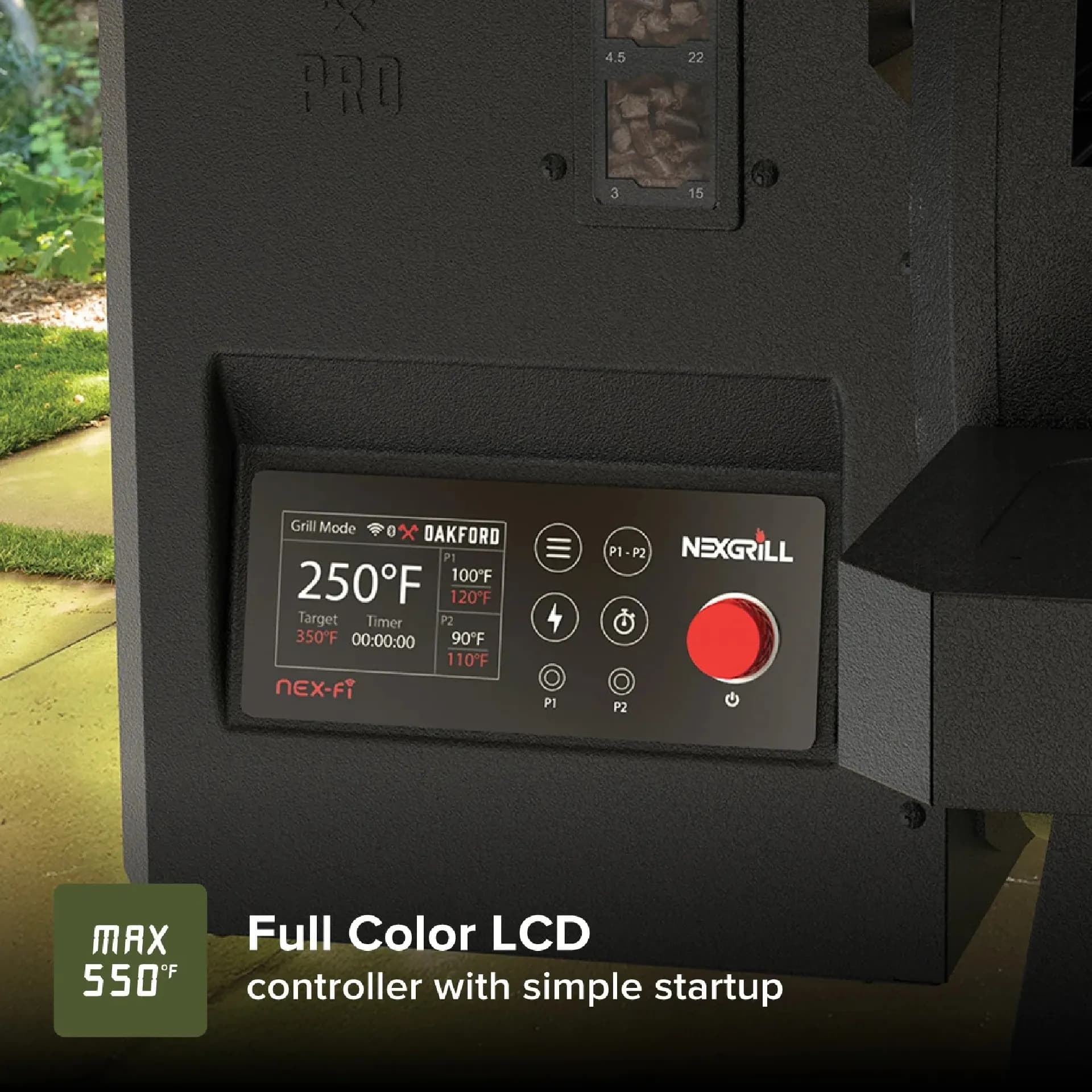
Wood pellet grills with digital controllers sit in a sweet spot for backyard cooks who want real wood-fired flavor without turning every cook into a chemistry experiment. The pellet hopper feeds compressed hardwood pellets into a fire pot, while the digital controller manages the feed rate and fan speed to hold a target temperature. That means you can smoke brisket overnight, roast chicken for Sunday dinner, or sear pork chops after work with far more repeatability than a purely manual setup. For many buyers, the controller is the feature that changes pellet grilling from a hobby into a practical weeknight cooking tool.
This matters because pellet grills are often chosen for consistency and ease of use, but the controller is what actually delivers that experience. A well-tuned digital controller can reduce temperature swings, recover faster after the lid is opened, and make it easier to run separate cooking sessions at 180°F for smoke, 225°F for low-and-slow, or 375°F and above for roasting. In the real world, that precision can be the difference between tender ribs that finish on schedule and a long cook that drifts off target for hours.
The controller is not just a convenience feature; it is the core system that affects pellet feed, combustion, and the stability of the entire cook.
For shoppers comparing the best wood pellet grill with digital controller, the key question is not whether the grill has one, but how thoughtfully it is implemented. Some controllers are basic dial-style interfaces that keep things simple. Others add programmable probes, meat-based temperature alerts, Wi-Fi connectivity, and app control. The right fit depends on whether you want set-it-and-forget-it smoking, more active cooking oversight, or remote monitoring while you are doing something else around the house.
Key Features to Consider in Digital Pellet Grills
The most important feature is temperature stability. A digital controller should hold a setpoint within a practical range, not just display numbers. Look for systems that adjust pellet feed gradually rather than overcorrecting, because sharp oscillations can dry out food or create uneven bark. The second feature is interface clarity. If the display is hard to read in daylight, or if the buttons require a confusing sequence to change settings, the cooking experience becomes more frustrating than it should be. Many first-time buyers underestimate how often they will use the controller during an actual cook.
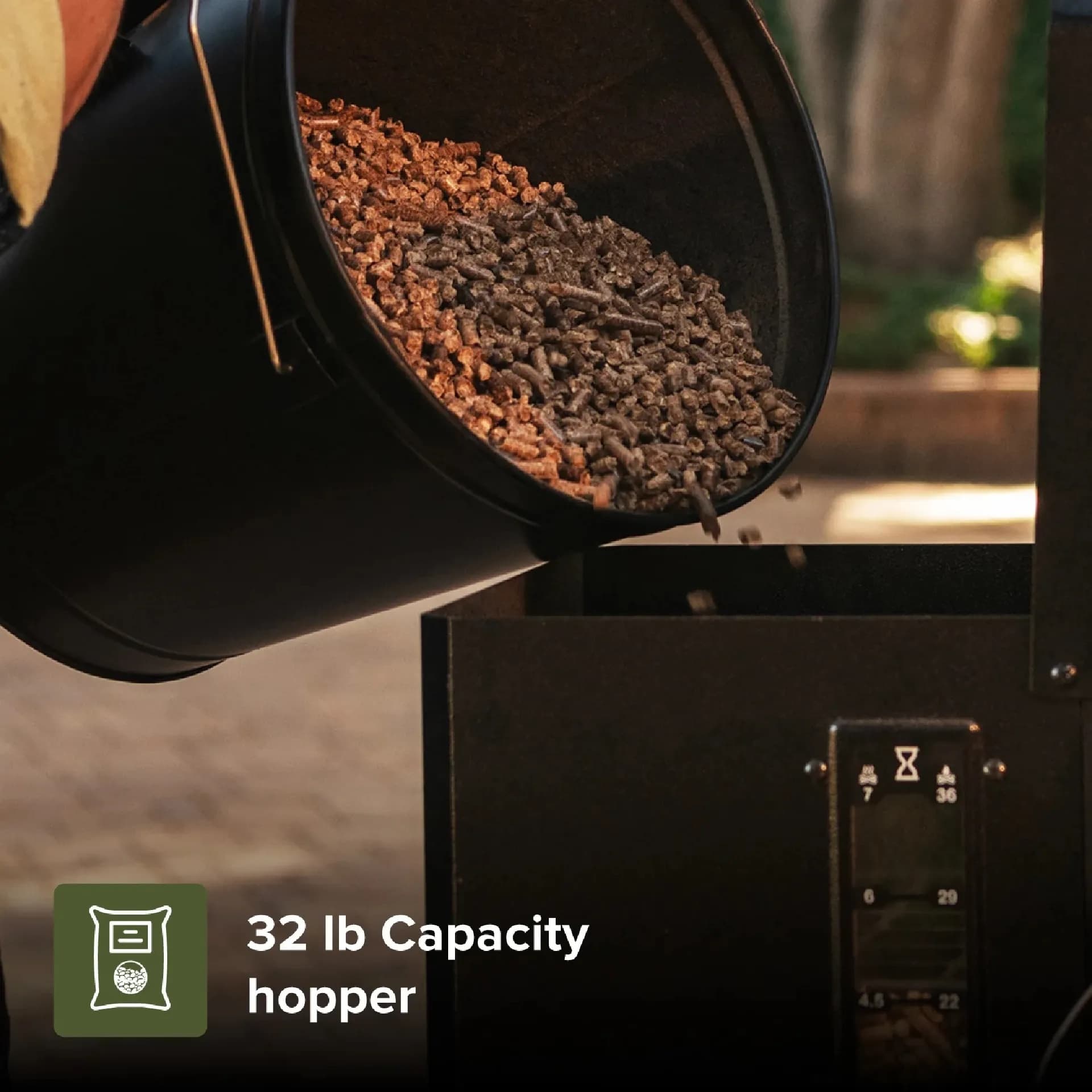
Cooking area is equally important, especially for families or frequent entertainers. A grill that can comfortably hold two pork shoulders, a rack of ribs, and a tray of vegetables without crowding will be much more useful than a compact model that forces you to cook in rounds. Hopper capacity also matters because pellet burns are a continuous process. Larger hoppers support longer cooks with fewer refills, which is especially useful for overnight brisket or all-day pulled pork. If you plan to smoke frequently, hopper size should be evaluated alongside the controller, not after it.
| Feature | Why it matters | What to look for |
|---|---|---|
| Temperature control | Determines how steady the cook stays | Minimal overshoot and smooth recovery after lid opens |
| Controller interface | Affects daily usability | Clear display, simple controls, probe readouts if possible |
| Cooking space | Supports larger meals and batch cooking | Enough grate area for your typical guest count |
| Hopper size | Extends unattended runtime | Enough capacity for long smokes without refilling |
Top Models Comparison: Traeger, Weber, Pit Boss
Among the best-known names in pellet grilling, Traeger, Weber, and Pit Boss each approach digital control a little differently. Traeger remains the category’s best-known pellet brand and often appeals to buyers who want a polished app ecosystem and broad accessory support. Weber’s pellet grills lean into brand familiarity, sturdy construction, and a more traditional barbecue audience that wants pellet convenience without losing Weber’s grilling identity. Pit Boss is typically the value-forward option, often packing in larger cook surfaces and straightforward digital controls at aggressive price points.
A useful way to compare them is by the controller experience rather than brand reputation alone. Traeger often stands out for user-friendly app integration and recipe support. Weber appeals to cooks who want a robust interface and premium-feeling build. Pit Boss usually attracts shoppers who want the most grill for the money, especially if they plan to smoke often and need a larger footprint. The best choice depends on whether you prioritize ecosystem, construction, or size-to-price ratio.
| Brand | Digital controller strengths | Typical buyer fit |
|---|---|---|
| Traeger | App-guided cooking, easy setpoints, strong ecosystem | Cooks who want convenience and a guided experience |
| Weber | Straightforward digital management with premium build cues | Buyers who value brand trust and balanced performance |
| Pit Boss | Accessible controls and high value for larger cooking surfaces | Budget-conscious grillers who want more capacity |
A higher price does not automatically mean tighter temperature control. Compare controller behavior, not just brand prestige.
User Experiences and Reviews
User feedback on pellet grills with digital controllers usually falls into a few recurring themes. Owners often love the convenience of walking away from a long cook once the temperature is set, especially when the grill can hold a stable target for several hours. People cooking ribs, brisket, or pork shoulder frequently describe the controller as the reason they switched from charcoal or stick-burning routines. They appreciate not having to constantly adjust dampers or manage live coals.
The complaints are just as consistent. Some users mention that cheaper controllers can lag after the lid is opened, which makes it harder to recover temperature quickly. Others note that very windy or cold conditions can expose weaknesses in insulation or controller tuning. A few reviews also highlight learning curves with app connectivity, especially when pairing Wi-Fi features or updating firmware. These are not deal-breakers for every buyer, but they are important signals about how the grill behaves outside the showroom.
If you read owner reviews carefully, the most useful comments are the ones that describe a cooking scenario rather than a star rating. For example, a review that says a grill held 225°F during a nine-hour pork butt cook is more helpful than a generic statement that the unit is “great.” Look for mentions of startup reliability, recovery speed, and whether the controller matched the selected temperature once the grill fully stabilized.
Maintenance and Troubleshooting for Digital Controllers
Digital controllers last longer when they are protected from heat, grease, and moisture. Keep the control panel clean and dry, and avoid blasting it with water or chemical cleaners. Use a soft cloth for the exterior and inspect wire connections periodically for looseness or corrosion. Since pellet grills live outdoors in many United States backyards, seasonal storage matters too. A covered grill in a dry location will generally fare better than one left exposed to rain and humid air.
If the controller is acting erratically, check the simplest causes first: pellet flow, ash buildup, loose probe wires, and power connection stability.
Common controller problems often trace back to the grill system rather than the display itself. If temperatures are running low, the fire pot may be choked with ash or the pellets may be damp. If temperatures overshoot, the temperature probe may be coated with residue or positioned incorrectly. If the display fails to turn on, confirm the outlet, power cord, and internal fuse before assuming the controller has failed. For many owners, a disciplined cleaning routine prevents most of the so-called controller issues from ever happening.
Price Range and Value Assessment
In the United States, wood pellet grills with digital controllers commonly start around the mid-hundreds for entry-level models and can move well above $1,000 for larger, feature-rich versions. Value is not just about the sticker price. A cheaper grill with a weak controller may cost less upfront but create more frustration and uneven results. A better controller, more stable pellet feeding, and sturdier construction can justify spending more if you cook often.
For casual weekend cooks, the best value often sits in the middle of the market, where digital controls are simple but dependable. For serious smokers who regularly cook for family gatherings, a premium model may be worth the cost if it provides better heat management, larger capacity, and longer unattended runtime. The smart way to evaluate value is to estimate how many long cooks you will do in a season and how much convenience you want during each one. That perspective makes it easier to pay for features you will actually use instead of chasing the biggest spec sheet.
Best Practices for Using Digital Pellet Grills
The best results start before the food goes on the grate. Preheat the grill until the controller has stabilized, not merely until the first display target appears. That helps the fire and chamber reach a consistent state before the meat is introduced. Place food with temperature zones in mind, since even a good controller cannot erase every hot spot. Use the controller as your baseline, then rely on a meat probe or instant-read thermometer to confirm doneness.
It also helps to choose the right cooking mode for the food. Low-and-slow smoking builds smoke flavor and tenderness, while higher settings are better for chicken skin, vegetable roasting, and crust development. Avoid opening the lid repeatedly, because each peek dumps heat and forces the controller to work harder. Try comparing two products side by side below to see which fits best:
Advanced Features in Digital Pellet Grills
Once you have weighed two options against each other, the next step is to look beyond basic temperature control and decide which advanced features will genuinely improve your cooking. The most useful additions are not always the flashiest. In practice, the features that matter most are programmable meat probes, remote monitoring, ignition reliability, and the controller’s ability to hold steady temperatures during changing weather. In the United States, where backyard conditions can vary from dry desert evenings to humid coastal afternoons, a grill that behaves consistently in imperfect weather is often more valuable than one with a long list of app extras.
Wi-Fi and Bluetooth connectivity can be helpful if you cook long briskets or pork shoulders and want to monitor temperatures without standing next to the grill. That said, app integration should be treated as a convenience feature, not the core buying decision. A well-designed controller with clear display logic and dependable startup behavior may be more valuable than an app that sends alerts but still struggles to regulate heat. The best systems combine automation with enough manual transparency that you can understand what the grill is doing at a glance.
Advanced controls are most useful when they support better cooking habits, not when they distract from them.
Comparative Analysis of Leading Models
A more detailed comparison of Traeger, Weber, and Pit Boss shows how differently each brand approaches the same problem. Traeger is often the easiest to recommend for buyers who want a polished ownership experience: clear digital control, straightforward startup, and a broad culture of recipe support. Weber tends to appeal to cooks who want a familiar, solid-feeling grill with a digital controller that feels integrated into a premium outdoor cooking setup. Pit Boss often wins on footprint and price, especially when a buyer wants a bigger cooking surface without moving into a top-tier budget.
A practical scorecard can help clarify the decision. If you cook once or twice a month and want minimal setup friction, Traeger often feels easiest to live with. If your priority is the sensation of a substantial, long-lasting grill with balanced performance, Weber is a compelling middle ground. If your household needs capacity first and wants digital control as a practical bonus, Pit Boss frequently offers the strongest value proposition. None of these brands is perfect for every cook, which is why matching the controller style to your habits is more important than chasing the most features.
| Model family | Best use case | Trade-off to consider |
|---|---|---|
| Traeger pellet grills | User-friendly smoking with strong digital support | May cost more for the convenience layer |
| Weber pellet grills | Balanced performance and premium brand feel | Fewer value-heavy size bargains than Pit Boss |
| Pit Boss pellet grills | Large cooks and budget-focused shoppers | Interface polish can trail more premium rivals |
User Testimonials and Feedback
Owners often talk about digital pellet grills in terms of confidence. They like being able to set a target temperature and step away, especially on weeknights when they are juggling family schedules. A common sentiment is that a pellet grill with a responsive controller feels less intimidating than charcoal or offset smoking. That feedback matters because many buyers are not looking for a competition rig; they are looking for a grill that will help them cook dinner without guessing.
At the same time, feedback reveals where expectations need to be calibrated. Users sometimes assume that digital control eliminates all variation, but outdoor cooking still responds to weather, pellet quality, and food load. Reviewers who understand this tend to be more satisfied because they view the controller as a precision aid rather than a magic wand. The most positive testimonials usually come from cooks who learned to trust the controller, use a probe, and leave the lid closed until it is genuinely time to check progress.
One recurring theme in reviews is that convenience becomes especially valuable during long cooks. Parents hosting a backyard birthday party, for example, may appreciate a grill that lets them smoke ribs while handling everything else on the patio. A controller that keeps the fire steady reduces the cognitive load of cooking, which is one reason many users describe pellet grills as the easiest route to repeatable barbecue at home.
Troubleshooting Common Digital Controller Issues
When a digital controller behaves badly, the fix is often mechanical or environmental rather than electronic. Start by checking pellet quality. Pellets that absorb moisture can swell, crumble, or feed unevenly, leading to temperature drops or failed ignitions. Next, inspect the fire pot for ash. Too much ash interferes with airflow and can cause the controller to chase a temperature it cannot reach. Also verify that the temperature probe is clean and correctly placed, because residue can trick the controller into reading the wrong chamber temperature.
If the controller displays an error or the grill will not maintain heat, power issues should be ruled out early. In many cases the cord, outlet, or plug connection is the real problem. Cold-weather cooks may also notice slower startups and longer recovery times, which is normal to a degree. The solution is often to preheat longer, shield the grill from wind, and avoid overloading the chamber with cold meat all at once. If the grill has app connectivity, rebooting the controller and re-pairing the device can solve many software-related hiccups.
Do not replace the controller before eliminating ash buildup, damp pellets, dirty probes, and power interruptions.
Maintenance Tips for Longevity
A digital controller will last longer if the entire grill is maintained with the same care you would give any outdoor appliance. Empty ash regularly, clean grease management channels, and keep pellet storage dry. A sealed bag stored indoors is usually better than one left open in a humid garage. Wipe down the controller area with a soft, dry cloth after each cook, and inspect it seasonally for corrosion or insects that may have entered the housing.
If you live in a region with harsh winters, consider moving the grill to a sheltered location when not in use. Temperature extremes are harder on electronics than mild storage conditions. It also helps to run the grill periodically during the off-season so the controller, auger, and fan system do not sit idle for months. That simple habit can reveal issues before the first big cook of spring.
Evaluating Cost vs. Performance
The best value is not the cheapest grill; it is the grill that earns its price every time you use it. Entry-level pellet grills with digital controllers can be excellent for occasional cooks, but if the temperature management feels inconsistent or the build quality seems thin, you may outgrow the grill quickly. Mid-range models often provide the best balance for most households because they deliver reliable controls, enough cooking space, and a better sense of long-term durability without moving into premium pricing.
A helpful way to think about cost is per cook, not just per purchase. A more expensive grill that helps you host more comfortably, smoke overnight without stress, or cook multiple meals in one session can offer stronger value over time. This is especially true for buyers who plan to use the grill weekly. For a family that cooks outdoors all season, the controller’s reliability may matter more than the last few dollars saved upfront.
Optimizing Cooking Techniques with Digital Controls
To get the most from a digital controller, think in terms of heat planning. Use lower settings for smoke-heavy cooks and higher settings when you want better browning or faster finishing. Allow the grill to stabilize before loading food, and avoid adjusting the setpoint repeatedly during a single session unless you have a clear reason. The controller works best when it is given a stable target and enough time to settle into that target.
A probe-based approach also improves results. Let the controller manage chamber temperature while a meat probe manages doneness. This pairing is especially effective for brisket, pork shoulder, turkey breast, and thicker cuts of beef. For more delicate foods, such as fish or vegetables, use the digital controller to maintain a moderate chamber temperature and finish with direct attention near the end of the cook. The point is to use the controller as a precision tool, not a substitute for judgment.