Choosing the Best Grill Thermostat Replacement
Your guide to selecting and installing the right grill thermostat.
In This Article
Types of Grill Thermometers
Top Models Compared
Installation Tips
Introduction to Grill Thermostats
Choosing the best grill thermostat replacement starts with understanding what the part actually does in day-to-day cooking. A grill thermostat is the control point that helps you read and manage heat, whether you are trying to hold a steady low temperature for chicken thighs or push the fire higher for a fast sear. When a thermostat becomes inaccurate, sticky, fogged, or inconsistent, the whole cooking experience changes: temperatures drift, food takes longer than expected, and it becomes harder to repeat a good result. For backyard cooks, that usually shows up as frustration before it shows up as ruined food.
In practical terms, thermostat replacement is less about buying the flashiest display and more about restoring confidence. A good replacement should be readable, stable, and appropriate for the style of grill you use. Some cooks only need a simple analog dial mounted on the hood. Others want a digital probe that gives a fast reading and works alongside a smartphone app. If your current setup is older or exposed to a lot of weather, the best choice may be the most durable and easiest-to-maintain option rather than the model with the most features.
Can change how evenly and confidently your grill cooks.
Info: Replacement choices should be matched to the grill body, mounting hole size, temperature range, and how close the reading point sits to the cooking surface.
Nexgrill customers often compare thermostat replacements the same way they compare burners or grates: by asking what fits, what lasts, and what makes cooking simpler. That is the right approach. The best replacement is not the one with the most claims on the box; it is the one that gives you reliable heat information on the grill you already own.
Types of Grill Thermometers
Before buying a replacement, it helps to separate the main thermometer styles. The market usually breaks into three practical categories: analog dial thermometers, digital thermometers, and wireless smart thermometers. Each has a different job, and each fits a different kind of griller. If you choose the wrong type, you may end up with something accurate on paper but awkward in use.
Analog dial thermometers
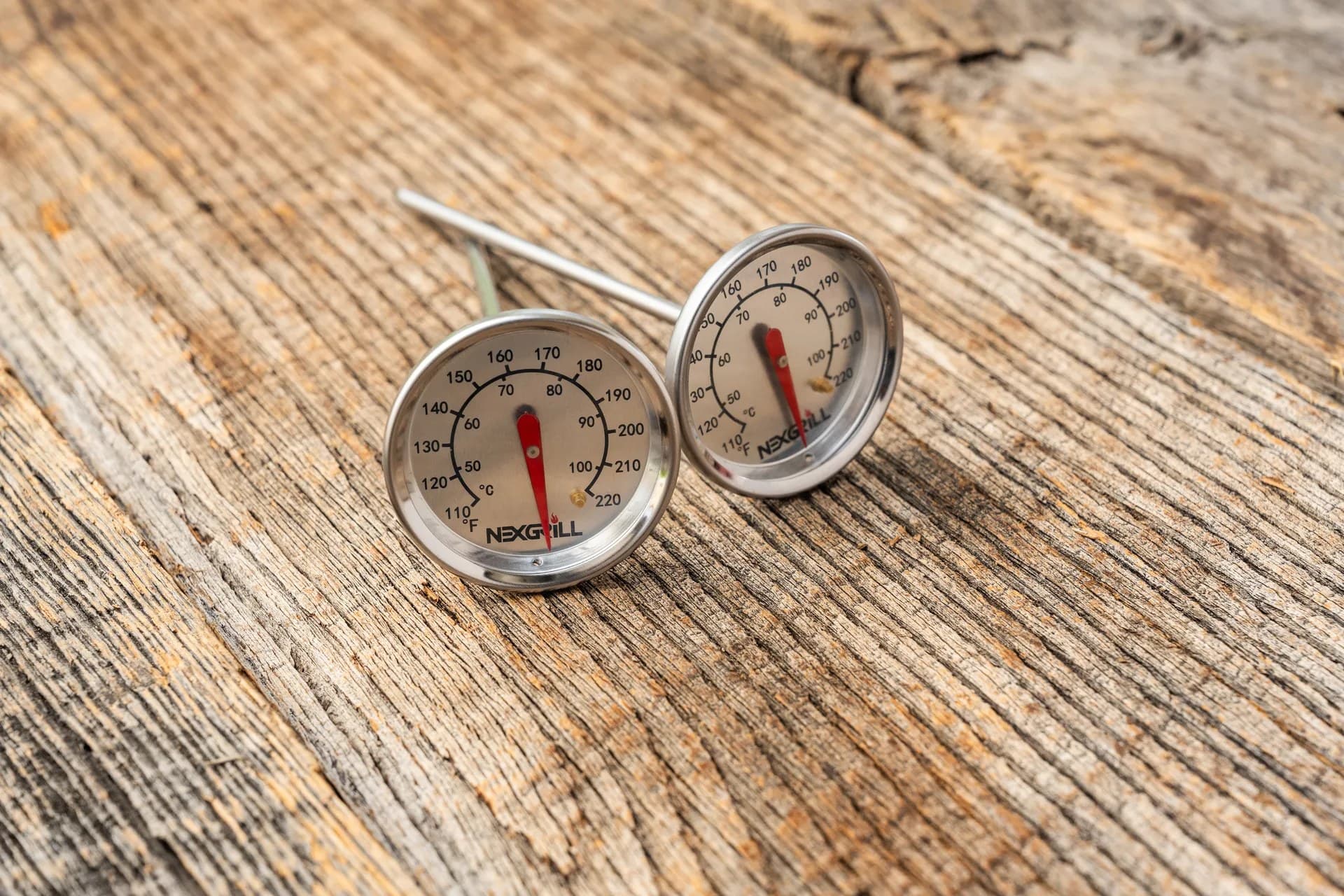
Analog thermometers are the familiar round gauges found on many grill lids. They are simple, easy to install, and often affordable. Their appeal is obvious: no batteries, no app, and no learning curve. For cooks who want a quick visual check while grilling burgers, chops, or vegetables, a well-made analog dial is usually enough. The trade-off is that analog units can be slower to respond and may drift over time, especially if they have been exposed to grease, steam, and repeated heat cycles.
A strong analog replacement should have a clear face, a readable scale, and a body built for outdoor heat. In real use, the biggest issue is not whether the dial looks nice from the patio; it is whether it stays accurate after a long season of use.
Digital thermometers
Digital thermometers are better for cooks who want faster readings and more precise temperature checks. They are especially useful when the goal is repeatability: brisket, ribs, chicken, or delicate items that can overcook quickly. Many digital models provide clearer numbers than a dial gauge and can be easier to interpret in changing light.
The main advantage is precision. The main drawback is dependency on batteries, sensors, and sometimes a more careful installation. If you want a replacement that tells you exactly what is happening inside the cooking chamber, digital is usually the better fit.
Wireless smart thermometers
Wireless thermometers are the newest category and are especially attractive to cooks who step away from the grill between checks. These systems can connect to a phone or base unit and help monitor food or ambient grill temperature from a distance. That is useful during longer cooks, where opening the lid too often can cost heat and slow down progress.
Wireless tools are convenient, but they work best for owners who are comfortable charging devices, pairing apps, and checking battery status before a cook. For a novice, they can feel like overkill. For a frequent griller, they can be a major quality-of-life upgrade.
| Type | Best for | Trade-off |
|---|---|---|
| Analog dial | Simple grill-top monitoring | Less precise and slower to respond |
| Digital | Fast, accurate reading | Needs power and careful handling |
| Wireless | Hands-off temperature monitoring | More setup and battery management |
Key Features to Consider
When comparing thermostat replacements, a few features matter more than branding. Accuracy is the first one. If a thermometer is off by several degrees, it can make you chase heat that is not really there. That is especially important on smaller grills, where a modest change in lid temperature can affect timing. Look for a unit that is known for stable readings rather than just a wide temperature range.
Warning: A replacement can look compatible and still read poorly if the probe length, mounting depth, or sensing location does not match your grill design.
Readability matters almost as much as accuracy. Large numbers, strong contrast, and a face that does not fog up easily are useful if you cook in bright sun or evening light. If you often grill after dark, a backlit digital display or a high-contrast dial can save you from squinting while managing multiple burners.
Response time is another practical detail. A fast thermometer is useful when you lift the lid, adjust heat, or open vents and want to know what changed quickly. Slow response can be fine for casual cooking, but it is less helpful when you are balancing direct and indirect zones.
Compatibility should be checked carefully. Measure the existing hole diameter, look at the mounting style, and confirm whether the replacement is designed for the lid, the chamber, or a probe port. For a gas grill, the right replacement should sit where it can sense the cooking environment without being exposed to direct flame. For a charcoal grill, placement is even more important because hot spots can create misleading readings if the sensor is too close to the fire.
Ease of use is the final filter. If you want a low-fuss setup, analog and simple digital replacements are the easiest path. If you want data and remote monitoring, wireless options are worth the extra effort. The best choice is the one you will actually use every time you cook, not just the one with the longest spec sheet.
Popular Brands and Models
The most trusted grill thermometer replacements usually come from brands that focus on measurement rather than general accessories. ThermoWorks is widely respected among serious cooks for its emphasis on professional-grade accuracy and quick readings. MEATER is known for wireless smart monitoring that fits modern cooking habits. Char-Broil offers practical grill accessories that appeal to buyers who want straightforward replacement parts and a familiar retail footprint.
| Brand | Strength | Best use case |
|---|---|---|
| ThermoWorks | Professional-level accuracy | Cooks who care about precise temperature control |
| MEATER | Wireless convenience | Users who want remote monitoring |
| Char-Broil | Accessible replacement options | Home cooks needing practical, familiar parts |
A simple way to judge these options is to match them to your habits. ThermoWorks is the best fit if your priority is disciplined accuracy and repeatable results. MEATER makes sense if you like app-based cooking and do not mind charging a device before use. Char-Broil is a sensible choice when you want a more traditional shopping experience and a replacement that is easy to understand without extra layers of setup.
Tip: If your current grill already has a built-in opening and mounting pattern, start by matching dimensions before comparing features. Fit comes first, features second.
Try comparing two products side by side below to see which fits best:
Installation Guide for Thermostats
Once you have compared two options, the next question is how to install the new thermostat correctly so it gives trustworthy readings from day one. A careful install matters because even a high-quality thermometer can perform poorly if it is mounted too loosely, too deeply, or in the wrong location. The goal is simple: the sensing point should represent the cooking environment without being distorted by direct flame or trapped grease.
Start by turning the grill completely off and letting it cool. Remove the old thermostat or probe assembly and inspect the opening. If there is rust, grease, or warped metal around the mounting hole, clean it before installing the new part. On many grills, a soft cloth, mild soap, and a non-abrasive brush are enough. If the old hardware used a nut, clip, or washer, save it until you confirm the new replacement uses the same style of fastening.
Info: Keep the packaging until the installation is complete so you can double-check the model number, probe length, and any included gasket or retaining hardware.
For a lid-mounted analog thermometer, insert the stem through the existing hole and secure it from the inside according to the part design. Do not overtighten, because that can bend the mounting surface or crack a thin bezel. For a digital replacement or probe port, route the cable away from hot surfaces and sharp edges. Make sure the wire does not rest against burners, flame shields, or moving cart parts. On wireless systems, pair the probe or base unit before the first cook and verify battery charge while the grill is still cold.
After installation, test the thermometer against a known reference if you have one. You do not need laboratory equipment to do a basic check; you just need to verify that the reading is stable and believable once the grill warms up. Allow enough time for the thermometer to settle. If the number jumps around or seems unrealistically high, recheck the seating depth and mounting position.
If your grill uses a separate hood gauge and an internal probe, remember that they may not read identically because they measure slightly different points in the cooking chamber. A small difference is normal. Large or erratic differences usually mean the sensor is misplaced or the unit needs calibration.
Simple calibration and troubleshooting steps
A replacement should be checked before you trust it on a full meal. If the thermometer supports calibration, follow the manufacturer instructions first. If it does not, compare it with another known-good thermometer placed close to the same zone. That gives you a practical sense of whether the replacement is reading consistently. If the display fogs, the numbers lag badly, or the needle sticks, confirm that the unit is not exposed to direct flame or moisture intrusion.
1. Turn off the grill and let it cool completely.2. Remove the old thermostat or probe assembly.3. Clean grease, rust, and debris from the mounting area.4. Fit the new replacement using the correct hole size and hardware.5. Route wires away from burners and sharp edges.6. Tighten only until secure, not forced.7. Start the grill and monitor for stable readings.8. Compare against a known reference thermometer if possible.User Reviews and Expert Recommendations
User feedback tends to be most helpful when it focuses on real cooking conditions rather than packaging claims. ThermoWorks products are often praised by experienced cooks for consistency, especially when someone wants dependable readings during long sessions. The common theme is confidence: users trust the numbers enough to make timing decisions without constantly opening the lid. MEATER reviews frequently highlight convenience, remote monitoring, and the freedom to step away from the grill while keeping an eye on internal temperature. That makes it appealing for people who cook across large backyards, entertain guests, or multitask during longer smokes. Char-Broil replacement accessories are often valued for being easy to source and straightforward to install, which matters if you want a practical fix more than an upgrade.
Experts generally recommend choosing the simplest tool that solves your real problem. If your old dial was drifting but you do not need app alerts, a quality analog or digital replacement is usually enough. If the real issue is that you cannot babysit a cook, then wireless monitoring delivers more value than another basic dial. In other words, the best thermostat replacement is not always the most advanced one; it is the one that closes the gap between how you cook and how you want to cook.
Warning: Reviews can be misleading if they describe a different grill style. A probe that works beautifully on a pellet smoker may not be the right choice for a small gas grill lid.
Maintenance Tips for Grill Thermometers
A replacement thermometer will last longer if you treat it like precision equipment instead of a decorative part. Wipe the dial or probe after cooking once the grill is cool enough to handle safely. Grease buildup can dull visibility and interfere with movement on analog units, while residue can affect ports, cable jackets, and charging contacts on digital and wireless models. Avoid soaking electronics unless the manufacturer specifically says they are water resistant.
Storage matters too. If your grill lives outdoors, a weather cover helps protect both the grill body and the thermometer from rain, dust, and UV exposure. If you remove wireless probes between uses, store them fully dry and charged according to the instructions. Check batteries periodically so you are not surprised by a dead display right before dinner. For analog thermometers, inspect the face for condensation, clouding, or needle hesitation; those are signs it may be time to replace the unit rather than keep fighting it.
Tip: If you grill year-round in the United States, do a quick thermometer check at the start of each season and after any major storm or deep cleaning.
The best maintenance habit is also the simplest: verify the reading before an important cook. A 30-second check can prevent a long meal from going off course.
Conclusion and Final Thoughts
The best grill thermostat replacement is the one that restores control, matches your grill, and fits the way you actually cook. If you want simple visibility, a durable analog dial can be enough. If precision matters most, a digital replacement offers faster and clearer readings. If convenience is the goal, wireless smart thermometers make it easier to monitor food without hovering over the fire.
For most buyers, the smartest path is to start with fit, then compare accuracy, then consider convenience. That order keeps you from buying a feature-rich product that does not suit your grill or your style. ThermoWorks, MEATER, and Char-Broil each serve a different type of griller, which is why the right answer depends on your priorities instead of a single universal winner. A thoughtful replacement choice brings back confidence every time you preheat, sear, or smoke.