The Best 5-Burner Gas Grills with Griddles: Performance and Value
Explore top models and essential features for your outdoor cooking needs.
In This Article
Top Features
Brand Comparisons
Maintenance Tips
Introduction: Why Choose a 5-Burner Gas Grill with Griddle?
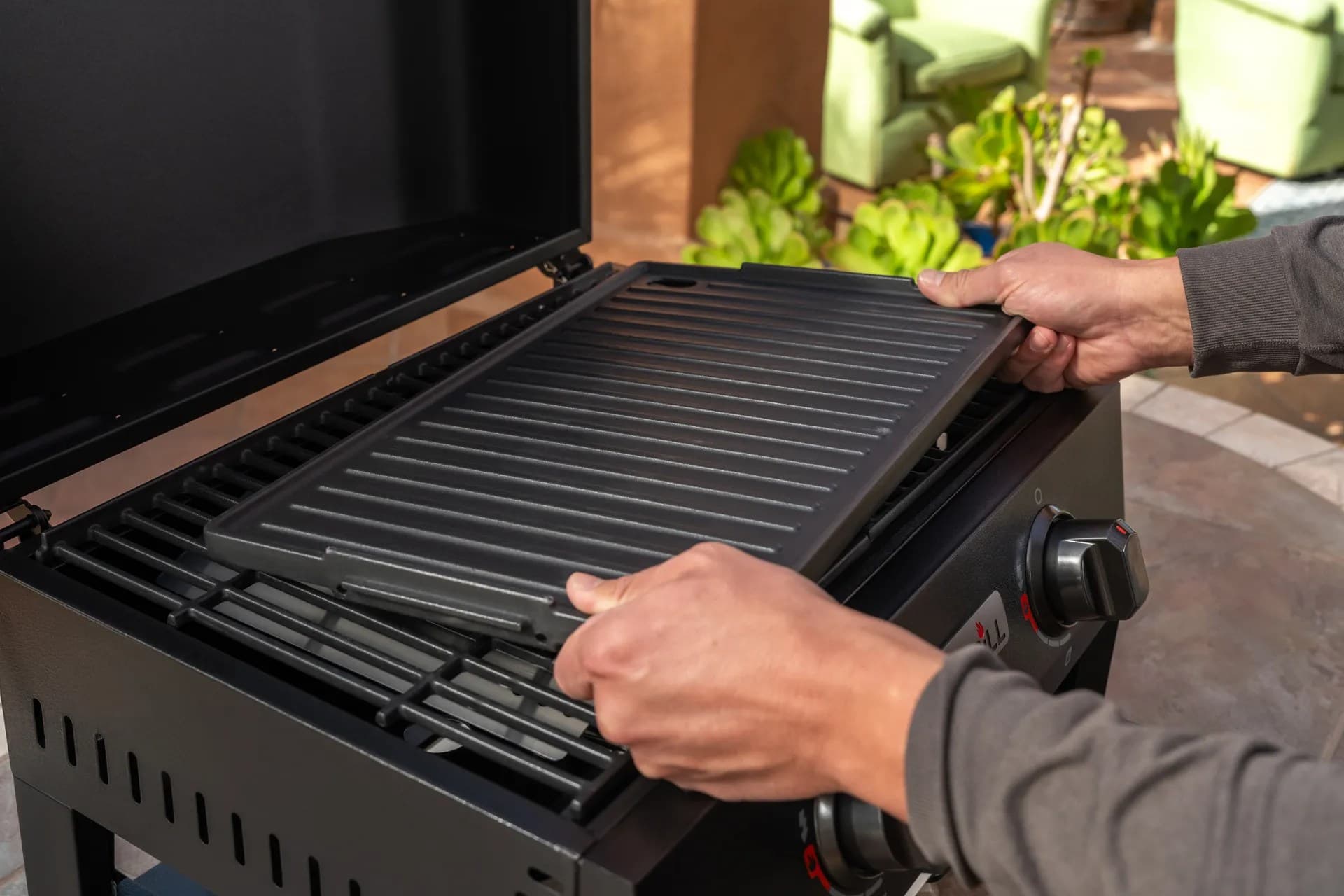
A 5-burner gas grill with a griddle attachment is built for people who want more than a standard backyard cooker. The five-burner layout gives you enough surface control to set up distinct heat zones for steaks, chicken, vegetables, and warming tasks, while the griddle side or griddle insert opens up a second style of cooking that a plain grate cannot match. In practical terms, that means you can sear on one side, sauté onions or peppers on the flat top, and keep buns warm without swapping equipment. For United States shoppers comparing grills in the midrange to premium category, this combination is often the sweet spot between versatility and value.
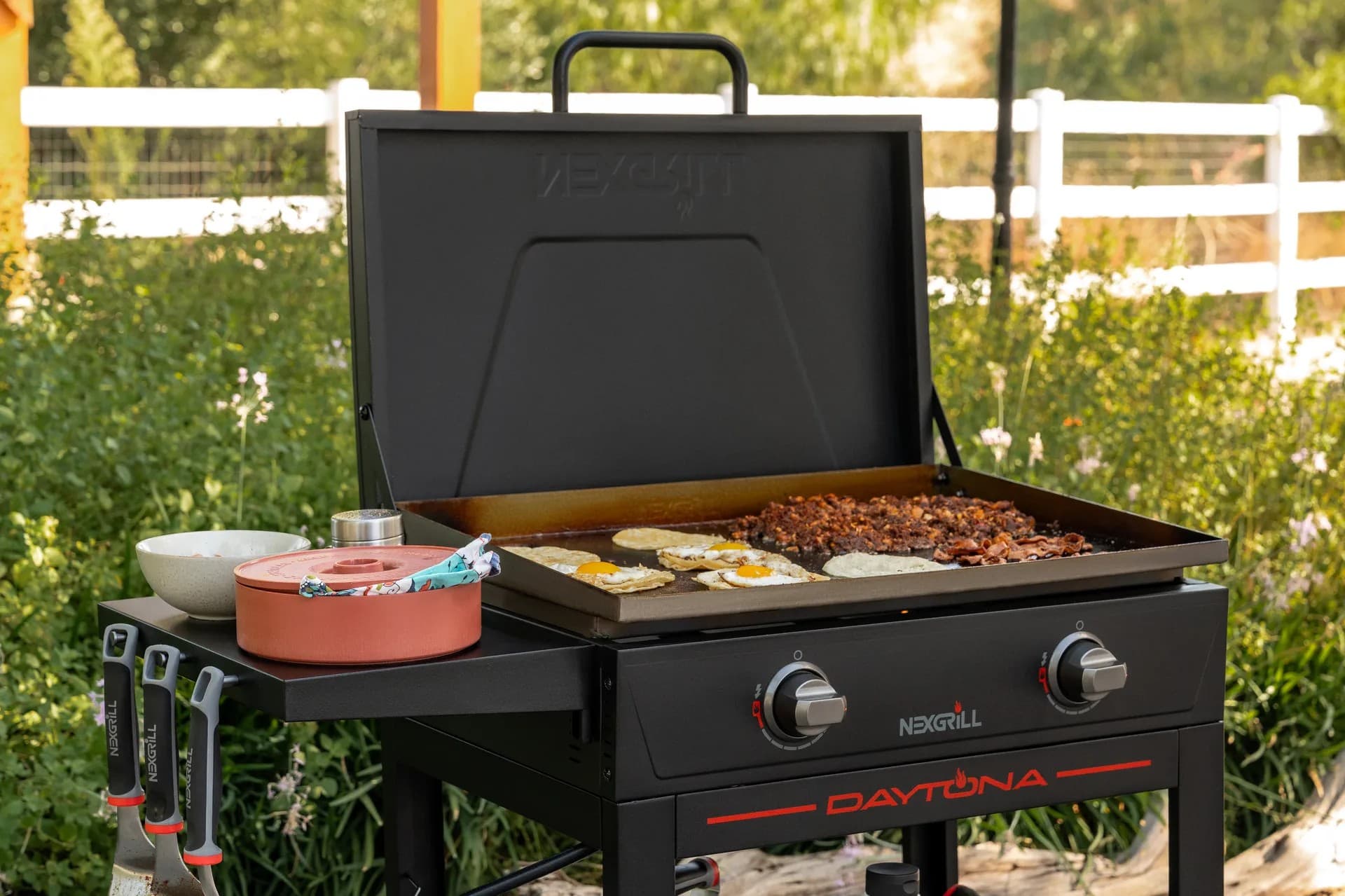
The real appeal is flexibility. A family that wants burgers on Friday, breakfast on Saturday, and fajitas on Sunday does not need three separate outdoor appliances. The griddle gives you a wide, flat cooking zone for smash burgers, eggs, bacon, fried rice, and delicate foods that would fall through grates. The five burners, meanwhile, help prevent the all-too-common problem of cooking everything over one hot center point. Instead of crowding a single grilling area, you can spread out your workflow and cook more efficiently for guests.
Info: In this category, cooking layout matters as much as raw heat. A well-designed 5-burner grill can outperform a higher-BTU unit if the burners and griddle distribute heat more evenly.
That is why buyers should look beyond headline numbers and think about the way they actually cook. A grill that claims a large BTU figure may still leave cold spots if the firebox is shallow or if the griddle plate is thin. Likewise, a spacious cooking area can be less useful if the griddle surface warps, the ignition is inconsistent, or the side shelves are too small for prep. Choosing the best 5-burner gas grill with griddle is about matching structure, heat control, and cleanup to how often you cook and how many people you feed.
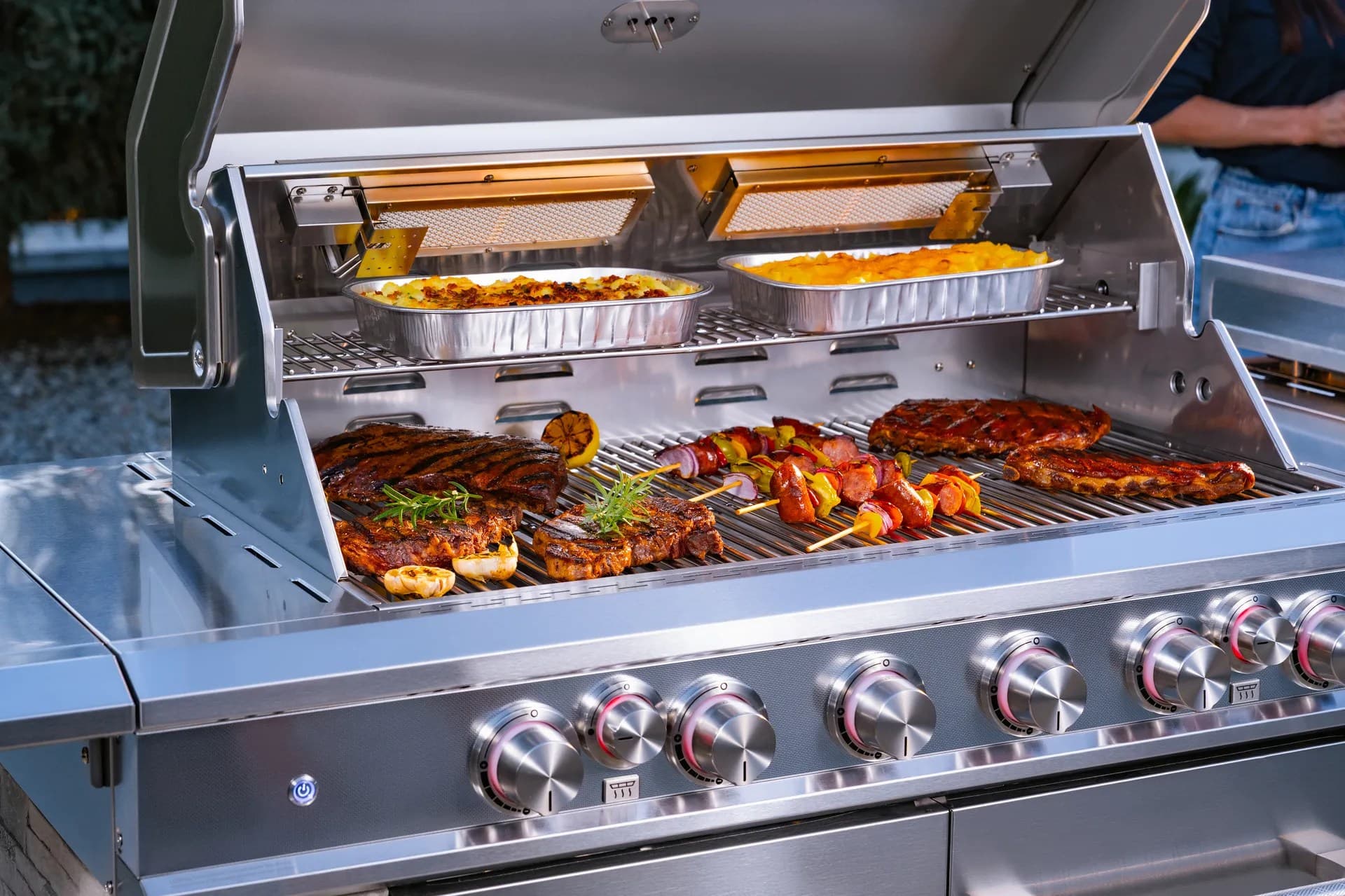
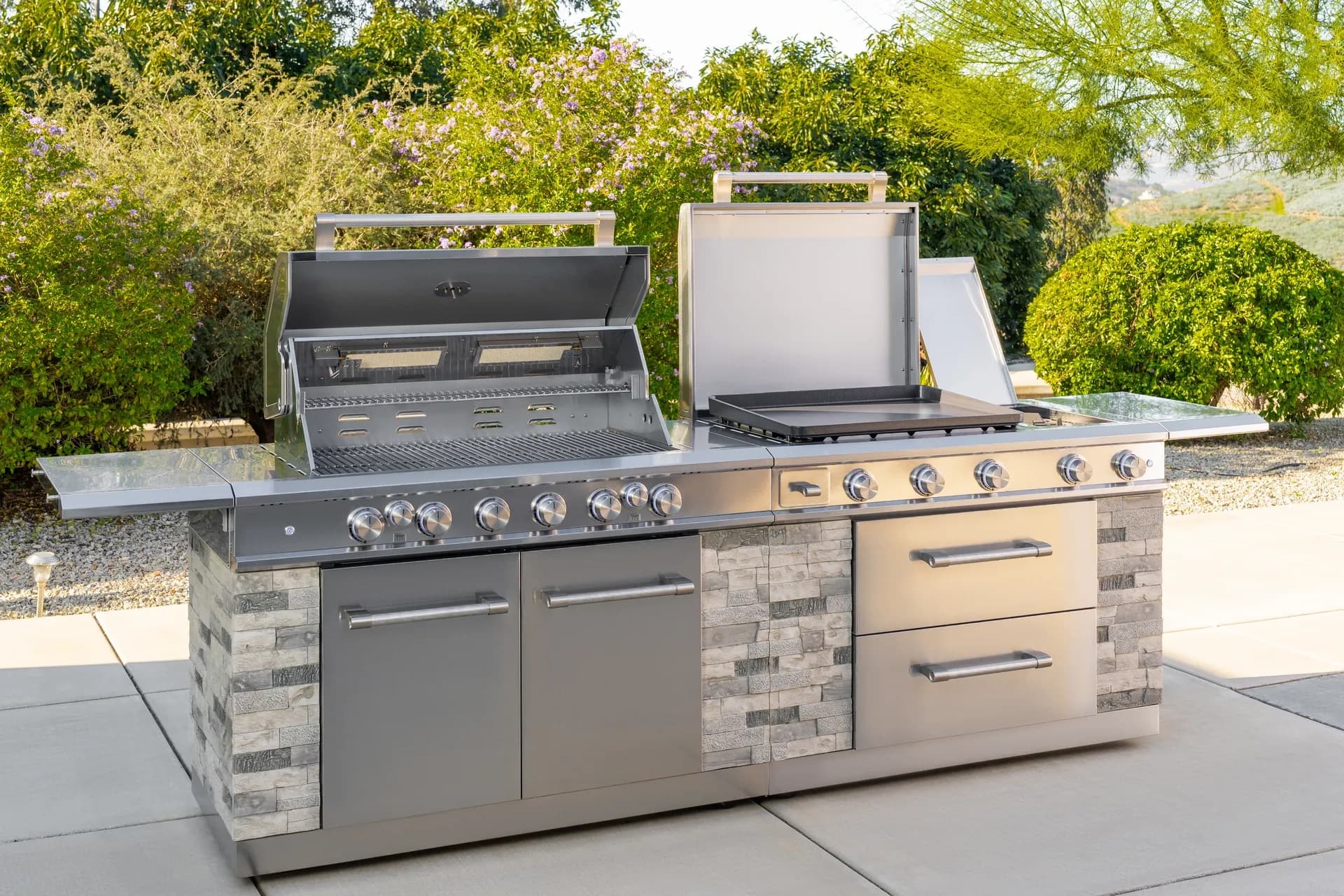
can create direct heat, indirect heat, warming, and flat-top cooking in one setup.
There is also a value argument. A buyer who is comparing Weber, Blackstone, and similar brands is not only shopping for size; they are shopping for how much capability they can get per dollar. Weber tends to appeal to shoppers who want refined construction and strong brand trust, while Blackstone has built its reputation around flat-top cooking and griddle-first performance. For many households, the best choice depends on whether the griddle is an occasional bonus or the centerpiece of the cookout. Try comparing two products side by side below to see which fits best:
Key Features of 5-Burner Gas Grills with Griddles
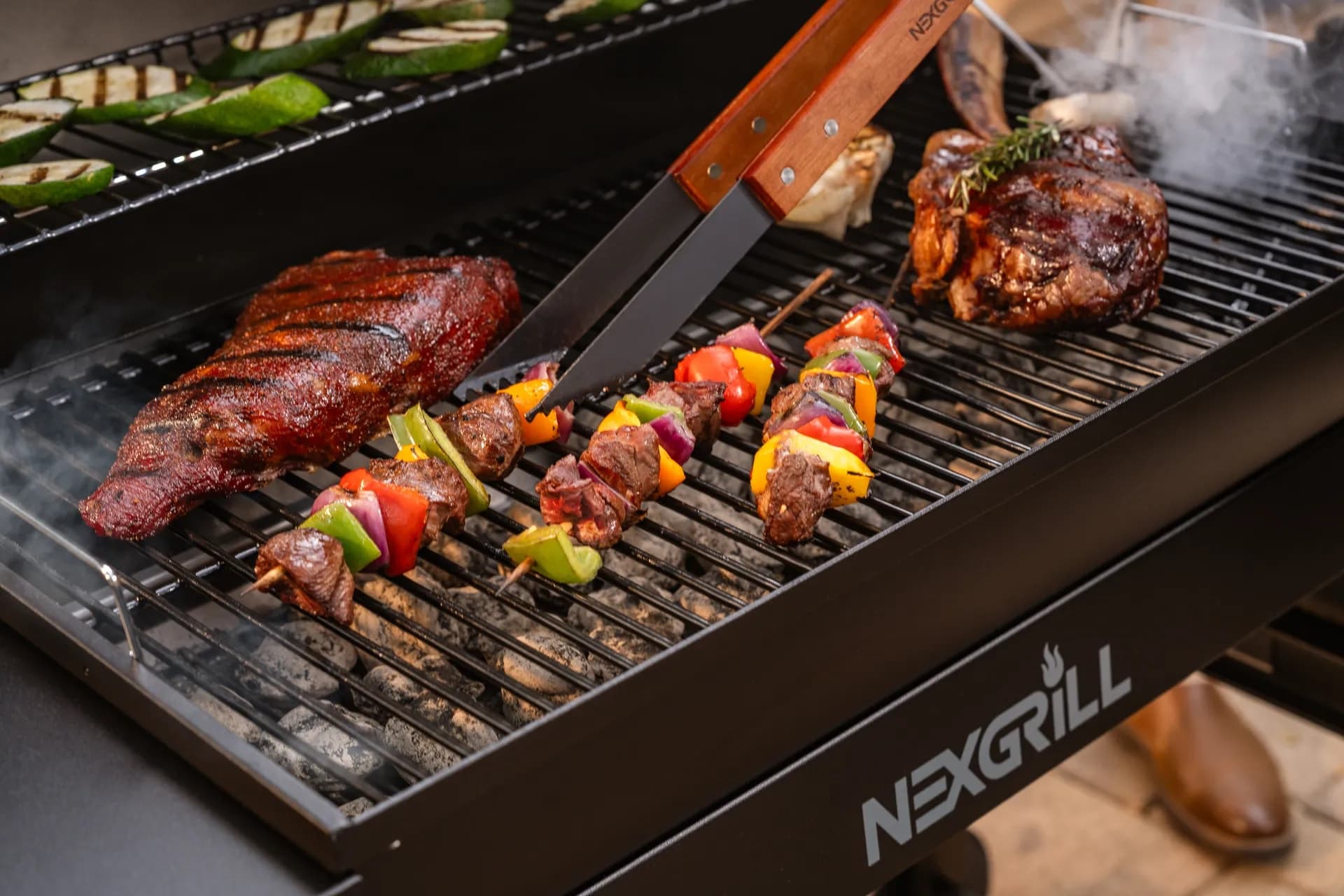
The most useful feature to evaluate is not burner count alone but how the burners and griddle work together. Five burners should give you enough control to hold one side at searing temperatures while keeping another section at medium heat or warming range. That matters when you are cooking for a crowd. On a typical Saturday cookout, one zone may be handling chicken thighs at a steady cook while the griddle side is busy with onions, tortillas, or breakfast items. The best 5-burner gas grill with griddle makes those transitions feel natural rather than improvised.
Cooking surface area is another deciding factor. Shoppers often see large square-inch numbers and assume bigger is always better, but the useful question is how much of that area is truly usable at one time. A griddle that runs hot in the middle but cool near the edges can slow you down if you are making pancakes or smash burgers in batches. A broader, flatter heat field is more valuable than a slightly larger footprint with uneven performance. In this class, a strong griddle should heat fast enough for breakfast service but remain controllable for delicate foods like eggs or fish.
Warning: High BTU output does not automatically equal better cooking. Heat retention, burner spacing, and griddle plate thickness often matter more for consistent results.
Material quality affects both performance and maintenance. Stainless steel lids, burners, and control panels tend to be easier to live with in humid or coastal parts of the United States, while coated steel can offer good value if you are willing to keep a cover on the unit and clean it carefully. Ignition reliability is another practical detail. A grill used for family dinners has to light quickly and predictably, especially if you do not want a long preheat while guests are already waiting. Electronic ignition systems are common in this segment, but the difference between a decent igniter and a dependable one becomes obvious the first time you are cooking in breezy weather.
Storage and workflow features are easy to underestimate. Side shelves, utensil hooks, tool storage, and grease management affect how smooth the cooking session feels. If a griddle is part of your routine, you will appreciate a setup that keeps spatulas, squeeze bottles, and seasoning within reach. A removable grease tray or an easier-to-clean drip path also saves time later. For serious weekend grilling, convenience is not a luxury; it is what keeps the grill in regular use instead of turning into patio furniture.
To make comparison easier, here is the feature set that usually separates a great choice from a merely adequate one:
| Feature | Why it matters | What to look for |
|---|---|---|
| Burner control | Creates multiple cooking zones | Independent valves with stable low-to-high range |
| Griddle heat spread | Determines cooking consistency | Even edge-to-edge heating, minimal hot spots |
| Cooking area | Supports batch cooking | Enough room for multiple proteins and sides |
| Ignition system | Affects daily convenience | Reliable startup without repeated clicks |
| Cleanup design | Impacts long-term ownership | Grease capture and surfaces easy to wipe down |
Top 5 Models: Specifications and Comparisons
Because shoppers often search this keyword expecting product-level guidance, it helps to organize the field around real use cases rather than pretending every grill is built the same. In practice, the strongest contenders usually separate into three groups: griddle-first designs, hybrid gas grills with a griddle zone, and higher-end multi-burner units that can adapt to both styles. That distinction is important because the best 5-burner gas grill with griddle for a frequent pancake cook is not necessarily the best choice for someone who wants to roast chicken and sear steaks on alternating weekends.
| Model Type | Best For | Strength | Trade-Off |
|---|---|---|---|
| Weber 5-burner gas grill with griddle accessory | Shoppers who want premium build feel and brand confidence | Even cooking and strong overall fit and finish | Often priced above entry-level alternatives |
| Blackstone 5-burner-style griddle setup | Flat-top-focused cooks | Dedicated griddle performance and breakfast versatility | Less traditional grill-grate flexibility |
| Royal Gourmet hybrid gas grill and griddle | Value shoppers wanting dual-format cooking | Broad feature set for the money | Finish quality can vary by model |
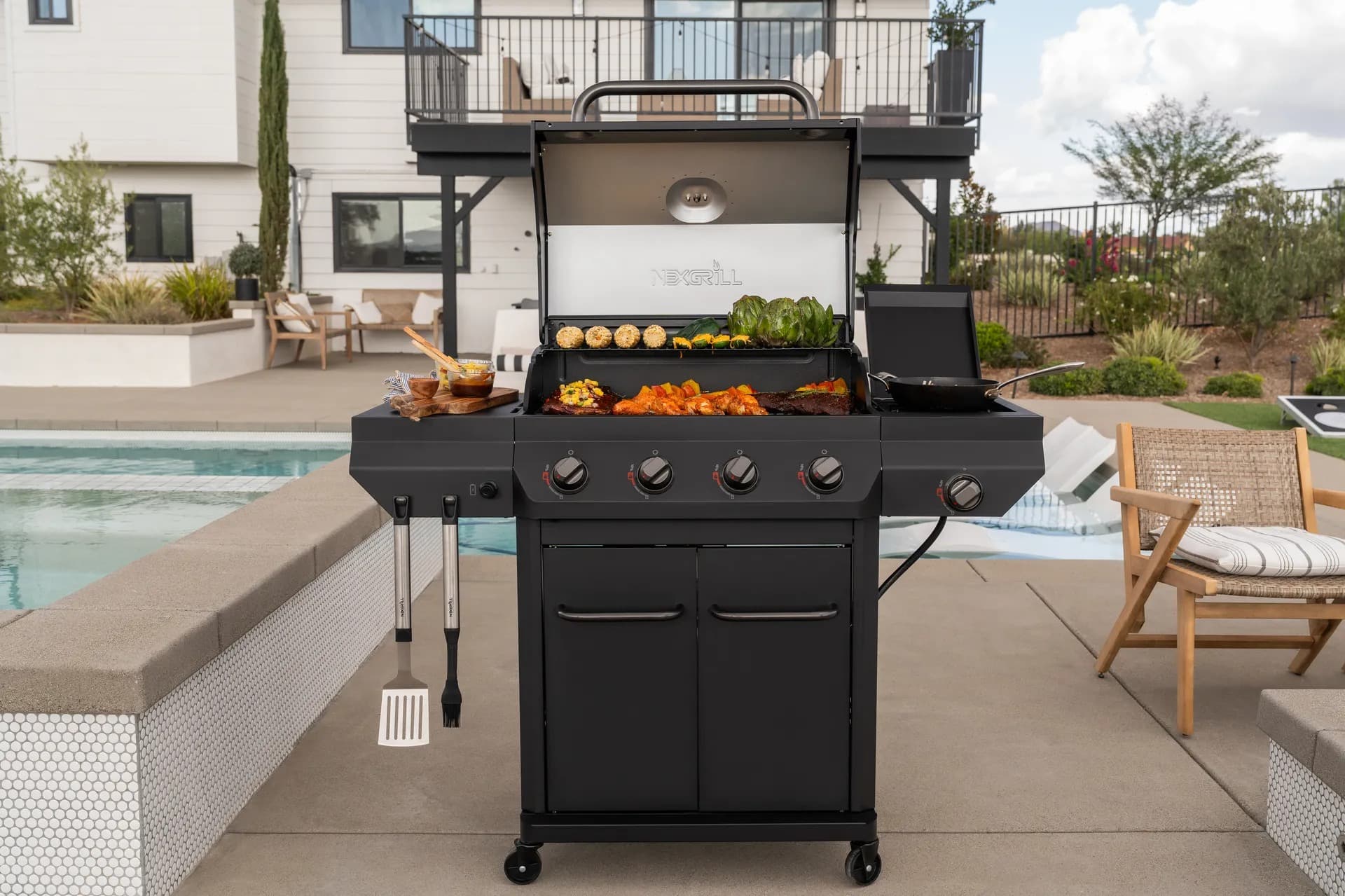
| Nexgrill-style five-burner hybrid concept | Families balancing cost and flexibility | Useful mix of everyday grilling and griddle sessions | Availability and exact specs vary by retailer |
| Premium cart-based 5-burner hybrids | Frequent entertainers | Large workspace and strong multi-zone cooking | Requires more patio space and budget |
In a real household comparison, Weber usually earns points for controlled heat and a polished ownership experience, while Blackstone tends to win when the griddle is the main event. Royal Gourmet often enters the conversation because it gives buyers a more affordable way to get a large format and multiple cooking modes. The smartest way to shop is to decide whether you want the grill side to be primary, the griddle side to be primary, or both to matter equally. That answer narrows the field fast and prevents buyer’s remorse. For a family in the United States looking at weekend pricing promotions, the best value is usually the model that minimizes compromise in the cooking style you actually use most often.
If you are narrowing the list, compare these practical scenarios: a suburban family that makes burgers, eggs, fajitas, and vegetables may prefer a balanced hybrid; a tailgater who wants pancake speed and smash burger crust will lean toward a griddle-strong unit; and a host who values traditional grilling most of the time should not sacrifice grate performance just to add a griddle they will rarely use. The best 5-burner gas grill with griddle is the one that supports your real menu, not the one with the longest feature checklist. Once you’ve compared these layouts, the next step is to weigh brand philosophy, owner feedback, buying criteria, and upkeep so the choice lasts beyond the first season.
In-Depth Brand Comparison: Weber vs. Blackstone
Once you've weighed two options against each other, the brand question becomes easier to answer. Weber and Blackstone serve different instincts in the outdoor cooking market, and that difference matters when you are choosing a five-burner gas grill with griddle capabilities. Weber's gas-grill lineup emphasizes balanced heat, familiar controls, and a premium ownership experience, which is why many buyers think of it first when they want a traditional grill that can also support griddle-style cooking through add-ons or hybrid arrangements. Blackstone, by contrast, is the brand many cooks associate with flat-top cooking first and grilling second. Its griddles are popular because they make breakfast, smash burgers, fried rice, and delicately handled foods easier to manage at scale. For shoppers, the decision is less about which brand is “better” in the abstract and more about which cooking format you will use most.
Weber’s advantage usually shows up in the way the grill feels to operate day after day. The controls tend to be intuitive, the assembly and hardware usually feel more refined than the least expensive mass-market alternatives, and the brand has built a reputation around predictable outdoor cooking behavior. For a buyer who wants to sear steaks on Saturday and make vegetables or corn on the griddle on Sunday, Weber-style construction appeals because it is designed to be a dependable centerpiece rather than a one-note specialty item. Blackstone, on the other hand, makes a compelling case for households that want the griddle to dominate the experience. If your cooking menu is heavy on eggs, breakfast sandwiches, hibachi-style meals, or foods that benefit from uninterrupted contact with a flat surface, Blackstone is often the more natural fit.
Info: Weber is often the safer choice for grill-first buyers; Blackstone is often the stronger choice for flat-top-first buyers.
Budget also pushes the decision. Weber typically sits higher on the pricing ladder, especially once you factor in larger cook boxes and higher-end construction. Blackstone can be more accessible for shoppers who want griddle performance without paying for premium grill-body finishes. Royal Gourmet and similar value brands fill the gap by making dual-format cooking more affordable, though they may not always match the refinement or longevity feel of the most established names. That does not mean value brands are poor choices; it means they require a more careful read of the warranty language, metal thickness, and user reports before purchase.
| Brand | Typical Strength | Typical Buyer | Main Trade-Off |
|---|---|---|---|
| Weber | Heat control and brand trust | Grill-first households | Higher purchase price |
| Blackstone | Flat-top cooking and large batches | Griddle-first cooks | Less emphasis on traditional grilling |
| Royal Gourmet | Feature-rich value | Budget-conscious families | Fit and finish can be inconsistent |
User Insights: What Customers Are Saying
Customer feedback around five-burner gas grills with griddles is surprisingly consistent across major retail channels. Buyers who love their purchase usually mention two things: the cooking space makes family meals less chaotic, and the griddle side changes what they can cook outdoors. The most enthusiastic reviews tend to come from owners who use the grill weekly rather than occasionally. They talk about making breakfast for a group, reverse planning meal prep around one appliance, and using the griddle for foods that used to stay inside the kitchen. That kind of feedback is valuable because it reflects real habits, not just first impressions.
The most common praise is about versatility. Owners like being able to cook bacon on one section while burgers or chicken are on another, or to use the griddle for onions, toast, and tortillas while meat cooks separately. A second recurring theme is convenience. Many users say they did not realize how often they would reach for the flat-top surface until it became part of routine cooking. A third positive point is crowd management: large households and entertainers appreciate being able to move food through the cooker faster, which reduces bottlenecks when guests arrive all at once.
Warning: Complaints usually focus on uneven heat, difficult cleanup, or griddle surfaces that need more seasoning and care than buyers expected.
That last point is important. Some reviews from first-time griddle owners reveal a learning curve. A griddle is not just a flat version of a grill; it is a different cooking surface with different temperature management and cleaning habits. Buyers who expect it to behave exactly like a grate can be disappointed by flare-up reduction but surprised by grease flow and seasoning requirements. The best reviewers are the ones who adapt their technique, preheat properly, and learn how to use oil, heat zones, and timing to their advantage.
For United States shoppers, price-and-value commentary also comes up often. Users tend to be happiest when the grill lands in the right range for their usage pattern. A family that cooks outdoors once a month is more sensitive to upfront cost. A household that cooks several times a week is more willing to pay for sturdier materials, better ignition, and easier cleanup. That is why reading reviews through the lens of your own habits is more useful than averaging star ratings alone. A five-star review from a breakfast-heavy cook may not predict your satisfaction if your main use is steak night.
Buying Guide: Key Considerations
If you are trying to choose the best 5-burner gas grill with griddle, start with the menu you actually plan to cook. The right grill for burgers and vegetables may not be the same as the right grill for pancakes, stir-fry, and delicate proteins. The next step is to check cooking area and burner layout, because five burners only become an advantage if they are spread in a way that creates distinct zones. After that, examine griddle thickness, ignition reliability, side shelf usefulness, and whether the grease management design looks easy to live with.
| Buyer Profile | Best Fit | Why |
|---|---|---|
| Grill-first family | Weber-style hybrid or premium gas grill with griddle accessory | Better all-around grill performance with occasional flat-top use |
| Flat-top enthusiast | Blackstone-style griddle-heavy setup | More natural fit for breakfast, stir-fry, and batch cooking |
| Value-focused entertainer | Royal Gourmet-style hybrid | Lower entry cost with broad cooking flexibility |
For pricing in the United States, expect a broad range depending on construction and brand positioning. Entry-level hybrid systems can sit in the few-hundred-dollar range, while premium larger-format units can move well above that once cart design, materials, and accessories are included. As a rule, it is smarter to compare the cost per function than the sticker price alone. If one unit replaces a separate griddle and a larger grill, a higher upfront number may still deliver better value over time.
Maintenance Tips for Longevity
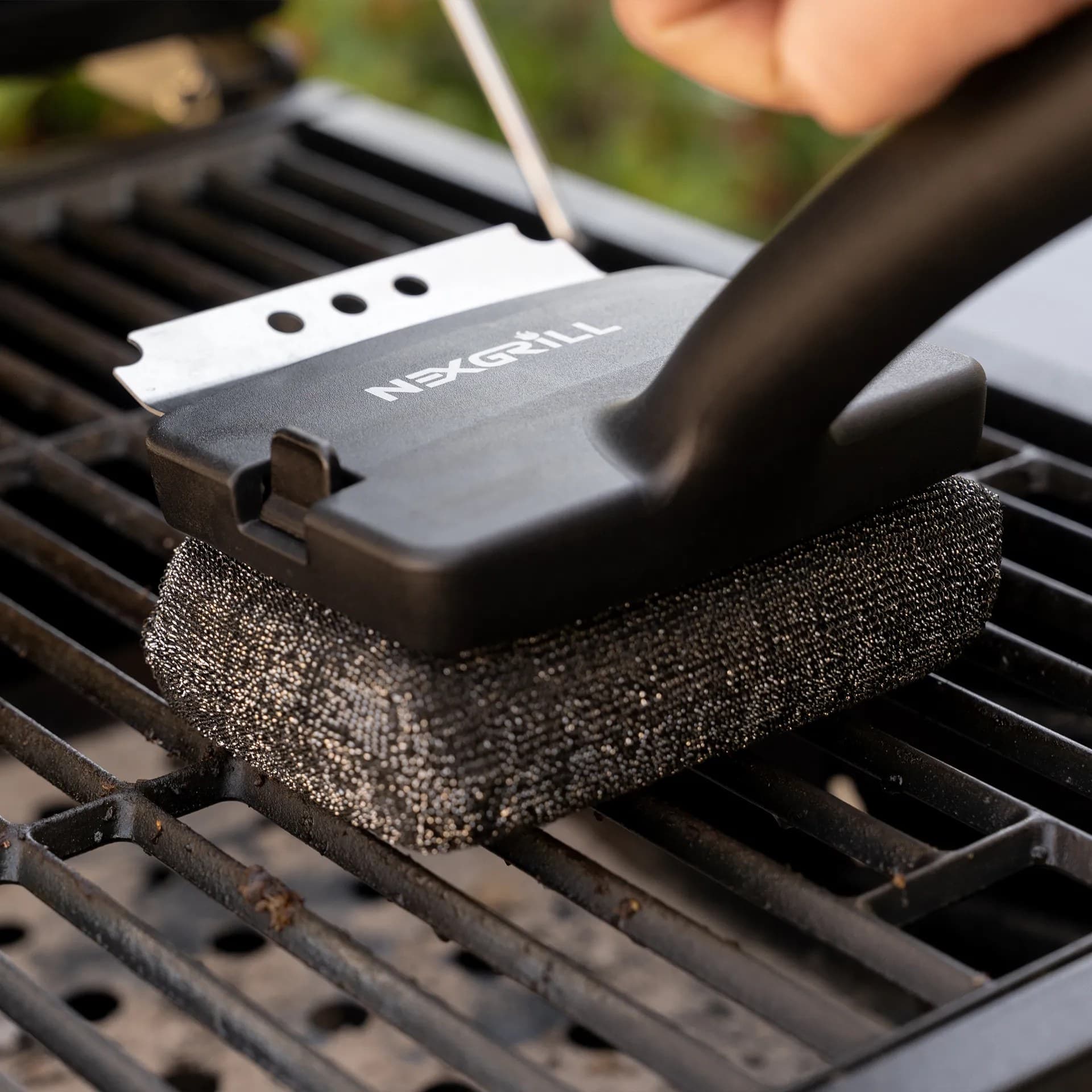
A five-burner grill with a griddle lasts longer when you treat cleanup as part of the cooking process rather than an afterthought. Wipe the griddle while it is still warm, not cold, so grease and stuck-on bits release more easily. Empty drip trays regularly, and avoid letting buildup sit until the end of the season. For gas burners, keep an eye on ignition consistency and make sure burner ports remain clear. A small obstruction can create an uneven flame pattern that later shows up as uneven cooking.
Tip: A fitted cover, regular seasoning on cast-iron-style griddles, and seasonal burner checks do more to extend grill life than occasional deep cleaning alone.
If your grill lives outdoors year-round in a wet or snowy climate, make cover use a habit, not a backup plan. Moisture, dust, and UV exposure are major causes of cosmetic wear and early corrosion. Keep the cooking surfaces dry after cleaning, and season flat-top components according to the manufacturer’s guidance so they resist rusting. A spring and fall inspection routine is usually enough for most households: check hoses, test ignition, clean grease pathways, and confirm that knobs and controls move smoothly.
Conclusion: Final Recommendations
The best 5-burner gas grill with griddle is the one that matches your real cooking rhythm. Choose Weber if you want a polished, grill-first experience with strong brand confidence. Choose Blackstone if your outdoor cooking is driven by flat-top meals and batch breakfast work. Choose a value-oriented hybrid like Royal Gourmet if you want to balance cost and versatility. If you shop with cooking style, heat control, and long-term upkeep in mind, you will get a setup that feels useful on more days of the year, not just during the first weekend after delivery.