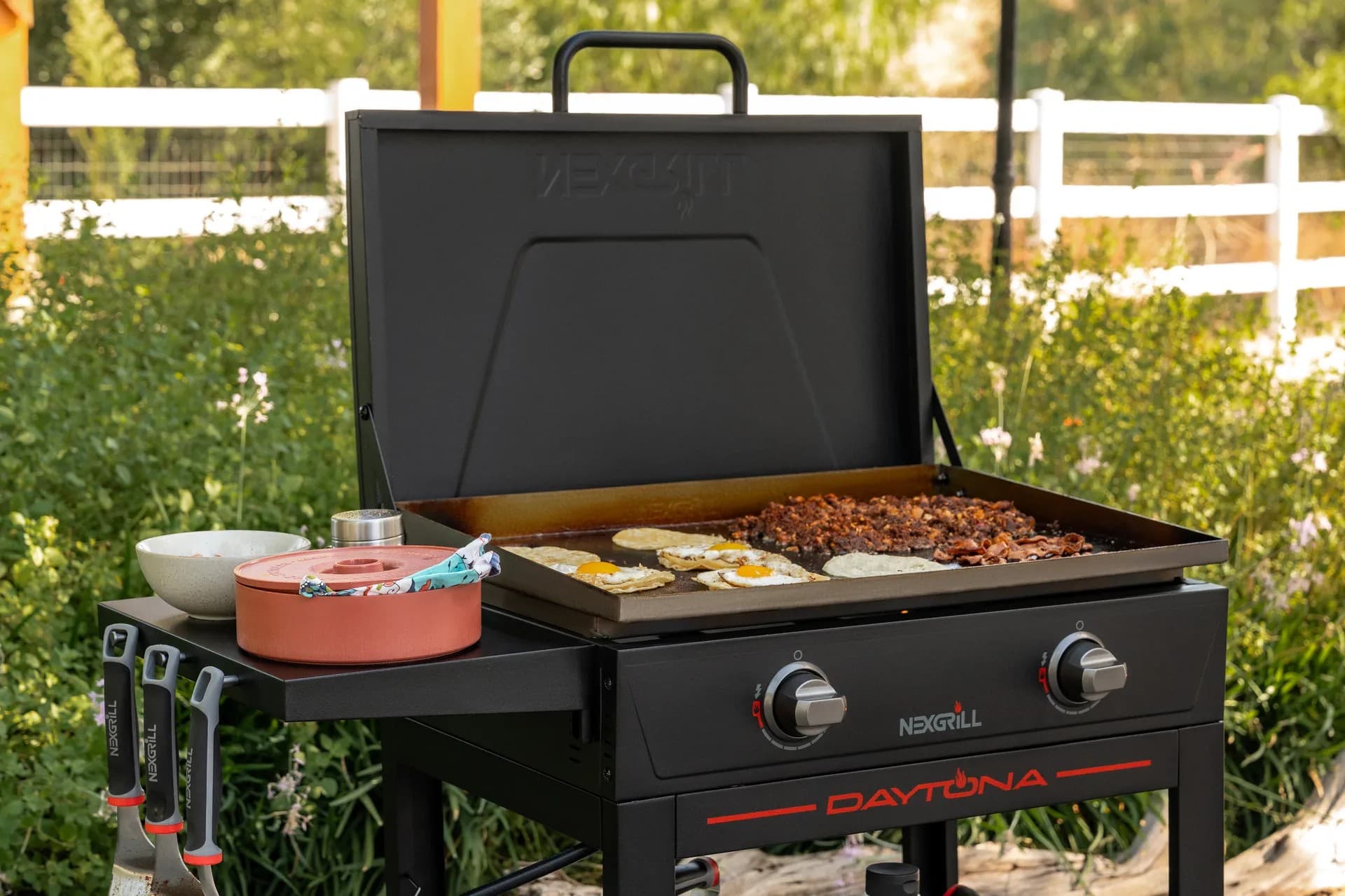
Nexgrill Rally 1-Burner Review: How to Run a Single-Burner Tabletop Grill Right
A verification-first, step-by-step guide to confirming your unit, staging it safely, cooking for two, and avoiding the five mistakes that ruin small-grill sessions.
In This Article
Confirm Your Model First
Leak Test Every Cylinder
Cook for Two, Not Ten
What This Nexgrill Rally 1-Burner Review Covers (and What It Can't Confirm)
A live SKU for the “Nexgrill Rally 1-Burner” was not confirmed on nexgrill.com at the time of writing, so we cannot responsibly publish BTU ratings, weights, or dimensions. Instead, this guide gives a safety-first operating sequence for any single-burner tabletop propane grill in that category. For verified products, browse Nexgrill’s full catalogue.
Confirm What You Actually Bought Before You Trust Any Spec
- Data plate: A metal tag on the back or underside of the firebox lists model number, serial number, and gas type (usually LP).
- Manual PDF: Search the model number plus “manual PDF” for the correct leak-test points and regulator type.
- Catalogue cross-check: If your grill no longer appears on the brand’s site, it may be discontinued or rebadged.
- Used-unit clues: Check the regulator fitting for cracks, the firebox for rust perforation, and the burner tube for blockages.
If the data plate is missing or unreadable, treat the grill as unverified and do not connect a cylinder until you have identified the correct regulator and hose. A mismatched regulator is a fire risk.
Staging a Single-Burner Tabletop: Clearance, Wind, and Surface
Place the grill on a level, non-combustible surface such as concrete or stone, with at least 3 feet of clearance from walls, railings, and flammables. Never use it on a wooden deck railing or inside a garage. Wind is the biggest enemy of a small burner: a gust can extinguish the flame while gas keeps flowing. If your spot is exposed, set up a windbreak at least a foot away from the grill.
Step-by-Step First Run: From Cylinder Connection to Burn-Off
Step 1 - Inspect the 1 lb cylinder and regulator
A standard 1 lb propane cylinder is DOT-39 non-refillable; never refill it yourself. Check for dents, rust, or a damaged valve, and inspect the regulator and hose for cracks or brittleness.
Step 2 - Soapy-water leak test at the connection
Brush soapy water onto the regulator-to-cylinder connection and open the valve slowly. Growing bubbles mean a leak - tighten or replace the regulator. Never use a flame to test. Repeat every time you change the cylinder.
Step 3 - Ignition and a 10-15 minute burn-off
Open the lid, turn the burner to high, and press the igniter. If it does not light within 5 seconds, turn off the burner, wait 5 minutes, and retry. Once lit, close the lid and burn on high for 10-15 minutes to clear manufacturing oils; faint smoke is normal.
Step 4 - Heat mapping the single grate zone
A single burner rarely heats evenly. After the burn-off, sprinkle flour or sugar across the grate and watch where it browns first - typically the center. Use that to rotate food or reserve a cooler edge for finishing.
A Realistic Cook for Two: What One Burner Actually Handles
A single-burner grate typically fits 4-6 burger patties, two chicken breasts, or a small batch of vegetables. For two people, sear steaks first, then move them to a cooler edge while a foil packet of potatoes finishes.
Category comparison table: single-burner tabletop vs 2-burner portable vs full-size 2-burner
| Category | Typical BTU (estimate) | Cooking area | Best for |
|---|---|---|---|
| Single-burner tabletop | 8,000-12,000 | ~200 sq in | 2 people, balcony, tailgate |
| 2-burner portable | 12,000-20,000 | ~300-400 sq in | 4 people, camping, small patio |
| Full-size 2-burner (e.g., Nexgrill Deluxe 2-Burner) | ~20,000-26,000 | ~400-500 sq in | Daily family use, small gatherings |
The Nexgrill Deluxe 2-Burner Gas Grill offers two independent heat zones - something a single-burner cannot match. If you often cook for more than two, that is the more practical category.
Ready to weigh two grills against each other?
Use the comparison tool below to put a single-burner tabletop next to a larger option and see how specs, features, and use cases stack up using real catalogue data.
Once You've Weighed Two Options, Here's What Else Matters
Comparing two grills clarifies the big trade-off: portability and simplicity versus capacity and control. But day-to-day experience hinges on fuel logistics, storage discipline, and cleaning habits.
Fuel Math for a 1 lb Cylinder: How Long a Cook Really Lasts
A standard 1 lb cylinder holds about 0.236 gallons of liquid propane - roughly 1.5 to 2 hours of cooking at medium-high heat. That covers a weeknight dinner for two but not a three-hour low-and-slow session. Carry a spare when camping or tailgating. Store cylinders outdoors, away from heat, and never in a hot vehicle or living space; NFPA 58 and USFA advise against indoor storage or temperatures above 120°F.
When a 20 lb tank adapter makes sense (and when it doesn't)
For regular home use, a hose adapter for a standard 20 lb tank cuts fuel costs and waste. But adapters add leak points and are not recommended for portable use - occasional balcony cooks should stick with 1 lb cylinders.
Use-Case Fit: Balcony, Tailgate, Campsite, Weeknight Dinner
A single-burner tabletop shines on a small balcony for two people and works as a tailgate companion if the cylinder is secured during transport. At a campsite, wind protection is critical, and many campgrounds prohibit open-flame grills without lids. For frequent weeknight dinners, a 2-burner portable offers better heat control and room for a side. Nexgrill’s current lineup includes multiple tabletop and portable options.
Shutdown, Clean, and Store Without Ruining the Regulator
Turn the burner knob off first, then close the cylinder valve to avoid trapping residual gas in the hose. Let the grill cool completely before cleaning.
Drip tray, grate, and burner tube cleaning order
- Drip tray: Remove and empty after every cook to prevent grease buildup and flare-ups.
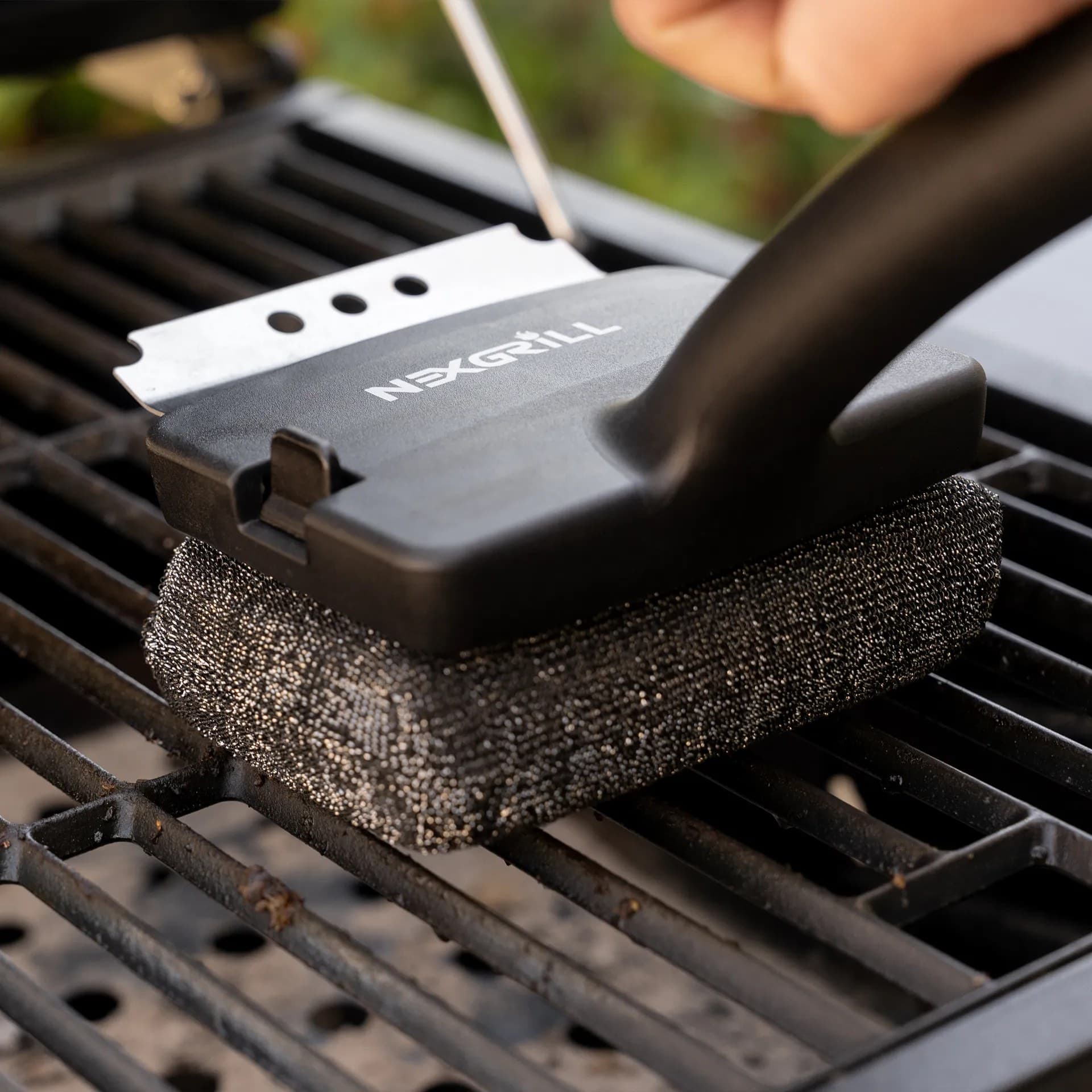
- Grate: Scrub while slightly warm, then wipe with a damp cloth.
- Burner tube: Monthly, check for spider webs or rust and clear the ports with a wire brush or pin.
Store with the cylinder disconnected and the lid slightly ajar for airflow. Cover only once fully dry.
Five Mistakes That Ruin a Single-Burner Experience
Mistake 1 - Grilling in wind without a shield
Wind steals heat and can blow out the flame, causing uneven cooking or gas pooling. Always use a windbreak.
Mistake 2 - Oversized pans that smother the burner
A pan wider than the grate blocks airflow and causes incomplete combustion. Keep cookware within the grate footprint.
Mistake 3 - Overloading the grate
Too much food drops the temperature and steams instead of sears. Cook in batches.
Mistake 4 - Skipping the drip tray
Grease fires are common on small grills when the tray overfills. Empty it every time.
Mistake 5 - Storing the cylinder attached indoors
A small leak in an enclosed space can cause an explosion. Always disconnect and store cylinders outdoors.
A Pre-Cook Checklist You Can Run in Two Minutes
- Cylinder valve closed before connecting?
- Soapy-water leak test performed?
- Grill on a level, non-combustible surface with 3 ft clearance?
- Windbreak in place if needed?
- Drip tray empty and in position?
- Grate clean and lightly oiled?
- Igniter working and burner lighting within 5 seconds?
Run this before every cook - two minutes prevents the most common accidents and frustrations.