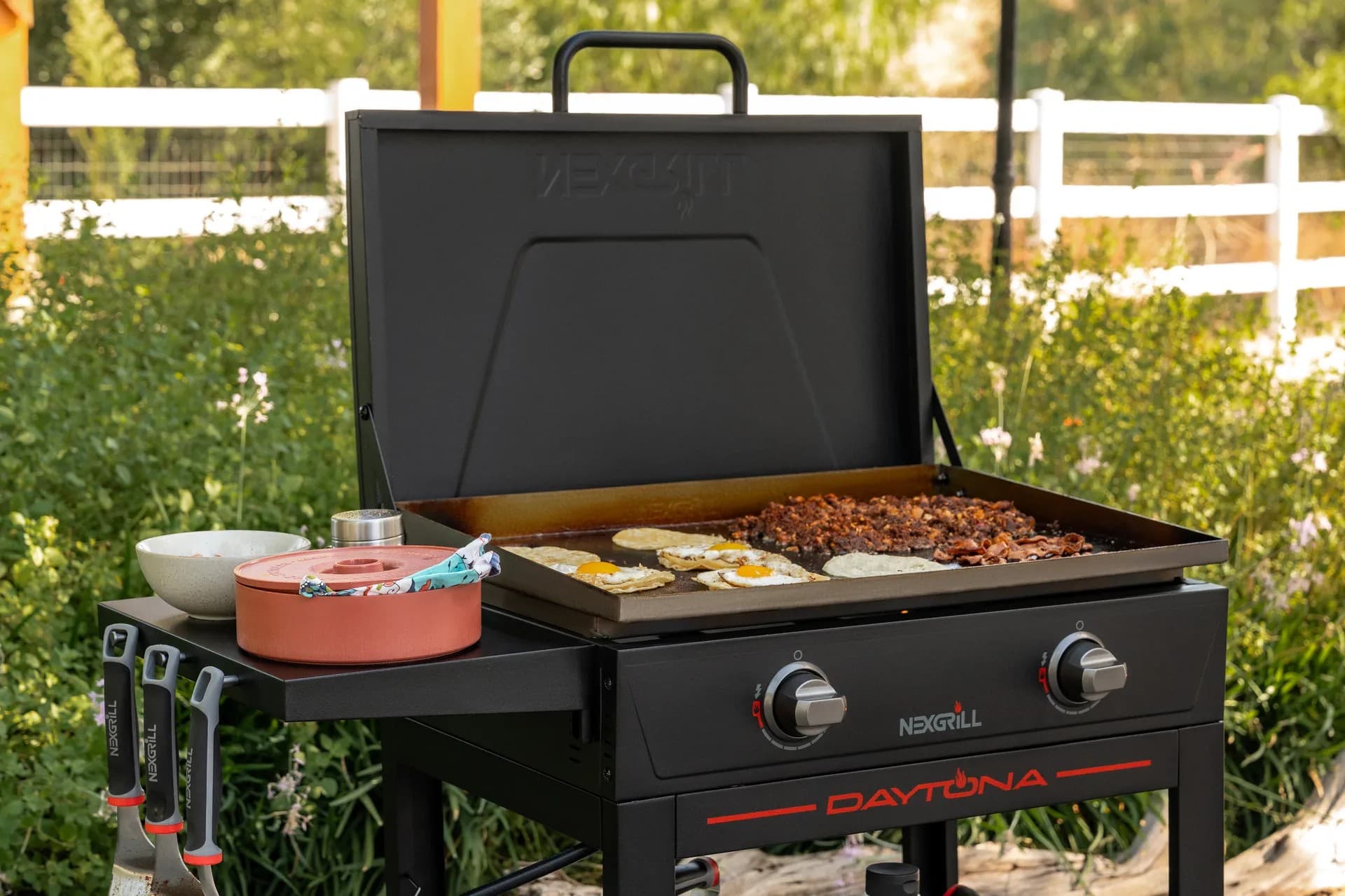
Nexgrill 820-0061 vs Char-Broil: A First-Time Buyer's Walkthrough for Used-Legacy vs. New-Infrared
A step-by-step method for confirming what the 820-0061 actually is, then deciding whether a used legacy Nexgrill beats a new infrared Char-Broil for your deck and cooking style.
In This Article
Confirm Before You Compare
Emitter vs. Heat Tent
Price One Season of Parts
Why the Nexgrill 820-0061 Is a Verification Job Before It Is a Comparison
The Nexgrill 820-0061 is a legacy model number, not a current catalog listing. You are not comparing two live spec sheets; you are deciding whether a used grill with an uncertain history beats a new infrared Char-Broil with a box and a receipt. No verified live spec sheet for the 820-0061 was available during this session, so treat every online number as unconfirmed until you check the physical unit.
Do not assume all grills sold as “820-0061” share one burner count, cookbox size, or gas type. Legacy model numbers can span revisions and retailer-specific variants.
What to Bring to the Comparison: Badge Photo, Tape Measure, Gas Type, and a Manual
Treat the first visit as information-gathering, not buying. Bring a phone camera, a tape measure, a notepad, and a willingness to walk away. The badge photo anchors the model and serial number that support lines and parts diagrams use. The tape measure confirms the grill fits your deck. Gas type matters because many older 820-series grills were built for propane, and natural-gas conversion is not always a simple orifice swap. Access to a manual or parts diagram before you commit separates a cheap grill from a paperweight.
Step 1: Photograph the Data Plate So You Know Which 820-0061 You Are Standing In Front Of
The data plate is usually on the back panel, inside the cabinet door, or under the control panel. Photograph it straight on and zoom in to confirm the model number, serial number, and gas type. A faded or missing plate is a red flag: you cannot reliably order parts without it. Search the Nexgrill support contact page to ask whether a manual is still available for that exact code before you hand over cash.
Step 2: Measure the Cookbox and Burner Count, Not the Marketing Copy
Measure the grate area in inches and count the main burners. A “4-burner” grill might have three mains plus a side burner, or four mains and no side burner-different cooking tools. Compare that measurement directly to the Char-Broil you are considering. If the used Nexgrill has a smaller cookbox than the new infrared model, the decision may be simpler than you think.
Step 3: Pull Both Manuals and Check Which Wear Parts Are Still Buyable
For the Nexgrill, contact support with the model and serial number and ask for a parts diagram. For the Char-Broil, download the manual from the manufacturer’s support page. List the wear parts-cooking grates, heat tents or flavorizer bars, burner tubes, ignition components, and the regulator hose assembly-and price each in USD. If the used grill needs grates and a burner and those parts are discontinued, the “bargain” price is misleading.
Step 4: Read the Flame Before You Read the Price Tag
If the seller allows it, do a live flame read. Look for blue flames with slight yellow tips; heavy yellow or orange flames can suggest blocked air or dirty burners. Check that each burner lights promptly and responds to the knob. Inspect the regulator and hose for cracks and do a soapy-water leak test on the connection. A grill that fails this step is a repair project, not a cooking appliance.
Once you have those four data points-badge, measurements, parts availability, and flame quality-you are ready to weigh the used Nexgrill against a new infrared Char-Broil. Try comparing two products side by side below to see which fits best:
Once You Have Two Grills Side by Side, Here Is What Actually Tips the Decision
After comparing a used Nexgrill 820-0061 against a new infrared Char-Broil, the decision usually comes down to one cooking-system difference and one ownership-cost difference: how the grill handles fat and flare-ups, and what you will spend in the first season to make it reliable.
The One Cooking Difference That Matters: Infrared Emitter Plate vs. Flavorizer Bars and Briquettes
Char-Broil’s TRU-Infrared system uses a perforated emitter plate between the burner and the grate, designed to reduce flare-ups and spread heat more evenly. A legacy Nexgrill 820-0061, depending on its revision, likely uses flavorizer bars or heat tents over the burners, sometimes with a briquette tray. That design lets drippings vaporize and smoke, adding flavor but producing more flare-up potential with fatty cuts. Neither is “better” in the abstract; they suit different cooking styles.
If you mostly cook burgers and chicken thighs on high heat and hate flare-ups, infrared has a clear advantage. If you like the smoke-kissed flavor of drippings hitting hot metal, a flavorizer-bar grill may feel more familiar.
Used-Legacy vs. New-Infrared: Three Buyer Profiles and Which Grill Fits Each
| Buyer profile | Best fit | Why |
|---|---|---|
| Weeknight griller, wants low flare-up, limited patience for repairs | New infrared Char-Broil | Emitter plate reduces flare-ups; full manual and parts support |
| Budget buyer with mechanical confidence and a small deck | Used Nexgrill 820-0061 (if parts are buyable) | Lower upfront cost; can replace wear parts over time |
| Flavor-focused cook who likes smoke and direct-heat searing | Either, but test the flame and grates first | Flavorizer bars can add smoke; infrared is cleaner but less smoky |
Pricing a First Season of Ownership in US Dollars
Assume the used Nexgrill needs grates and a burner. Based on typical online parts prices, budget roughly USD 60-120 for grates, USD 25-40 per burner tube, and USD 20-30 for a cover. Add a regulator and hose at USD 25-40 if the original is cracked-a first-season parts estimate of USD 130-230 on top of the purchase price. A new infrared Char-Broil typically includes a manual and warranty, but you may still want a cover and spare tank. The used grill only wins financially if the asking price plus parts stays comfortably below the new grill’s sale price.
Five Mistakes First-Time Buyers Make With a Legacy Nexgrill Model Number
- Buying on the BTU sticker alone-BTU is not a measure of cooking quality.
- Assuming every 820-0061 is the same; revisions differ.
- Skipping a soapy-water leak test on a used regulator and tank connection.
- Choosing infrared but then cooking only low-and-slow, where the emitter’s advantage is less pronounced.
- Comparing a 2-burner grill to a 4-burner grill as if they were equals.
Before buying any used gas grill, confirm the model and serial number with Nexgrill support and ask for a parts diagram. If the diagram is unavailable, walk away.
A Short Pre-Purchase Checklist You Can Run in a Driveway
- Photograph data plate and confirm model/serial.
- Measure grate area and count main burners.
- Check gas type and regulator condition.
- Light each burner and observe flame color.
- Ask for parts diagram availability.
- Price grates, burner tubes, and cover.
- Do a soapy-water leak test on connections.