Nexgrill vs Char-Broil: A 30-Minute How-to for Picking the Right Gas Grill
A repeatable, five-step decision procedure - resolve the model name first, then run the math, check flare-up design, confirm parts availability, and read the real warranty.
In This Article
Resolve the Model First
Run the BTU Math
Parts and Warranty Win
Start Here: Pin Down What 'Nexgrill Evolution' Actually Means
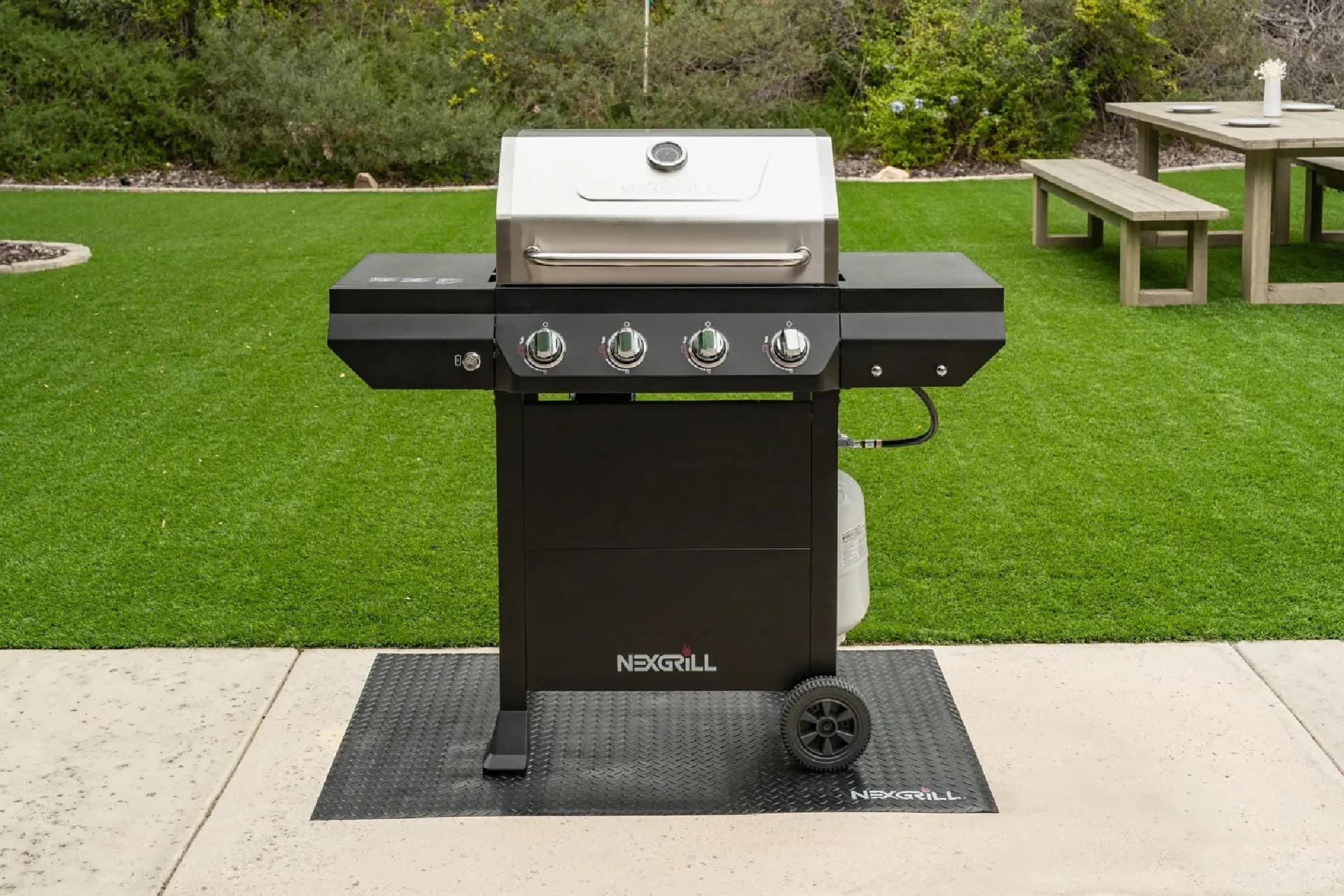
'Nexgrill Evolution' is not a confirmed product line in Nexgrill's current catalog. Nexgrill organizes its gas grills around Daytona (griddles), Oakford (pellet/charcoal), Deluxe, and numbered 720-/820-SKU gas grills. 'Evolution' is most likely shopper shorthand, a reseller label, or a mis-remembered series name. Don't invent an 'Evolution' spec sheet. Instead, turn any ambiguous label into a concrete model plate, then compare that plate against a Char-Broil model you can actually see.
Always start with the model plate, not the marketing name. The plate is the only source that ties the grill to a manual, a parts list, and a warranty document.
What You Need Before You Start Comparing (Prerequisites)
You need three things: a photo of the model plate from each candidate grill, a tape measure, and the ability to open a PDF on your phone. In store, photograph the plate inside the cabinet door, on the rear panel, or under the side shelf. Online, find the SKU in the product title or specifications tab. Record the full SKU, serial number (if present), burner count, and total BTU. Without these, you are comparing box copy, not grills.
Step 1 - Read the Model Plate Before You Read the Box
The model plate is a sticker or metal tag, commonly inside the left cabinet door, on the back panel near the gas inlet, or under the right side shelf. Record the full SKU exactly as printed. Nexgrill SKUs often start with 720- or 820-; treat those prefixes as identifying patterns, not guaranteed spec codes. A 720-XXXX and an 820-XXXX may share burner counts but differ in frame, lid, or valve design.
How to Decode a Gas Grill Model Number: A Worked Example
Suppose a plate reads '720-1234' on a Nexgrill and '463-4567' on a Char-Broil. Enter each full number on the brand's support page to find the owner's manual PDF, which lists exact burner output, cooking area, and part numbers. If no manual appears, the model may be discontinued or region-specific. Char-Broil numbers often start with 463- or 466-; again, a hint, not a rule.
Step 2 - Run the BTU-per-Square-Inch Math
BTU density is a tiebreaker, not a verdict. Use this formula:
BTU_per_sq_in = total_main_burner_BTU / primary_cooking_sq_inExclude side and sear burners from the numerator and the warming rack from the denominator. Example: 60,000 BTU over 600 sq in gives 100 BTU/sq in. Most US mid-market gas grills cluster in a similar band, so a 10-15 BTU/sq in difference rarely changes cooking outcomes. Use the number to spot outliers, not to crown a winner.
Illustrative BTU Density Comparison (Figures Are Estimates)
| Model (illustrative) | Main BTU | Primary sq in | BTU/sq in |
|---|---|---|---|
| Nexgrill 4-burner (example) | 48,000 | 600 | 80 |
| Char-Broil 4-burner (example) | 44,000 | 550 | 80 |
Both examples land at 80 BTU/sq in. Verify with the model's manual rather than assuming.
Step 3 - Compare How Each Brand Manages Grease and Flare-Ups
Char-Broil's TRU-Infrared system uses perforated emitter plates above the burners. Many Nexgrill gas models use flavourizer bars or heat tents over tube burners. Infrared plates heat faster and produce fewer flare-ups from dripping fat, but are harder to clean. Flavourizer bars are easier to replace and allow more direct radiant heat for searing. Neither is universally better; it depends on whether you prioritize low flare-up cooking or high-heat searing.
Emitter Plates vs. Flavourizer Bars: What Actually Changes at the Grate
Emitter plates create a more even radiant heat field and excel for chicken and fish where flare-ups ruin the cook. Flavourizer bars vaporize drippings for flavor and allow hotter surface temps for steaks. Check the specific model: some Nexgrill units also offer infrared side burners. Read the manual's cooking guide before you commit.
End of Part One: Put Two Candidates Head to Head Below
You now have two model plates, two BTU densities, and two flare-up designs. Use the comparison tool below to see how your two finalists stack up on the specs that matter to you.
Once You've Weighed Two Options Against Each Other, Here's What Else Matters
You have a shortlist. Now pressure-test it on what determines whether you still like the grill in year three: parts availability, warranty depth, and fit with your cooking habits.
Step 4 - Check That Parts and Manuals Are Still Orderable in Year Three
Before you buy, search the brand's parts portal for three items by SKU: a burner, a heat tent or emitter plate, and an igniter. If those are in stock or orderable, the model has a support tail. Nexgrill publishes manuals and parts through nexgrill.com and retail partners; Char-Broil does the same on its site. If you cannot find a burner for a 2020 model in 2025, assume the same will happen to a 2025 model by 2030. This test is more predictive than any spec sheet.
Warning: A low shelf price can hide a dead-end parts channel. Always check parts availability before you fall in love with a deal.
Step 5 - Read the Warranty Per Model, Not Per Brand
Both brands tier warranties by series, and the shelf tag rarely shows full terms. Open the exact model's warranty PDF from the support page and check what is covered (burners, firebox, lid) and for how long. Do not accept a verbal summary; the document is the contract.
| Check | What to verify |
|---|---|
| Warranty PDF | Model-specific coverage for burner, firebox, lid |
| Parts portal | Burner, heat tent, igniter orderable by SKU |
| Manual | Assembly, clearance, and cooking guide available |
Which Buyer Are You? Three Profiles and the Grill That Fits
Match your profile to a general grill type, then verify the specific model.
- Budget-first first-time buyer with a small patio: A 2-burner gas grill from either brand in the USD $300-$450 range (estimate), with an easily orderable burner and a simple grease tray.
- Mid-tier family entertainer cooking 4-6 nights a week: 4-burner models in the USD $450-$700 range (estimate). BTU density around 80-100 per sq in is adequate; keep the side burner out of your math.
- Infrared/sear-focused cook: Char-Broil's TRU-Infrared models or a Nexgrill with an infrared side burner. Accept that emitter plates need careful cleaning.
Nexgrill's lineup breadth-Daytona griddles, Oakford pellet smokers, and numbered gas grills-gives you options beyond a standard gas box. Char-Broil's tiers range from entry to infrared-equipped mid-market. Use the Nexgrill product catalog to see current models.
Five Mistakes That Wreck This Comparison
- Comparing a 2-burner entry model to a 4-burner mid-tier and calling it a brand verdict.
- Trusting total BTU without checking whether the side burner is counted.
- Assuming a stainless lid means a stainless firebox and cart.
- Buying on shelf price without factoring a cover plus a replacement burner set in year 3-5.
- Measuring cooking area including the warming rack, or forgetting that most US mid-market grills ship without a propane tank.
The 10-Minute Aisle Checklist
- Photograph the model plate.
- Look up the manual PDF on your phone.
- Write down main burner BTU and primary sq in.
- Compute BTU/sq in.
- Check parts portal for burner and heat tent.
- Open the warranty PDF.
- Confirm fuel type and tank inclusion.
- Note if a cover is included.
- Ask about delivery and assembly options.
- Walk away if any of the above is unavailable.
Tip: Take a photo of the plate and the warranty page side by side. It makes online comparison trivial when you get home.