Explore features, comparisons, and cooking tips for the best portable griddles.
Here's what sets us apart from the competition
We position ourselves as delivering high-end outdoor cooking features and performance without premium-brand pricing, emphasizing “Quality Grills. Unbelievable Value.”
We offer gas grills, pellet grills, griddles, smokers, pizza ovens, portable/tabletop grills, electric grills, accessories, and replacement parts — allowing customers to stay within one ecosystem for all outdoor cooking needs.
We differentiate ourselves through smart grilling products like the Oakford smart pellet grill, including app-connected cooking controls and modern outdoor cooking technology.
Expert tips, buying guides, comparisons, and inspiration for choosing and getting the most out of your grill.
Practical guides for cleaning, maintenance, common grill issues, and performance optimization.
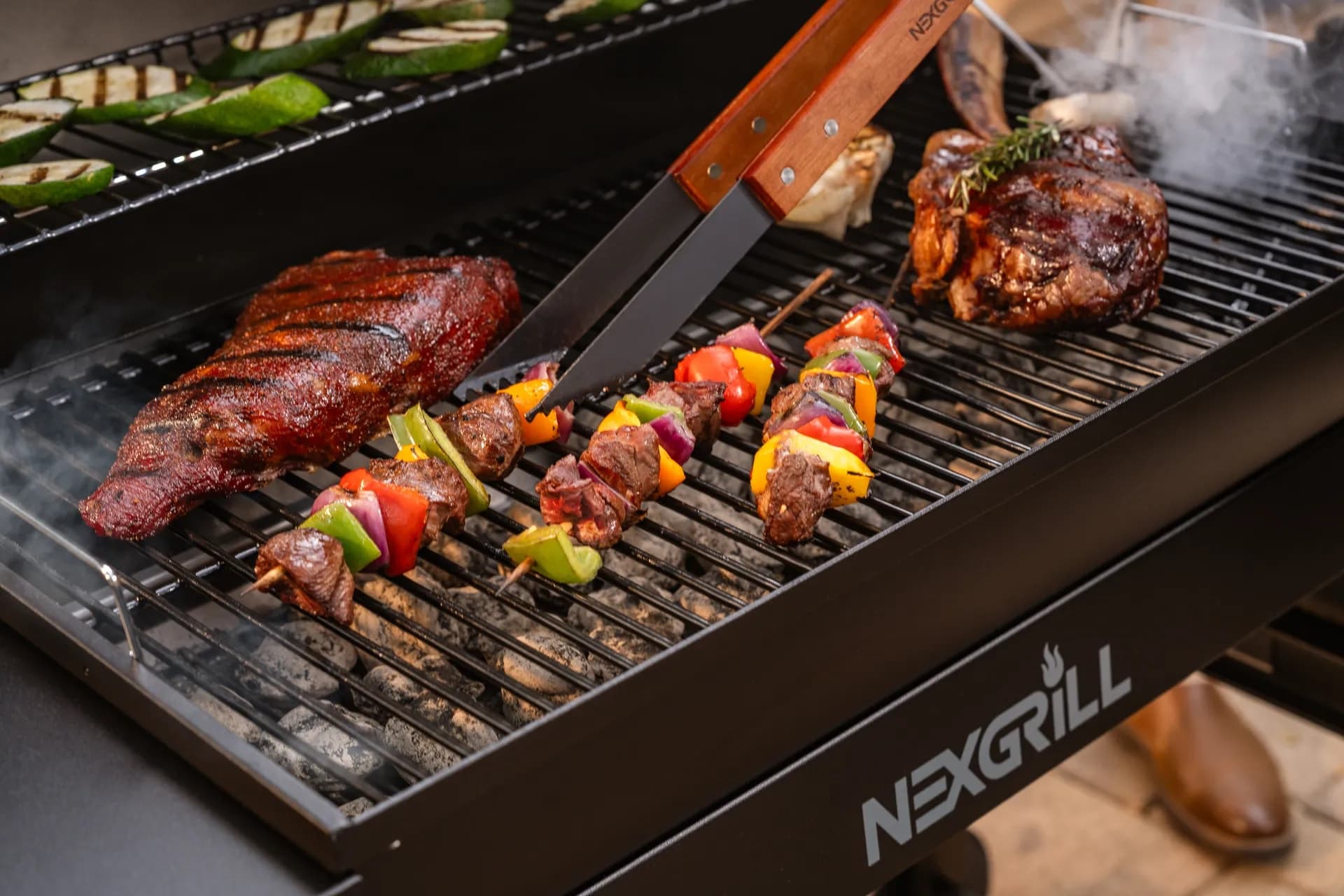
Step-by-step grilling recipes, cooking techniques, and meal ideas for every occasion and skill level.
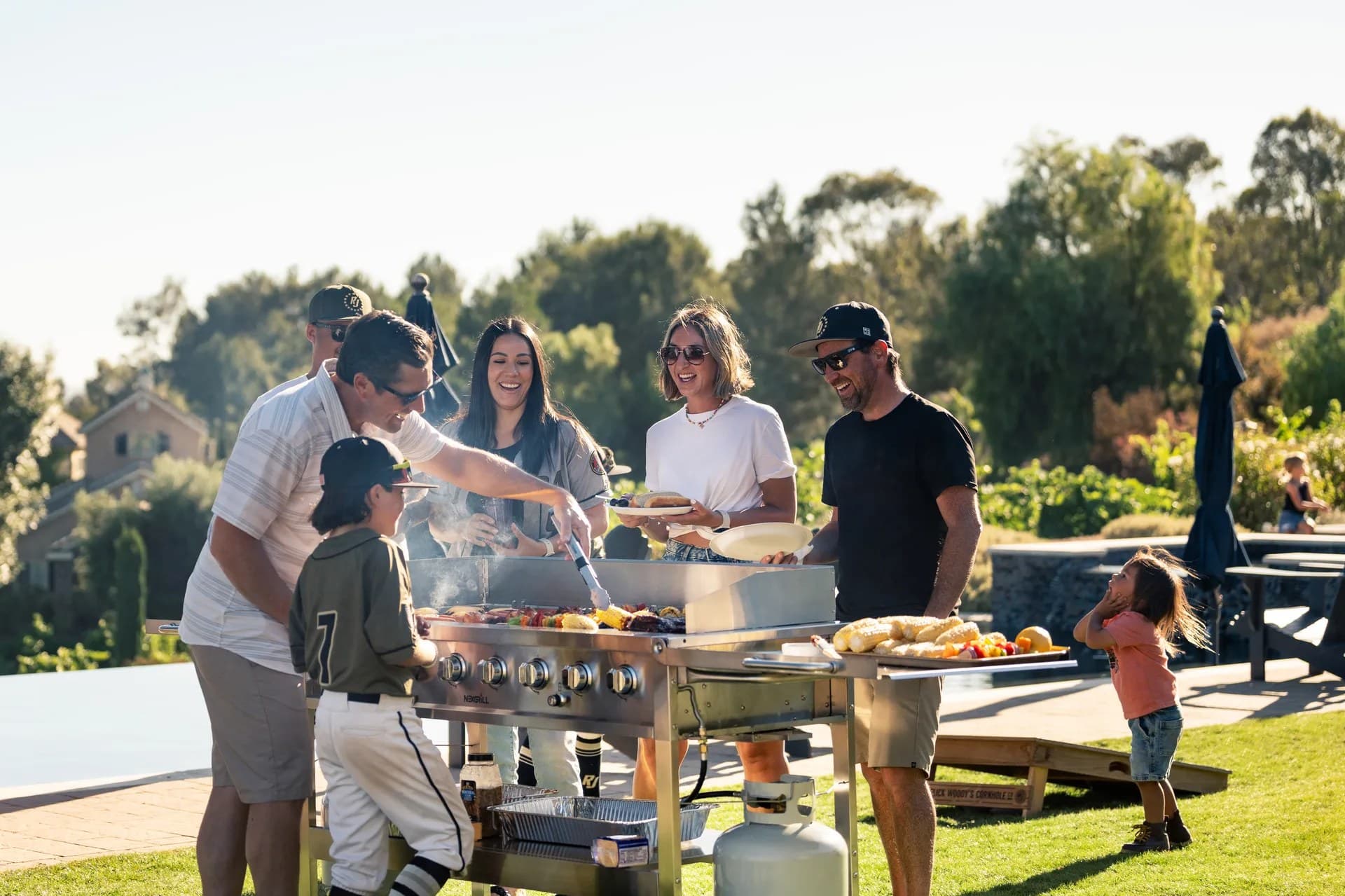
Backyard entertaining ideas, seasonal grilling inspiration, and stories that celebrate outdoor cooking culture.
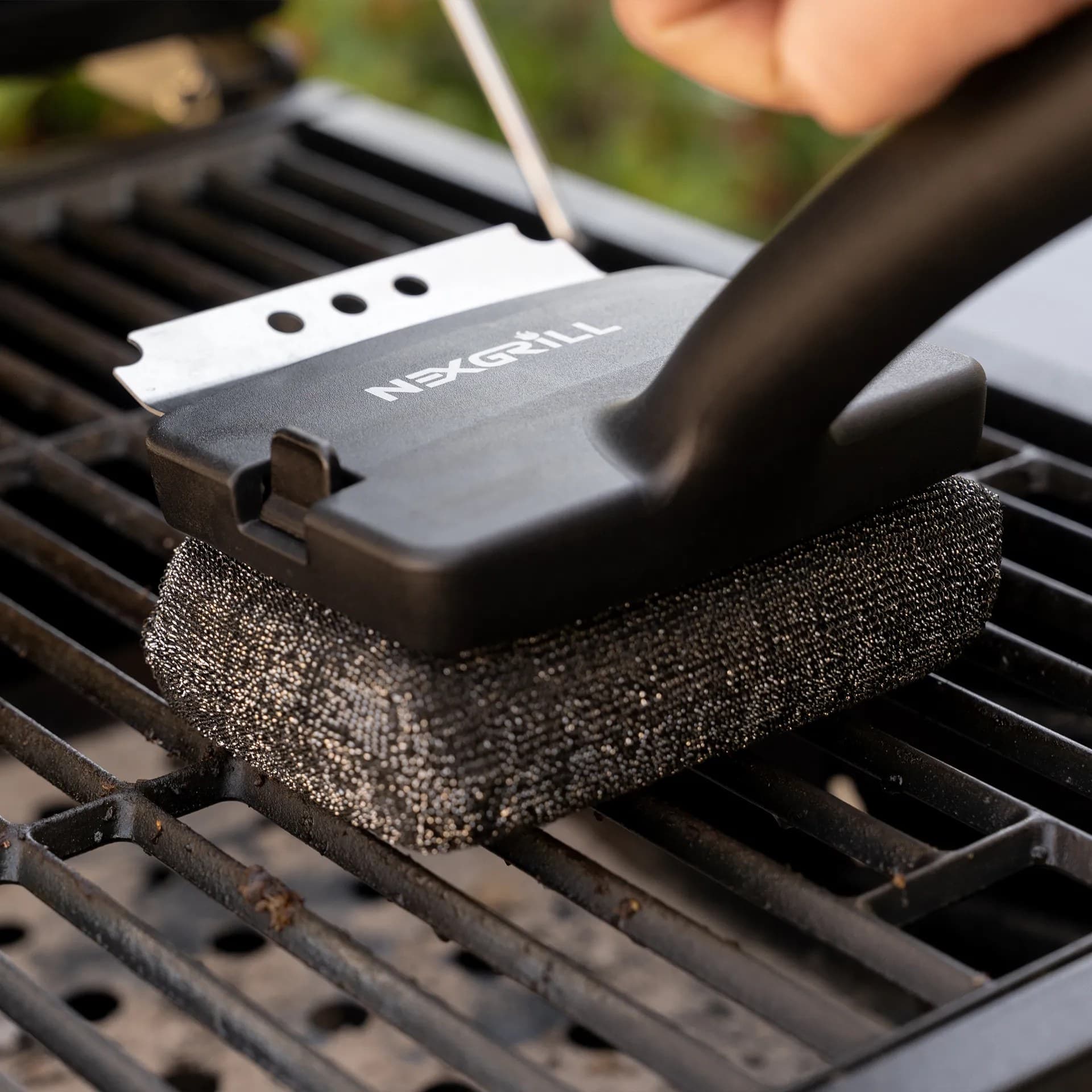
Helpful articles covering grilling tools, cookware, maintenance gear, and must-have accessories for outdoor cooking.
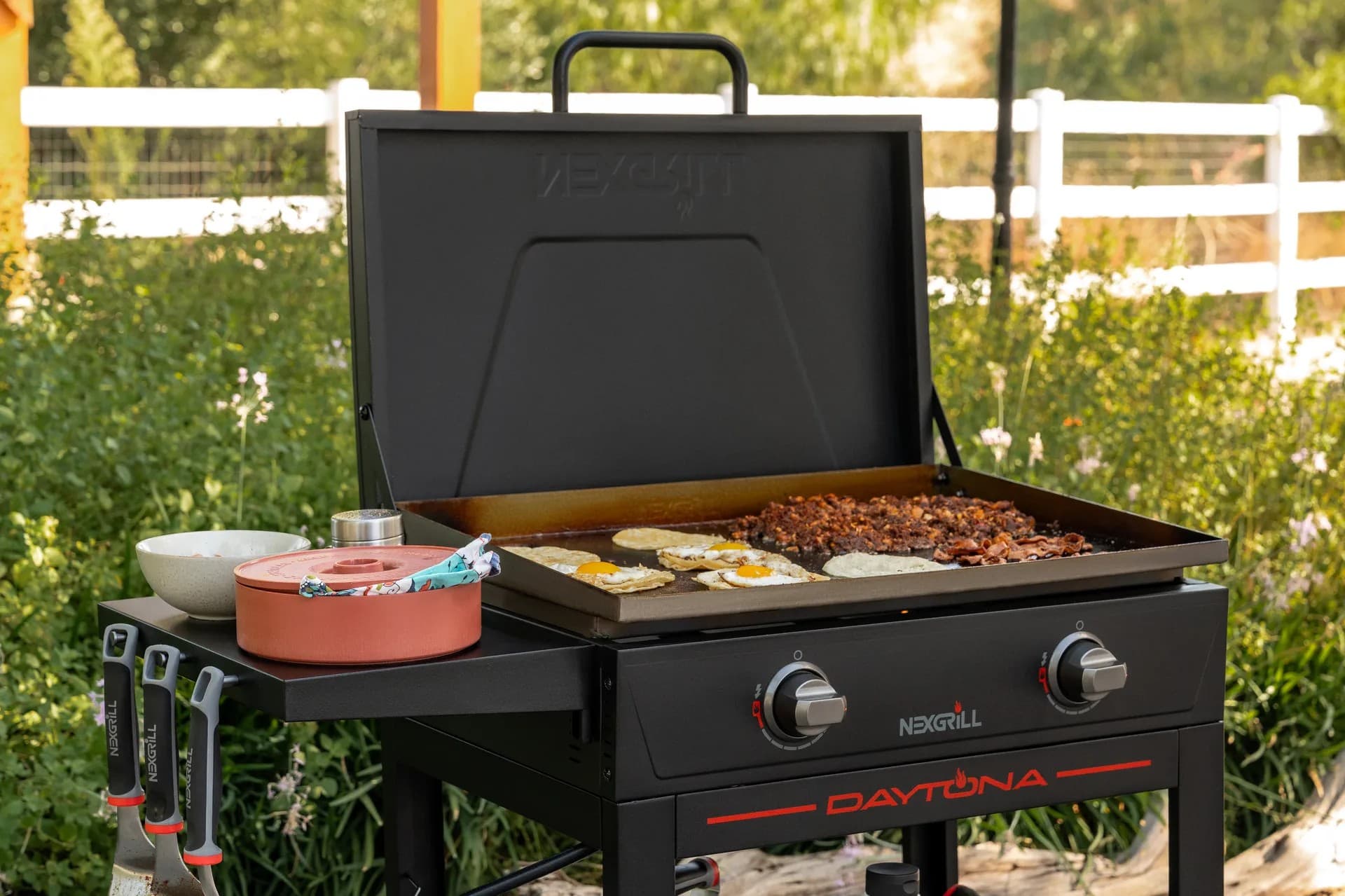
Find griddle recipes, cooking techniques, cleaning tips, and outdoor meal ideas designed for Nexgrill griddles.
Find answers to common questions
Nexgrill griddle dimensions vary by model. Please refer to the specific product page for detailed measurements.
Nexgrill griddles are typically constructed from high-quality stainless steel and other durable materials designed for outdoor cooking.
To clean your Nexgrill griddle, make sure it is cool, then scrape off food residue with a spatula and wash the surface with warm, soapy water. Regular cleaning helps maintain performance and longevity.
Yes, Nexgrill griddles are designed for versatile cooking and are ideal for preparing breakfast foods such as pancakes, eggs, and bacon.
Yes, Nexgrill offers a warranty on their griddles. Warranty terms can vary by model, so please check the product details for specific coverage information.
In This Article
Portability Features
Model Comparisons
Cooking Techniques
Flat-top griddles with foldable carts sit in a sweet spot between backyard permanence and grab-and-go convenience. They give you the broad, even cooking surface that makes breakfast, smash burgers, fried rice, and vegetables easy to manage, while the cart design adds mobility and a more stable cooking height than a tabletop unit. For many buyers, that combination is the real value: you get the flexibility to roll the griddle into storage, position it near the action for a tailgate or patio cookout, then fold it down when the day is over.
This format has become especially appealing for people who want more than a small portable cooker but do not want a fixed outdoor kitchen footprint. A foldable cart makes it easier to store the griddle in a garage, shed, or covered utility area, and it can help simplify setup when you are cooking in a driveway, at a campsite with vehicle access, or at a neighborhood gathering. In other words, the cart is not just a convenience feature; it changes how often the griddle gets used because the barrier to setup is lower.
Portability is not only about weight. A truly useful foldable-cart griddle should be easy to roll, easy to stow, and sturdy enough to feel stable once it is cooking hot.
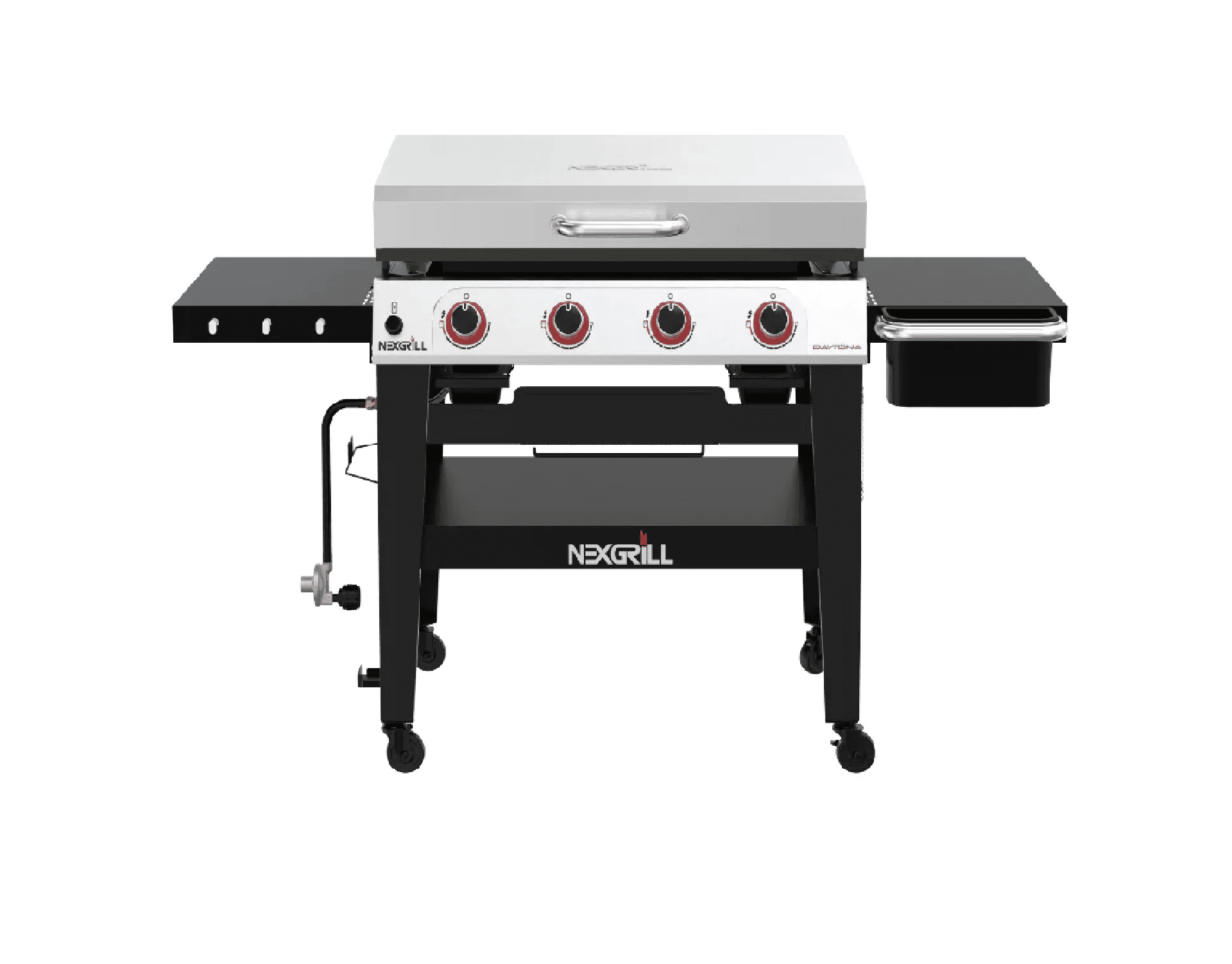
Nexgrill’s Daytona 2-Burner Griddle is a good example of this category because it is designed around compact outdoor versatility rather than oversized restaurant-style bulk. It gives shoppers a practical way to enter the flat-top category without committing to a large, permanent setup. Blackstone, by contrast, is widely associated with the broader flat-top market and is often the benchmark people compare against when deciding whether they need more or less cooking surface, more mobility, or a different cart design. That comparison matters because the best choice depends less on brand name alone and more on how you actually cook.
If you mostly cook for two to four people, travel occasionally, and want quick breakfasts or weeknight dinners outdoors, a foldable-cart griddle can be the most practical path. If you regularly feed a larger group, sear multiple proteins at once, or want extra room for batch cooking, you may lean toward a larger carted model. The key is understanding the trade-off between surface area, burner control, and how often you need the unit to move.
That is the main reason foldable-cart griddles win over tabletop-only designs for many buyers.
When people compare Blackstone and Daytona, they are usually really comparing two ownership experiences. Blackstone has long been a familiar name in the flat-top category, and many shoppers start there because they already know the brand’s broad range of griddles and accessories. Daytona, including Nexgrill’s Daytona 2-Burner Griddle, tends to appeal to buyers looking for a more compact and approachable way to cook on a flat top while still getting the benefits of a carted, outdoor-ready design. The right answer depends on size, storage, and how much cooking flexibility you want on a typical weekend.
| Comparison point | Blackstone-style flat top | Nexgrill Daytona 2-Burner Griddle |
|---|---|---|
| Typical use case | Larger gatherings and broad flat-top cooking setups | Smaller households, patios, camping, and tailgating |
| Mobility | Varies by model, often centered on backyard use | Designed around foldable-cart convenience and easier storage |
| Cooking style | Often chosen for batch cooking and high-volume use | Best for flexible everyday cooking with a smaller footprint |
| Buyer priority | Surface area and brand familiarity | Practical portability and easier ownership |
A useful way to decide is to think in terms of meal volume. If your typical session is pancakes for a family of six, then followed by onions, eggs, and burgers, a larger flat top can save time simply because you are not cooking in waves. If, instead, you are prepping breakfast for two after a camping trip, or making lunch for a small group at a tailgate, a foldable-cart model can feel more efficient because it gets hot quickly, fits the occasion, and does not dominate the space. That is where Daytona’s more compact positioning is compelling.
Do not choose by brand reputation alone. Measure the cooking area, think through storage space, and decide whether your real need is volume or portability.
The best comparison also includes how the cart works in your routine. A foldable cart is especially useful when you cook in mixed environments: patio one day, driveway the next, cabin porch on the weekend. The Daytona 2-Burner Griddle is positioned for that kind of flexibility, while larger flat-top griddles from competitors may be more comfortable staying put. If you want a side-by-side decision that emphasizes travel, quick setup, and smaller-group cooking, Daytona has a strong case. If you are building a more permanent outdoor cooking station, larger models may justify their footprint.
The most important features in a portable flat-top griddle are not always the flashy ones. BTU output matters, but only in context. Cooking surface area matters, but only if you actually use it. For a foldable-cart model, the details that separate a good purchase from a frustrating one are usually burner layout, cart stability, storage footprint, and how smoothly the unit moves from one location to another. Buyers often discover that these practical details matter more than raw power ratings once they start using the griddle in real life.
| Feature | Why it matters | What to look for |
|---|---|---|
| BTUs | Affects heat-up speed and recovery | Enough power to preheat quickly without sacrificing control |
| Cooking surface | Determines how much food you can cook at once | Sized for your typical group, not your rare biggest crowd |
| Foldable cart | Improves storage and transport | Solid locking points and manageable folded dimensions |
| Grease management | Supports cleaner cooking sessions | Easy-to-empty tray or channel system |
A portable griddle should also feel intuitive to use. Side shelves, prep space, ignition location, and control knob placement all affect how quickly you can go from rolling the cart into place to cooking your first batch. That matters a lot in tailgating and camping, where conditions are less forgiving and you do not want a complicated setup. The cart should support the griddle, not distract from it. When shoppers evaluate a Daytona-style unit, they should ask whether the cart folds easily, whether the wheels suit the surfaces they cook on most often, and whether the grill can be stored without becoming an obstacle in the garage.
A practical rule: if your storage space is tight, the foldable cart may be worth more than an extra burner you only use a few times a year.
For buyers who like value-oriented outdoor gear, this category rewards disciplined comparison. Read the size specs, look at how many separate cooking zones the griddle offers, and think about whether you want breakfast-and-lunch versatility or large-group speed. A well-designed portable griddle can do both, but the best experience comes from matching the unit to the rhythm of your cooking life rather than chasing the biggest number on the box.
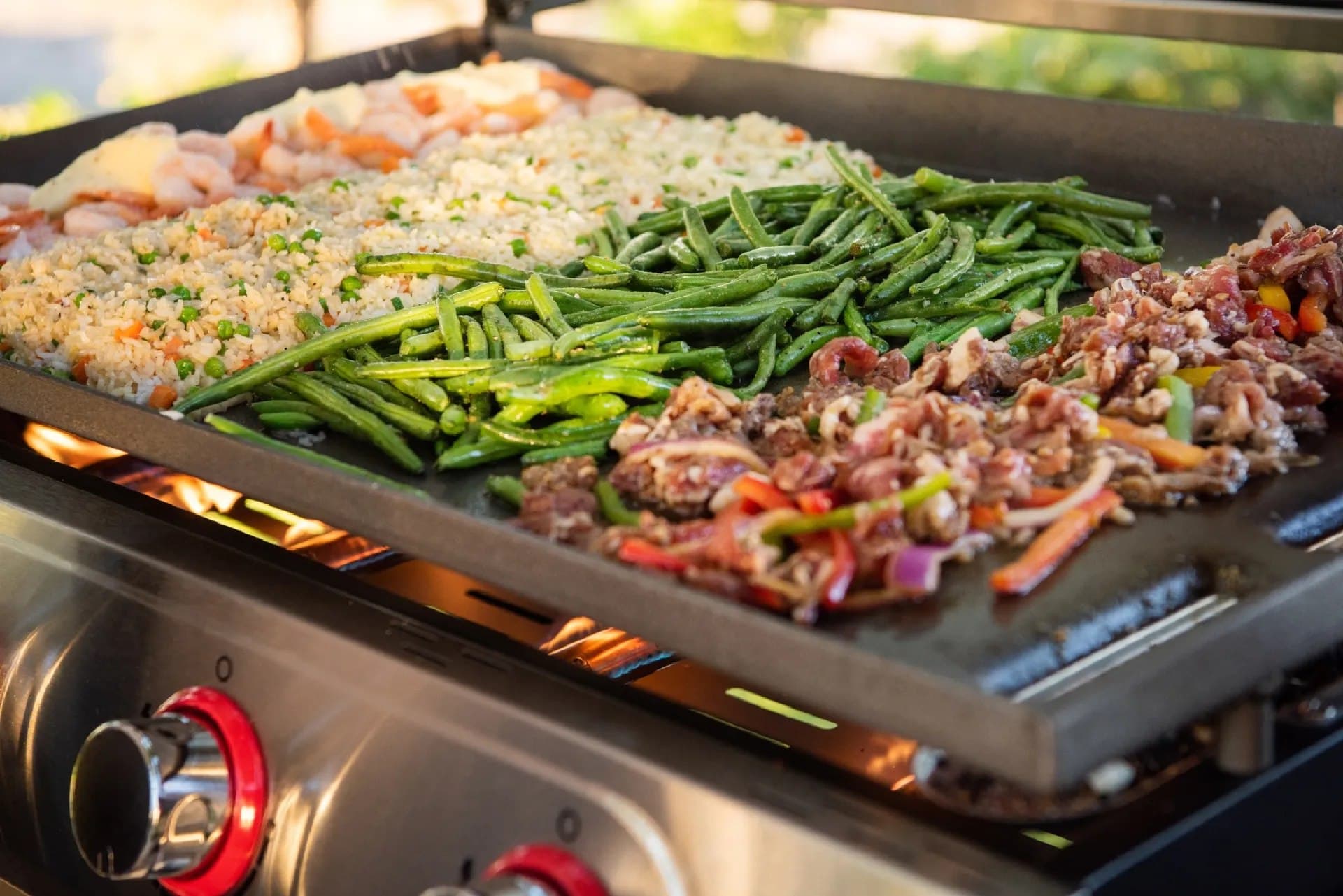
Flat-top griddles excel at foods that need even contact heat and room to move around. Breakfast is the obvious win: eggs, bacon, potatoes, pancakes, and sausage all benefit from the consistent surface and the ability to create warm zones. Lunch and dinner are just as strong. Smash burgers are a natural fit because the flat surface creates excellent contact for browning, and the wide cooking area lets you toast buns, melt cheese, and sear onions without overcrowding the cooking zone. Fajita-style chicken and peppers also work well because you can cook the vegetables and protein side by side, then mix them together at the end.
For best browning, preheat fully before adding food. A hot surface is what gives flat-top cooking its signature texture and fast turnaround.
Tailgating and camping are where foldable-cart griddles really earn their keep. You can set up near the action, cook in batches, and serve directly off the surface without worrying about multiple pans. For camping, think about one-pan meals that benefit from the broad cooktop: breakfast hash, quesadillas, stir-fried rice, breakfast sandwiches, and grilled sandwiches are all excellent choices. You can also use cooler and hotter zones on the same griddle to manage delicate foods and quick-searing foods at the same time. That level of control makes a flat top more versatile than many people expect.
The main cooking technique to master is zone management. Turn one side slightly hotter for searing and keeping food moving quickly, and keep another area moderate for finishing or holding. This is especially useful when cooking for a group, because it lets you stage food rather than forcing everything onto the plate at once. Use a thin coat of high-smoke-point oil, let proteins develop a crust before moving them, and clean the surface between rounds so flavors stay crisp rather than greasy.
There are also foods that are less ideal on a flat-top. Anything that depends on open flames or heavy smoke flavor alone may be better suited to another cooker. Very watery batters can be tricky if the surface is not properly heated, and thick stews are not really a griddle job at all. Think of the flat top as a fast, flexible skillet that works outdoors, not a replacement for every kind of cooker. Once you approach it that way, the cooking possibilities open up quickly.
Avoid overloading the surface with too much food at once. Crowding can cool the griddle, reduce browning, and make cleanup harder.
If you want a practical first menu, start with breakfast potatoes, smash burgers, and sautéed vegetables. Those three categories teach heat control, spatula timing, and surface management without making the session feel complicated. From there, move into rice dishes, tacos, and sandwich builds. The more you cook on a flat top, the more you appreciate how the foldable cart turns it into a true everyday outdoor station rather than a novelty appliance.
Try comparing two products side by side below to see which fits best:
Once you've weighed two options against each other, the next question is how to keep a flat-top griddle performing well over time. Longevity starts with a simple habit: clean the cooktop while it is still warm, not after residue has hardened. That warm-surface cleanup removes stuck-on food more easily and helps prevent the kind of buildup that can change flavor and make future cooking sessions uneven. For foldable-cart models, the cart itself also deserves attention because moving parts, hinges, and wheels are part of the ownership experience, not separate from it.
After each cook, scrape the surface, wipe away excess oil, and empty the grease system as directed by the model’s design. If you allow grease to pool or food debris to sit for several sessions, you are asking the griddle to do more work than it should. This is especially important for portable units used at tailgates and campsites, where dust and debris can add to the mess. A quick post-cook routine is usually enough to keep the surface in good shape, and it pays off in both flavor and appearance.
A light oiling after cleaning helps protect the cooking surface and supports easier preheating next time.
Pay attention to storage as well. A foldable cart makes storage easier, but it does not eliminate the need to keep moisture off the unit. If you store the griddle outdoors, use a fitted cover when available and keep it in a location that reduces exposure to rain and standing moisture. If you store it indoors, fold the cart securely and make sure the wheels and hinges are not bearing unnecessary stress. Even a well-built portable griddle lasts longer when it is stored clean, dry, and covered.
Reviews from everyday griddle owners usually focus on the same practical themes: how quickly the unit sets up, whether the cart feels sturdy, whether the surface heats evenly, and how easy it is to cook for a group without losing control of the food. That is helpful because it reinforces a simple truth about this category: buyers care less about abstract specs and more about how the griddle behaves on a real Saturday morning or during a tailgate rush. The most positive feedback tends to come from users who cook a mix of breakfast items, quick lunches, and casual dinners, since the flat-top format is strongest when versatility matters.
Users also tend to appreciate compact griddle systems when they do not have room for a full backyard outdoor kitchen. In that setting, a foldable cart is often described as the difference between buying a griddle and actually using it. If the unit can be rolled out, opened, ignited, and cooled down without hassle, owners are more likely to take it camping, load it for a game day, or simply use it on a weeknight. That convenience creates more cooking opportunities, and more opportunities usually lead to better skills.
Portable griddles get used more when setup, cleanup, and storage feel effortless.
What do experienced users often recommend? They usually suggest starting with manageable portions, learning how the hot and cool zones behave, and resisting the urge to crowd the surface. They also value carts that fold with minimal fuss, because the less effort required to store the unit, the more likely it is to stay in good condition. In practical terms, that means a Daytona-style griddle can be a strong fit for buyers who want a mobile, approachable entry point, while larger competitors may appeal more to hosts who prioritize sheer cooking volume. Try comparing two products side by side below to see which fits best:
What is the best portable flat-top griddle for small spaces? Usually the best option is the one with a foldable cart, manageable footprint, and enough cooking surface for your normal meal size. For many households, that means a 2-burner model that is easier to store and roll than a larger carted unit.
How do I know whether to choose Blackstone or Daytona? Start with your space and cooking style. Blackstone is often the familiar choice for broad flat-top cooking, while Daytona is attractive if you want a more compact and storage-friendly setup. If your priority is portability and regular small-group cooking, Daytona may be the better fit.
What should I avoid cooking on a flat-top griddle? Avoid dishes that need deep pans, heavy liquid simmering, or a strong open-flame effect. Thick stews, watery sauces, and foods that require smoke as the main cooking method are usually better handled elsewhere. Flat tops are best for foods that benefit from direct surface contact and fast turning.
How often should I clean it? Wipe and scrape after every cook, then give the griddle a deeper clean whenever residue starts to accumulate or before long storage. Consistent, light maintenance is much easier than rescuing a neglected surface later.
Here's what sets us apart
We position ourselves as delivering high-end outdoor cooking features and performance without premium-brand pricing, emphasizing “Quality Grills. Unbelievable Value.”
We offer gas grills, pellet grills, griddles, smokers, pizza ovens, portable/tabletop grills, electric grills, accessories, and replacement parts — allowing customers to stay within one ecosystem for all outdoor cooking needs.
We differentiate ourselves through smart grilling products like the Oakford smart pellet grill, including app-connected cooking controls and modern outdoor cooking technology.
Don't just take our word for it
Keep reading
From our catalog