Unlock the secrets to perfect stir-frying with your flat top griddle.

Here's what sets us apart from the competition
We position ourselves as delivering high-end outdoor cooking features and performance without premium-brand pricing, emphasizing “Quality Grills. Unbelievable Value.”
We offer gas grills, pellet grills, griddles, smokers, pizza ovens, portable/tabletop grills, electric grills, accessories, and replacement parts — allowing customers to stay within one ecosystem for all outdoor cooking needs.
We differentiate ourselves through smart grilling products like the Oakford smart pellet grill, including app-connected cooking controls and modern outdoor cooking technology.

Expert tips, buying guides, comparisons, and inspiration for choosing and getting the most out of your grill.

Practical guides for cleaning, maintenance, common grill issues, and performance optimization.

Step-by-step grilling recipes, cooking techniques, and meal ideas for every occasion and skill level.

Backyard entertaining ideas, seasonal grilling inspiration, and stories that celebrate outdoor cooking culture.

Helpful articles covering grilling tools, cookware, maintenance gear, and must-have accessories for outdoor cooking.

Find griddle recipes, cooking techniques, cleaning tips, and outdoor meal ideas designed for Nexgrill griddles.
Find answers to common questions
Nexgrill griddle dimensions vary by model. Please refer to the specific product page for detailed measurements.
Nexgrill griddles are typically constructed from high-quality stainless steel and other durable materials designed for outdoor cooking.
To clean your Nexgrill griddle, make sure it is cool, then scrape off food residue with a spatula and wash the surface with warm, soapy water. Regular cleaning helps maintain performance and longevity.
Yes, Nexgrill griddles are designed for versatile cooking and are ideal for preparing breakfast foods such as pancakes, eggs, and bacon.
Yes, Nexgrill offers a warranty on their griddles. Warranty terms can vary by model, so please check the product details for specific coverage information.
In This Article
Versatile Cooking
Essential Ingredients
Common Mistakes
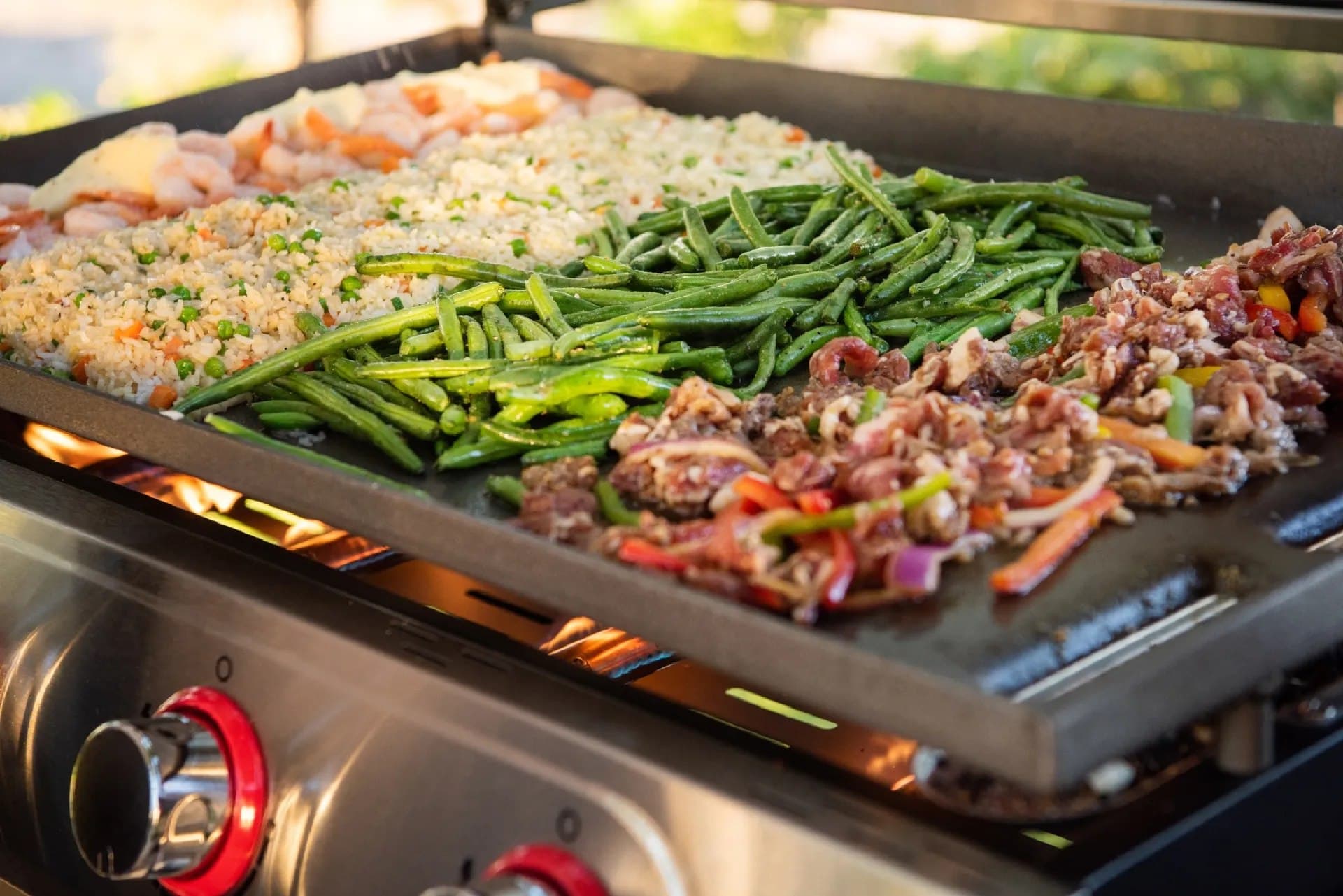
A flat top griddle can absolutely handle stir-fry, and in some home cooking setups it is easier to manage than a wok. The broad cooking surface gives you room to spread ingredients out, build separate heat zones, and cook larger portions without crowding the pan. That matters because stir-fry depends on fast evaporation, quick browning, and the ability to keep vegetables crisp while proteins finish at the right moment. On a griddle, you are not tossing ingredients in a curved bowl; instead, you are using heat, spacing, and timing to create the same lively result with a different method.
This approach is especially useful for backyard cooks who already use a flat-top setup for breakfast, smash burgers, or fajitas and want to stretch the same surface into weeknight stir-fry. A griddle also makes it easier to cook for a crowd, since you can prepare rice, vegetables, and protein in batches without constantly fighting for space. The trick is learning to think in zones. One area can be hot for searing chicken or beef, another can be slightly cooler for onions and mushrooms, and a third can hold finished food while you combine the final sauce. That kind of control is part of what makes flat-top stir-fry practical for family dinners and relaxed entertaining.
lets you cook proteins, vegetables, and sauce components without crowding
Info: Stir-fry on a griddle is less about tossing and more about sequencing. Once you master the order of ingredients, the results can be crisp, colorful, and fast.
A flat top griddle is a solid cooking surface, usually heated by gas burners underneath, that distributes heat across a wide metal plate. Unlike a traditional wok, which concentrates heat in a curved center, the griddle gives you a broad field to work on. That difference changes the rhythm of cooking. In a wok, food is constantly moved up the sides and back to the hottest point. On a flat top, you manage doneness by moving ingredients to hotter or cooler areas, then combining them at the right time. For many home cooks, that method feels more intuitive because it resembles how they already cook breakfast or sauté vegetables on a skillet, just on a larger scale.
The most important benefit for stir-fry is surface area. If you are cooking shrimp, bell peppers, snap peas, and noodles at the same time, a griddle lets you keep each ingredient in contact with the metal rather than stacking everything in a deep pan. That contact encourages browning and helps moisture escape. It also makes it easier to work with recipes that serve four, six, or even more people because you can cook in phases without losing heat. This is one reason many griddle owners find it easier to adapt Asian-inspired dishes, noodle bowls, and vegetable-forward meals to a flat surface.
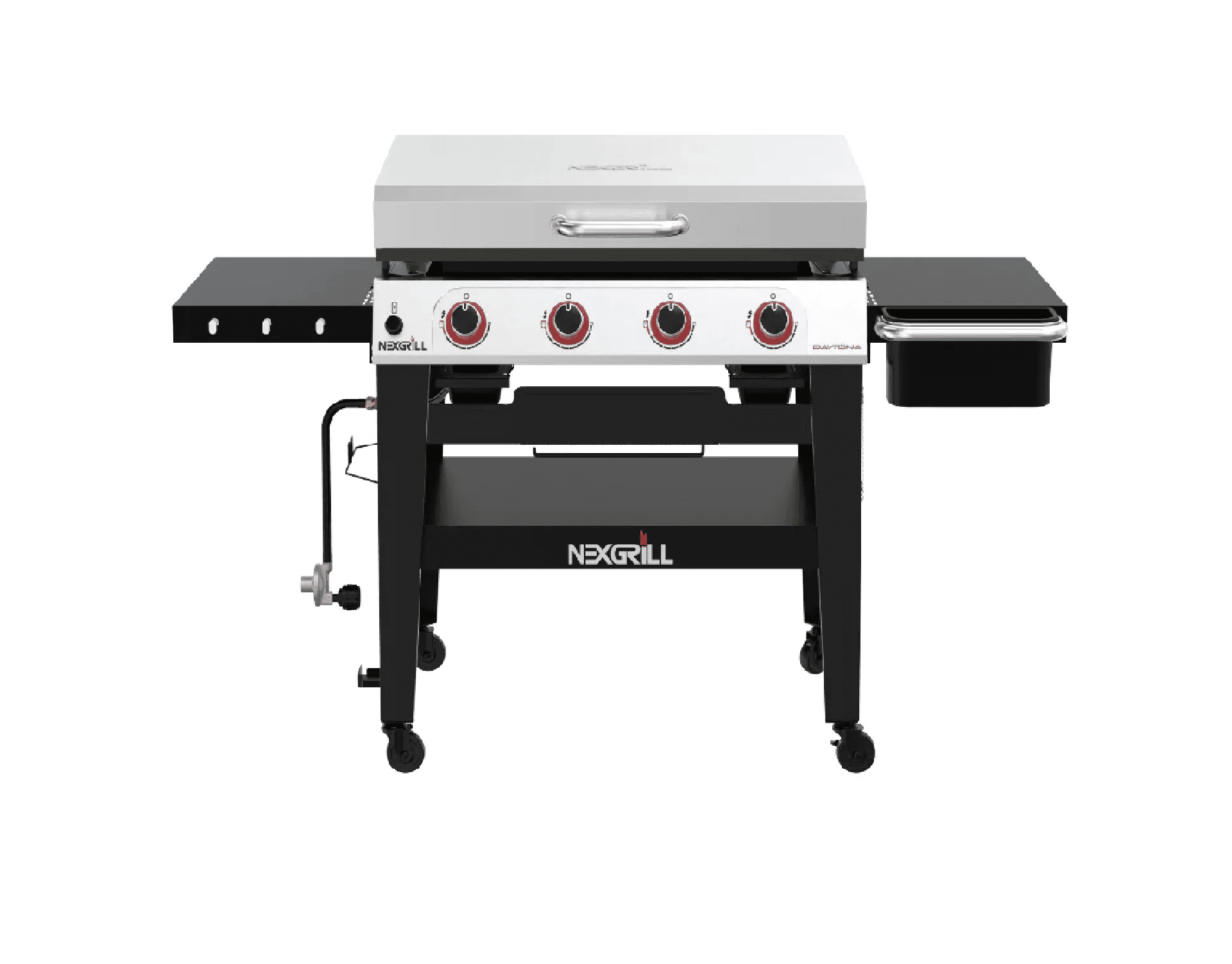
The tradeoff is that a griddle does not create the same vertical heat concentration a wok provides. You will not get identical wok hei, the smoky high-heat character associated with traditional wok cooking. But you can still build excellent flavor by using high heat, preheating properly, and keeping ingredients dry before they hit the surface. For readers comparing methods, a wok is about containment and motion, while a griddle is about expansion and control. If you already own a Nexgrill Daytona or similar flat-top model, you can use that workspace to cook a full stir-fry meal without switching appliances mid-service, which is a real advantage for busy households and outdoor cooks alike.
| Feature | Flat Top Griddle | Traditional Wok |
|---|---|---|
| Cooking surface | Wide and open for batching | Deep and curved for tossing |
| Heat management | Uses zones across the plate | Concentrates heat in the center |
| Best use case | Large portions and mixed meals | Fast toss-cooking with small batches |
| Home convenience | Very practical for outdoor cooking | Great flavor, but less forgiving in small home setups |
The best stir-fry starts with ingredients that are cut to cook quickly and season evenly. Proteins such as chicken thighs, flank steak, shrimp, tofu, or tempeh all work well because they can be sliced into bite-size pieces that sear fast. Vegetables should be chosen with texture in mind: bell peppers, broccoli florets, snow peas, onions, carrots, mushrooms, zucchini, and cabbage all hold up well on a flat top. If you want a vegan or gluten-free stir-fry, the ingredient list can be just as satisfying as any meat-based version; the key is building a balance of color, crunch, and sauce.
Equipment matters as much as ingredients. Use two sturdy spatulas or griddle turners so you can move food quickly without tearing it. Long tongs help with larger pieces of protein, while a squeeze bottle is useful for oil or sauce distribution. High-smoke-point oils are the safest choice for the temperature needed in stir-fry. Avocado oil, refined peanut oil, canola oil, or grapeseed oil all perform well because they handle heat better than delicate oils. Sesame oil is usually best as a finishing ingredient rather than the main cooking fat, since its flavor can become overpowering if overheated. Keep your sauce ready before you begin, because stir-fry moves too quickly to pause and measure ingredients once the surface is hot.
Warning: Wet vegetables and damp protein will steam before they sear. Pat ingredients dry and keep marinades light if you want crisp edges instead of soggy texture.
Start by heating the griddle until it is fully hot across the zone you plan to use. A properly preheated surface is what gives you the quick browning that defines good stir-fry. Add a thin layer of oil and place your protein first if it needs the most time, such as chicken, beef, or tofu. Let the pieces sit long enough to develop color before turning them. Moving food too early prevents browning, and browning is where much of the flavor starts. For vegetables, group them by cooking time. Hard vegetables like carrots and broccoli usually go on first, while softer items like mushrooms, spinach, or bean sprouts can join later.
Use the griddle’s surface deliberately. Keep the hottest area for searing and a medium-hot area for cooking through. If you are making a full meal, cook protein and sturdy vegetables first, then clear a section for aromatics such as garlic, ginger, and scallions. These ingredients burn quickly, so they should go in near the end and only stay on the surface long enough to release fragrance. After that, return the protein and vegetables to the center, add your sauce, and toss or fold the mixture just until everything is coated. If you are adding noodles or rice, make sure they are already cooked and slightly dry. Cold, day-old rice often works better than freshly steamed rice because it separates more cleanly on the griddle.
Think of stir-fry on a flat top as a sequence: sear, soften, aromatize, and finish. If you try to do everything at once, you will lose the contrast between tender and crisp textures. Once the dish is finished, move it off the heat immediately so residual cooking does not overcook the vegetables. That last step is easy to overlook, but it separates a lively stir-fry from a tired one. Try comparing two products side by side below to see which fits best:
Once you have compared two options, the next step is learning how to avoid the mistakes that flatten flavor on a griddle. The biggest error is overcrowding. When the surface is packed, moisture has nowhere to go, so ingredients steam instead of browning. That is especially common when home cooks try to make too large a batch in one pass. A better method is to cook in two or three smaller rounds, then combine everything at the end. Another mistake is using sauces too early. Sugary sauces can scorch if they hit a very hot surface before the ingredients have cooked through, so it is usually better to add them near the final minute.
Temperature control is the second major skill. Too low, and the food softens. Too high, and garlic, ginger, and sesame-heavy sauces can burn before the vegetables finish. The sweet spot is a hot griddle with enough oil to keep things moving but not so much that the food fries in grease. Also, resist the urge to constantly flip and stir. Letting ingredients rest briefly on the surface creates browning, which gives you the savory backbone of the dish. If your griddle has multiple zones, use them. Keep one section hot for searing and another slightly cooler for holding finished components. That setup is one of the best reasons to cook stir-fry on a flat top instead of in a single narrow pan.
Tip: Keep a clean bowl nearby for finished ingredients so you can clear the griddle quickly and prevent overcooking while you finish the sauce.
A flat top griddle is at its best when it becomes a flexible canvas for different dietary preferences. One easy starting point is a classic chicken and vegetable stir-fry: thinly sliced chicken thigh, broccoli, bell pepper, onion, and a soy-garlic sauce finished with a splash of toasted sesame oil. Cook the chicken first, remove it, then sear the vegetables until they are bright and lightly charred before combining everything at the end. Serve it over jasmine rice or rice noodles for a meal that feels familiar but still has the outdoor energy of griddle cooking.
For a vegan version, try a ginger-vegetable stir-fry with tofu, bok choy, snap peas, mushrooms, and carrots. Press the tofu first so it sears instead of crumbling, then use a light sauce built from tamari, rice vinegar, ginger, garlic, and a touch of maple syrup. This version is naturally adaptable for gluten-free diners if you choose tamari instead of standard soy sauce. The texture contrast is the goal: crisp vegetables, browned tofu, and a sauce that coats without drowning the ingredients.
A third option is a gluten-free shrimp stir-fry with pineapple, red onion, zucchini, and chili-lime sauce. Shrimp cooks in just a few minutes, so add it after the vegetables are almost done. The pineapple brings sweetness, the lime brightens the final dish, and the chili adds enough heat to keep the flavor profile exciting. Because the griddle gives you room, you can sear the shrimp in one area while the fruit and vegetables warm in another, then merge them at the end. That separation of tasks is hard to do in a crowded skillet but easy on a flat top.
2 tbsp tamari or soy sauce1 tbsp rice vinegar1 tbsp water or stock1 tsp sesame oil1 tsp grated ginger1 minced garlic clove1 tsp honey or maple syrupMix the sauce before cooking so it is ready to pour the moment the pan needs it. This formula is intentionally flexible. You can add chili paste for heat, orange juice for brightness, or cornstarch slurry if you want a thicker glaze. The point is not to copy one exact flavor profile, but to build a dependable base that works with chicken, beef, tofu, or vegetables. If you keep your ingredients prepped, your griddle hot, and your timing tight, stir-fry becomes one of the easiest ways to turn a simple outdoor cooktop into a meal that feels fast, fresh, and complete.
A flat top griddle gives you a practical, forgiving way to make stir-fry at home, especially when you want to cook for a group or prepare a full meal with multiple ingredients. Once you understand heat zones, ingredient order, and sauce timing, you can build dishes that are crisp, colorful, and deeply satisfying. The more you practice, the more the griddle starts to feel less like a substitute for a wok and more like its own cooking style with real strengths.
Experiment with vegetables that are in season, try plant-based or gluten-free variations, and pay attention to how different oils, sauces, and protein cuts change the final result. If you enjoy the process, you will likely find that stir-fry becomes one of the most rewarding ways to use your flat top griddle.
Here's what sets us apart
We position ourselves as delivering high-end outdoor cooking features and performance without premium-brand pricing, emphasizing “Quality Grills. Unbelievable Value.”
We offer gas grills, pellet grills, griddles, smokers, pizza ovens, portable/tabletop grills, electric grills, accessories, and replacement parts — allowing customers to stay within one ecosystem for all outdoor cooking needs.
We differentiate ourselves through smart grilling products like the Oakford smart pellet grill, including app-connected cooking controls and modern outdoor cooking technology.
Don't just take our word for it
Keep reading
From our catalog