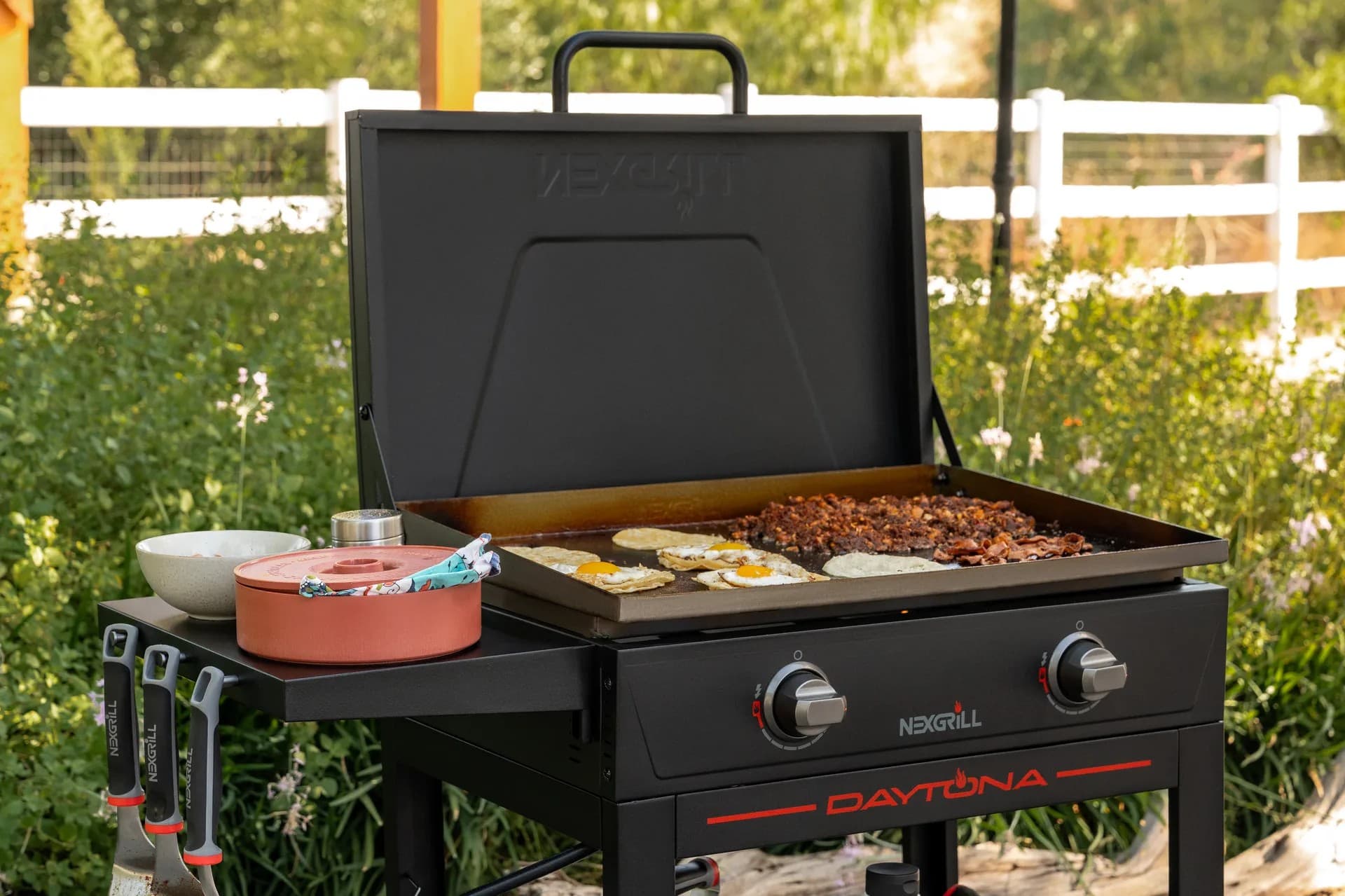
Delicious and time-saving breakfast ideas to kickstart your day on the griddle.

Here's what sets us apart from the competition
We position ourselves as delivering high-end outdoor cooking features and performance without premium-brand pricing, emphasizing “Quality Grills. Unbelievable Value.”
We offer gas grills, pellet grills, griddles, smokers, pizza ovens, portable/tabletop grills, electric grills, accessories, and replacement parts — allowing customers to stay within one ecosystem for all outdoor cooking needs.
We differentiate ourselves through smart grilling products like the Oakford smart pellet grill, including app-connected cooking controls and modern outdoor cooking technology.

Expert tips, buying guides, comparisons, and inspiration for choosing and getting the most out of your grill.

Practical guides for cleaning, maintenance, common grill issues, and performance optimization.

Step-by-step grilling recipes, cooking techniques, and meal ideas for every occasion and skill level.

Backyard entertaining ideas, seasonal grilling inspiration, and stories that celebrate outdoor cooking culture.

Helpful articles covering grilling tools, cookware, maintenance gear, and must-have accessories for outdoor cooking.

Find griddle recipes, cooking techniques, cleaning tips, and outdoor meal ideas designed for Nexgrill griddles.
Find answers to common questions
Nexgrill equipment is suitable for a variety of recipes including meats, vegetables, and even pizzas. Popular options include marinated steaks, grilled vegetables, and shrimp skewers.
To enhance the flavor of grilled vegetables, consider marinating them in olive oil, herbs, and spices before grilling. Alternatively, you can season them with salt and pepper during grilling for a more straightforward approach.
To achieve perfect grill marks, preheat your grill to a high temperature and ensure that the food is dry before placing it on the grill. Avoid moving the food too early, as it needs to sear properly to form those classic grill marks.
Using a meat thermometer is the most accurate way to ensure your grilled meat is at the desired temperature. For instance, chicken should reach an internal temperature of 165°F while medium-rare beef is typically at 135°F.
To clean your Nexgrill after cooking, allow it to cool and then use a grill brush to remove any residue from the grates. You can also wipe down the exterior with a damp cloth and mild soap to keep it looking its best.
In This Article
Pancakes
Breakfast Burritos
Omelets
Busy mornings have a way of exposing every weak spot in breakfast planning. The skillet is too small, the toaster can only do one thing at a time, and by the time everyone is ready to eat, the food is already cold. That is where a griddle earns its place. A flat, wide cooking surface lets you make breakfast in batches without sacrificing speed, and it is especially useful when you want one appliance to handle pancakes, eggs, potatoes, breakfast meats, and wraps in the same window of time. For families, roommates, or anyone trying to get out the door before the second cup of coffee, the griddle is less about showing off and more about removing friction.
The best quick breakfast recipes are not the most complicated ones. They are the recipes you can repeat without measuring every ingredient from scratch, the recipes that tolerate a little multitasking, and the recipes that finish cleanly so you are not facing a pile of dishes before 8 a.m. That is why griddle breakfasts work so well. You can cook at different heat zones, keep finished items warm on one side, and build a complete meal from a single setup. In practical terms, that means you can make a stack of pancakes while browning sausage, warm tortillas while eggs set, or cook a full omelet station without switching pans.
This guide is built for fast mornings, not leisurely brunches. It focuses on recipes and techniques that shorten prep, streamline cleanup, and help you serve food hot the first time it hits the plate. Nexgrill’s approach to outdoor cooking centers on approachable, reliable tools for real-life use, and that includes breakfast. A griddle is one of the easiest ways to turn a rushed morning into a calm one because it gives you room to work. On a good morning, you are not just making breakfast; you are buying back time.
For quick breakfasts, the real advantage of a griddle is workflow: cook multiple parts of the meal at once instead of one pan at a time.
Can replace several pans when you plan breakfast as a batch cook.
A griddle shines at breakfast because it solves the two problems that slow people down most: heat control and batch cooking. A traditional skillet gives you one cooking zone. A griddle gives you room to create several. That matters when pancakes need a medium heat, bacon needs steady rendering, hash browns need space for browning, and eggs need a gentler surface. Instead of moving between burners, you can divide the griddle into zones and manage the meal in stages. The result is less chaos and more consistency.
The other major advantage is speed. Once the griddle is preheated, it becomes a fast recovery surface. Cold batter, chilled tortillas, and freshly cracked eggs do not drop the temperature as sharply as they would in a small pan because the cooktop has more thermal mass. That helps you keep a better pace when making breakfast for two people or six. It also helps with timing: pancakes can cook in rows, eggs can finish while toast warms nearby, and burritos can be assembled as ingredients come off the surface.
Cleanup is another reason people keep coming back to griddle breakfasts. When the morning meal stays on one flat surface, you reduce the number of burners, pans, and utensils that need washing. If you line up your ingredients before cooking, the whole process becomes more efficient. That is one reason griddles are a favorite for family weekends and weekday meal prep alike. They make breakfast feel organized instead of improvised.
There is also a practical flavor benefit. Foods that need direct, even contact with heat develop better browning on a griddle than they often do in deep-sided cookware. Hash browns crisp more evenly. Pancakes cook with a more uniform surface color. Tortillas warm and toast without burning in patches. Even eggs, when handled carefully, can set into a tender, cohesive layer that is ideal for wraps or folded omelets. This is simple cooking, but it is simple cooking with better control.
| Breakfast task | Why the griddle helps | Best use case |
|---|---|---|
| Pancakes | Wide surface allows even spacing and easy flipping | Family breakfasts and batch cooking |
| Eggs | Low to medium heat zones help prevent overcooking | Breakfast burritos and omelets |
| Potatoes | More surface contact supports browning | Hash browns and breakfast skillets |
| Tortillas | Quick warming without drying out | Breakfast burritos and wraps |
The fastest griddle breakfasts are the ones that use overlapping ingredients. If you are already cooking eggs, you should be able to use the same station to warm tortillas or toast bread. If you are making pancakes, you should be able to add fruit, nuts, or even bacon without changing the core workflow. The goal is not to make breakfast more elaborate; it is to make it more efficient while keeping it satisfying.
Pancakes are the classic griddle breakfast because they are easy to scale. Mix a simple batter the night before or use a reliable dry mix, then pour consistent circles onto a lightly buttered griddle set to medium heat. A tablespoon measure or small ladle helps keep the pancakes the same size, which means they cook at the same rate and flip more predictably. For a busy morning, skip complicated toppings during cooking. Instead, serve with butter, maple syrup, or a quick fruit spooned on top after plating.
What makes pancakes a smart weekday choice is that they reward rhythm. You can pour four or six at a time, check the edges for bubbles, flip once, and move the finished pancakes to a warm plate. If you need more protein, cook bacon or breakfast sausage on the cooler side of the griddle while the pancakes finish. That gives you a full plate without doubling your workload. The important thing is to keep the batter simple and the portions steady so breakfast feels repeatable, not fussy.
Breakfast burritos are one of the smartest grab-and-go griddle meals because they can be assembled in stages. Start with scrambled eggs, then add pre-cooked sausage or bacon, shredded cheese, and optionally diced peppers or onions. Warm the tortillas on the griddle for just a few seconds per side so they become flexible without drying out. Once the fillings are ready, roll the burritos tightly and, if desired, return them seam-side down to the griddle for a quick seal and light toast.
This recipe is ideal when different family members want different fillings. One burrito can stay simple with eggs and cheese, while another includes potatoes and hot sauce. If you are meal-prepping, you can make several burritos at once, wrap them, and reheat them later. That makes the griddle useful beyond the immediate breakfast window because it sets you up for the next day too.
Omelets can be fast if you treat them like a controlled fold instead of a delicate performance. Pour beaten eggs onto the griddle, let them set slightly, then add fillings on one side before folding. Keep the fillings finely chopped so they warm quickly and do not tear the eggs. Ham, spinach, mushrooms, onions, and cheese are all strong candidates because they cook or melt without adding much delay.
For the busiest mornings, the best omelet strategy is to use prepped ingredients. Dice vegetables in advance, shred cheese ahead of time, and keep cooked proteins ready in the refrigerator. That way, you are only doing the final assembly at the griddle. The omelet becomes a five-minute solution rather than a weekend project.
Pre-chop fillings and pre-measure batter the night before so the griddle does the cooking, not the morning planning.
Efficiency on a griddle starts before the heat goes on. Lay out every ingredient, utensil, spatula, and plate in the order you will use them. This sounds basic, but it is the difference between a smooth breakfast and one where you are scrambling for butter while pancakes overbrown. The best quick griddle cooks think in stations: batter station, egg station, finishing station. That mindset keeps your hands moving and your food moving with them.
Temperature discipline matters just as much. A lot of breakfast mistakes come from rushing the heat. If the griddle is too hot, pancakes brown before the centers set and eggs become rubbery. If it is too cool, bread and tortillas dry out before they pick up color. Medium heat is usually the most forgiving starting point for pancakes and burritos, while omelets and eggs often benefit from a slightly lower zone. If your griddle allows different heat areas, use them. One side can hold cooked food warm while the other handles fresh items.
Use a light amount of fat, but use it strategically. Butter adds flavor to pancakes and eggs, while a neutral oil can help protect areas that need better release, especially for potatoes or tortillas. Wipe away excess grease between batches so the surface stays responsive. A clean, lightly seasoned surface cooks faster and more predictably than one with burnt residue or puddled oil. This is especially helpful if you are making more than one recipe in the same session.
Finally, think about ordering. The slowest component should start first. Potatoes, bacon, or sausage usually need the longest time, so get them going before eggs or pancakes. Tortillas can be warmed at the very end, because they only need a moment. When you cook in the right sequence, your breakfast comes together naturally instead of waiting on the one ingredient you forgot to prioritize. Try comparing two products side by side below to see which fits best:
Once you've compared your options, the next question is how to make breakfast actually flow on the griddle. Pancakes are the simplest place to start because they teach timing, spacing, and heat control without demanding much prep. For busy mornings, the best pancake recipe is the one you can repeat with confidence. A basic batter, a preheated griddle, and a reliable flip are enough to feed several people fast.
For a dependable batch, whisk together flour, baking powder, a little sugar, salt, milk, eggs, and melted butter until just combined. Do not overmix; a few small lumps are fine and actually help keep the texture tender. Letting the batter rest for a few minutes while the griddle heats can improve consistency, but if you are in a hurry, you can move straight to cooking. Lightly grease the surface, pour even circles, and watch for bubbles along the edges before flipping once. That single flip matters more than people think because every extra turn increases the odds of a misshapen pancake.
If you want to make pancakes feel more complete without slowing down, add toppings after cooking instead of during the flip. Sliced bananas, blueberries, chopped pecans, or a dusting of cinnamon sugar can all be added at the table. That keeps the cooking surface uncluttered and allows everyone to customize their plate. For families, this is a huge time saver because one base batter can serve multiple tastes without separate recipes.
Do not crowd the griddle. Pancakes need space so you can flip quickly and keep the batch moving.
| Pancake approach | Best for | Time-saving benefit |
|---|---|---|
| Plain batter | Weekday routines | Fastest to mix and cook |
| Fruit-studded batter | Kids and guests | One recipe, more variety |
| Protein-side combo | Hearty breakfasts | Main and side cook together |
Breakfast burritos are the ultimate busy-morning griddle food because they solve two problems at once: they cook quickly, and they travel well. They are also a practical way to use leftovers without making breakfast feel repetitive. If you already have cooked potatoes, sausage, or roasted vegetables, the griddle gives you a quick way to reheat and assemble everything into a complete handheld meal.
A strong burrito starts with eggs cooked softly on the griddle. Scramble them gently and remove them before they dry out. Warm the tortilla directly on the surface for a few seconds, then add the fillings in a line across the center. Cheese helps bind the ingredients once it begins to melt, while potatoes add bulk and make the burrito more filling. If you want a better breakfast sandwich feel, toast the rolled burrito seam-side down for a short finish so it holds together.
The burrito format is useful because everyone can choose a different combination without requiring a separate cooking process. One person can have eggs and cheese only, another can add peppers and salsa, and a third can go heavier with potatoes and sausage. That kind of flexibility makes it easier to feed a group fast, especially when the family leaves the house at different times.
For meal prep, wrap burritos individually and cool them before refrigerating so they reheat more evenly later.
Omelets are a smart griddle breakfast because they feel custom while still being fast. The trick is to keep the filling list short and the cut size small. The less time your fillings need to warm, the faster your omelet comes together. On a griddle, you can cook several omelets in sequence rather than managing them one at a time in a narrow pan.
Beat the eggs just enough to combine the whites and yolks, then pour them into a lightly greased area. As the edges set, use a spatula to guide the cooked egg inward and create a more even layer. Add fillings on one side and fold when the center is still slightly glossy. The residual heat finishes the job, which keeps the texture tender instead of overdone. Cheese, diced ham, mushrooms, spinach, and leftover roasted potatoes all work well because they cook quickly or are already cooked.
For a truly quick morning, preportion fillings into small containers the night before. That way, you can build the omelet in seconds and spend less time searching for ingredients while the eggs set. If you are feeding more than one person, keep the omelet fillings similar so the cook line stays simple and the timing stays predictable.
If you want to keep breakfast fresh without adding complexity, the griddle can handle a few more high-speed favorites. French toast is a natural fit because bread browns evenly on a flat surface and cooks in batches. Simply dip slices in an egg mixture, cook them until golden, and serve with fruit or syrup. Breakfast sandwiches also work well because you can toast the bread, cook the egg, and warm the protein all in one place.
Hash browns are another dependable choice when you need something filling but fast. Shredded potatoes crisp best when spread thinly and left alone long enough to brown. If you pair them with eggs, you get a complete breakfast without needing a second pan. For a lighter option, griddled tortillas with melted cheese and scrambled eggs create a simple breakfast quesadilla that can be sliced into wedges for easy sharing.
These extras matter because they keep your morning rotation from getting stale. A good griddle breakfast routine should be flexible enough to use what you already have on hand, whether that is leftover vegetables, extra tortillas, or a half loaf of bread. That flexibility is what makes griddle cooking sustainable on a weekday schedule.
Keep one shelf, plate, or tray as a warm landing zone so finished items stay ready while you complete the next batch.
Quick griddle breakfast recipes work because they prioritize pace without giving up comfort. Pancakes, breakfast burritos, omelets, and a few adaptable extras can cover almost every type of busy morning, from school-day rushes to weekend meal prep. The griddle makes all of them easier by giving you space to cook in parallel, keep food moving, and serve hot breakfast with less cleanup.
If you want the most value from your morning routine, choose recipes that share ingredients, use prepped fillings, and lean on batch cooking. That approach saves time in the kitchen and reduces the chances of starting the day behind schedule. With a little planning and the right griddle workflow, breakfast becomes one of the easiest parts of your morning instead of the hardest.
Here's what sets us apart
We position ourselves as delivering high-end outdoor cooking features and performance without premium-brand pricing, emphasizing “Quality Grills. Unbelievable Value.”
We offer gas grills, pellet grills, griddles, smokers, pizza ovens, portable/tabletop grills, electric grills, accessories, and replacement parts — allowing customers to stay within one ecosystem for all outdoor cooking needs.
We differentiate ourselves through smart grilling products like the Oakford smart pellet grill, including app-connected cooking controls and modern outdoor cooking technology.
Don't just take our word for it
Keep reading
From our catalog